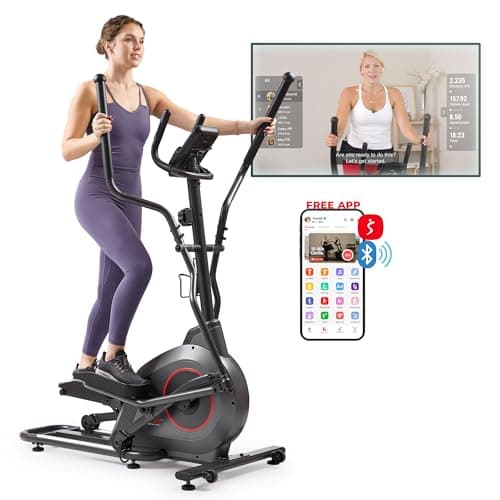
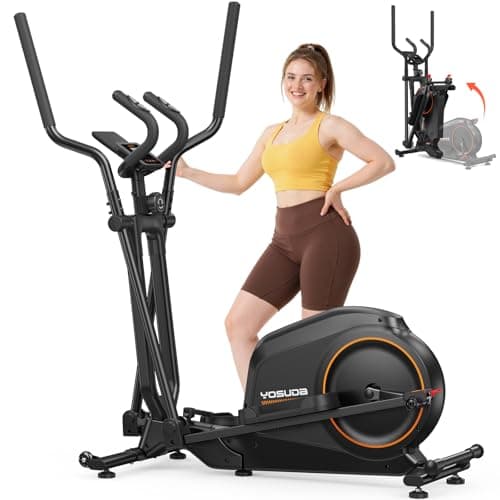
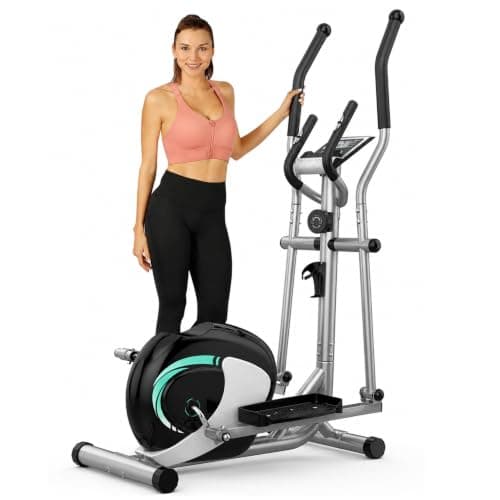
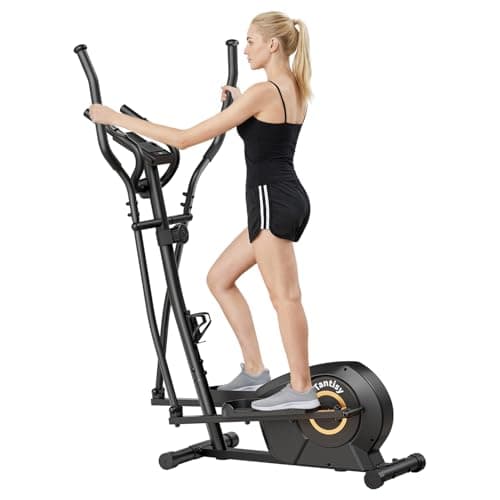
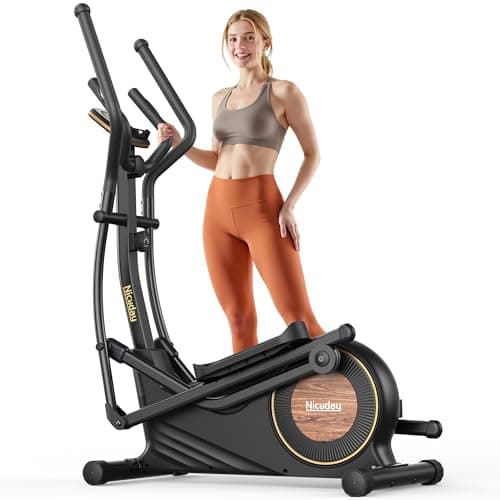
For most people the right home elliptical is the one with the longest stride you can fit and afford — and here that is the Niceday Elliptical with an 18-inch stride. Almost everything else on a listing can be lived with or worked around. Stride length is welded into the frame, it is the single thing that decides whether the motion feels like a natural walking gait or like pedaling a bicycle standing up, and it is almost always printed in the smallest type on the page.
Ellipticals are bought for one reason above all others: they give you a cardio session without the repeated heel strike of running. Your feet never leave the pedals, so the impact spike that arrives on every footfall of a run simply does not happen. That is a real mechanical advantage and it is why ellipticals end up in so many rooms where a treadmill would not be tolerated — apartments, upstairs bedrooms, and the homes of people whose knees have made their position clear.
The trap is that the shelf competes on the two numbers easiest to inflate: resistance levels and flywheel weight. Sixteen levels of magnetic resistance costs a manufacturer almost nothing over eight, and a heavier flywheel is a selling point long past the point where you can feel the difference. Four specs actually decide whether the machine gets used or becomes a clothes horse.
- Stride length. Under about 13 inches the motion is a cramped shuffle that most adults find unnatural within ten minutes. Fourteen to sixteen inches is where it starts to feel like a stride. Eighteen inches is close to a commercial-gym machine. If you are over about 5 ft 10 in, this is not a preference, it is the whole purchase.
- Resistance type and range.You want magnetic rather than friction-pad resistance — magnetic is quiet, has nothing to wear out and never needs adjusting. Beyond that, eight levels is enough for most people and sixteen is a finer spread, not a different machine.
- Footprint, and whether it folds. A full-size elliptical is a long, tall object. The compact and foldable designs trade stride length and stability for the ability to live against a wall between sessions, and for a lot of rooms that trade is the right one.
- Stability and user weight capacity.Published capacity is a proxy for how much frame the maker put in. A 400 lb rating under a 200 lb user means a frame that does not flex and rock at speed, which is most of what "feels cheap" actually means.
What the research supports, and what it does not
The impact claim is sound and reasonably well characterized. A three-dimensional biomechanical analysis of elliptical exercise published in Medicine & Science in Sports & Exercisein 2007 (Lu, Chien and Chen) compared lower-limb loading during elliptical exercise with level walking and found the vertical pedal reaction forces and loading rates lower than those of walking — but it found that this came at the cost of greater hip flexor and knee extensor moments. That is the honest, useful version of "low impact": the sharp loading spike is reduced, and the muscular demand around the knee and hip goes up instead.
Two things follow from it. First, an elliptical is a genuinely good answer for someone who cannot tolerate impact — which is why it keeps appearing in our equipment guide for bad knees. Second, "low impact" is not the same as "no load on the knee," and if your knee pain is specifically provoked by deep flexion under tension, a recumbent bike or a seated pedal unit is the safer starting point, not this.
What an elliptical will not do is give you the bone-loading benefit of weight-bearing impact, because that benefit comes from the impact. It also will not produce the numbers its console reports; the calorie readouts on machines in this price bracket are estimates from your weight and the resistance level, not measurements. Judge sessions by time and perceived effort instead. The CDC's adult target is 150 minutes of moderate-intensity activity a weekplus at least two days of muscle-strengthening work, and an elliptical will cover the first half of that comfortably while doing nothing at all for the second — which is what adjustable dumbbells are for.
Scores below are judgments from published specifications and owner feedback, not lab tests — see how we review. Prices are pulled live and stamped with the date they were checked. If you have not settled on an elliptical at all yet, best home cardio machines ranks it against the treadmill, the bike and the rower first.
The six, side by side
| Machine | Published stride | Resistance levels | Capacity | Folds |
|---|
| Niceday 18 in | 18 in | 16, magnetic | 400 lb | No |
| Sunny Upright | 16 in | Magnetic | Not published in title | No |
| YOSUDA Foldable | 15 in | 16, magnetic | 350 lb | Yes, to 2 sq ft |
| THERUN | 14.3-15.3 in | 16, magnetic | Not published in title | No |
| TANTISY | 15.5 in | 8, magnetic | 400 lb | No |
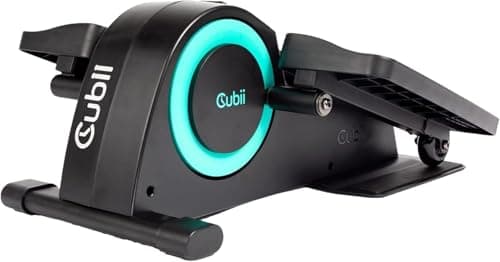
| Cubii JR1 | Seated, short | 8, magnetic | Not published in title | No (portable) |
How to pick a stride length for your height
There is no published standard here, so treat this as orientation rather than a rule. Under about 5 ft 4 in, a 14 to 15 inch stride generally feels natural and the longer machines can feel like a reach. Between roughly 5 ft 4 in and 5 ft 10 in, 15 to 16 inches is the comfortable band and is where most of this shelf sits. Above about 5 ft 10 in, buy the longest stride you can — 18 inches if it is available — because a short stride on a tall frame does not merely feel small, it shortens your hip extension and turns the motion into knee-dominant pedaling.
The test that settles it is boring and effective: stand on the pedals and take one slow stride. If your trailing leg reaches close to straight behind you, the stride fits. If your hips stay under your shoulders the whole way round, it does not, and no resistance setting fixes that.
The four specs worth reading on a listing
Stride length, in inches, in the specification table.If a listing does not publish it, assume it is short — makers print the number when the number is good. "Full-body" and "natural motion" in the title mean nothing.
Magnetic, not friction. Magnetic resistance has no contact surface, which means no wear part, no squeal and no adjustment. Friction-pad machines still exist at the very bottom of the market and they are a false economy.
Published user weight capacity. Read it as a frame-stiffness proxy rather than a limit. A machine rated well above your weight will feel planted; one rated close to it will not.
Assembled dimensions, and whether it folds. Measure the floor before you order, and add clearance behind the machine for the pedal arms. The commonest post-purchase complaint on this shelf is not quality, it is that the thing is bigger than the room.
Elliptical, treadmill, bike or rower?
An elliptical is the right machine when impact is the thing you need to avoid and you still want to be upright and weight-bearing. A treadmill gives you the bone-loading benefit of real footfalls and the most specific transfer to walking and running, at the cost of impact and noise. An exercise bike is the most comfortable place to do a hard, sustained effort and the gentlest on the ankles, but it is not weight-bearing at all. A rowing machine recruits the most muscle per minute and punishes bad technique. We settle two of those head-to-heads directly in rowing machine vs treadmill and walking pad vs treadmill.
What an elliptical will not do
It will not build strength. Magnetic resistance against a smooth pedal path is endurance work, not loading. Two days a week of resistance training sits in the CDC guidance alongside the aerobic minutes for a reason, and dumbbells or kettlebells are what cover it.
It will not load your bones the way impact does.Reduced loading rate is the feature; the bone-density stimulus that comes from footfalls goes with it. If bone health is the goal and your joints allow it, walking and loaded walking do more — see best weighted vests.
It will not measure your calories. The console estimates from resistance and a generic body mass. Use time and effort, or a wrist or chest heart-rate monitor, and treat the console number as decoration.
And it will not be silent. Magnetic resistance is quiet; a person moving on a frame is not. If there is a room below you, budget for a mat and expect to hear the rhythm of your own footfalls through the floor regardless.