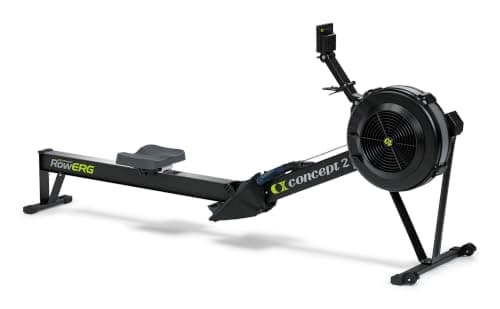
Rowing is the most efficient cardio a home gym can host. One movement trains legs, back, arms and core simultaneously, it is genuinely low impact on the knees in a way running is not, and the machine sits still and quiet in a corner rather than needing a road or a season. It is also the piece of cardio equipment where the buying decision is unusually clear, because one spec dominates everything: how the resistance is generated.
There are three answers. Air rowers spin a flywheel against a fan — resistance scales with how hard you pull, so the machine responds to effort exactly like a boat does, and it is what every gym and every rowing program uses. It is also the loudest, by a lot. Magnetic rowers use a magnet against a flywheel: near-silent, resistance set by a dial rather than by your effort, and cheap. Water rowers pull paddles through a tank: a swooshing sound most people find pleasant, a stroke feel close to air, and furniture that happens to be exercise equipment.
Pick the resistance type first and the shortlist writes itself. Below, five rowers ranked with that in mind, plus the storage question — because a rower is around 8ft long in use and the difference between one that stands upright afterwards and one that does not is the difference between owning it and resenting it.
Air, magnetic or water: the only decision that really matters
Air resistance is generated by a fan flywheel, so it scales with your effort: pull harder, get more resistance, exactly like water against a blade. That responsiveness is why every gym, every rowing club and every structured program uses air, and why an air rower is the only one where interval work feels right. The price is noise — a fan at full effort is genuinely loud.
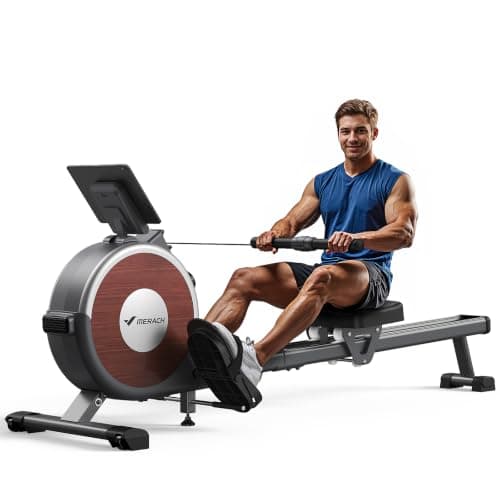
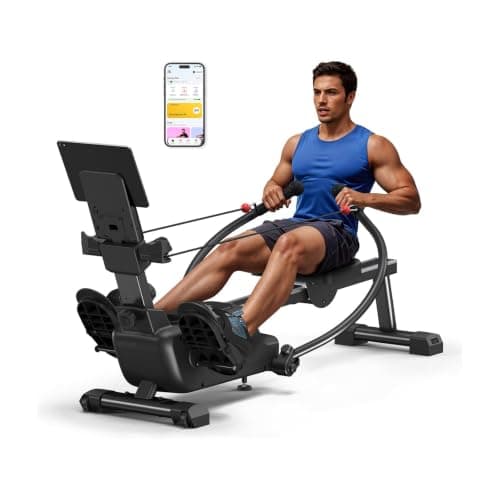
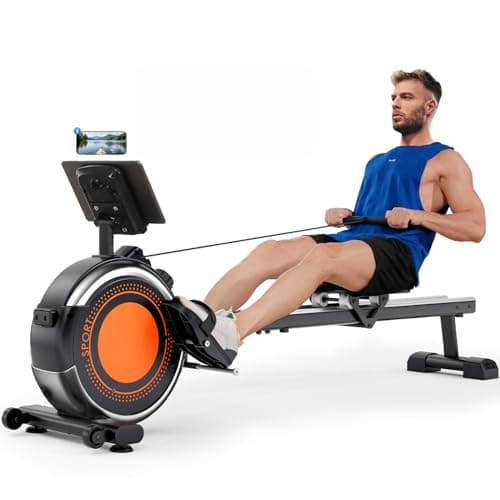
Magnetic resistance uses a magnet near a flywheel and is nearly silent. You set a level from a dial and that is your resistance regardless of how hard you pull, which makes the stroke feel flatter and makes sprint efforts feel oddly weightless. For general cardio in a shared house it is an excellent trade, and it is why the majority of home rowers sold are magnetic.
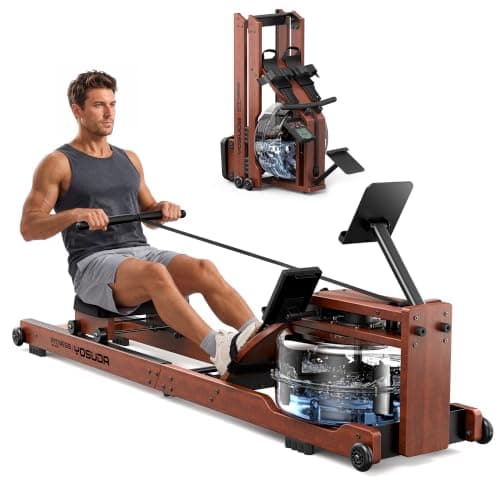
Water pulls paddles through a tank. It responds to effort like air, sounds like a wave instead of a leaf blower, and usually comes in a wooden frame that people are willing to leave in a living room. You change resistance by changing the water level, which is not something you do mid-workout, and the tank needs a purification tablet every few months.
Storage: the spec that decides whether you keep it
A rower is roughly 7 to 8 feet long in use. That is a hallway. The question is what happens afterwards, and there are three answers: it stands upright (most magnetic and water rowers pivot onto their end and take a two-foot square of floor), it separates (the Concept2 splits into two pieces that live in a cupboard), or it stays exactly where it is. That third category is where rowers go to become laundry racks. Check the folded or stored dimensions before you buy, and check that you can lift the thing to fold it — some are heavier than they look.
What the monitor is and is not telling you
Every rower has a display, and only some of them mean anything. An air rower with a proper performance monitor reports pace (time per 500m) and wattson a scale that is consistent across every identical machine, which is what makes programmed workouts, online racing and year-on-year progress tracking possible. A budget magnetic rower reports strokes, time, and a "calorie" figure derived from an undisclosed formula at a resistance level that is unique to that model. Neither is dishonest, but only one of them is a number you can compare to anything — including your own performance on a different machine.
Technique, briefly, because rowing is easy to do badly
The stroke is legs, then back, then armson the drive, and the exact reverse — arms, back, legs — on the recovery. Most beginners pull with the arms first and finish with the legs, which turns a whole-body movement into a lower-back exercise and is the reason "rowing hurt my back" is such a common complaint. Roughly 60% of the power should come from the leg drive. Keep the chain or strap horizontal, do not lean back past about 11 o'clock, and keep the spine long rather than rounded. Ten minutes spent on a technique video before your first session is the highest-return thing you can do with this purchase.
Where a rower fits alongside strength work
Rowing is a genuinely good complement to lifting: it is low impact, it trains the posterior chain, and it builds work capacity without the joint cost of running. It is not a replacement for resistance training — pulling a handle will not build the strength that dumbbells, kettlebells or a rack will. And after a hard session, a rower leaves the same tight lats, hips and forearms everything else does; a foam roller handles the first two and a massage gun the last.
If you have not settled on rowing yet, the layer above this page compares a rower against a bike, a treadmill and a walking pad on noise, footprint and cost per year: best home cardio machines.