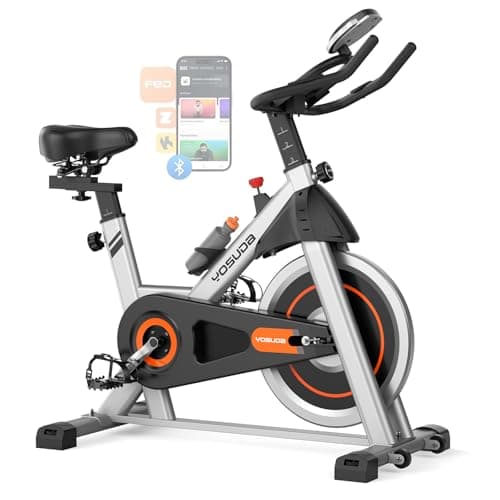
An exercise bike is the most apartment-friendly cardio machine there is. It makes far less noise than a treadmill, transmits almost nothing through a floor, occupies a fixed and modest footprint, and — unlike running — is genuinely low-impact, which matters if your knees have opinions. It is also the cheapest serious cardio machine per usable minute, and the one most likely to still be used in month six.
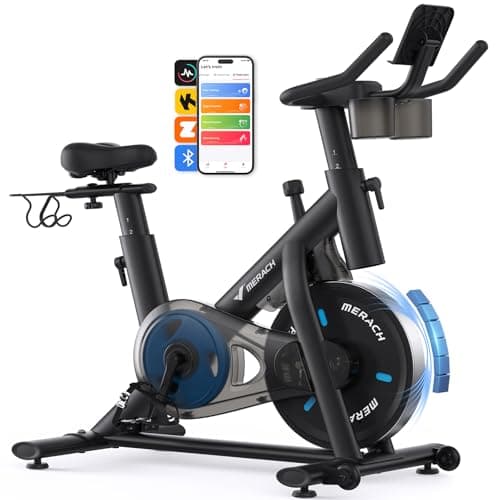
The specification that decides everything is the resistance system. Friction bikes use a felt or fabric pad pressed against the flywheel: cheap, simple, infinitely adjustable, and the pad wears and needs replacing. Magnetic bikes move magnets near the flywheel with no contact at all: nearly silent, no wear, usually stepped rather than infinitely variable, and more expensive. For a shared building, magnetic is worth the premium; in a garage, friction is fine and cheaper.
Ranked below across the three formats — indoor cycling bikes (weighted flywheel, forward riding position), upright and folding bikes (light, packs away), and recumbents (seated back support). If you want the wider cardio comparison, our rowing machines and treadmills roundups cover the alternatives.
Buying because your knees hurt? A recumbent bike is usually the right machine, but the seat position and the resistance range matter more than anything on the spec sheet — we go through that, and the alternatives, in best exercise equipment for bad knees.
Friction or magnetic?
Friction presses a felt pad against the flywheel. It is cheap, gives infinitely variable resistance from a single knob, and can be cranked to a genuinely brutal load. The pad is a consumable that eventually needs replacing, and it makes a mild rushing sound in use.
Magnetic moves magnets near the flywheel without touching it. Nothing wears, nothing needs replacing, and the bike is close to silent — which for a shared building is the entire argument. Resistance is usually stepped rather than continuous, and the bikes cost more.
If anyone can hear you train, buy magnetic. If you train in a garage or a house you own outright, friction is more bike for the money.
The three formats, and who each suits
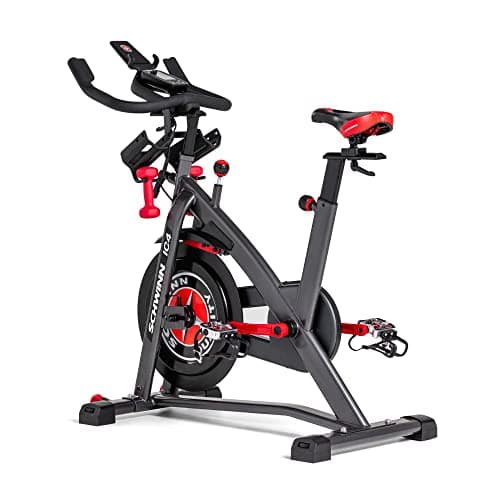
- Indoor cycling bike. Heavy flywheel, forward riding position, road-bike geometry. Best ride quality, highest intensity ceiling, and what you want if you cycle outdoors or like class-style workouts. Least comfortable for casual riders.
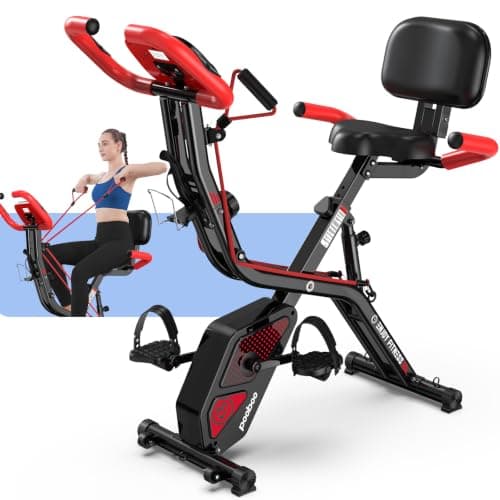
- Upright or folding bike. Lighter, more upright, often folds. Lower intensity ceiling, but genuinely storable — the right compromise for a small flat.
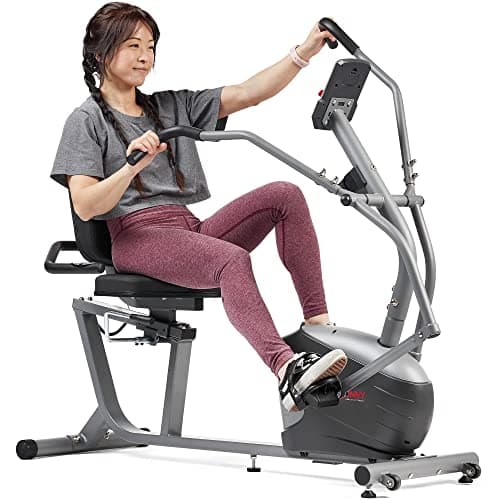
- Recumbent. Seated with a backrest, feet forward. Easiest on the back, wrists and neck, easiest to get on and off, lowest intensity ceiling. The correct choice for many older riders and for rehab — see also best fitness equipment for seniors.
The subscription trap
The dominant business model in this category is a subsidized bike plus a compulsory monthly membership for the classes. Do the three-year arithmetic before you commit: the membership usually costs several times the hardware. Every bike on this page works without a subscription, and a tablet holder plus whatever app you already use replicates the experience for nothing. That is the same argument we make about subscription wearables — buy the hardware, own the thing.
Bike, rower, or treadmill?
Bike for quiet, low-impact, easy-to-sustain cardio in a small space — the machine most likely to still be used a year later. Rower for full-body work that includes the upper body and posterior chain; more total conditioning per minute, more technique to learn, and louder. Treadmill if running is your sport or you want walking incline work; the most useful and by far the loudest, heaviest and most expensive to run. In a flat, the honest ranking is bike, then rower, then treadmill.
Set it up properly or you will not use it
Seat height is the single thing people get wrong: with the pedal at its lowest point, your knee should have a slight bend, not lock out and not stay heavily bent. Too low is the cause of most knee complaints from indoor cycling. Set the handlebars high enough that you are not straining your lower back, put a mat underneath for noise and floor protection, and put the bike somewhere you will actually walk past — a bike in a spare room with the door shut is a clothes horse.
Still deciding between a bike and something else entirely? The cross-category comparison — rower, bike, treadmill and walking pad ranked on training range, noise and footprint — is at best home cardio machines.