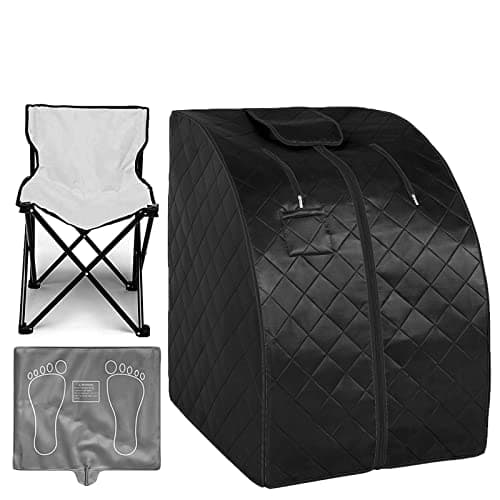
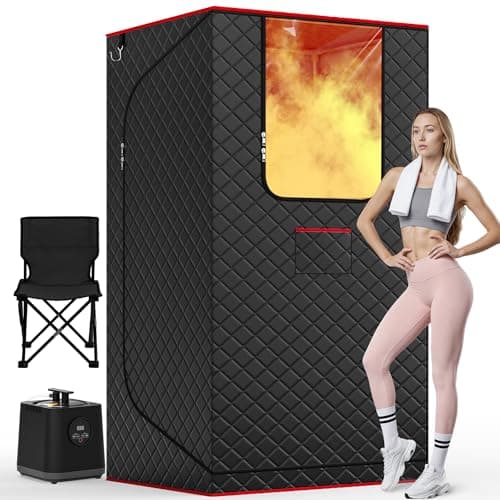
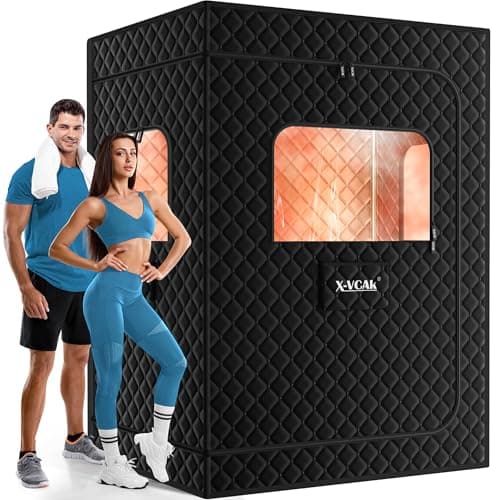
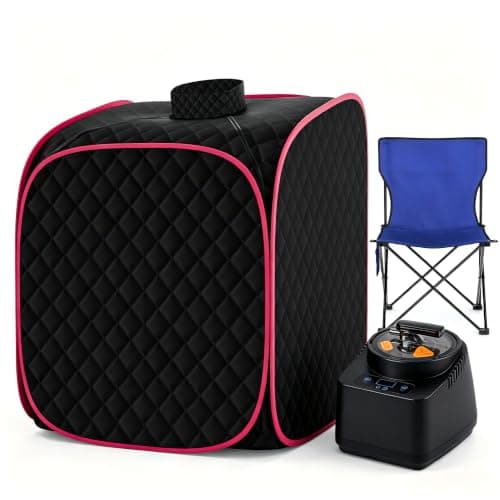
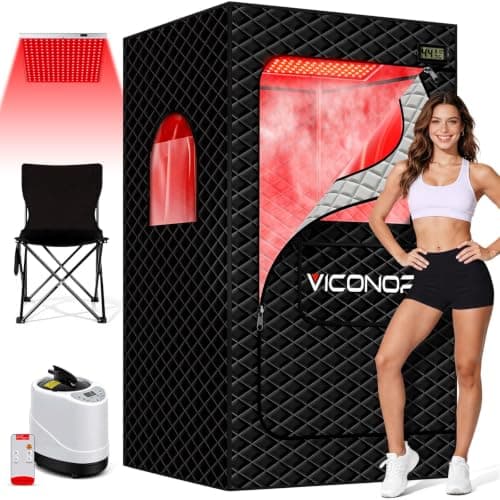
A portable sauna is the cheapest, smallest way to sweat at home — a fabric tent or box you sit inside with your head out the top, heated either by an infrared panel or a small steam generator. No plumbing, no dedicated room, no five-figure install. They all do the same basic thing — heat you until you sweat — and they split on two questions: infrared or steam, and how much you want to spend to remove friction. The specs that matter are the heat type, the interior size, the power draw (which is your running cost), and, for infrared, the EMF the cautious care about.
The winner, the Viconor box, is an infrared unit with added red-light panels and a rigid frame — the most complete portable sauna here. Below it sit a classic infrared tent, two steam saunas (including a roomy two-person option) and a genuine budget pick. One honest note up front: a personal tent sauna with your head outside is not the same as a traditional Finnish sauna, and the well-known heart-health research is on hot-air saunas, not tents — we get into that in the sauna benefits guide. For a heat option you lie down in, the sauna blankets are the other route, and for the cold half, see the best cold plunge tubs.
One timing question comes up more than any other once a unit is in the house, so it has its own page: sauna before or after a workout. The short version is after — and the reasons are worth knowing before you build a routine around it.
Infrared vs steam: the core choice
Portable saunas come in two heat types, and they feel genuinely different. Infrared panels emit radiant heat that warms your body directly rather than the air around you — so you can breathe relatively cool air while your skin heats and you sweat, which many people find more comfortable and easier on the lungs. It is dry: no vapor, nothing to wipe down. Steamsaunas use a small water boiler to fill the tent with hot, humid vapor — the enveloping, sweaty heat most people picture, but with moisture to dry out afterward and a steamer to refill. Neither is "better"; pick the sensation you will actually want to sit in. If you are unsure, infrared is the more tolerable introduction for most.
Running cost: the number nobody publishes
A portable sauna draws real electricity, and that is your running cost. To estimate it, find the unit's power draw in watts (portable saunas commonly run in the roughly 800–1,500 W range), divide by 1,000 for kilowatts, multiply by the fraction of an hour you run it, and multiply by yourelectricity rate. A 1,000 W sauna run for 30 minutes uses about 0.5 kWh — at the U.S. residential average of a shade under 19 cents per kWh, roughly a dime a session. We will not hand you a made-up monthly total, because it depends on your unit's wattage, your session length and your rate — but the arithmetic is simple, and the honest headline is that a portable sauna costs cents to run, not dollars.
Size, EMF and the head-out reality
Check the interior dimensions against your height and how you like to sit — taller users are more comfortable in the roomier tents or the two-person option. For infrared units, the cautious can look for a low-EMF claim, the same spec that matters on sauna blankets. And set expectations honestly: a portable sauna is a head-out device. Your body heats and sweats, but your head stays in room air — so it is not the whole-body, breathe-the-heat experience of a walk-in sauna, and it does not reach the temperatures a traditional sauna does.
What a portable sauna is (and isn't)
A portable sauna is a genuine way to get a hot, sweaty, relaxing session at home for very little money and space — and the relaxation and post-workout warmth are real benefits, covered in sauna benefits. What it is not is a medical device or a substitute for a traditional Finnish sauna: the well-known research linking sauna use to heart health was done on hot-air saunas at higher temperatures with the whole body (and head) in the heat, and it does not automatically transfer to a head-out tent. Enjoy it for what it is. And if you want the full contrast-therapy loop, pair heat with cold — our sauna vs cold plunge guide covers how.
Both of those decisions have their own pages now. The heat-type question is worked through in full, with a side-by-side table, at infrared vs steam sauna; and if you are still weighing whether to buy a tent at all, are portable saunas worth it runs the gym-membership arithmetic and names the four buyers who should skip one.