Skip to content
Rep & Recovery

Thermal · Cold & Heat

Sauna before or after a workout?

After. Heat before a hard session raises your core temperature, starts you down on fluid and lowers what you can produce. Heat afterwards is where the comfort is, and it is the half of the hot-and-cold pair with no evidence against it.

By Stephen V.Updated How we review
#ad

We earn a commission when you buy through our Amazon links, at no extra cost to you. It never changes a verdict, and we say so when the cheaper product is the better buy. How this works.

After the workout— for strength training, running, cycling, anything hard. Sitting in heat beforehand raises your core temperature and starts you with a fluid deficit, which makes the session feel harder and lowers what you can actually produce. The exception is narrow and worth knowing: a short, mild sit before mobility or flexibility work is defensible, because warm tissue stretches more easily. It is not a warm-up, and it will not help your squat.

There is a second reason the order matters, and it is the one most people have backwards. Of the two popular post-workout extremes, it is cold that has evidence against it after lifting, not heat. A 2015 study in The Journal of Physiology had 21 trained men strength train for 12 weeks with either cold water immersion or active recovery after every session; strength and muscle gains were larger in the active-recovery group. Nothing comparable exists against post-exercise heat. If you are going to do one of the two after a hard lift, heat is the safer choice.

Below: what heat before a session actually costs you, what heat after it does and does not do, the one case for going first, how long to stay in, and then three home units ranked on how little they ask of you when you are already tired. If you are choosing between heat and cold in general, that is sauna vs cold plunge.

What heat before training costs you

Three things, all of them measurable in how the session feels. Your core temperature starts higher, so you reach the point where heat limits performance sooner. You begin already down on fluid, because a sauna session is a sweat session, and even mild dehydration raises perceived exertion and heart rate at a given workload. And heat is itself a cardiovascular load — the reason a sauna feels like mild exercise is that your heart rate rises and peripheral blood vessels dilate to shed heat, which is exactly the capacity you were about to spend on training.

None of that makes a pre-workout sauna dangerous for a healthy person. It makes it expensive. You pay in output, in a session that feels harder than it should, and in the slightly higher chance of feeling lightheaded during your first hard set.

The one real case for going first

Mobility and flexibility work. Warm connective tissue is more compliant, and a short mild heat exposure before stretching, yoga or a rehabilitation routine is a reasonable passive warm-up — the same logic as a hot shower before stretching, and a good deal more pleasant. Keep it short, keep it mild, and drink water on the way out.

What it is not is a substitute for a warm-up. A warm-up is movement: it raises tissue temperature, yes, but it also wakes up the nervous system, rehearses the pattern you are about to load, and primes the joints through the range you will use. Heat does the first part and none of the others. Walking into a heavy set warm but unrehearsed is not safer than walking in cold.

What heat after a workout actually does

Honestly: it feels good, people report recovering better, and the more dramatic claims are not supported. Blood vessels dilate, muscles relax, and most people find the session finishes the workout psychologically — which is a real benefit and the main reason to own one. Harvard's and Mayo's reviews of sauna use describe the well-documented pattern: heart rate rises as in moderate exercise, blood vessels widen, and regular users report better sleep and lower stress.

What we will not tell you is that it repairs muscle faster, flushes lactic acid or detoxes anything. Lactate clears within an hour on its own. Sweat is not a detox pathway; that is what your liver and kidneys are for. And the famous cardiovascular findings came from long-term studies of traditional Finnish hot-air saunas at temperatures a head-out home unit does not reach — we go through that carefully in sauna benefits. Post-workout heat is a comfort and relaxation purchase with real secondary benefits, not a performance drug.

How long, and how hot

For a post-workout session, 15 to 20 minutes is plenty and 30 is an upper bound for an experienced user. Rehydrate first — a glass of water before you get in, more after — and leave if you feel dizzy, nauseous or stop sweating. Do not go in after alcohol, and treat a session straight after a maximal effort with more caution than one an hour later, because your cardiovascular system is still busy.

If you want the hot-then-cold sequence, do heat first and cold second only on days you are not trying to build muscle, and leave several hours between a hard lift and a cold plunge. The ordering logic for both is in sauna vs cold plunge, and the dosing detail for the cold half is in how long to cold plunge.

Three home units judged on post-workout use

The axis here is not peak heat. It is what the thing asks of you when you are already tired and sweaty: how fast it sets up, whether you can lie down in it, and what you have to dry afterwards. Prices are live and stamped with the date they were checked.

The short answer

Quick picks

#ProductBest forScorePrice
01
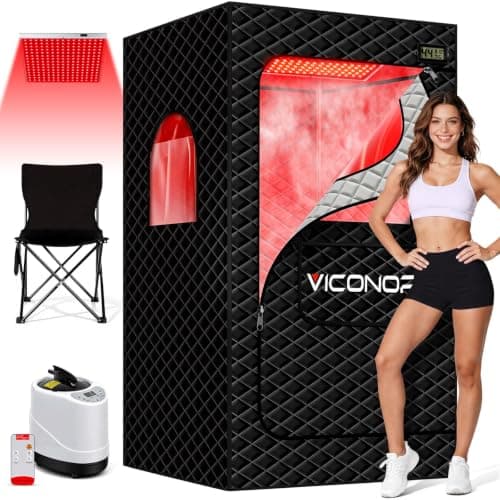
Viconor Viconor Portable Infrared Sauna Box
Viconor Portable Infrared Sauna Box

The best post-workout unit here, for one unglamorous reason: infrared heat is dry, so there is nothing to mop up or hang out to dry when you are done. A rigid-framed, head-out box with 660nm and 850nm red-light panels, which means the end of a session is you standing up and walking away.

Best for after training
8.0
$145.30Amazon
02
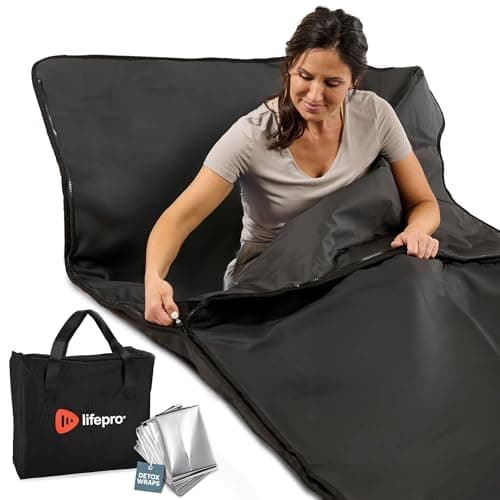
Lifepro Lifepro RejuvaWrap Sauna Blanket
Lifepro RejuvaWrap Sauna Blanket

The lowest-effort way to take heat after a session, which on a tired evening is the only specification that matters. You lie down, zip up and wait; afterwards it wipes out and folds into a cupboard. The trade is that you cannot sit up, read or move.

Lowest effort after leg day
8.8
$399.99Amazon
03
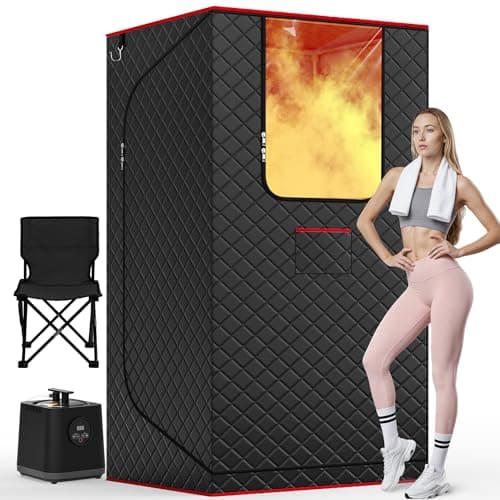
Manastin Manastin Portable Steam Sauna
Manastin Portable Steam Sauna

The pick if what you want after training is humid heat rather than dry radiant heat — the gym-steam-room sensation at home. A foldable XL tent with a separate water steamer and multiple heat levels. It is the best feeling here and the most work afterwards.

Best for humid heat
6.8
$99.99Amazon

#ad · Live prices from the Amazon Product API, as of October 18, 2026. Where we have no verified live price, we show none — a gap beats a number that has rotted.

In detail

The picks, in full

01
Viconor Viconor Portable Infrared Sauna Box

Best for after training

Viconor Portable Infrared Sauna Box

Infrared radiant heat (dry)660nm + 850nm red-light panelsRigid-framed boxHead-out design
8.0/10

The best post-workout unit here, for one unglamorous reason: infrared heat is dry, so there is nothing to mop up or hang out to dry when you are done. A rigid-framed, head-out box with 660nm and 850nm red-light panels, which means the end of a session is you standing up and walking away.

Setup when tired
8
Post-session comfort
9
Cleanup
10
Footprint
5
Value
8

Pros

  • Dry infrared heat means no condensation, no steamer to empty, nothing to dry
  • Rigid frame is steadier to get in and out of than a soft tent after a hard session
  • Head-out design keeps your airway in room air, which is more comfortable at the end of a workout
  • Red-light panels are a genuine extra, though we make no therapeutic claim for them

Cons

  • Takes more floor space than a folding tent and is less convenient to store
  • Infrared air temperature reads lower than a traditional sauna; the sensation is radiant, not ambient
  • Still an 800-1,500 W electric heater — it is not free to run

Don't buy this if…

…you want humid, lung-filling steam heat — that is the Manastin below, and it is a different experience.

Cleanup is the feature that decides whether a home sauna gets used twice a week or twice. A steam unit leaves water in a steamer, condensation on the walls and a tent to dry; an infrared box leaves nothing. After a workout, when the alternative is a shower and the sofa, that difference is the whole battle.

The head-out design matters here too. Finishing a hard session with your head in 140°F air is unpleasant for most people; keeping your airway in room temperature while your body takes the heat is the version people actually tolerate for twenty minutes. Full rankings, including the two-person option, are in best portable saunas, and the dry-versus-humid decision is in infrared vs steam sauna.

$145.30View on Amazon

$229.9937% off

Price as of October 18, 2026. Prices change — Amazon's at checkout is the one that counts.

#ad · we may earn a commission from this link to Viconor Portable Infrared Sauna Box

02
Lifepro Lifepro RejuvaWrap Sauna Blanket

Lowest effort after leg day

Lifepro RejuvaWrap Sauna Blanket

Infrared sauna blanketLie-down useFolds flat for storageWipe-clean interior
8.8/10

The lowest-effort way to take heat after a session, which on a tired evening is the only specification that matters. You lie down, zip up and wait; afterwards it wipes out and folds into a cupboard. The trade is that you cannot sit up, read or move.

Setup when tired
10
Post-session comfort
7
Cleanup
9
Footprint
10
Value
8

Pros

  • No assembly: unroll on the floor or a sofa and zip up
  • Lying down is genuinely the position you want after a hard lower-body session
  • Folds flat — the only unit here that stores in a cupboard
  • Wipe-clean interior, so the post-session job is thirty seconds

Cons

  • Fully enclosed and immobile: no reading, no phone, no getting up quickly
  • Heats you by contact and radiation rather than filling a space with heat
  • Not the choice for anyone who dislikes close enclosure

Don't buy this if…

…you are claustrophobic or want to sit upright — a tent or box is the format for you.

$399.99View on Amazon

Price as of October 18, 2026. Prices change — Amazon's at checkout is the one that counts.

#ad · we may earn a commission from this link to Lifepro RejuvaWrap Sauna Blanket

03
Manastin Manastin Portable Steam Sauna

Best for humid heat

Manastin Portable Steam Sauna

Steam heat (wet, humid)Separate water steamerMultiple heat levelsFoldable XL tent
6.8/10

The pick if what you want after training is humid heat rather than dry radiant heat — the gym-steam-room sensation at home. A foldable XL tent with a separate water steamer and multiple heat levels. It is the best feeling here and the most work afterwards.

Setup when tired
6
Post-session comfort
8
Cleanup
4
Footprint
8
Value
8

Pros

  • Humid heat feels warmer at the same reading and is kinder to a dry throat after hard breathing
  • Multiple heat levels, so a post-workout session can be mild
  • Folds down for storage, unlike a rigid box
  • The closest home approximation of a gym steam room

Cons

  • Needs a ventilated room: you are releasing moisture into your house
  • Steamer to fill and empty, and a tent to dry, after every session
  • Humid heat is harder on the lungs for some people than dry heat

Don't buy this if…

…you will not do the drying — a wet tent folded away is how a sauna develops a smell.

$99.99View on Amazon

$109.999% off

Price as of October 18, 2026. Prices change — Amazon's at checkout is the one that counts.

#ad · we may earn a commission from this link to Manastin Portable Steam Sauna

Timing, by what you are training for

GoalWhenWhy
Strength or hypertrophyAfter, or on a rest dayHeat first lowers output; nothing suggests heat after blunts adaptation the way cold can
Running or cycling intervalsAfterStarting with a fluid deficit and a raised core temperature makes the hard part harder
Mobility, stretching, yogaShort and mild, beforeWarm tissue is more compliant — this is the one genuine pre-session case
Relaxation and sleepEvening, after or standaloneThe best-reported benefit of regular sauna use, and it does not need a workout attached
Heat acclimation for a hot raceAfter, deliberately and progressivelyAdaptation comes from repeated heat exposure, which is easiest to tolerate post-session

Rehydrate on a plan, not on thirst

You finished a workout down on fluid, and then you chose to sweat more. Drink a glass of water before you get in and keep drinking afterwards; if the session was long or you are a heavy sweater, something with sodium in it does more than plain water. Thirst lags behind actual fluid loss, which is why "I was not thirsty" is how people end up with a headache two hours later.

Who should skip the sauna after a workout

Anyone pregnant, anyone with uncontrolled high or low blood pressure, unstable heart disease, a recent heart attack or a condition that affects sweating or blood-pressure regulation should ask a doctor before using any sauna, and that advice does not change because you have just exercised — if anything exercise makes the question more relevant. Skip it entirely if you have been drinking alcohol, if you feel dizzy or nauseous, or if you have stopped sweating. And do not use heat on a fresh acute injury that is still swelling; that is the one place cold is clearly the right tool.

What about hot and cold together?

Contrast exposure is pleasant and popular, and the research on it is thinner than the enthusiasm suggests. Two practical rules. If you lift for size or strength, keep cold immersion away from the hours right after the session — that is the finding with the strongest support behind it. And if you are doing both in one sitting, most people prefer heat then cold, finishing cold. The detail is in cold plunge before or after a workout and sauna vs cold plunge.
How we picked

We did not lab-test this gear

Everyone in this category says they tested twenty products. We have not lab-tested any of these, and we say so. What we did instead: compiled the published specifications, pulled the numbers from the manufacturer manuals, ran the cost-to-run and cost-per-unit math where there was math to run, and scored each product against a published rubric. The scores are judgments from documented research — not measurements we took, because we do not have a lab and we will not pretend we do. Where a number came from someone else's work, we name them in Sources.

Questions

Frequently asked

Is it better to sauna before or after a workout?
After, for essentially all hard training. Heat beforehand raises your core temperature and starts you with a fluid deficit, both of which reduce what you can produce and make the session feel harder. The single exception is a short, mild sit before mobility or flexibility work, where warm tissue is genuinely an advantage.
Does a sauna after a workout help muscle growth?
There is no good evidence that it accelerates muscle growth. What it does is feel good, help people relax and sleep, and — unlike cold immersion — carry no evidence that it works against strength adaptation. A 12-week trial in The Journal of Physiology found cold water immersion after lifting produced smaller strength and size gains than active recovery; nothing comparable exists for heat. Our sauna benefits page separates the supported claims from the marketed ones.
How long should you sit in a sauna after a workout?
Fifteen to twenty minutes is plenty, with 30 as an upper bound for someone used to it. Drink water before and after, and leave early if you feel dizzy, nauseous or stop sweating. Longer is not better; the adaptation comes from doing it regularly, not from enduring a single long session.
Does a sauna before a workout help you warm up?
It warms your tissue but it does not warm you up. A warm-up also wakes up the nervous system, rehearses the movement and takes joints through the range you are about to load, and heat does none of that. Treat a pre-session sauna as a nice start to a stretching routine, not as a substitute for five minutes of movement.
Does sweating in a sauna burn fat or flush toxins?
No. The weight lost in a sauna is water and it comes back with your next drink. Sweat is not a detoxification pathway — your liver and kidneys do that work. Heart rate does rise as it would in moderate exercise, which is where the "passive cardio" framing comes from, but it is not a fat-loss tool. More on this in are portable saunas worth it.
Can you use a sauna blanket right after exercise?
Yes, and it is the easiest option on a tired evening, because there is no assembly — you lie down and zip up. The same rules apply: rehydrate first, keep it to 15 to 20 minutes, and get out if you feel unwell. Blanket-specific safety, including the enclosure and overheating questions, is covered on our sauna blanket safety page.

Keep reading

Receipts

Sources

We do not run a testing lab, and we do not pretend to. Where a measured number came from someone else's work, we name them and link them. Where we could not verify something, we say so on the page rather than quietly leaving it out. Read our full method.