Skip to content
Rep & Recovery

Compression · Compression Boots

Compression boots vs compression socks

One pulses and sequences for 30 minutes; the other is passive and worn all day for the price of lunch. The right answer depends entirely on what you need — and it is not always the expensive one.

By Stephen V.Updated How we review
#ad

We earn a commission when you buy through our Amazon links, at no extra cost to you. It never changes a verdict, and we say so when the cheaper product is the better buy. How this works.

Buy compression boots if you want active recovery after hard training — a pump that pulses and sequences up the leg to flush a fatigued limb in a focused 20-30 minute session. Buy compression socks if you want passive support you can wear all day, for standing work, long flights, travel and general leg fatigue, at roughly one-tenth the cost. They are not really competitors; they solve different problems, and plenty of people are best served by the $20 option.

The uncomfortable truth for anyone about to spend $300: for a lot of use cases, socks win. If your goal is to keep blood moving through a workday or a red-eye flight, a pump you can only use sitting still for half an hour is the wrong tool, and a graduated sock does the job for the price of a sandwich. The boots earn their premium only when you specifically want the active, pulsing flush after training. Here is exactly how to tell which camp you are in — and if you land on boots, our best compression boots roundup and budget shortlist take it from there.

When $20 socks beat $300 boots

  • You are on your feet all day or fly often — socks give continuous, wear-anywhere support; boots require you to sit still and plug in (or charge up).
  • Your main issue is swelling or heavy legs, not post-workout soreness — graduated compression worn for hours does this well and cheaply.
  • You want simple and portable — no pump, no charging, no timer. Pull them on and forget them.

When boots are worth the money

  • You train hard and often and want the focused, active flush that only a sequential pump delivers.
  • You value the “fresh legs” feeling after a session — the most reliable benefit of pneumatic compression, and one socks do not replicate.
  • You will actually use them — the 30-minute ritual fits your routine rather than becoming a closet ornament.

Head to head

FactorCompression boots (Cincom)Compression socks (Physix Gear)
How it worksActive — pump pulses chambers in sequencePassive — graduated fabric, tighter at the ankle
PressureAdjustable, firm (multi-level)Fixed 20-30 mmHg (medical class 1)
When you use itSeated, 20-30 min sessionsWorn for hours, any activity
PortabilityBulky, needs powerPocket-sized, no power
Best forPost-training active recoveryAll-day support, travel, swelling, work
CostMuch higher — check the live priceA fraction of a boot — check the live price

A sensible reality for many athletes is both: socks for the workday, travel and general fatigue; boots for the focused flush after the hardest sessions. If you can only buy one, start with socks — they are cheap, universally useful, and if they turn out to be enough, you just saved yourself a few hundred dollars. Still unsure whether pneumatic compression is worth it at all? The evidence review in do compression boots work? is the honest place to decide.

The short answer

Quick picks

#ProductBest forScorePrice
01
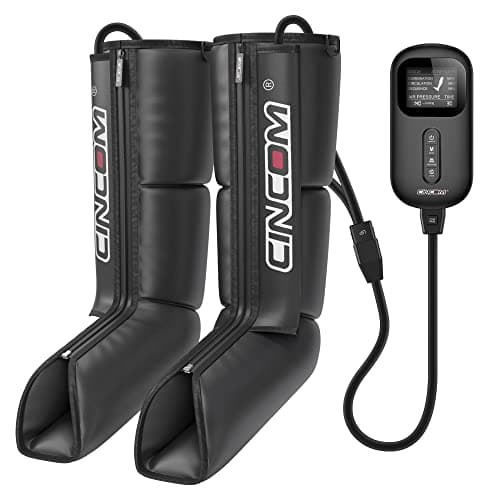
Cincom Cincom Air Compression Boots
Cincom Air Compression Boots

The affordable way to get the active, pulsing recovery that socks cannot do. Three sequential chambers over the foot and calf, three modes and zip-on sleeves — a focused post-training flush in 20-30 minutes. Just don't expect all-day wear.

Active recovery
7.0
$169.99Amazon
02
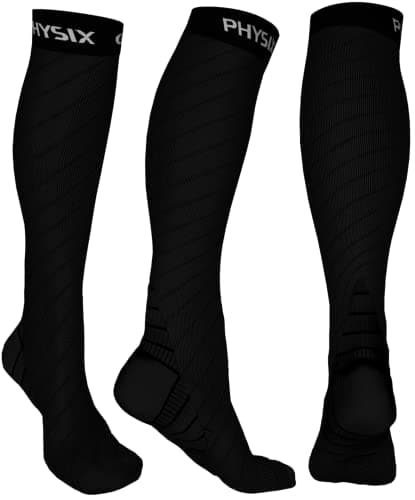
Physix Gear Physix Gear Compression Socks
Physix Gear Compression Socks

The cheap, wear-anywhere option that beats a boot for most everyday needs. Graduated 20-30 mmHg compression, tighter at the ankle to move blood upward, worn for hours with no power. For standing, travel and swelling, this is the smarter buy.

All-day support
8.0
$25.55Amazon

#ad · Live prices from the Amazon Product API, as of Jul 20, 2026. Where we have no verified live price, we show none — a gap beats a number that has rotted.

In detail

The picks, in full

01
Cincom Cincom Air Compression Boots

Active recovery

Cincom Air Compression Boots

Foot + calf (3 zones)3 modes, 3 intensitiesZip-on sleevesCorded
7.0/10

The affordable way to get the active, pulsing recovery that socks cannot do. Three sequential chambers over the foot and calf, three modes and zip-on sleeves — a focused post-training flush in 20-30 minutes. Just don't expect all-day wear.

Pressure
7
Coverage
6
Comfort
8
Portability
6
Value
8

Pros

  • Active, sequential pulse — the flush a static sock cannot reproduce
  • Adjustable, firmer pressure than a fixed sock
  • Easy zip-on sleeves and simple controls; FSA/HSA eligible

Cons

  • Only usable seated, for 20-30 minutes at a time
  • Foot and calf only, corded, and far pricier than socks

Don't buy this if…

you mainly want all-day support for work or travel — a pump you use sitting still is the wrong tool for that.

$169.99View on Amazon

$199.9915% off

Price as of Jul 20, 2026. Prices change — Amazon's at checkout is the one that counts.

#ad · we may earn a commission from this link to Cincom Air Compression Boots

02
Physix Gear Physix Gear Compression Socks

All-day support

Physix Gear Compression Socks

20-30 mmHgGraduated (class 1)Nylon/spandexNo power needed
8.0/10

The cheap, wear-anywhere option that beats a boot for most everyday needs. Graduated 20-30 mmHg compression, tighter at the ankle to move blood upward, worn for hours with no power. For standing, travel and swelling, this is the smarter buy.

Pressure
5
Coverage
7
Comfort
8
Portability
10
Value
10

Pros

  • Graduated compression aids venous return and reduces swelling
  • Worn all day, during any activity, with zero setup
  • Pocketable, washable, and a fraction of a boot's price
  • Genuinely useful for standing work, flights and travel

Cons

  • Passive — no active pulse or sequenced flush
  • Fixed pressure; needs correct sizing to work and stay comfortable

Don't buy this if…

you want the active, pulsing recovery of a pump after hard training — passive socks cannot flush a limb the way a device does.

$25.55View on Amazon

Price as of Jul 20, 2026. Prices change — Amazon's at checkout is the one that counts.

#ad · we may earn a commission from this link to Physix Gear Compression Socks

How we picked

We did not lab-test this gear

Everyone in this category says they tested twenty products. We have not lab-tested any of these, and we say so. What we did instead: compiled the published specifications, pulled the numbers from the manufacturer manuals, ran the cost-to-run and cost-per-unit math where there was math to run, and scored each product against a published rubric. The scores are judgments from documented research — not measurements we took, because we do not have a lab and we will not pretend we do. Where a number came from someone else's work, we name them in Sources.
Questions

Frequently asked

Are compression boots better than compression socks?
Not universally — they solve different problems. Boots give an active, pulsing flush after hard training; socks give passive, all-day support for work, travel and swelling at a fraction of the cost. For everyday leg fatigue, socks often win; for focused post-workout recovery, boots do more.
Do compression socks do the same thing as boots?
Partly. Both use graduated pressure to help blood move up the leg. But socks are static and worn for hours, while boots actively inflate and sequence to milk the limb during a focused session. Some research shows compression garments reduce soreness about as consistently as pumps, which is why socks are underrated.
Can I just use compression socks instead of buying boots?
For many people, yes — especially if your goal is all-day support, travel or reducing swelling rather than post-training recovery. Start with socks; if they are enough, you have saved a lot of money. If you specifically miss the active flush, then look at the budget boots.
What mmHg are compression socks compared to boots?
Athletic compression socks are typically 20-30 mmHg (medical class 1) and fixed. Compression boots are adjustable and usually firmer, commonly used around 70-90 mmHg for recovery. The sock number is lower because it is worn continuously for hours, not in a short session.

Keep reading

Receipts

Sources

We do not run a testing lab, and we do not pretend to. Where a measured number came from someone else's work, we name them and link them. Where we could not verify something, we say so on the page rather than quietly leaving it out. Read our full method.