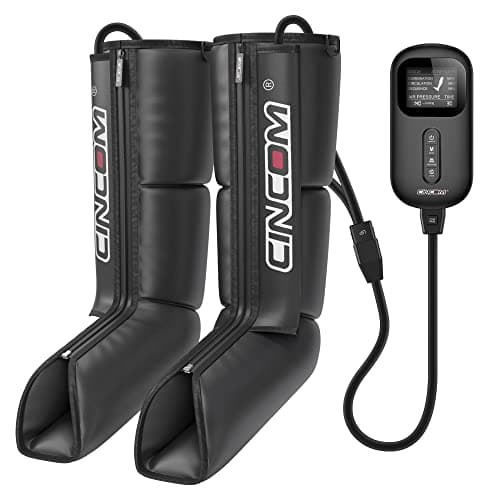
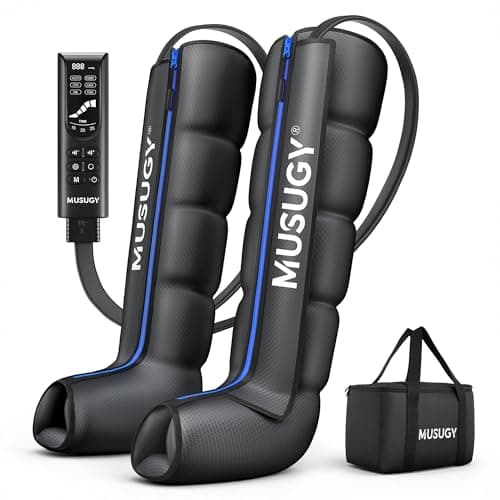
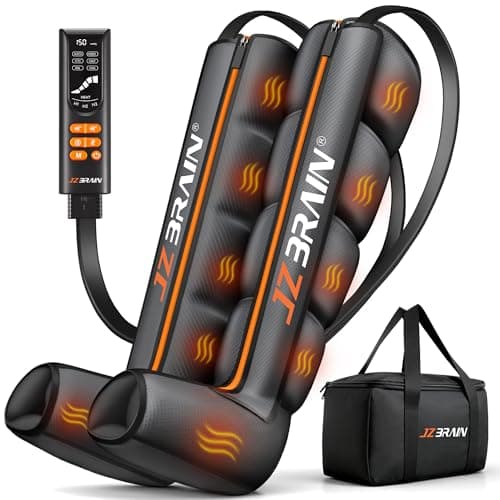
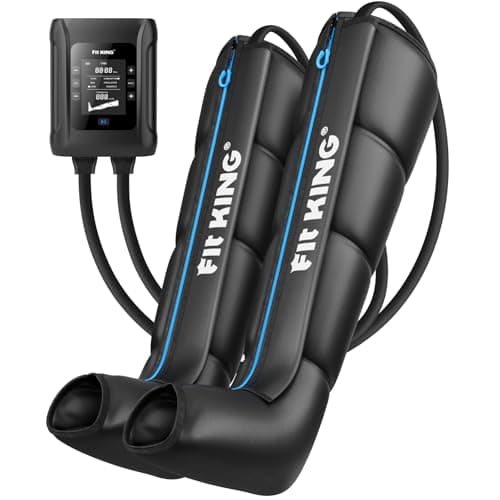
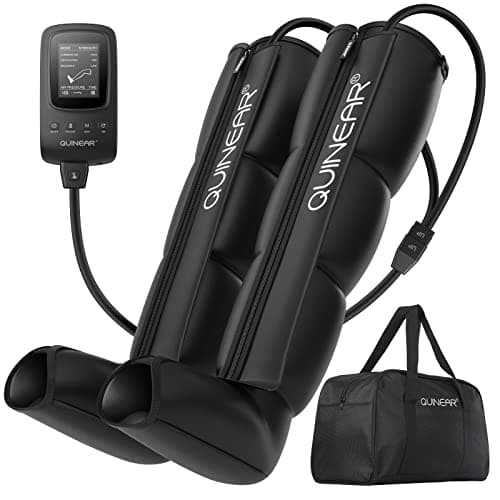
Most compression boot reviews are written for athletes. This one is not. If you are here because your legs feel heavy and tired at the end of a day on your feet, or swell after eight hours at a desk or a long flight, you want a different set of qualities: pressure that goes genuinely low, sleeves you can get into without a fight, controls with large obvious buttons, and comfort while sitting in an ordinary armchair.
One important framing note before the picks. These are consumer wellness devices. Sequential pneumatic compression is a real, well-described mechanism — Cleveland Clinic describes intermittent pneumatic compression as helping move blood and fluid up out of the limb — and in a clinical setting it is used under supervision for specific conditions. A home recovery system is not that. It can make tired legs feel better; it does not treat venous disease, lymphoedema, clots or heart failure, and it should not be used as though it does. If you have a diagnosed circulatory condition, ask your clinician before buying anything on this page.
With that said, for the ordinary end-of-day heaviness that a lot of people live with, a 25-minute session with your legs squeezed rhythmically from foot to thigh is genuinely pleasant and costs nothing to repeat. Ranked below on the qualities that matter for that use — not on how well they serve a marathon runner. For the athletic version of this list, see best compression boots.
What these actually do — and what they do not
A sequential compression system inflates chambers in order from the foot upward, squeezing the limb toward the body and then releasing. Cleveland Clinic describes intermittent pneumatic compression working exactly this way: the compression helps blood and fluid move up out of the leg, and the release lets it refill. That mechanism is real and it is why twenty minutes leaves legs feeling lighter.
What a consumer system is not is a treatment. It does not cure varicose veins, treat chronic venous insufficiency or lymphoedema, prevent or treat blood clots, or substitute for prescribed medical compression. Clinical IPC is prescribed, fitted and supervised. If you have a diagnosed condition, the device you need — and the pressures and durations you need — is a conversation with your clinician, not a purchase decision.
The three specs that matter for this use
- How low the low end goes. Systems with eight to eleven intensity steps let you find a genuinely gentle setting. Three-step systems often jump from imperceptible to uncomfortable, and the result is a device you stop using.
- How they go on. Zip-on sleeves are far easier than wrap-and-velcro if bending, reach or grip strength is limited. This is the spec nobody lists and everybody notices.
- Coverage that matches the complaint. Ankle and foot swelling — a three-zone foot-and-calf system is enough. Whole-leg heaviness — you want four or five zones to the thigh.
How to use them for tired legs
Twenty to thirty minutes, once a day, in the evening, at the lowest pressure that still feels like something is happening. Elevate slightly if you can — a footstool or a couple of cushions under the calves adds gravity to the same mechanism for free. Stop immediately if you feel numbness, tingling, sharp pain, or if your foot changes color. Full protocol in how to use compression boots.
The cheaper thing to try first
If you have not already, try 20-30 mmHg graduated compression socks. They cost a tiny fraction of any system here, they work all day rather than for twenty-five minutes, and for standing-all-day and flight-related heaviness they are the first-line answer that most clinicians reach for. Boots are the nicer experience; socks are the more practical one, and a great many people are best served by owning socks and skipping boots entirely.
When not to use compression boots at all
Do not use them if you have or suspect a deep vein thrombosis, if you have an active infection, an open wound or ulcer on the leg, severe peripheral artery disease, decompensated heart failure, or new one-sided swelling of unknown cause — new swelling in one leg deserves same-day medical attention rather than a compression session. Reduced sensation (from diabetes-related neuropathy, for example) is a reason to be cautious generally and to avoid heated models specifically. When in doubt, ask before you buy.