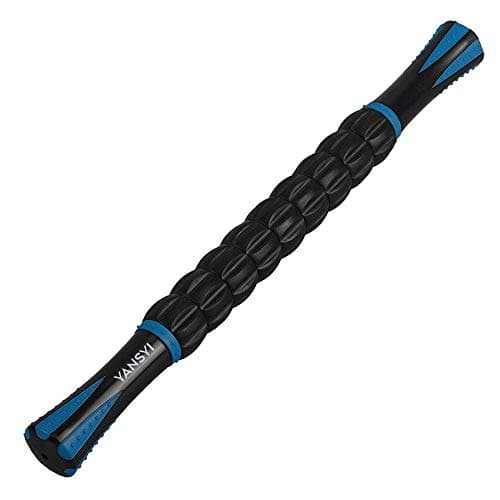
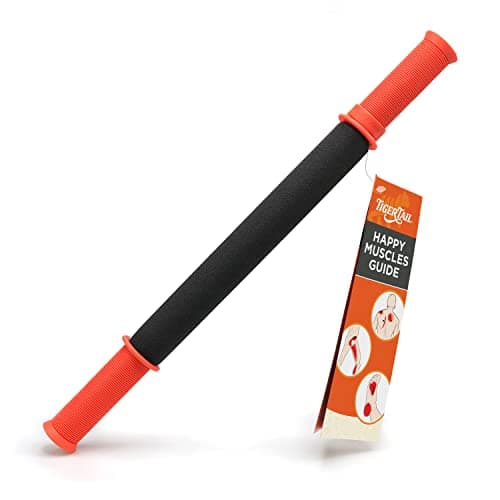
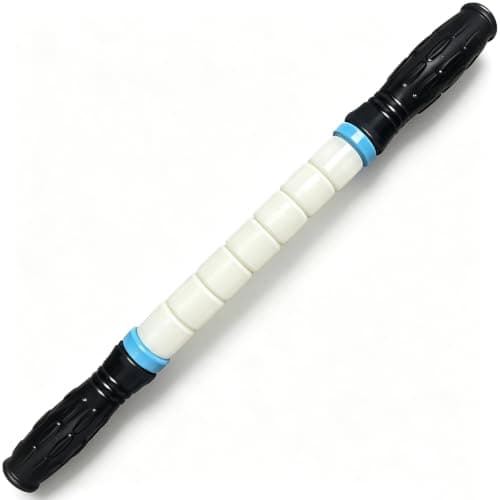
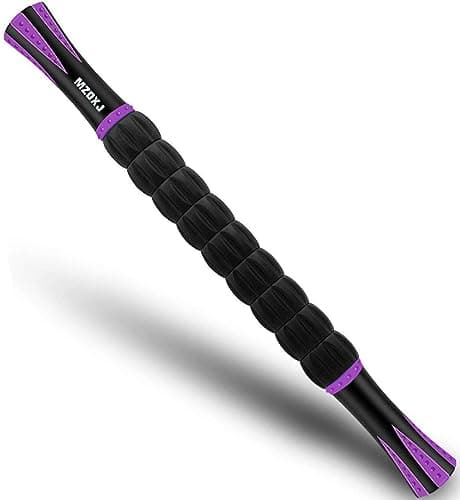
A massage stick — a handheld bar with rolling segments — is the targeted, portable cousin of the foam roller. Instead of lying on the floor and using your body weight, you hold the stick in two hands and roll it along a muscle, controlling the pressure with your arms. That makes it brilliant for calves, quads, hamstrings and forearms, for use on a bench or in a chair, and for throwing in a gym bag or suitcase. The specs that matter are few: firmness (rigid digs deeper, flexible is gentler), the roller design (smooth spindles spread pressure, spiky ones concentrate it), and grip and length.
This is a category where spending more buys you very little. A ten-dollar stick does nearly everything a premium one does, so the winner is a value pick and the premium option has to justify itself on durability and brand alone. Below are four honest picks across that spread. If you want the on-the-floor, whole-back version of the same idea, the foam rollers roundup is the place to start, and for pinpoint spots a stick rides over, see the massage balls.
Massage stick vs foam roller: which do you need?
They overlap, but they are not the same tool. A foam roller uses your body weight, covers large areas like the whole back, and frees your hands — but it is bulky and gives you less fine control. A massage stick is handheld, so you control the pressure precisely with your arms, it reaches muscles like the calves and quads while you sit on a bench, and it packs into a bag — but you cannot easily do your own back with it, and working the legs is a small arm workout in itself. Most people who roll a lot own both: the roller for home and big muscles, the stick for travel and targeted leg work. Our foam roller roundup covers the other half.
Firmness and roller design
The two things that change how a stick feels are its firmness and its roller surface. A rigid bar lets you put real, deep pressure through a muscle; a flexible, bendy stick wraps a curved muscle and feels gentler. Smooth spinning segments spread the pressure and glide; textured or spiky segments concentrate it into ridges, which some people love on a stubborn knot and others find harsh. There is no single best — match it to how much pressure you like. Beginners generally do better starting smoother and firmer-but-not-spiky.
How to use a massage stick
The technique mirrors foam rolling: roll slowly, about an inch per second, along the length of the muscle; pause on tender spotswith steady pressure for 20–30 seconds; and keep the pressure to a "good hurt" you can breathe through, not a wince. Great targets are the calves, quads, hamstrings, IT-band-adjacent quad and forearms. Avoid rolling directly on bone, joints or the spine — the same rules as any self-massage tool.
Why cheap wins here
More than almost any recovery product, a massage stick is a commodity. The function is a rigid bar and some rolling segments; a $10 stick and a $40 one apply the same physics. The premium option earns its price on durability and a trusted name, not on doing more. So unless you specifically want a warranty-backed pro tool, buy the value pick, keep a spare in your suitcase, and put the savings toward a proper foam roller or a massage ball.
How we picked
Everyone in this category says they tested twenty products. We have not lab-tested any of these, and we say so. What we did instead: compiled the published specifications, pulled the numbers from the manufacturer manuals, ran the cost-to-run and cost-per-unit math where there was math to run, and scored each product against a published rubric. The scores are judgments from documented research — not measurements we took, because we do not have a lab and we will not pretend we do. Where a number came from someone else's work, we name them in Sources.