The best massage guns — ranked on the specs that matter
Six percussion massagers that actually earn their place, ranked on amplitude, stall force, noise and value. Most people need far less gun than the marketing suggests.
We earn a commission when you buy through our Amazon links, at no extra cost to you. It never changes a verdict, and we say so when the cheaper product is the better buy. How this works.
The best massage gun for most people is not the most expensive one. The specs that actually decide how a percussion massager feels — amplitude (how far the head travels), stall force (how hard you can push before the motor bogs down), and noise — plateau fast, and a well-built sub-$100 gun matches a flagship on the numbers that matter. We ranked these six on published manufacturer specs, aggregated owner feedback, and value, and led with the one that does the most per dollar.
We have not lab-tested these units — we compile the published figures, cross-check them against owner reports, and do the math, which is exactly how our how we review page describes it. Before you buy anything, it is worth reading whether percussion therapy is even the right tool for you in are massage guns worth it?, and how to use one without hurting yourself in how to use a massage gun. If you want the smallest possible option, jump to our best mini & travel guns; if budget is the whole story, the best budget guns narrows it further. And if you are still deciding between a gun and a roller, we settle that in foam roller vs massage gun.
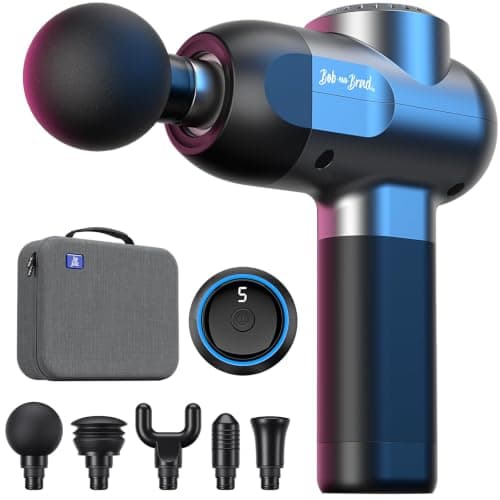
The one most people should buy. It is quiet at usable speeds, light enough to hold overhead, FSA/HSA eligible so pre-tax dollars can cover it, and it does everything a mid-range gun does for a fraction of a flagship's price. The value bar the rest of this list is measured against.
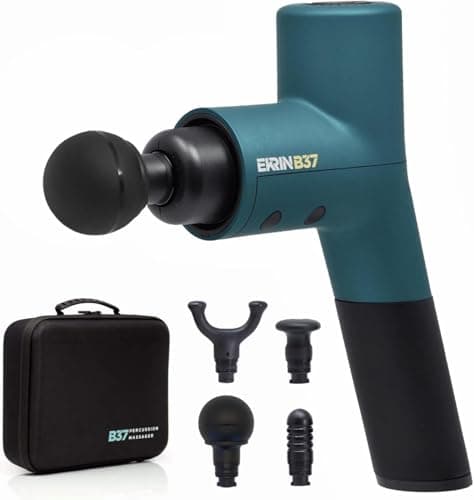
The enthusiast pick, and the one to buy if you want real deep-tissue force without the flagship logo tax. 12 mm amplitude, a rated 56 lb of stall force, a genuinely quiet motor and up to 8 hours of battery — all backed by a lifetime warranty most rivals do not offer.
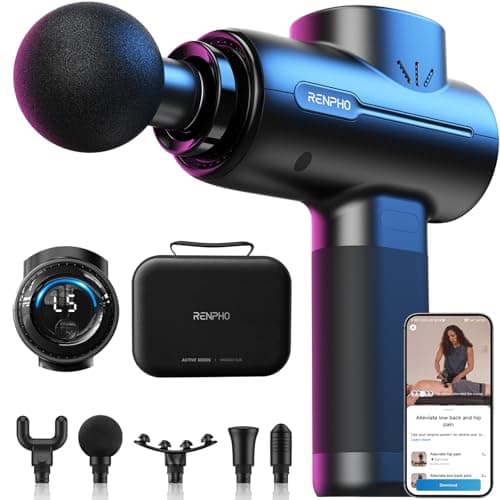
A lot of gun for the money. Renpho publishes a 50 lb stall force and a 45 dB ceiling at a budget-brand price, and at 1.5 lb it is as light as the C2. The compromise is stroke: 10 mm of amplitude is a step below the 12 mm guns above it.
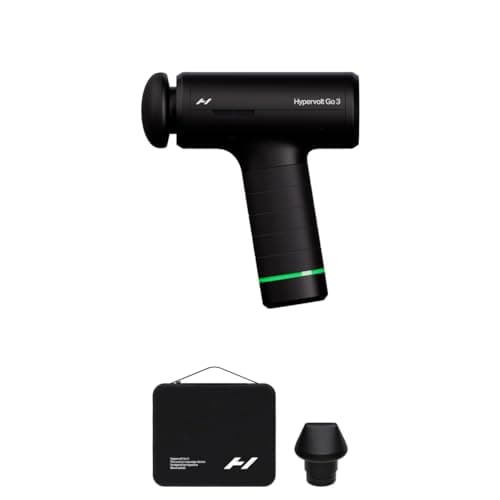
The smooth, quiet, travel-friendly Hyperice. QuietGlide keeps it near 55 dB, it weighs just 1.6 lb, the battery lasts about 4 hours and it is TSA-friendly for carry-on. You are paying the brand premium for polish and app connectivity rather than raw force.
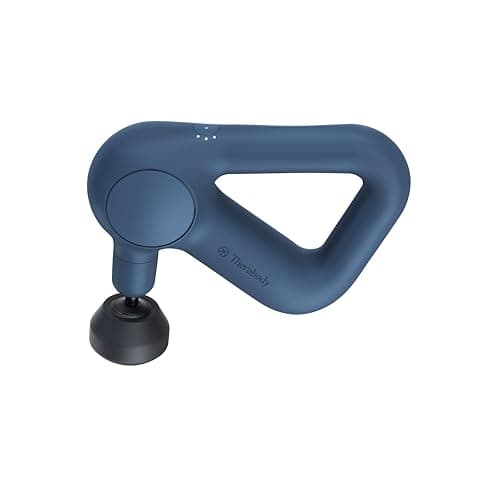
The gentle, big-brand entry point. Therabody's triangle handle, a quiet motor and a light 1.4 lb body make it easy and comfortable for everyday aches — but it is deliberately mild (3 speeds, a lighter stroke and lower force), so it is not the gun for hard deep-tissue work.
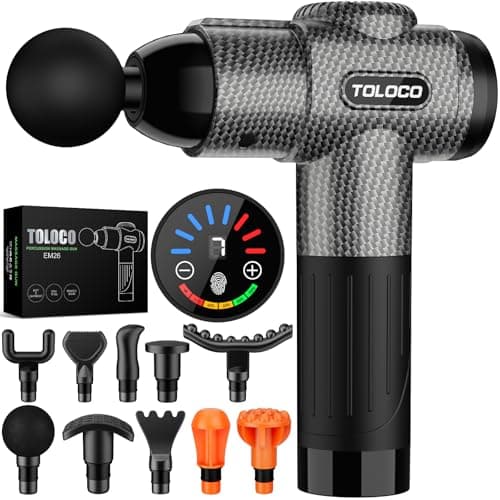
The cheapest gun on this list that genuinely works. Ten heads, an LCD touch screen and roughly 6 hours of battery for around the price of a couple of gym day-passes. Independent testers measure a shorter stroke than the box claims, so treat it as a capable everyday gun, not a deep-tissue tool.
#ad · Live prices from the Amazon Product API, as of October 19, 2026. Where we have no verified live price, we show none — a gap beats a number that has rotted.
In detail
The picks, in full
01
Best overall value
Bob and Brad C2 Massage Gun
5 speedsFSA/HSA eligible~1.5 lb5 heads
8.4/10
The one most people should buy. It is quiet at usable speeds, light enough to hold overhead, FSA/HSA eligible so pre-tax dollars can cover it, and it does everything a mid-range gun does for a fraction of a flagship's price. The value bar the rest of this list is measured against.
Power
7
Quiet
8
Ergonomics
9
Battery
8
Value
10
Pros
+Genuinely quiet at its lower speeds for everyday use
+Light at about 1.5 lb, so wrist fatigue and overhead reach are non-issues
+FSA/HSA eligible, which effectively discounts it with pre-tax dollars
+Five speeds and five heads cover every everyday recovery job
Cons
−Amplitude and stall force sit in the mid-range, not the deep-tissue elite class
−Independent testers measure less amplitude than the marketing implies
Don't buy this if…
…you are a large or very muscular user who wants a gun to punch deep into dense tissue — step up to the Ekrin B37v2 below for real stall force.
The C2 is the gun we point almost everyone to first because it gets the boring things right: it is quiet, it is light, and it is cheap enough that you will actually keep it on the desk and use it. The five-speed range and five interchangeable heads handle calves, quads, back and shoulders without drama, and the FSA/HSA eligibility means many buyers can cover it with pre-tax health dollars — a real discount the spec sheet does not show.
What you give up is top-end grunt. Amplitude and stall force are solid-mid-range rather than the deep-punching class of a bigger gun, and independent reviewers have measured a shorter stroke than the listing suggests. For the vast majority of recovery use that is irrelevant; for a 220-lb powerlifter chasing deep glute release, it is the reason the Ekrin exists.
The enthusiast pick, and the one to buy if you want real deep-tissue force without the flagship logo tax. 12 mm amplitude, a rated 56 lb of stall force, a genuinely quiet motor and up to 8 hours of battery — all backed by a lifetime warranty most rivals do not offer.
Power
9
Quiet
9
Ergonomics
8
Battery
9
Value
6
Pros
+12 mm amplitude and a rated 56 lb stall force — it pushes into big muscle without stalling
+Quiet for its power class (brand rates roughly 35–55 dB)
+Up to 8 hours of battery with USB-C fast charging — charge it rarely
+Lifetime warranty, which is unusual and genuinely valuable at this price
Cons
−Heavier at about 2.1 lb than the compact picks here
−Four attachments, one or two fewer than some cheaper guns bundle
Don't buy this if…
…you want the lightest, most packable option — at about 2.1 lb this is a bench gun, not a jacket-pocket one; see the mini roundup instead.
The B37v2 is what you buy when the C2's mid-range power is not enough and you still refuse to pay flagship money. The 12 mm amplitude and rated 56 lb stall force are the two numbers that matter for deep work, and Ekrin publishes both plainly. The angled handle is one of the more comfortable in the category, the battery genuinely lasts, and the lifetime warranty quietly makes it the lowest-risk gun on the list over a five-year horizon.
The trade-off is weight and price: it is the heaviest gun here at about 2.1 lb, and it costs more than the C2. If you are not chasing deep-tissue force, that is money and heft you do not need to spend.
10mm amplitude50 lb stall force45 dB or underFSA/HSA eligible
7.6/10
A lot of gun for the money. Renpho publishes a 50 lb stall force and a 45 dB ceiling at a budget-brand price, and at 1.5 lb it is as light as the C2. The compromise is stroke: 10 mm of amplitude is a step below the 12 mm guns above it.
Power
7
Quiet
8
Ergonomics
8
Battery
6
Value
9
Pros
+A published 50 lb stall force — you can lean on it without bogging the motor
+Rated at 45 dB or under, quiet enough to use with other people in the room
+Light at about 1.5 lb, so it does not tire your arm out on long sessions
+Bluetooth app with guided routines, and FSA/HSA eligible like the C2
Cons
−10 mm amplitude does not reach as deep as the 12 mm guns above it
−Battery life of about 3.5 hours trails the Ekrin
Don't buy this if…
…you want the deepest stroke your money can buy — the Ekrin's 12 mm amplitude reaches further into dense muscle for a modest step up in price.
The smooth, quiet, travel-friendly Hyperice. QuietGlide keeps it near 55 dB, it weighs just 1.6 lb, the battery lasts about 4 hours and it is TSA-friendly for carry-on. You are paying the brand premium for polish and app connectivity rather than raw force.
Power
6
Quiet
9
Ergonomics
8
Battery
8
Value
6
Pros
+Very smooth, quiet stroke — rated about 55 dB with QuietGlide tech
+Light and compact at 1.6 lb, TSA-friendly for carry-on
+About 4 hours of battery over five speeds via USB-C
+Bluetooth connectivity to the Hyperice app if you want guided routines
Cons
−A compact travel gun — less raw force than the full-size picks above
−Ships with only two attachments (flat and wedge)
Don't buy this if…
…you want maximum deep-tissue power at home — this is tuned for smooth, portable, everyday use, not heavy release work.
The gentle, big-brand entry point. Therabody's triangle handle, a quiet motor and a light 1.4 lb body make it easy and comfortable for everyday aches — but it is deliberately mild (3 speeds, a lighter stroke and lower force), so it is not the gun for hard deep-tissue work.
Power
6
Quiet
9
Ergonomics
8
Battery
6
Value
7
Pros
+Signature Theragun triangle handle reaches your own back and neck-adjacent muscles easily
+Quiet and light at about 1.4 lb — unintimidating for beginners
+Comfortable, gentle stroke for everyday stiffness rather than punishment
+The Therabody name, support and attachment ecosystem behind it
Cons
−Only three speeds and a gentle stroke — light on power for deep tissue
−Costs more than harder-hitting guns like the C2 or Renpho
Don't buy this if…
…you want serious deep-tissue force — the Relief is tuned for comfort and everyday use, so heavier users should look at the Ekrin or a full Theragun Prime instead.
The cheapest gun on this list that genuinely works. Ten heads, an LCD touch screen and roughly 6 hours of battery for around the price of a couple of gym day-passes. Independent testers measure a shorter stroke than the box claims, so treat it as a capable everyday gun, not a deep-tissue tool.
Power
6
Quiet
7
Ergonomics
6
Battery
7
Value
9
Pros
+Astonishing value — a working percussion gun for the price of a foam roller
+Ten attachments and an LCD touch screen, more than guns costing three times as much
+Long battery life, around 6 hours depending on speed
+Genuinely fine for everyday soreness and warm-ups
Cons
−Independent testing found real amplitude under 10 mm, below the advertised figure
−Build quality and long-term durability are a step below the branded guns
Don't buy this if…
…you want a gun you can lean your body weight into — it will stall under heavy pressure; buy the Ekrin or Renpho for that.
The three specs that actually decide how a gun feels
Massage-gun marketing throws a dozen numbers at you. Three of them matter. Amplitude (or stroke length) is how far the head travels on each stroke — roughly 10–12 mm is the sweet spot for most people, and 16 mm is deep-tissue territory that not everyone enjoys. Stall force is how many pounds of pressure you can apply before the motor stops; a mid-range gun stalls around 30 lb, a strong one holds 50–56 lb, and that is the number heavier or more muscular users should actually shop on. Noise decides whether you will use it — anything rated in the 40–55 dB range is quiet enough for a shared room, and a gun you can use while watching TV is a gun you will keep using.
Everything else — speed count, number of heads, app connectivity, an LCD screen — is secondary. Five speeds is plenty; a gun with "30 speeds" is not five times better than one with six. More heads mostly add options you will ignore after a week. And a companion app is a nice-to-have, not a reason to pay double.
Where the price stops buying you anything
The uncomfortable truth for premium brands is that the specs plateau well below their price points. A quiet, 12 mm, 50-plus-lb-stall gun like the Ekrin B37v2 costs a fraction of a flagship and matches it on the three numbers above. What another hundred or two hundred dollars buys is polish: a smoother-feeling stroke, a better app, nicer materials, a recognized logo, and sometimes a pressure sensor. Those are real, but they are comfort and brand, not performance. If your budget is tight, buy on amplitude, stall force and noise, and spend the savings on literally anything else. The same logic scales up the category: a massage chair costs twenty to fifty times a good gun and is worth it only for leg, foot and glute coverage you cannot get by hand — which is exactly how we frame it on that page.
One honest caveat on advertised numbers
Some budget brands overstate amplitude — independent bench testing has repeatedly found real stroke lengths a few millimeters shorter than the box claims (the Toloco and, per some testers, the Bob and Brad C2 are examples). We have flagged that on the cards above rather than repeat a figure we cannot stand behind. It does not make those guns bad; it makes them honestly-mid-range guns at honest-mid-range prices. If you want a number you can trust absolutely, Ekrin and Therabody publish their amplitude and force figures and have the least daylight between the spec sheet and reality. For how we weigh all of this, see how we review.
Two things decide more about living with a gun than its power rating does. If it will be used in a shared room, see the quietest massage guns, which ranks on published decibel figures and explains why stall force predicts real-world noise better than the number on the box. And whichever gun you buy, the head you fit changes the intensity more than the speed dial does — massage gun attachments covers which one to use where.
How we picked
We did not lab-test this gear
Everyone in this category says they tested twenty products. We have not lab-tested any of these, and we say so. What we did instead: compiled the published specifications, pulled the numbers from the manufacturer manuals, ran the cost-to-run and cost-per-unit math where there was math to run, and scored each product against a published rubric. The scores are judgments from documented research — not measurements we took, because we do not have a lab and we will not pretend we do. Where a number came from someone else's work, we name them in Sources.
Questions
Frequently asked
What is the best massage gun for most people?+
The Bob and Brad C2 is the best pick for most people: it is quiet, light, FSA/HSA eligible and covers every everyday recovery job for a fraction of a flagship's price. Step up to the Ekrin B37v2 only if you specifically want deep-tissue force.
How much should I spend on a massage gun?+
For most people, a well-built sub-$100 gun is the sweet spot. The specs that decide how a gun feels — amplitude, stall force and noise — plateau below that price, so a mid-range gun matches a flagship on the numbers that matter. Spend more only for polish, an app or a pressure sensor, not for performance.
What is a good amplitude and stall force?+
Amplitude of 10 to 12 mm suits most people; 16 mm is deep-tissue territory that not everyone finds comfortable. For stall force, 30 lb is fine for general use, while heavier or more muscular users should look for 50 lb or more so the motor does not bog down under pressure.
Are expensive massage guns worth it?+
Usually not for the performance alone. Premium guns buy you a smoother stroke, a better app and nicer materials, but a quiet 12 mm gun with 50-plus lb of stall force costs far less and matches them on the core specs. We break down the value question in are massage guns worth it?
Do massage guns actually help recovery?+
The best-supported benefits are a short-term boost in range of motion and a modest reduction in delayed-onset muscle soreness — useful, but not a cure. Cleveland Clinic notes they can increase blood flow and may improve range of motion and perceived fatigue. See are massage guns worth it? for the evidence.
We do not run a testing lab, and we do not pretend to. Where a measured number came from someone else's work, we name them and link them. Where we could not verify something, we say so on the page rather than quietly leaving it out. Read our full method.