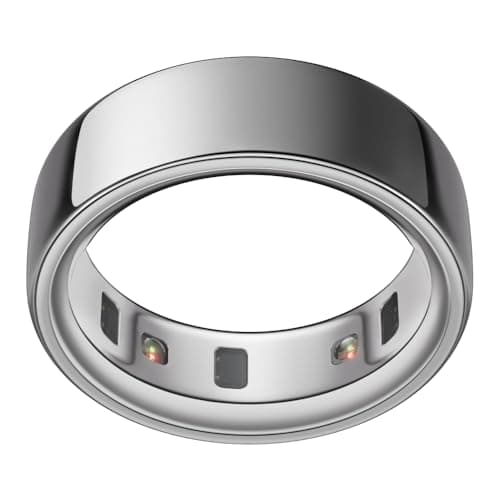
Verdict:The Oura Ring 4 still reads sleep and recovery about as well as anything you can wear, and for the right person it is genuinely worth it — but it is not worth it for everyone, because its best features live behind a paid membership that never stops. If you are sleep- and recovery-obsessed, want the most comfortable device to wear overnight, and will use the insights daily, it earns its place. If you just want to know roughly how you slept, a fee-free tracker gets you most of the way for a fraction of the lifetime cost. The ring is excellent; the question is whether you will use enough of it to justify the ongoing fee.
One thing to know before you buy: the Ring 4 is no longer the current generation. Oura launched the Ring 5in June 2026 — a body 40% slimmer at 6.09mm, a harder scratch-resistant finish, comparable battery and the same membership model — and that is the ring we now rank first on our best smart rings and best sleep trackers pages. The Ring 4 is still sold and everything below still describes it accurately, so this page is worth reading if the older generation is what you are looking at. But if you are buying an Oura today without a specific reason to prefer the Ring 4, start with the Ring 5. Note too that sizing differs between the two generations, so a Ring 4 size is not a Ring 5 size.
Method, stated plainly: we did not lab-test this ringand we are not clinicians. We compiled Oura's published sensor set, battery and water specs, cross-checked the recovery features against how the underlying measurements actually work, and did the cost-of-ownership math ourselves. That is the basis for everything below — the full approach is on how we review. A ring is a trend tool, not a medical device; the value is in your baseline moving over weeks.
What it does brilliantly
Oura earns its reputation on sleep. Worn on the finger, the Ring 4 reads overnight heart rate, heart rate variability and respiratory rate from a cleaner signal than any wrist device gets, and its sleep staging is among the most trusted in consumer hardware. Its packed sensor array — green and infrared PPG for 24/7 heart rate and HRV, red and infrared for blood oxygen, plus a digital temperature sensor— is what sets it apart: body-temperature trends surface things a heart-rate-only tracker cannot, like an oncoming illness or a shift in cycle phase. All of that rolls up into a morning readiness score that, in practice, is a legitimately useful nudge toward training hard or backing off.
The hardware is the other half of the appeal. A ring is simply the most comfortable thing to sleep in — no screen glow, no wrist bulk, nothing to press into a pillow — and it reads as jewelry rather than a gadget. Battery runs up to about eight days, so charging rarely interrupts wear, and it is water resistant to 100m, so it never comes off. If sleep and recovery are what you care about, only its own successor beats it on our recovery wearables list.
The subscription reality
Here is the part the marketing soft-pedals. Buying the ring is not the end of the spending. New rings come with a trial of Oura Membership, and once that lapses, the features that make Oura Oura— the detailed readiness score, the long-term trends, the guidance — require a paid monthly or annual membership. Without it, the ring still works with limited functionality, so it does not become a paperweight the way an unpaid Whoop band does — but you are no longer getting the product you thought you bought.
So the honest cost of an Oura is the ring price plus the membership, compounding for as long as you own it. Do that math before you buy: add the membership fee across two years onto the purchase price, and hold that total up against a no-subscription tracker that reads sleep and HRV for a single price. For a committed user who checks the app every morning and acts on it, the gap is defensible. For a casual user who will glance at it twice a week, it is not — and no amount of sensor quality changes that arithmetic.
Who should skip it
Skip the Oura Ring 4 if a recurring fee bothers you on principle, or if you want one device that also shows the time, notifications and live workout data — the ring has no screen and no GPS, so it is a pure recovery instrument, not a smartwatch. Skip it too if your main interest is accurate heart rate during exercise: the ring is optical, and a chest strap is far better for beat-to-beat accuracy while you move. And if you are cross-shopping the other big subscription tracker, our Whoop vs Ouracomparison lays out which one fits which kind of user. But if you have read all that and still want the best overnight data on the most comfortable device, the Oura is the right call — and it is easy to get on Amazon below.
If the alternative you are weighing is specifically Samsung's ring, the direct comparison is Oura vs Galaxy Ring, which includes the three-year cost of both.