The best compression boots — ranked on the specs that matter
Six sequential-compression systems compared on pressure, coverage, presets and portability, across four price tiers. One value workhorse wins; the famous premium unit is on the list, just not at the top.
We earn a commission when you buy through our Amazon links, at no extra cost to you. It never changes a verdict, and we say so when the cheaper product is the better buy. How this works.
The best compression boots are the ones that hit the pressure and coverage you need without charging you Normatec money for a Normatec name. All of these do the same core job — sequential pneumatic compression that inflates chamber by chamber from the foot up to “milk” blood and fluid back toward the heart. What separates them is honest and measurable: how many mmHg they push, how many chambers they use, how far up the leg they reach, what presets they offer, and whether they need a wall outlet.
We have not lab-tested these boots. What we did is read the manuals and spec sheets, pull the real numbers, and rank on the things that change the experience — then weigh that against price. The headline: a mid-priced FIT KING system beats the field on value, a cordless Therabody set is the one to travel with, the Normatec 3 is the refined standard-bearer you buy when budget is not the constraint, and the cheapest way to get compression on your thigh rather than just your calf is now a long way below any of them. Every price in the table is pulled live and date-stamped, so the four tiers are easy to see for yourself. If you are still deciding whether any of this is worth it, start with do compression boots work? — it is candid about what the evidence does and does not support. On a tight budget, the best budget boots shortlist gets you most of the benefit for less, and if you are choosing between a $300 machine and $20 socks, we settle that in boots vs socks.
Not sure the category is right for you at all? We argue the other side in are compression boots worth it, where the honest answer for most first-time buyers is socks or a massage gun instead.
The best value in compression boots right now. Four chambers per leg, an unusually wide 40–150 mmHg pressure range, three modes and — the part that matters — no cord, all for a fraction of a Normatec. Nothing here does more per dollar.
The best cordless boots and the easiest to travel with. Four overlapping chambers, a built-in pump (no separate control box), FDA-cleared, and light enough to fold into the included bag. Simpler controls than a Normatec, but far more portable.
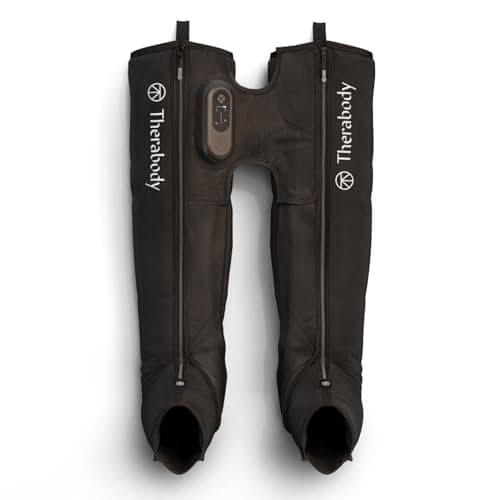
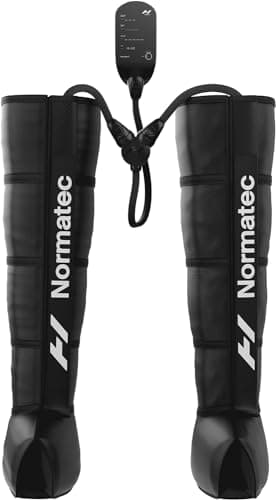
The refined premium standard, and the boots everyone else is measured against. Five overlapping zones, a patented Pulse pattern that pre-molds to your leg, ZoneBoost for targeting a sore spot, an app and no subscription. It is excellent — and priced like it.
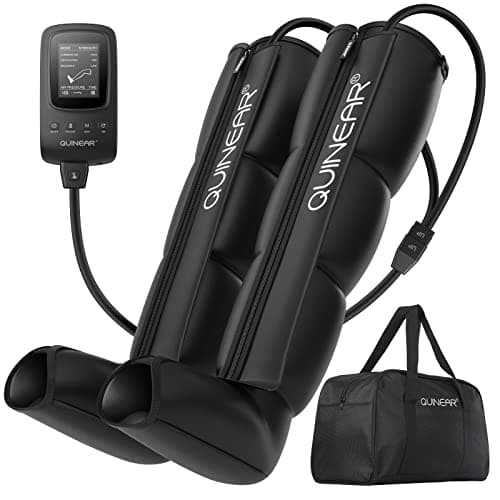
The mid-price value pick. Four sequential zones, eight intensity steps from 50–120 mmHg, three modes and a pressure sensor that adapts to leg size. Corded, but a genuinely capable recovery system for well under the premium tier.
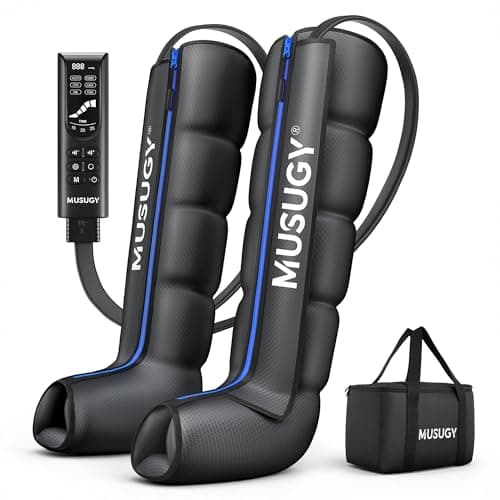
The cheapest way to get compression above the knee. Full-leg sequential boots with nine intensity steps, six modes and three timers, at roughly the price of the calf-only budget pick below. The catch is honest and important: Musugy does not publish a mmHg figure, so you are buying intensity levels rather than a number.
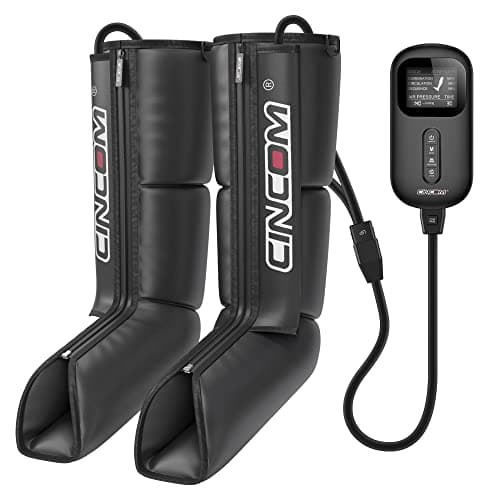
The budget entry point and a genuinely useful one — if you accept that it stops at the calf. Three chambers over the foot and lower leg, three modes, three intensities and a zip-on sleeve that is easy to get into. Not full-leg, but cheap and reliable.
#ad · Live prices from the Amazon Product API, as of October 19, 2026. Where we have no verified live price, we show none — a gap beats a number that has rotted.
In detail
The picks, in full
01
Best overall
FIT KING Air Compression Recovery System
4 zones per leg40-150 mmHg3 modesCordless, rechargeable
8.6/10
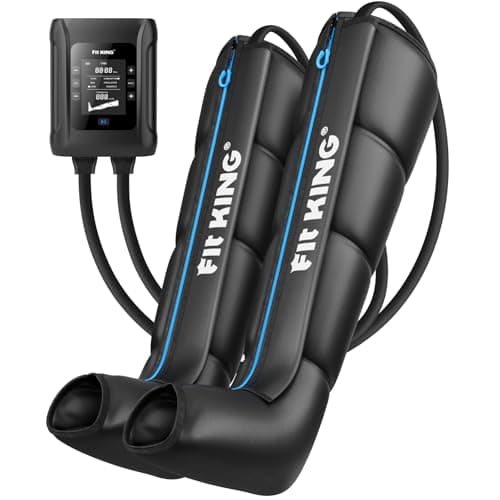
The best value in compression boots right now. Four chambers per leg, an unusually wide 40–150 mmHg pressure range, three modes and — the part that matters — no cord, all for a fraction of a Normatec. Nothing here does more per dollar.
Pressure
8
Coverage
9
Comfort
8
Portability
9
Value
9
Pros
+Full-leg coverage: foot, lower calf, upper calf and thigh
+Wide 40-150 mmHg range spans gentle flush to genuinely firm compression
+Cordless with a 2500mAh battery — use it on the couch, not tethered to a wall
+Zone-specific, single-leg or full-leg control and a 15-60 minute timer
Cons
−Pump is noticeably louder than a Normatec or JetBoots
−No companion app or saved user profiles
Don't buy this if…
…you want the clinical polish, quiet pump and app of a boutique device — this is an honest workhorse, not a status object.
This is the pick we would hand most people. It covers the whole leg through four sequential chambers, and its pressure ceiling — a claimed 150 mmHg — is higher than the Normatec 3 or the Therabody JetBoots, which top out nearer 100 mmHg. In practice most recovery sessions live in the 70-90 mmHg range anyway, so the ceiling matters less than the fact that the range starts low enough (40 mmHg) to be comfortable for beginners and swelling.
The cordless battery is the quality-of-life feature that justifies the pick. You can sit anywhere for 20-30 minutes without hunting for an outlet, and it recharges over USB. The trade-off is noise — the pump hums more than the premium boots — and there is no app. For a value device those are fair compromises.
4 chambers per leg25-100 mmHg (4 levels)Cordless (~180 min)FDA cleared
8.2/10
The best cordless boots and the easiest to travel with. Four overlapping chambers, a built-in pump (no separate control box), FDA-cleared, and light enough to fold into the included bag. Simpler controls than a Normatec, but far more portable.
Pressure
7
Coverage
8
Comfort
8
Portability
10
Value
8
Pros
+Fully wireless with the pump built into the boots — no control unit to carry
+About 180 minutes of battery and a fold-into-a-bag design for travel
+FDA cleared, with a clean on-device interface anyone can use
+Sequential foot-to-thigh compression across four overlapping chambers
Cons
−Only four fixed pressure steps (25/50/75/100 mmHg) — no fine adjustment
−Heavier on the leg than a tethered boot because the pump rides onboard
Don't buy this if…
…you chase the highest possible pressure or granular control — it caps at 100 mmHg in four fixed steps.
The JetBoots Prime solves the one thing that keeps compression boots in the closet: friction. There is no separate pump box, no octopus of hoses — the pump is built in, the boots fold like a pair of pants, and they go in a bag. If you actually want to use recovery boots on the road or after a race, this is the set that comes with you.
The cost of that simplicity is control. You get four pressure levels in 25 mmHg steps and a handful of timers, not the per-zone tuning of a Normatec. For most people that is plenty. Compared head-to-head with the premium standard, we break it down in Normatec vs Therabody.
5 zones per leg7 levels (to ~100 mmHg)ZoneBoostApp + no subscription
7.8/10
The refined premium standard, and the boots everyone else is measured against. Five overlapping zones, a patented Pulse pattern that pre-molds to your leg, ZoneBoost for targeting a sore spot, an app and no subscription. It is excellent — and priced like it.
Pressure
8
Coverage
9
Comfort
10
Portability
6
Value
6
Pros
+Five overlapping zones and the smoothest, most refined compression feel of the group
+Patented Pulse calibration molds the attachment to your leg for a precise fit each session
+ZoneBoost adds targeted pressure to a chosen zone; Bluetooth app saves settings
+No subscription — you own the hardware outright
Cons
−Costs roughly two to three times a capable value system
−Standard unit is corded — the portable battery pack is a separate purchase
Don't buy this if…
…you are price-sensitive — you can get most of the benefit from boots that cost a third as much.
4 zones per leg50-120 mmHg (8 levels)3 modesCorded
7.6/10
The mid-price value pick. Four sequential zones, eight intensity steps from 50–120 mmHg, three modes and a pressure sensor that adapts to leg size. Corded, but a genuinely capable recovery system for well under the premium tier.
Pressure
8
Coverage
8
Comfort
7
Portability
6
Value
9
Pros
+Full foot-to-thigh coverage across four sequential chambers
+Eight intensity levels give more granularity than the four-step cordless boots
+Three modes (sequence, circulation, combination) plus a leg-size pressure sensor
Cons
−Corded — you sit where the outlet is
−Controller and build feel utilitarian next to premium units
Don't buy this if…
…you want cordless freedom — this one tethers you to a wall outlet the whole session.
The cheapest way to get compression above the knee. Full-leg sequential boots with nine intensity steps, six modes and three timers, at roughly the price of the calf-only budget pick below. The catch is honest and important: Musugy does not publish a mmHg figure, so you are buying intensity levels rather than a number.
Pressure
6
Coverage
9
Comfort
7
Portability
5
Value
9
Pros
+Full-leg coverage — foot, calf and thigh — at the price other brands charge for calf-only
+Nine intensity steps is finer adjustment than the four-step cordless premium boots
+Six modes include whole-leg sequences and single-zone work on feet, calves or thighs
+Three timer lengths, so a session ends on its own
+Sized (small/medium/large) rather than one-size, which matters for a decent seal
Cons
−No published mmHg pressure range, so you cannot compare its firmness numerically against the FIT KING or the Normatec
−Thin published documentation generally — a marketplace brand, not an engineering one
−Plug-in controller, so you sit near an outlet for the whole session
−No app, no saved profiles, no per-zone boost
Don't buy this if…
…you want to train to a specific pressure — without a published mmHg range you are guessing where level 6 sits, and the FIT KING publishes 40-150 mmHg for a reason.
This pick exists because of a gap the rest of the list leaves open. The cheapest boots in this category almost always stop at the calf — which is fine if your calves are the problem, and useless if your quads and hamstrings did the work. Musugy sells genuinely full-leg sequential boots at roughly what the calf-only budget option costs, which is the single most useful thing anyone has done at this price point.
We are ranking it below the calf-only Cincom on pressure and above it on coverage for one reason: the listing does not publish a mmHg range. Our whole method on this page is to rank on the numbers the manufacturer publishes, and when a number is missing we say so and score conservatively rather than invent a figure. Nine intensity levels tell you there is fine adjustment; they do not tell you what level 9 actually pushes. If a specific pressure matters to you — because you are following a protocol, or managing swelling on advice — buy a system that publishes the range.
The budget entry point and a genuinely useful one — if you accept that it stops at the calf. Three chambers over the foot and lower leg, three modes, three intensities and a zip-on sleeve that is easy to get into. Not full-leg, but cheap and reliable.
Pressure
7
Coverage
6
Comfort
8
Portability
6
Value
8
Pros
+One of the cheapest ways into real sequential compression
+Zip-on sleeves are easy to put on, including for older or less mobile users
+FSA/HSA eligible and simple to operate — three modes, three intensities
Cons
−Covers only the foot and calf — no thigh or hamstring compression
−Corded, and controls are basic with no fine pressure tuning
Don't buy this if…
…you want thigh and hamstring coverage — these boots stop at the calf, so quads never get worked.
The five specs that actually change the experience
Ignore the marketing adjectives. Five measurable things decide whether a set of compression boots is right for you, and every one of them is on the spec sheet if you look.
Pressure (mmHg). This is the force the chambers exert. Recovery research tends to cluster around 70-90 mmHg, so a range that starts low (for comfort and swelling) and reaches at least ~100 mmHg covers almost everyone. Higher ceilings look impressive but are rarely the setting you actually use.
Chambers / zones.More chambers means a smoother, more gradual “wave” up the leg. Three zones cover the foot and calf; four to five reach the thigh. If your quads and hamstrings do the work — runners, cyclists, lifters — you want four or five and full-leg coverage, not a calf boot.
Presets / modes.Sequence, circulation and combination modes change the order and overlap of inflation. It is a nice-to-have, not a deal-breaker; per-zone control (like Normatec's ZoneBoost) is the genuinely useful version of this feature.
Corded vs cordless. This decides where and how often you use them. A cordless boot you can flop onto the couch with gets used; a corded one that lives near the only free outlet often does not. Cordless usually costs more and runs a little louder.
Coverage. Foot-to-thigh vs foot-to-calf. Bigger is not always better — if you only ever have sore calves, a calf boot is cheaper and lighter — but most athletes want the whole leg.
The four price tiers, and what each one actually gets you
Prices in this category move weekly, so the live figures are in the table above rather than typed into this paragraph. What does not move is the shape of the tiers — and knowing which one you are shopping in is worth more than hunting a discount.
The entry tier. Two very different products live here. A calf-and-foot boot (Cincom) gives you three chambers, easy zip-on sleeves and genuine sequential compression, but never touches the thigh. Or a full-leg boot from a marketplace brand (Musugy) reaches the thigh for about the same money, at the cost of a published mmHg figure. Decide which compromise you can live with: coverage or numbers.
The mid tier. Corded, four-zone, full-leg systems with published pressure ranges and eight or more intensity steps (Quinear). This is where the spec sheet starts telling you the truth, and where most buyers get everything they actually need.
The cordless-value tier. A four-zone full-leg system with a battery (FIT KING) — our winner, because a boot you can use on the sofa is a boot you use. This tier is a step up in price and the single biggest step up in whether the thing gets used.
The premium tier. Refinement, not physiology: five overlapping zones, a quieter pump, per-zone boosting, an app, better materials, and a warranty behind it (Normatec 3, Therabody JetBoots). Real improvements, and roughly two to three times the price of a capable value system.
The premium and value tiers do the same physiology. What the extra money buys is refinement: a quieter pump, a smoother pulse, an app, better materials and a per-zone boost. Those are real, and if you will use the boots daily for years, spreading that cost out can be reasonable. But the core benefit — flushing a tired limb for 20-30 minutes — is delivered just as well by a value system. Be honest about which you are paying for. Our budget shortlist is built for people who decide it is the physiology, not the badge, they are after — and if you have not bought any recovery gear yet, our recovery gear starter kit argues that a cheap pair of graduated socks should come before any of these.
What we did instead of a lab test
We are enthusiasts, not a testing lab, and we will never pretend otherwise. Every spec above comes from the manufacturer's own manual or product page, cross-checked against aggregated owner reviews and the published research on how compression recovery works. Scores are our judgments from that documentation, not measurements from a bench we do not own. If a number is not reliably published, we say so and use a qualitative note rather than invent a figure.
Before spending at this level, it is worth checking that boots are the right device for your actual complaint rather than the one with the best marketing. Boots treat a whole limb passively; a massage gun costs roughly a tenth as much and treats one spot anywhere on your body. We compare them directly at compression boots vs massage gun.
Same cart
Essentials under $40
The cheap stuff that decides whether the expensive thing gets used. These are add-ons, not ranked picks — no rubric, no score, and nothing here changes a verdict above.
Physix Gear Compression Socks (20-30 mmHg)
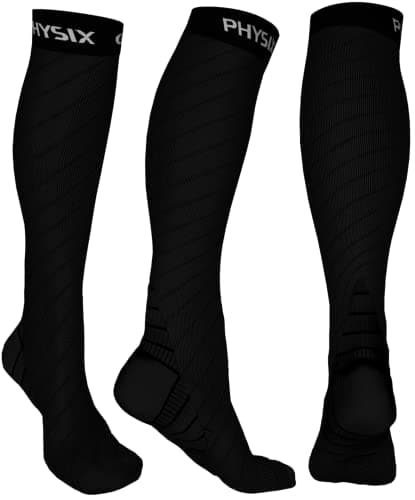
Boots are a 30-minute appointment; socks are the eight hours after it. Same graduated 20-30 mmHg range for roughly a fifteenth of the price, and the pair we rank in our boots-versus-socks comparison.
#ad · Live prices from the Amazon Product API, as of October 19, 2026. Where fit or size varies by tub, body or machine we link a search instead of guessing, and where we have no verified price we show none. We may earn a commission.
How we picked
We did not lab-test this gear
Everyone in this category says they tested twenty products. We have not lab-tested any of these, and we say so. What we did instead: compiled the published specifications, pulled the numbers from the manufacturer manuals, ran the cost-to-run and cost-per-unit math where there was math to run, and scored each product against a published rubric. The scores are judgments from documented research — not measurements we took, because we do not have a lab and we will not pretend we do. Where a number came from someone else's work, we name them in Sources.
Questions
Frequently asked
What is the best compression boot overall?+
For most people, the FIT KING Air Compression Recovery System — it delivers full-leg, four-chamber, cordless compression with a wide 40-150 mmHg range for a fraction of the premium price. The Hyperice Normatec 3 is the more refined choice if budget is not a constraint.
How many mmHg of pressure do you need for recovery?+
Most recovery protocols land around 70-90 mmHg, which is firm but comfortable. Anything from about 40 mmHg (gentle, good for swelling or beginners) up to roughly 100 mmHg covers the vast majority of use. Very high ceilings above that are rarely the setting people actually choose.
What are the cheapest compression boots that cover the thigh?+
A full-leg boot from a marketplace brand — the Musugy system on this list reaches foot, calf and thigh for roughly what calf-only budget boots cost. The trade is that it does not publish a mmHg range, so you are choosing between nine unlabeled intensity steps rather than a stated pressure. If your quads and hamstrings are what get sore, that trade is usually worth making; if you need a specific pressure, step up to a system that publishes one. The whole value end is ranked in our budget compression boots shortlist.
Are cheaper compression boots as good as a Normatec?+
For the core job — sequential compression that flushes a tired limb — a good value system gets you most of the way there. The Normatec buys refinement: a quieter pump, a smoother pulse, an app and per-zone ZoneBoost. Whether that is worth two to three times the price is a personal call, which we work through in do compression boots work?
How long should you use compression boots?+
A typical session is 20-30 minutes, once or twice a day. Longer is not better; most devices cap timers around 60 minutes and it is fine to stop sooner. Use them after training or before bed, at a pressure that feels firm but never painful or numbing.
Do compression boots need a subscription?+
None of the boots here require one. The Normatec 3 has an optional companion app but no paid subscription — you own the hardware. Be wary of any recovery device that locks core function behind a recurring fee.
We do not run a testing lab, and we do not pretend to. Where a measured number came from someone else's work, we name them and link them. Where we could not verify something, we say so on the page rather than quietly leaving it out. Read our full method.