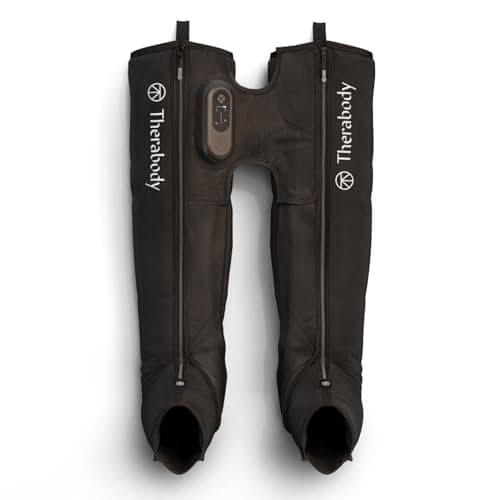
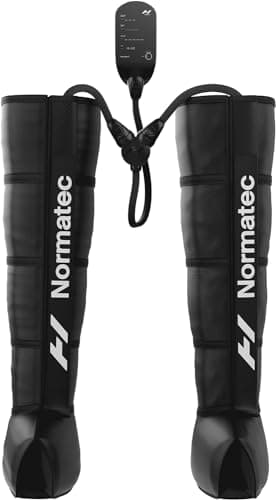
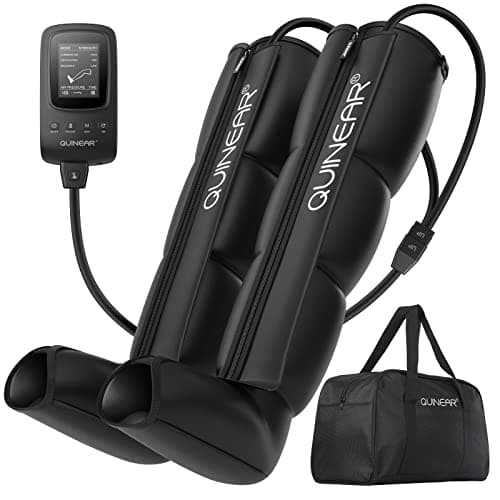
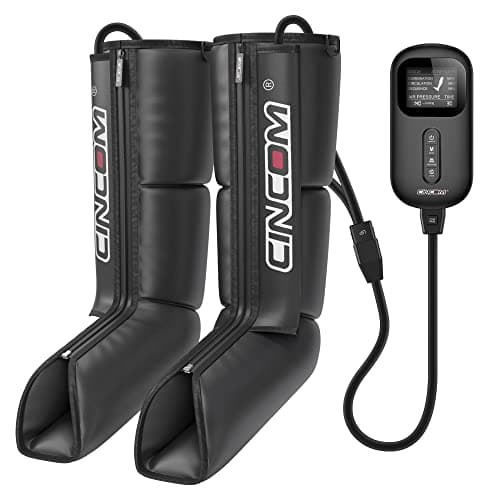
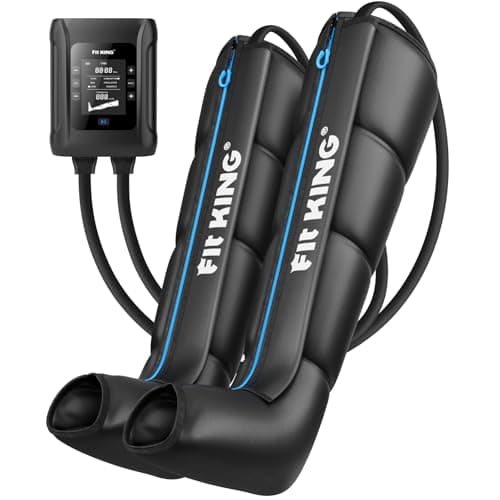
Compression boots suit runners better than almost anyone, for a simple reason: a run loads the whole leg from foot to hip, and boots are the only recovery tool that treats all of it at once while you do nothing. Twenty minutes with your legs up after a long run is the kind of recovery habit people actually keep, which is worth more than a better tool you use twice.
The ranking here differs from our flagship roundup because the criteria differ. Runners want thigh coverage (hamstrings and quads take the beating, not just calves), cordless operation (you finish a long run and want to collapse, not thread a cable), a long enough timer for a real 30-minute session, and — if you race away from home — something that packs. Raw peak pressure is far down the list: nobody benefits from 150 mmHg on a leg that just ran 20 miles.
Be clear-eyed about what these do. The evidence supports a reduction in the sensation of soreness and swelling, not a proven acceleration of physiological recovery — we go through the research honestly in do compression boots work. If your budget is tight, a pair of compression socks costs a twentieth as much and does a smaller version of the same job.
Coverage first: the boots that stop at the knee
The single biggest difference between a $150 system and a $900 one is not pressure — it is how much leg gets treated. Cheap systems commonly run three zones from foot to upper calf. That is a genuinely useful tool for a runner whose calves and feet take the brunt, and it is the right buy if that is your complaint. But a long run loads hamstrings, quads and glutes too, and only a four- or five-zone system reaches them. If you are buying one thing for general post-run recovery, buy the coverage.
Cordless or corded?
Corded units never run out, cost less, and often offer more intensity steps. Cordless units cost more and cap your session at the battery — and get used far more often, because the barrier to a session is nearly zero. For running specifically, that friction argument usually wins: the useful session is the one you do at 8 p.m. on the sofa with your legs on the arm, not the one requiring a free outlet within cable length of somewhere comfortable.
How long, how hard, how often
Twenty to thirty minutes is the standard session, once a day at most on hard days. Pressure should feel like a firm, sequential squeeze that you can hold a conversation through — if your foot is going numb or the sensation is sharp, it is too high, regardless of what the number says. Start in the lower third of the range; nearly everyone does. The full protocol is in how to use compression boots.
Timing matters a little: boots are best in the hours after a hard session or in the evening, not immediately before a run — there is no warm-up benefit and passive compression right before running is pointless. On a rest day they are optional and pleasant.
What to use instead, or as well
Boots are the most expensive tool on this site's recovery menu, and they are not the only one. For high-mileage runners on a budget, a pair of 20-30 mmHg compression socks costs a rounding error by comparison and provides static graduated compression you can wear all day. For targeted tightness, a massage gun or a foam roller does something boots cannot: address one specific angry muscle rather than flushing the whole limb. And if you are choosing between boots and an ice bath, we compare them directly in compression boots vs ice bath.
When not to use them
Intermittent pneumatic compression is not appropriate over an acute injury, a suspected blood clot, an open wound, an active infection, or where you have significant swelling of unknown cause. If you have a history of deep vein thrombosis, peripheral artery disease, heart failure or severe neuropathy, ask a clinician before buying — these are consumer recovery devices, not medical treatment, and the honest limits are set out in do compression boots work.