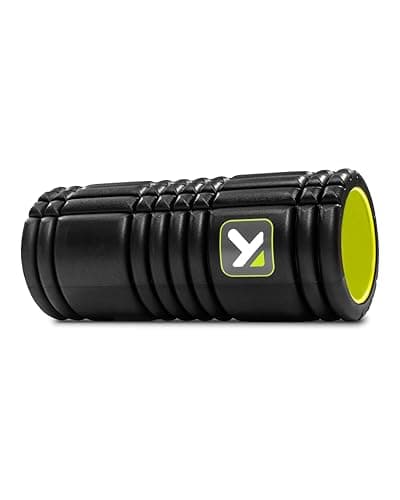
A foam roller is the highest-value item in a runner's recovery kit: it costs less than a pair of shoes lasts a fraction as long, it needs no battery, and it covers the entire lower body in about eight minutes. The catch is that most "best foam roller" lists rank for the general public, and runners are not the general public — you have dense calves, chronically short hip flexors, glutes that never get touched, and a strong temptation to attack the one structure you should leave alone.
The ranking below re-scores rollers we already cover in the main roundup on three running-specific criteria: firmness, because a marathon calf laughs at a soft roller; length, because a 26-inch roller does both quads or both calves at once and halves your session; and portability, because a lot of running happens away from home.
One thing to settle up front: the IT band. It is a thick band of connective tissue running down the outside of the thigh, and it does not lengthen when you roll it — what you feel is mostly the nerve-rich tissue underneath complaining. The productive work is on the tensor fasciae latae at the hip and the outer quad, both of which pull on it. More on that in the guide below.
The runner's eight-minute routine
You do not need a long session; you need a consistent one. Calves first (60 seconds each, slowly, pausing on tender spots), then quads (60 seconds each), then the outer quad and hip just above the IT band (45 seconds each), then glutes (60 seconds each, sitting on the roller with the ankle crossed over the opposite knee), then hamstrings if they are involved. That is eight to nine minutes and covers everything running loads. Roll slowly — about an inch per second — and pause with steady pressure on tender areas rather than sawing back and forth. The technique detail is in how to foam roll.
About the IT band
The single most common running-recovery mistake is grinding the outside of the thigh in the belief that the IT band will lengthen. It is dense connective tissue anchored at the hip and the knee; the forces required to deform it meaningfully are not forces you can generate with body weight on a foam cylinder. What you can productively do is work the muscles that pull on it: the tensor fasciae latae (the small muscle at the front-outside of the hip), the gluteus medius, and the vastus lateralis (outer quad). Those are muscle, they respond, and they are what is actually tight. If the outside of your knee hurts when you run, that is a load and biomechanics conversation, not a rolling one.
Before a run or after?
Both work and they want different doses. Before: short, brisk passes of 20 to 30 seconds per muscle as part of a warm-up — rolling briefly before activity has been shown to improve short-term range of motion without the strength cost that long static stretching can carry. After: longer, slower, more deliberate, when the tissue is warm and you are not about to ask anything of it. We go into the timing evidence in foam rolling before or after a workout.
Firm or soft, long or short?
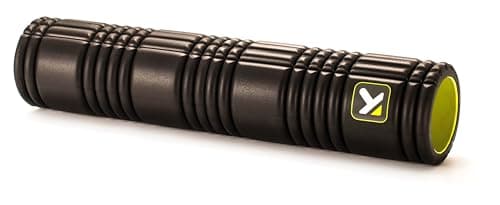
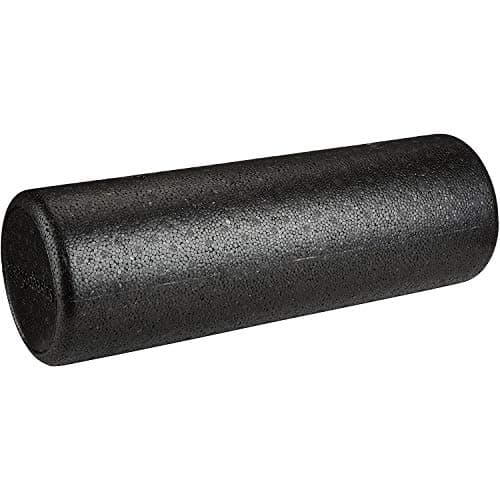
Firmness: runners generally want firm. Dense, trained calves do not respond to a soft roller, and a medium-density roller is the right choice only if you are new to rolling or genuinely very sore. Length: 12 to 13 inches travels and does one leg at a time; 18 inches is the sensible all-rounder; 26 inches does both legs at once and enables lengthwise thoracic work but never leaves the house. Texture: a multi-density grid surface is more versatile than a smooth one, and a smooth one is kinder for beginners. If you are choosing your first roller and you run seriously, firm and 18 inches or longer is rarely the wrong answer.
What the roller cannot do
It cannot fix plantar fasciitis (that is a ball and a load-management problem), it cannot fix shin splints, and it does not make you faster. What the evidence reasonably supports is a short-term improvement in range of motion and a reduction in the perception of soreness in the days after hard training — worth having, cheap to obtain, and not a miracle. The honest evidence review is in do foam rollers work. For the two or three spots that are genuinely angry rather than generally tight, a massage gun is faster and more precise.