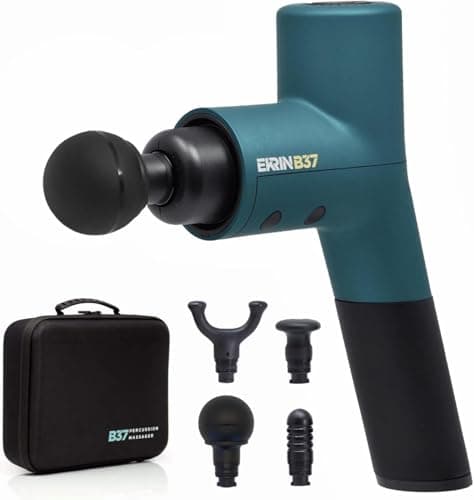
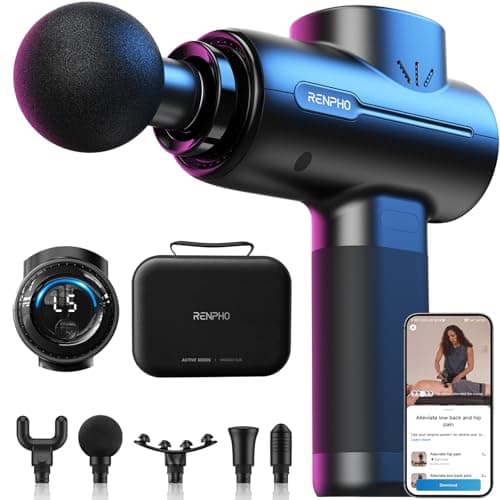
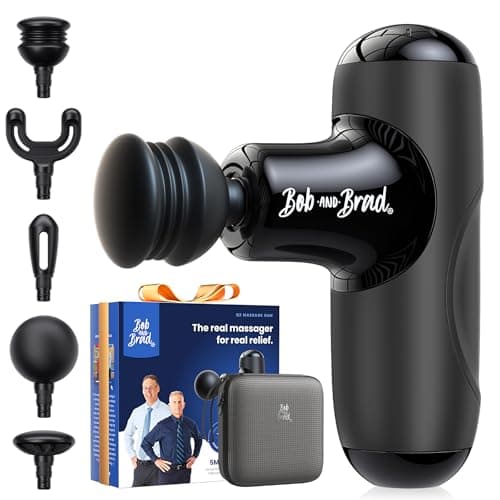
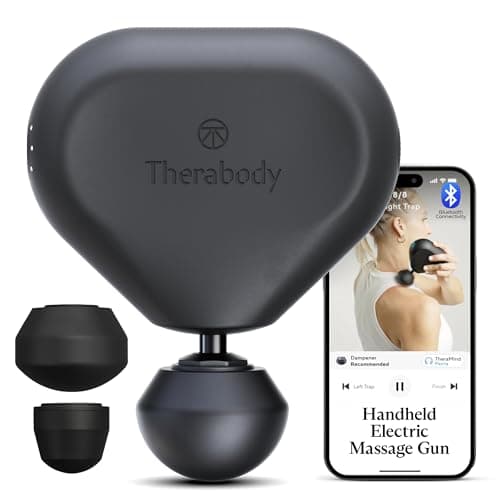
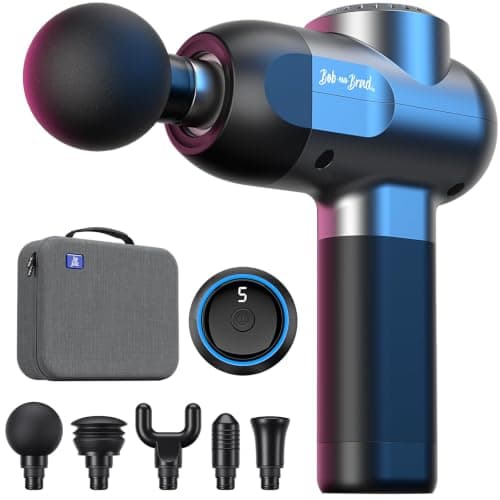
Running is a repetition problem. You load the same calves, hamstrings, quads and glutes thousands of times a week, and the tissue that complains is almost always the same short list. That changes what you want from a massage gun: not the deepest, heaviest, most aggressive unit on the shelf, but one you can hold one-handed on a bench for ten minutes without your wrist giving out, that reaches a calf while you sit, and that is quiet enough to use at 5:30 a.m. or in a hotel room the night before a race.
The five below are all guns we already rank in the flagship roundup, re-scored on the things running actually asks for: reach, stroke depth for dense calf tissue, weight, noise and battery. The order is different because the weighting is different — the runner's winner is a light, quiet mid-power gun, not the heaviest hitter. If you want the pure cheapest entry point, the budget guns list goes lower; for a bag-sized unit, see the mini and travel guns.
Two honest caveats before the list. First, percussion is a comfort and mobility tool, not a cure: it will not fix shin splints, a stress reaction or a tendon problem, and using it on one is how a small injury becomes a long one. Second, the two things runners most want to attack — the plantar fascia and the IT band — are both poor gun targets. We cover the first in massage guns for plantar fasciitis and the second in the buyer's guide below.
Shin pain is the one runner complaint where a gun needs real care: the muscles around the shin are fair game and the bone itself is not. Where to point it, and the stress-fracture signs that mean stop, are in using a massage gun for shin splints.
What a runner actually needs from a massage gun
Four specs decide it, and peak power is not the first of them. Weight comes first, because a runner's session is long and one-handed — anything over about two pounds turns a ten-minute leg routine into a forearm workout. Reach is second: you are working the back of your own leg, so an angled handle or a light body you can rotate matters more than an extra millimeter of stroke. Stall force is third, and only really matters if you are heavy or muscular enough to press hard into dense tissue. Noise is fourth on paper and often first in practice, because the sessions that get skipped are the ones that would wake the house.
Before a run vs after a run
The two uses want opposite dosing. Before a run, percussion is a warm-up aid: 30 to 60 seconds per muscle group at a low-to-medium speed, moving constantly, purely to raise tissue temperature and take the edge off morning stiffness. Long, deep work before running is counterproductive — you want the muscle awake, not sedated. After a run you have more latitude: one to two minutes per muscle group, still moving, still at a pressure you can breathe through. Our how often to use a massage gun guide covers the dosing in full, and how to use a massage gun covers the technique.
The four muscles that matter — and the two traps
For running, the whole routine is calves (both the gastrocnemius high up and the soleus lower down), hamstrings, quads and glutes — the glutes being the group most runners skip and most need. Do those four properly and you have covered the tissue running actually loads.
The two traps are the areas runners most want to attack. The IT band is a thick band of connective tissue, not a muscle: percussing it directly is painful and does not lengthen it, and the useful work sits on the tensor fasciae latae and the outer quad above it. The plantar fascia is the same story on a smaller scale — the gun belongs on the calf that pulls on it, while the foot itself is a massage ball job. We go through that properly in using a massage gun for plantar fasciitis. And as always, keep the gun off bone, joints and the spine — the full list is in where not to use a massage gun.
Gun, roller, or both?
A gun is fast, targeted and travels; a foam roller covers more tissue per minute, costs a fraction as much and needs no battery. Most runners who recover consistently own both and use them differently: the roller for a whole-leg pass after a long run, the gun for the two or three spots that are actually angry. If you only have the budget for one and you run high mileage, start with the roller — the best foam rollers for runners covers that half, and foam roller vs massage gun settles the argument properly.
What a massage gun will not do
It will not treat an injury. Shin splints, stress reactions, Achilles tendinopathy and plantar fasciitis are load problems, and percussion over an angry tendon or a bone that hurts to press is how a two-week problem becomes a two-month one. Nor does it, on the current evidence, meaningfully speed up physiological recovery — what it reliably does is reduce the feelingof soreness and improve short-term range of motion, which is worth having but is not the same claim. If something hurts in a specific, sharp, localized way that running makes worse, that is a clinician's job, not a gun's.