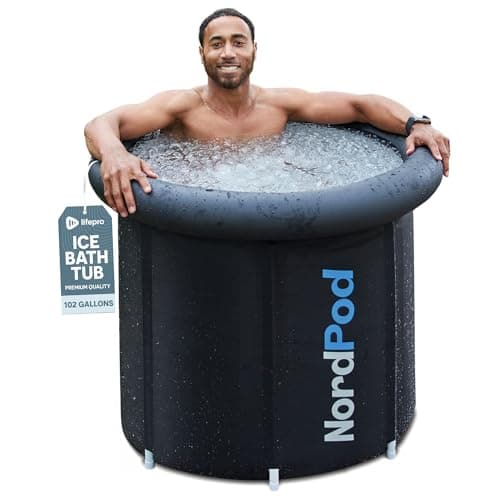
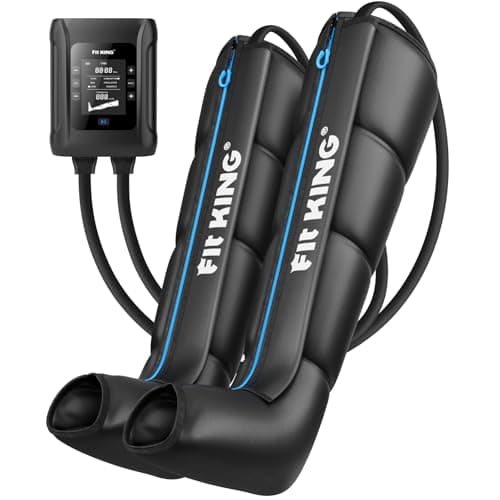
Both of these occupy the same slot in a training week — the twenty minutes after a hard session when you want to feel less wrecked tomorrow — and they get there by opposite routes. Compression boots inflate sequentially up the leg, mechanically moving venous blood and lymph back toward the heart. An ice bath drops the tissue temperature until the blood vessels constrict, numbing the leg and blunting the inflammatory response. One is a pump. The other is a brake.
That difference is not cosmetic, and it is the reason the honest answer is not "whichever you prefer." The evidence for each is different in kind, the effort each demands is wildly different, and — the part almost nobody mentions — there is a well-documented situation where cold water is actively working against you. Below we compare them on mechanism, evidence, effort, cost and timing, then name a real starting pick for each side.
For the deeper single-topic treatments, see do compression boots work and cold plunge benefits. This page is about choosing between them.
The head-to-head
| | Compression boots | Ice bath / cold plunge |
|---|
| Mechanism | Sequential external pressure moves venous blood and lymph proximally | Cold causes vasoconstriction, numbs nerve endings, blunts inflammation |
| What it reliably delivers | Reduced perceived soreness and heavy-leg feeling; pleasant to use | Strong short-term relief and reduced perceived soreness; a real jolt of alertness |
| Effort to use | Near zero — sit down, zip up, read something for 20 minutes | High — filling, chilling, and then actually getting in |
| Setup cost | Roughly $150-$900 for the unit; nothing after that | $100-$1,200 for a tub, far more with a chiller |
| Running cost | Electricity to recharge; negligible | Ice (recurring) or a chiller running continuously |
| Time per session | 15-30 min, hands-free, can be done while working | 2-10 min in the water, plus fill/chill time |
| Conflicts with strength training? | No known interference | Yes — regular post-lifting cold may blunt adaptation |
| Best suited to | Daily use, high-volume endurance training, desk-bound legs, travel | In-season competition, back-to-back events, heat, occasional use |
Where the evidence actually lands
Neither of these is a miracle, and both have more support for how you feel than for how you perform. Cold-water immersion has the larger research base and consistently reduces perceived muscle soreness in the days after hard exercise; the effect on actual performance recovery is smaller and less consistent than the ice-bath industry implies. Intermittent pneumatic compression has a smaller literature, drawn partly from clinical circulation use, and also lands mainly on perceived soreness and the subjective heavy-leg feeling rather than on measurable next-day power.
The practical reading of that: both are comfort and readiness tools, not magic. If a tool makes you feel meaningfully better and therefore train more consistently, that is a real benefit — just do not expect either to add watts.
The one asymmetry that should decide it for most lifters
There is a genuine, repeatedly-observed catch with cold, and it is the most important thing on this page. Regular cold-water immersion right after resistance training appears to blunt the muscle-building adaptation you just trained for. The inflammatory signaling that cold suppresses is part of the mechanism that produces hypertrophy and strength gains, so if your primary goal is getting bigger or stronger, routinely plunging straight after lifting is working against yourself. Compression boots have no equivalent problem — nothing about moving fluid interferes with the adaptive signal.
That does not make cold useless. It makes cold a situational tool: excellent when the priority is feeling good again fast — a competition tomorrow, a second session the same day, a brutal race in the heat — and a poor default habit for someone in a strength block. If you want cold anyway, put a few hours between lifting and plunging, or plunge on rest days.
Effort, and the tool you will actually use
This decides more real-world outcomes than the physiology does. Compression boots demand nothing of you: you sit down, zip them on, and answer emails for twenty minutes. An ice bath demands that you fill something, chill it, and then voluntarily get into water cold enough to make you gasp — every single time. Plenty of home plunges get used enthusiastically for three weeks and then become expensive garden furniture, while boots get used because using them is effortless. Be honest about which of those two people you are before you spend.
Running cost, honestly
Boots are the cheaper long-term proposition by a distance. After purchase, they cost the electricity to recharge a battery. A cold plunge costs either ice, forever — which adds up fast if you are filling a tub several times a week — or a chiller, which is a significant purchase in itself and then runs continuously. The tubs in our cold plunge roundup range from a cheap insulated barrel you fill with ice to units that cost more than a good bike, and the gap between sticker price and true annual cost is much wider on that side.
So which should you buy first?
Buy compression boots first if you train most days, your goal is strength or muscle, you want something you will genuinely use daily, or your legs feel heavy from volume or from standing and sitting all day. It is the lower-friction, lower-running-cost, no-downside option.
Buy a cold plunge first if you compete, you regularly need to back up hard efforts within 24 hours, you train in heat, or you want the alertness and mood hit that cold water gives and that boots do not attempt. Just keep it away from the hours right after your heaviest lifting.
And if you own both, the sequence that avoids the conflict is straightforward: boots any time, cold on rest days or well separated from strength work. For the wider thermal picture — cold versus heat, and when to use which — see sauna vs cold plunge.