Skip to content
Rep & Recovery

Compression · Compression Boots

Are compression boots worth it?

For most people, no — not as a first recovery purchase. For four specific buyers, yes, and comfortably. The deciding number is not the price; it is the price divided by how many times you will actually use them.

By Stephen V.Updated How we review
#ad

We earn a commission when you buy through our Amazon links, at no extra cost to you. It never changes a verdict, and we say so when the cheaper product is the better buy. How this works.

For most people, not yet. If this would be your first recovery purchase, a pair of graduated compression socks costs roughly a fiftieth of a boot system and a decent massage gun roughly a tenth, and both get used more often. Boots become worth it when you will use them three or more times a week for a couple of years, at which point the cost per session falls to pennies — and our pick for that is the FIT KING Air Compression Recovery System, which is cordless and covers the whole leg for a fraction of the premium systems.

The reason the question is hard is that boots are sold as a performance product and bought as a comfort product, and the honest case for them is the comfort one. What the research supports most consistently is reduced perceivedsoreness and fatigue; restored performance is much less consistent. So what you are buying is a pleasant whole-leg squeeze and thirty minutes in which you are obliged to sit still. That is genuinely valuable. It is not a training advantage, and anyone selling it as one is ahead of the evidence — which we go through in full in do compression boots work.

Below: the arithmetic, the three cheaper things that beat boots for most people, the four buyers for whom boots are the right answer, what not to pay extra for, and three picks across the range. Prices on this page are live and stamped with the date they were checked, so you can run the division yourself.

The arithmetic: cost per session, not cost

Take the live price of the boots you are considering and divide it by the number of sessions you will realistically do. Not the number you intend — the number you will do. Here is how that lands:

  • Four times a week for two years is over 400 sessions. Even a premium system comes out at well under a dollar a session, and a value pair comes out at small change. At this frequency boots are cheap.
  • Once a week is about 100 sessions in two years. A value pair is still defensible; a premium system is paying a lot per squeeze.
  • Twice a month is roughly 50 sessions. At that rate you are buying furniture. Socks and a massage gun would cover the same complaint for a fraction of the money.

Two things make that division come out better than people expect. The first is that a pair of boots has no consumables — no filters, no attachments, no subscription. The second is that the cheap boots do the same mechanical thing as the expensive ones: sequential pneumatic compression from the foot upward. What the premium price buys is quieter pumps, app control and support, not a different treatment.

And one thing makes it worse: boots that are inconvenient do not get used. A corded pump means recovery happens next to a wall outlet, and the sessions that do not happen are the ones that wreck your cost-per-session maths. Cordless is the single feature most likely to turn a purchase into a habit.

Three cheaper things that beat boots for most people

Graduated compression socks, at roughly a fiftieth of the price. They apply less pressure for eight or ten hours rather than a lot for thirty minutes, which for heavy legs from standing all day is arguably the better dose — and you can wear them at work. Ranked in best compression socks.

A massage gun, at roughly a tenth. It treats the one spot that is actually sore, works on shoulders and forearms as well as legs, and costs less than a pair of running shoes. If your complaint is a specific knot rather than two heavy legs, boots cannot help you and a gun can — the direct comparison is compression boots vs massage gun.

Twenty minutes with your legs up a wall, at nothing. Elevation uses gravity to do a weaker version of what the boots do, and a surprising share of the "my legs feel lighter" effect is available free. If that does nothing for you, that is useful information before you spend.

The four buyers boots are genuinely worth it for

  • High-volume endurance athletes. Marathon blocks, long-course triathlon, cycling weeks. Whole-leg heaviness is the actual complaint, it recurs several times a week, and the passivity is a feature because you are too tired to do anything active.
  • Anyone on their feet all day.Nurses, hospitality, retail, trades. The frequency is daily, which makes the arithmetic trivial — and this buyer should usually start with socks and add boots rather than the reverse.
  • Multi-person households. Two or three people using one pair halves or thirds the cost per session, and boots are the one recovery tool that is genuinely easy to share.
  • People who will not otherwise rest. If you need a device to make you sit down for thirty minutes, the device is doing something real for you even though the mechanism is behavioural rather than physiological.

If you are not one of those four, the honest recommendation is to spend a tenth of the money, see whether the complaint resolves, and come back if it does not.

What not to pay extra for

App control. You are setting a pressure and a timer. A phone is not a better interface for that than three buttons. Zone counts you will not use— four zones per leg covering foot to thigh is full coverage, and the ability to isolate a single zone is a feature most owners use twice. Brand prestige, which is most of the gap between the premium systems and the value ones.

What isworth paying for: a wide published pressure range (a gentle flush and a genuinely firm squeeze are different tools), coverage all the way to the thigh if your problem is quads and hamstrings rather than calves, cordless operation, and sleeves that you can actually get into unaided — zip-on sleeves matter more than any spec for older or less mobile users.

Three picks across the range

Scored on cost per session, coverage per dollar, and how likely you are to keep using them. Prices are live and stamped with the date they were checked.

If the answer for you was socks rather than boots, the follow-up question is wear time — which class, how many hours, and why most people should not sleep in them. That is in how long to wear compression socks.

The short answer

Quick picks

#ProductBest forScorePrice
01
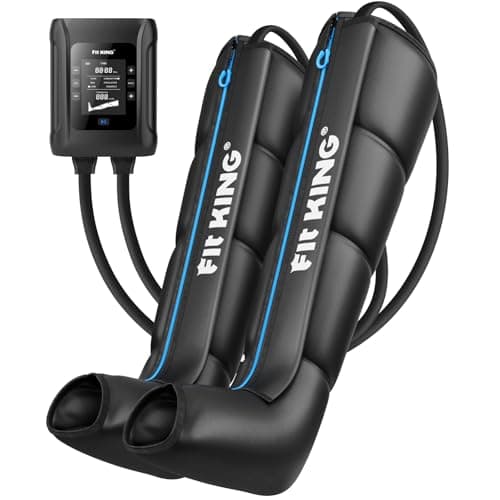
FIT KING FIT KING Air Compression Recovery System
FIT KING Air Compression Recovery System

The pair that makes the arithmetic work. Four zones per leg from foot to thigh, an unusually wide 40-150 mmHg range, three modes, and — the part that decides whether you keep using them — no cord. Nothing in the category does more per dollar, which is the whole question on this page.

Best value overall
9.0
$339.99Amazon
02
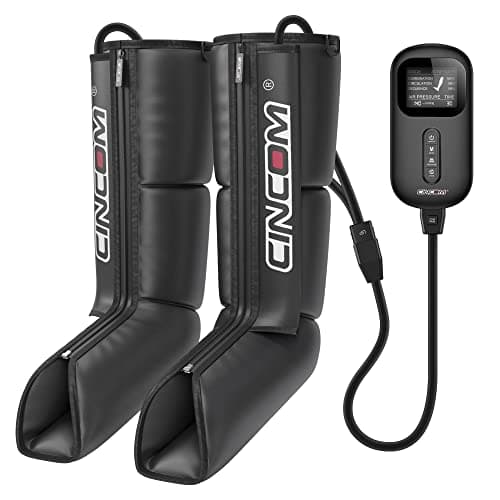
Cincom Cincom Air Compression Boots
Cincom Air Compression Boots

The cheapest honest way to find out whether you like this at all, with one limitation stated plainly: it stops at the calf. Three chambers over the foot and lower leg, three modes, three intensities, and zip-on sleeves that are genuinely easy to get into. If your heaviness lives below the knee, this covers it for a fraction of full-leg boots.

Cheapest way to test the idea
7.4
$159.99Amazon
03
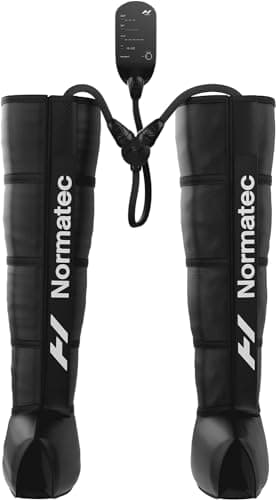
Hyperice Hyperice Normatec 3
Hyperice Normatec 3

The premium case, and we will make it honestly: it is quieter, better built, better supported and the pattern is well documented — and it does the same mechanical job as the FIT KING for several times the money. Worth it if you are a daily user who will keep it for years, or if resale value and support matter to you.

Best if you want the premium system
7.0
$899.00Amazon

#ad · Live prices from the Amazon Product API, as of October 19, 2026. Where we have no verified live price, we show none — a gap beats a number that has rotted.

In detail

The picks, in full

01
FIT KING FIT KING Air Compression Recovery System

Best value overall

FIT KING Air Compression Recovery System

4 zones per leg40-150 mmHg3 modesCordless, rechargeable
9.0/10

The pair that makes the arithmetic work. Four zones per leg from foot to thigh, an unusually wide 40-150 mmHg range, three modes, and — the part that decides whether you keep using them — no cord. Nothing in the category does more per dollar, which is the whole question on this page.

Cost per session
9
Coverage per dollar
10
Will you keep using it
9
Build and support
7
Value
10

Pros

  • Full-leg coverage: foot, lower calf, upper calf and thigh
  • 40-150 mmHg spans a gentle flush through to genuinely firm compression
  • Cordless, which is the difference between four sessions a week and four a month
  • Zone-specific, single-leg or full-leg control with a 15-60 minute timer

Cons

  • The pump is noticeably louder than the premium systems
  • No app and no saved user profiles

Don't buy this if…

…you would use them twice a month — at that frequency nothing in this category is worth the money, and socks are.

If boots are worth it for you at all, these are the ones that make the case easiest. Full-leg coverage is the thing you cannot add later, the published pressure range is wide enough to serve both a post-long-run flush and a firm squeeze for heavy standing legs, and the absence of a cord is worth more to your cost-per-session figure than any specification on the box.

What you give up against the premium systems is pump noise and polish. That is the correct thing to give up, because it does not change the treatment. The full ranking is at best compression boots, and the budget end specifically at best budget compression boots.

$339.99View on Amazon

$449.9924% off

Price as of October 19, 2026. Prices change — Amazon's at checkout is the one that counts.

#ad · we may earn a commission from this link to FIT KING Air Compression Recovery System

02
Cincom Cincom Air Compression Boots

Cheapest way to test the idea

Cincom Air Compression Boots

Foot + calf (3 zones)3 modes, 3 intensitiesZip-on sleevesCorded
7.4/10

The cheapest honest way to find out whether you like this at all, with one limitation stated plainly: it stops at the calf. Three chambers over the foot and lower leg, three modes, three intensities, and zip-on sleeves that are genuinely easy to get into. If your heaviness lives below the knee, this covers it for a fraction of full-leg boots.

Cost per session
10
Coverage per dollar
6
Will you keep using it
6
Build and support
6
Value
9

Pros

  • The lowest-risk way to test whether sequential compression does anything for you
  • Zip-on sleeves are the easiest here to manage unaided, including for less mobile users
  • FSA/HSA eligible, and simple enough that nobody needs the manual
  • Covers the calf and foot, where most standing-all-day heaviness is

Cons

  • No thigh or hamstring compression at all
  • Corded, so sessions happen where the outlet is
  • No fine pressure tuning

Don't buy this if…

…you are a runner or cyclist whose quads and hamstrings are the problem — half a leg of coverage is the wrong half.

$159.99View on Amazon

$219.9927% off

Price as of October 19, 2026. Prices change — Amazon's at checkout is the one that counts.

#ad · we may earn a commission from this link to Cincom Air Compression Boots

03
Hyperice Hyperice Normatec 3

Best if you want the premium system

Hyperice Normatec 3

5 zones per leg7 levels (to ~100 mmHg)ZoneBoostApp + no subscription
7.0/10

The premium case, and we will make it honestly: it is quieter, better built, better supported and the pattern is well documented — and it does the same mechanical job as the FIT KING for several times the money. Worth it if you are a daily user who will keep it for years, or if resale value and support matter to you.

Cost per session
5
Coverage per dollar
6
Will you keep using it
8
Build and support
10
Value
6

Pros

  • The best-documented compression pattern in the category, with published specifications
  • Noticeably quieter pump and better-made sleeves than the value systems
  • ZoneBoost can hold extra attention on one sore zone, which no value pair offers
  • Real support, a usable warranty, and resale value no budget pair holds

Cons

  • Several times the price of boots that deliver the same mechanical treatment
  • App control adds nothing to a device that sets a pressure and a timer
  • The cost-per-session arithmetic only works if you genuinely use it most days

Don't buy this if…

…this would be your first recovery purchase — start a tenth of the way down and come back if the complaint persists.

$899.00View on Amazon

Price as of October 19, 2026. Prices change — Amazon's at checkout is the one that counts.

#ad · we may earn a commission from this link to Hyperice Normatec 3

Worth it, or not, by buyer

If you areVerdictBuy instead / as well
Marathon or triathlon training, 5+ sessions a weekWorth itFull-leg cordless boots
On your feet all day, legs heavy every eveningWorth it, after socksCompression socks first, boots second
Two or three people in the household would use themWorth itOne good pair, shared
General gym training, two or three times a weekUsually notA massage gun, which costs a tenth
One specific sore spot rather than two heavy legsNoA massage gun — boots cannot target
Buying for swelling or a circulation concernAsk a clinician firstMedical-grade advice, then socks or a prescribed device

What the money actually buys you, mechanically

Sequential pneumatic compression inflates chambers from the foot upward, which moves fluid along the limb and produces the lighter-legged feeling people buy these for. Clinically, intermittent pneumatic compression is a real and well-established therapy — for circulation and clot prevention, under medical direction. The sports-recovery use is a consumer adaptation of that, and the recovery literature supports perceived soreness and fatigue reduction more strongly than it supports performance restoration. Both of those things are true at once, and a page that tells you only one of them is selling you something.

Before you buy: three checks

Measure your thigh and your inseam. Sleeves are sized, and boots that do not close properly at the thigh cannot compress it. Decide corded or cordless honestly, based on where you will actually sit. Check the contraindications.Pneumatic compression is not for everyone — if you have a known or suspected DVT, severe peripheral arterial disease, uncontrolled heart failure, an active leg infection or cellulitis, a fracture or open wound on the limb, or significant neuropathy, you need medical advice before using one, not after.

If you buy them, use them properly

Fifteen to thirty minutes at a pressure that is firm but comfortable, legs level or slightly elevated, after the session rather than before it. Daily is fine for most healthy adults. More pressure is not better and longer is not better — the dose that feels good is the dose. The detail is in how to use compression boots.
How we picked

We did not lab-test this gear

Everyone in this category says they tested twenty products. We have not lab-tested any of these, and we say so. What we did instead: compiled the published specifications, pulled the numbers from the manufacturer manuals, ran the cost-to-run and cost-per-unit math where there was math to run, and scored each product against a published rubric. The scores are judgments from documented research — not measurements we took, because we do not have a lab and we will not pretend we do. Where a number came from someone else's work, we name them in Sources.

Questions

Frequently asked

Are compression boots worth the money?
It depends almost entirely on frequency. At three or more sessions a week over a couple of years the cost per session falls to pennies and they are easy to justify; at twice a month they are expensive furniture. Run the division on the live price above before you decide, and if you are not sure you will use them, start with compression socks instead.
Are cheap compression boots as good as Normatec?
Mechanically they do the same thing: sequential pneumatic compression from the foot upward. What the premium price buys is a quieter pump, better sleeves, app control, real support and resale value — not a different treatment. For most buyers the value pair is the better purchase, which is why it wins our budget boots ranking and this page.
Do compression boots actually help recovery?
They reliably help how recovered you feel— reduced perceived soreness and fatigue is the consistent finding. Evidence that they restore performance faster is much weaker. Treat them as a comfort and adherence tool with a pleasant side effect, not as a training aid; the evidence in detail is in do compression boots work.
Are compression boots worth it for runners?
For high-volume runners, yes — whole-leg heaviness is the exact complaint boots address, and the frequency makes the arithmetic work. For someone running three easy times a week, a massage gun at a tenth of the price covers more complaints and will get used more often.
Can I just use compression socks instead?
For heavy legs from standing or walking all day, often yes — and socks cost roughly a fiftieth as much, apply their pressure for eight or ten hours rather than thirty minutes, and can be worn at work. Boots deliver a far stronger dose in a short session, which suits hard training rather than long days.
How long do compression boots last?
The failure points are the sleeves and the pump, not the electronics: look after the zips, do not over-pressure, and store them uncompressed. A well-treated pair lasts years, which is what makes the cost-per-session maths work. There are no consumables, no filters and no subscription on any pair we rank.

Keep reading

Receipts

Sources

We do not run a testing lab, and we do not pretend to. Where a measured number came from someone else's work, we name them and link them. Where we could not verify something, we say so on the page rather than quietly leaving it out. Read our full method.