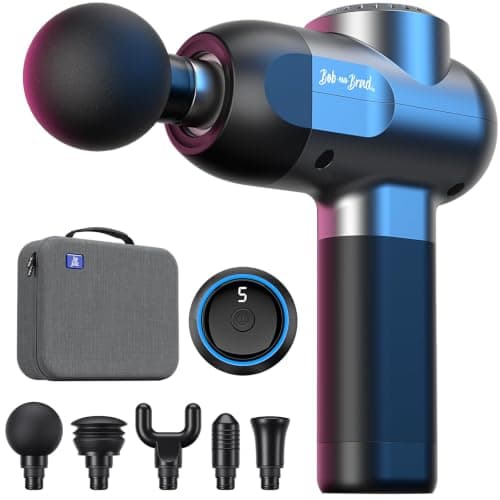
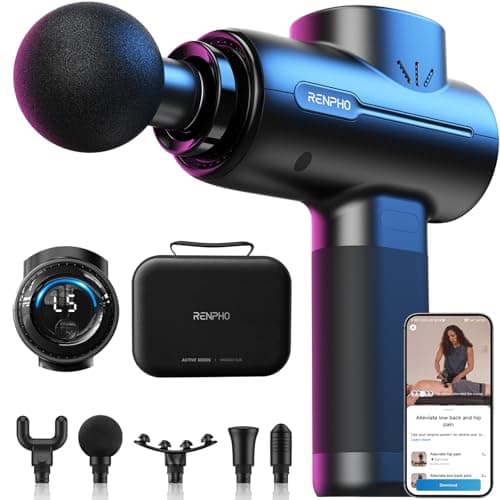
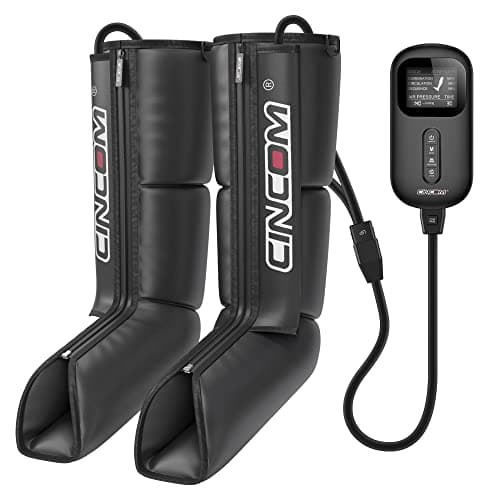
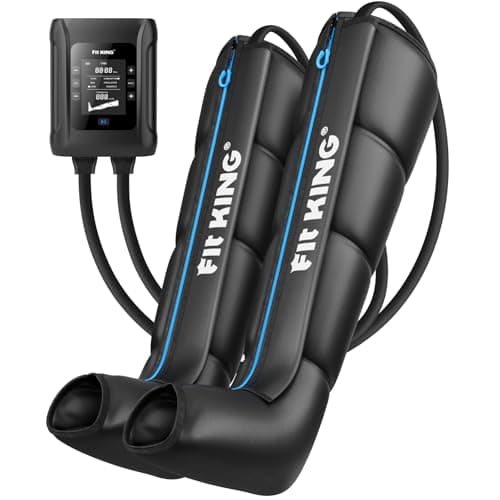
Buy the massage gun first. It costs roughly a tenth of what boots cost, it treats any muscle on your body rather than only your legs, and it handles the specific sore spot that is actually bothering you. Our pick is the Bob and Brad C2. Compression boots earn their place second, for a different complaint: heavy, flushed-out, whole-leg fatigue after long efforts, treated passively while you sit — and there the FIT KING Air Compression Recovery System is the best value in the category by a wide margin.
The reason this is a genuine question rather than a false one is that the two devices get marketed with the same word — recovery — while doing mechanically opposite things. A massage gun applies concentrated percussion to one small area, under your control, for as long as you aim it there. Boots apply sequential pneumatic pressure to the entire limb, on a timer, while you do nothing. Targeted and active versus general and passive. That distinction, not the price, is how you should pick.
Below: what each does and what the evidence supports, where the cost difference actually lands, the complaint-by-complaint lookup, and four picks — a boot and a gun at two budgets each. If you already know which category you want, the full rankings are at best compression boots and best massage guns.
Side by side
| Compression boots | Massage gun |
|---|
| What it does | Sequential pneumatic pressure, foot upward | Concentrated percussion on one spot |
| Area treated | The whole leg, both legs at once | Anywhere you can reach, one spot at a time |
| Your involvement | None — set a timer and sit | Continuous; you hold and guide it |
| Session length | 15-60 minutes | 1-2 minutes per muscle group |
| Typical cost | Roughly ten times a budget gun | Lowest-cost recovery device in this hub |
| Travels? | Poorly — bulky, and often corded | Yes — a gun fits in a gym bag |
| Best for | Heavy, swollen, whole-leg fatigue | A specific sore or stiff muscle |
Specifications are the manufacturers' published figures from the listings in Sources. The cost comparison is a ratio rather than a price, because prices move — the live figures are in the table above each pick.
What the evidence actually supports
Both categories sit in roughly the same evidentiary place, and it is worth being plain about it: the better-supported outcome for both is reduced perceived soreness and a feeling of recovery, not demonstrated restoration of performance. Neither device is going to make tomorrow's session measurably better in a way a trial would detect reliably.
That is not an argument against either. Feeling less sore is a real and useful outcome, and it is what people buy these for. It is an argument against paying premium money expecting a performance intervention. We work through the compression literature in do compression boots work and the percussion literature, including the case reports that define where a gun must not go, in massage gun benefits and side effects. Read whichever applies to the device you are leaning towards before you spend.
Which one for which complaint
- One sore muscle, a knot, a stiff calf: gun. Boots cannot target, and this is the single most common complaint.
- Both legs heavy after a long run, ride or race: boots. Treating a whole limb passively is exactly what they are for.
- Legs swollen from standing all day: boots — and read compression boots versus socks first, because for this complaint the cheaper answer frequently wins.
- Shoulders, back, neck, forearms: gun, obviously. Boots only do legs.
- Pre-workout warm-up: gun. Thirty seconds per muscle group before training is one of its better uses.
- You travel and want recovery with you: gun. Boots do not pack.
- You want recovery that requires no effort at the end of a hard day: boots, and that passivity is a genuine advantage people undervalue.
The cost gap, and what it should mean
A competent massage gun costs roughly a tenth of a competent set of boots. That ratio should drive the buying order for almost everyone: buy the gun, use it for a couple of months, and find out whether your actual complaint is spot soreness, which the gun solves, or whole-leg heaviness, which it does not. If you still want boots after that, you will buy them knowing why — and you will still own a gun, which treats parts of your body the boots will never reach.
The one group that can sensibly reverse the order is high-volume endurance athletes, where whole-leg fatigue after long sessions is the dominant complaint and a gun genuinely does not address it. If that is you, start at best compression boots for runners. If the budget is tight either way, best budget compression boots and best budget massage guns are where each category bottoms out without becoming useless.
Do you need either one?
A fair question, and the honest answer is that for a lot of people the first spend should be neither. A foam roller or a massage ball costs a fraction of a budget massage gun and overlaps substantially with what it does — we compare them directly in foam roller vs massage gun. Compression socks cost a fraction of boots and, for standing-all-day heaviness, are what the conservative advice points at first. Both of those are in our recovery gear starter kit, in buy order, and that order starts well below either device on this page.
How we picked
Everyone in this category says they tested twenty products. We have not lab-tested any of these, and we say so. What we did instead: compiled the published specifications, pulled the numbers from the manufacturer manuals, ran the cost-to-run and cost-per-unit math where there was math to run, and scored each product against a published rubric. The scores are judgments from documented research — not measurements we took, because we do not have a lab and we will not pretend we do. Where a number came from someone else's work, we name them in Sources.