Skip to content
Rep & Recovery

Tracking · Recovery Wearables

The best smart rings for sleep and recovery

A ring is the most comfortable thing you can wear to bed and the cleanest place to read heart-rate variability. The catch is the subscription — and two of these four do not have one.

By Stephen V.Updated Published How we review
#ad

We earn a commission when you buy through our Amazon links, at no extra cost to you. It never changes a verdict, and we say so when the cheaper product is the better buy. How this works.

The argument for a ring over a watch is simple and physical. Sleep and recovery metrics come from an optical sensor reading blood flow, and the finger gives a cleaner signal than the wrist, on a device with no screen glowing at 3 a.m. and no strap to press into a forearm. If you want overnight heart-rate variability, resting heart rate, temperature trends and sleep staging — and you do not want a computer on your wrist — a ring is the right form factor.

The argument against is money, and it is not the sticker price. Some rings require a paid membership to see the insights that justify buying them, and some do not. Over three years that difference is often larger than the price of the hardware. It is the single most important thing to understand before you buy, and it drives the ranking below.

If you want the wider comparison across bands, watches and rings, our best recovery wearables roundup covers all three, and best sleep trackers narrows to sleep specifically. For the fee question head on, see the best no-subscription trackers.

The short answer

Quick picks

#ProductBest forScorePrice
01
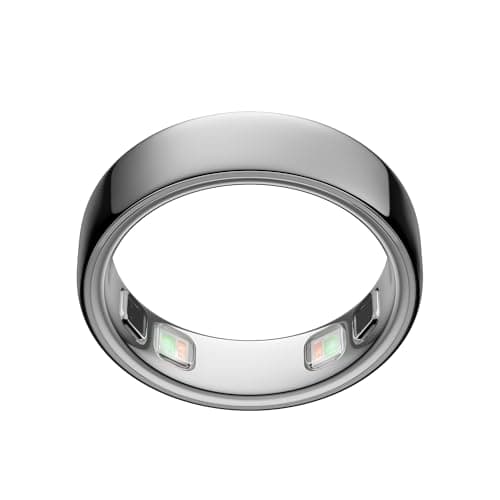
Oura Oura Ring 5
Oura Ring 5

Still the data benchmark, now in a body 40% smaller than the Ring 4 it replaces. The sleep staging and readiness modeling are the most refined in the category, the titanium ring is genuinely comfortable to sleep in, and the temperature sensor adds illness and cycle trends most rivals lack. The membership is the price of admission, and it never stops being the price of admission.

Best data (subscription required)
6.8
$399.00Amazon
02
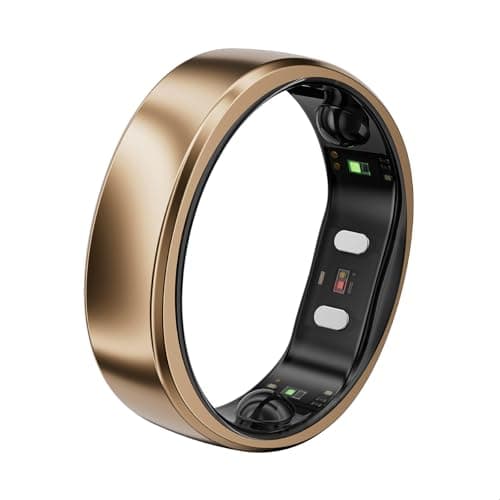
RingConn RingConn Gen 3 Smart Ring
RingConn Gen 3 Smart Ring

The best-value ring, and the one most people should buy. No subscription at all — you buy it once and every feature is yours — plus a rated 14-day battery, sleep-apnea pattern insights and, new to this generation, on-finger vibration alerts. The app is less polished than Oura's; the total cost is dramatically lower.

Best overall value (no subscription)
9.0
$349.00Amazon
03
RingConn RingConn Gen 2 Air Smart Ring
RingConn Gen 2 Air Smart Ring

The cheapest sensible way into the category. A thinner, lighter ring on the same no-subscription model as the Gen 3, for meaningfully less money. If a ring's whole appeal is that you forget you are wearing it, thinner is a feature and not a compromise.

Best budget / thinnest
9.0
$199.00Amazon
04
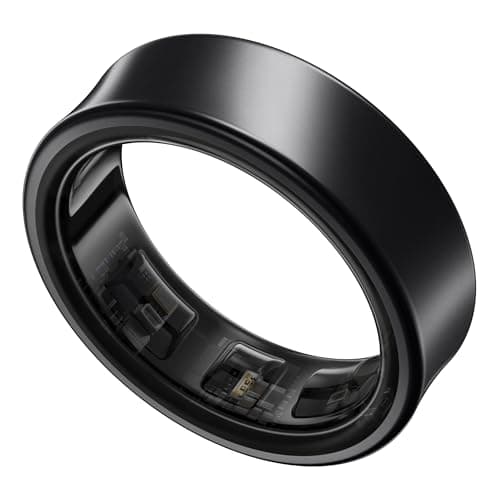
Samsung Samsung Galaxy Ring
Samsung Galaxy Ring

The Android answer, and specifically the Samsung-phone answer. No app subscription, a titanium body, up to a week of battery on Samsung's figures, and deep integration with Samsung Health — which is exactly as useful as your phone is Samsung. Sold size by size, so order the sizing kit first.

Best for Samsung phone owners
8.2
$399.99Amazon

#ad · Live prices from the Amazon Product API, as of Sep 4, 2026. Where we have no verified live price, we show none — a gap beats a number that has rotted.

In detail

The picks, in full

01
Oura Oura Ring 5

Best data (subscription required)

Oura Ring 5

PPG + temperature sensors6-9 day battery100m water resistantMembership required
6.8/10

Still the data benchmark, now in a body 40% smaller than the Ring 4 it replaces. The sleep staging and readiness modeling are the most refined in the category, the titanium ring is genuinely comfortable to sleep in, and the temperature sensor adds illness and cycle trends most rivals lack. The membership is the price of admission, and it never stops being the price of admission.

Sleep & recovery data
10
Battery
8
Comfort
9
No-fee ownership
2
Value over 3 years
5

Pros

  • Class-leading sleep staging and overnight HRV from the finger
  • Digital temperature sensor adds illness and cycle trends
  • Six to nine days of battery, and 40% slimmer than the Ring 4 — easy to forget
  • The most mature app and the largest body of published validation work

Cons

  • Ongoing membership fee to see the insights you bought it for
  • Sold in fixed sizes — you need the sizing kit before ordering, and Ring 5 sizing differs from the Ring 4's

Don't buy this if…

you object to paying monthly for data your own body generated — the RingConn picks below do most of this with no fee.

Nobody sensible disputes that Oura has the best-developed platform here, and the Ring 5 is the fifth generation of it. The sleep staging is the most scrutinized in the consumer category, the readiness score is genuinely well-modeled rather than a repackaged step count, and the temperature baseline is the feature that turns "I feel off" into a visible deviation the night before you get symptoms.

The honest complication is the total cost. You buy the hardware, then you subscribe to read it, and the subscription does not end. Over three years, the difference between this and a no-fee ring can exceed the cost of the ring itself — which does not make Oura a bad purchase, but does make it a different purchase from the one the sticker price suggests. We work the math through in is the Oura Ring worth it.

$399.00View on Amazon

Price as of Sep 4, 2026. Prices change — Amazon's at checkout is the one that counts.

#ad · we may earn a commission from this link to Oura Ring 5

02
RingConn RingConn Gen 3 Smart Ring

Best overall value (no subscription)

RingConn Gen 3 Smart Ring

No subscriptionUp to 14-day batterySleep apnea pattern insightsVibration alerts
9.0/10

The best-value ring, and the one most people should buy. No subscription at all — you buy it once and every feature is yours — plus a rated 14-day battery, sleep-apnea pattern insights and, new to this generation, on-finger vibration alerts. The app is less polished than Oura's; the total cost is dramatically lower.

Sleep & recovery data
8
Battery
9
Comfort
8
No-fee ownership
10
Value over 3 years
10

Pros

  • No membership fee — the purchase price is the whole price
  • Rated up to 14 days between charges, with a universal charging case
  • Sleep apnea pattern insights and vascular trend tracking, both fee-free
  • Costs less up front than the subscription rings and far less over time

Cons

  • App and insight quality lag behind Oura's
  • Smaller research and validation record than the market leader
  • Vascular readings are trends after a one-time calibration, not single measurements

Don't buy this if…

you want the most refined sleep staging and readiness modeling available and are willing to pay monthly for it.

The case for RingConn is arithmetic. Buy a subscription ring and, three years in, you have paid for the hardware plus three years of access. Buy this and you have paid for the hardware. If the second ring gives you 80% of the first ring's insight — and for the core metrics most people actually use, resting heart rate, HRV trend, sleep duration and sleep staging, it is in that territory — the value comparison is not close.

What you give up is polish and depth: fewer derived insights, a less elegant app, and less published validation behind the sleep staging. If you are the kind of user who reads a readiness score and acts on it, that gap matters. If you mainly want a reliable trend line without a recurring bill, it does not.

$349.00View on Amazon

Price as of Sep 4, 2026. Prices change — Amazon's at checkout is the one that counts.

#ad · we may earn a commission from this link to RingConn Gen 3 Smart Ring

03
RingConn RingConn Gen 2 Air Smart Ring

Best budget / thinnest

RingConn Gen 2 Air Smart Ring

No subscriptionUltra-thin profileMulti-day batteryLightweight
9.0/10

The cheapest sensible way into the category. A thinner, lighter ring on the same no-subscription model as the Gen 3, for meaningfully less money. If a ring's whole appeal is that you forget you are wearing it, thinner is a feature and not a compromise.

Sleep & recovery data
7
Battery
8
Comfort
10
No-fee ownership
10
Value over 3 years
10

Pros

  • The lowest price here for a ring worth owning
  • Ultra-thin profile is the most comfortable of the group
  • No subscription — nothing to pay after purchase
  • Same app ecosystem as the Gen 3

Cons

  • Fewer sensing features than the standard Gen 3
  • Thinner body means a smaller battery than its bigger sibling

Don't buy this if…

you specifically want sleep-apnea pattern insights or the fullest feature set — step up to the Gen 3.

$199.00View on Amazon

Price as of Sep 4, 2026. Prices change — Amazon's at checkout is the one that counts.

#ad · we may earn a commission from this link to RingConn Gen 2 Air Smart Ring

04
Samsung Samsung Galaxy Ring

Best for Samsung phone owners

Samsung Galaxy Ring

No app subscriptionSamsung Health integrationTitaniumSold by size
8.2/10

The Android answer, and specifically the Samsung-phone answer. No app subscription, a titanium body, up to a week of battery on Samsung's figures, and deep integration with Samsung Health — which is exactly as useful as your phone is Samsung. Sold size by size, so order the sizing kit first.

Sleep & recovery data
8
Battery
8
Comfort
9
No-fee ownership
9
Value over 3 years
7

Pros

  • No subscription for the app's features
  • Tight integration with Samsung Health and Galaxy phones
  • Titanium construction and a multi-day battery
  • Backed by a manufacturer that will still exist in five years

Cons

  • The experience is much weaker outside the Samsung ecosystem
  • Priced against Oura without matching Oura's depth of sleep analysis

Don't buy this if…

you use an iPhone — you are paying for ecosystem integration you cannot access.

$399.99View on Amazon

Price as of Sep 4, 2026. Prices change — Amazon's at checkout is the one that counts.

#ad · we may earn a commission from this link to Samsung Galaxy Ring

The subscription question, in money

This is the whole decision, so treat it as one. Work out the three-year cost of each ring: hardware price, plus thirty-six months of membership where one applies. A no-fee ring's three-year cost is its purchase price. A subscription ring's three-year cost is its purchase price plus three years of fees, which for most services lands somewhere near — or above — the cost of the ring again.

That is not automatically a bad deal. Continuous development, better modeling and a support operation cost money, and the subscription funds them. But you should make that trade deliberately rather than discovering it in month two. Our Oura Ring value analysis does the arithmetic explicitly.

Sizing is not optional

Rings are sold in fixed sizes and the correct one is not necessarily your jewelry size — the sensor has to sit flat against the palm side of the finger, and fingers swell and shrink with heat, salt and time of day. Every serious manufacturer sells a sizing kit and every serious manufacturer tells you to use it. Skipping that step is the most common reason a ring gets returned. Most people wear it on the index finger, which gives the cleanest signal.

What a ring measures well — and what it does not

Rings are strong on the things you do lying still: overnight heart-rate variability, resting heart rate, sleep duration and staging, respiratory rate, and skin temperature deviation from your own baseline. That is the whole recovery picture for most people, and it is the reason to buy one.

They are weak on active exercise. No GPS, no serious workout tracking, and optical heart-rate accuracy from a finger degrades under movement and grip — a ring is not a training device. If you want training metrics, that is a watch or a chest strap. And no consumer ring measures blood pressure, whatever an advert implies — we cover that claim in do fitness trackers measure blood pressure.

Ring, band, or watch?

Ring if sleep and recovery are the point and you do not want a screen. Band — something like a slim tracker — if you want recovery data plus notifications and step tracking at a lower price. Watch if you train seriously and want GPS and workout metrics; see best Garmin watches. Plenty of people wear a ring at night and a watch during the day, which is expensive but genuinely the best of both.

A note on what these numbers are

Every ring here estimates. Sleep staging is inferred from movement, heart rate and variability, not measured directly the way a clinical sleep study measures it, and consumer devices are better at trends than at any single night's absolute numbers. Use the trend line, ignore individual bad nights, and do not let a readiness score talk you out of training you feel fine for. A wearable that makes you anxious about your sleep is a wearable working against you.

How we picked

We did not lab-test this gear

Everyone in this category says they tested twenty products. We have not lab-tested any of these, and we say so. What we did instead: compiled the published specifications, pulled the numbers from the manufacturer manuals, ran the cost-to-run and cost-per-unit math where there was math to run, and scored each product against a published rubric. The scores are judgments from documented research — not measurements we took, because we do not have a lab and we will not pretend we do. Where a number came from someone else's work, we name them in Sources.

Questions

Frequently asked

Which smart ring has no subscription?
RingConn's Gen 3 and Gen 2 Air require no membership — you buy the hardware and every app feature is included. Samsung's Galaxy Ring also has no app subscription. Oura requires a paid membership for the insights, which is the main reason its three-year cost is much higher than its sticker price.
Are smart rings more accurate than watches for sleep?
For sleep and overnight recovery metrics, the finger generally gives a cleaner optical signal than the wrist, and a ring is more comfortable to sleep in, so people wear it more consistently. For active exercise it is the other way round — rings have no GPS and lose accuracy during movement.
What size smart ring should I get?
Use the manufacturer's sizing kit — a smart ring size is not necessarily your jewelry size, because the sensor needs to sit flat against the palm side of the finger. Fingers also change size with heat and time of day, so wear the sizing ring for a day before deciding. Most people wear it on the index finger.
Can a smart ring track workouts?
Only loosely. Rings have no GPS, and finger-based optical heart rate degrades during movement and gripping. They are recovery and sleep devices. If you want workout data, pair a ring at night with a watch or chest strap during training.
Is the Oura Ring worth it compared to cheaper rings?
It has the most refined sleep and readiness modeling and the largest validation record, and if you act on that data daily it can justify the membership. For the core metrics most people use — resting heart rate, HRV trend, sleep duration and staging — a no-subscription ring covers a lot of the same ground for far less over three years. Full analysis in is the Oura Ring worth it.

Keep reading

Receipts

Sources

We do not run a testing lab, and we do not pretend to. Where a measured number came from someone else's work, we name them and link them. Where we could not verify something, we say so on the page rather than quietly leaving it out. Read our full method.