A massage gun is a precision tool: you hold it, you aim it, you work one spot at a time. That is exactly what makes it the wrong tool for a back. You cannot reach your own mid-back with a gun, you should never percuss the spine itself, and after twenty minutes of holding a vibrating motor at an awkward angle your shoulder is more tired than your back is loose. A back massager solves a different problem: it is a kneading pad or cushion you sit against, hands-free, that works the muscles either side of the spine while you do nothing at all.
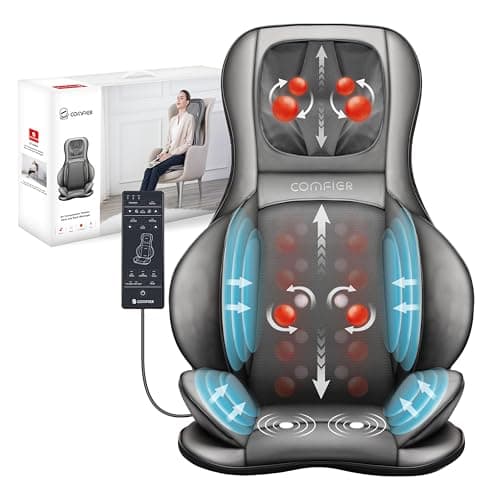
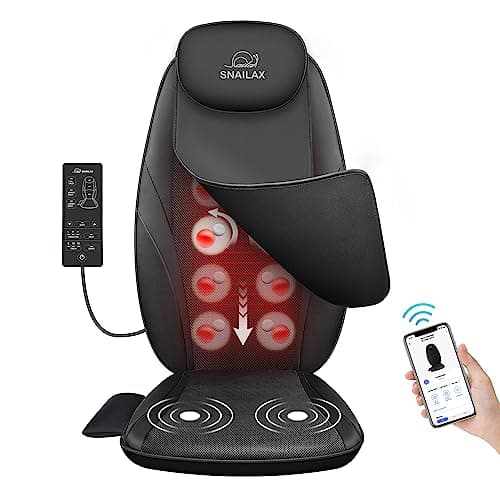
The category is dominated by shiatsu mechanisms — counter-rotating nodes that knead in circles, usually with an infrared heat element behind them. Three things separate a good one from a bad one, and none of them are on the front of the box. Coverage is first: a fixed four-node pillow massages one band of muscle, while a full-back pad runs the nodes up and down the whole length of your spine. Second is node intensity and adjustability — nodes that are too aggressive on a bony back are as useless as nodes too soft to feel, so height-adjustable or width-adjustable node carriages matter more than node count. Third is heat: real infrared warmth that relaxes tissue, not a red LED shining through fabric.
Below are five, ranked. The winner is a full-back kneading chair pad; below it sit a seat-and-back massager with rolling and spot modes, a neck-and-shoulder pillow, a lower-back-specific cushion and a genuinely cheap pick that still kneads properly. If your problem is one stubborn knot in a muscle you can reach, buy a gun instead — and if your problem is your neck specifically, read where not to use a massage gun first, because the neck is the area people get wrong most often.
If the knee rather than the back is the joint giving you trouble, start with do knee massagers work— the honest answer is narrower than the category's marketing, and it changes what you should pay for.
One thing to settle first: if it is the heat you are after and not the kneading, you are looking at the wrong shelf. A heating pad delivers more heat over a larger area for less money than any massager here, and our best heating pads ranking covers it. The massagers below earn their price on pressure, not warmth.
Traveling nodes vs fixed nodes — the only spec that really divides this category
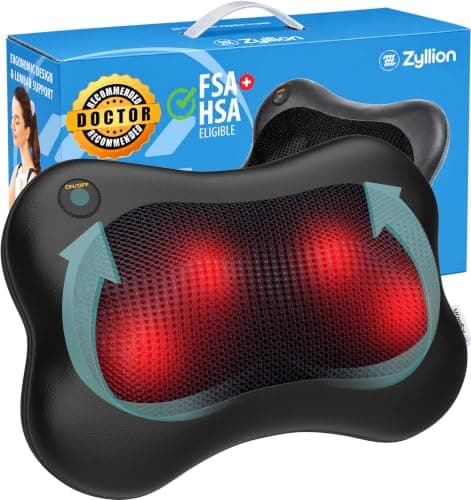
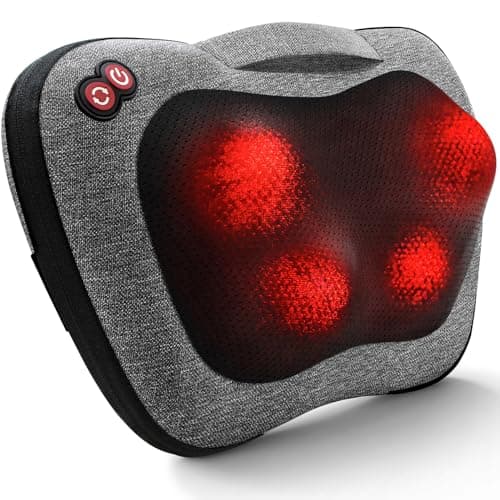
Every shiatsu massager works the same way: pairs of nodes rotate in opposite directions and pinch the tissue between them. What changes is whether that node carriage moves. A fixed-node unit — every pillow-shaped massager, including two of the picks above — treats one band of muscle. That is genuinely fine if you know where your problem is: for a tight upper trapezius, a pillow parked at shoulder height is more useful than a pad spreading its attention over three feet of spine. A traveling-nodeunit runs the carriage up and down the whole back, which is what you want when the answer to "where does it hurt" is "everywhere, from sitting." Decide which of those two sentences describes you, and the shortlist halves.
Node intensity, and why adjustability beats node count
Listings advertise node counts — 4D, 8D, 16 nodes — and the number tells you almost nothing. What determines whether a massager feels good or feels like being elbowed is how far the nodes protrude and how much of your body weight is pressed onto them. That is why the two adjustability features worth paying for are node height (so the neck nodes land on your neck, not your shoulder blades) and intensity or compression levels (so you can back the pressure off on a bony spot). A massager with four adjustable nodes beats one with sixteen fixed ones every time. If a unit has no adjustment at all, you can improvise one: put a folded towel between your back and the pad to soften it.
What the heat is actually doing
Almost every unit here advertises infrared heat, and the mechanism is unglamorous but real: warming tissue makes it more pliable and more comfortable to work, which is the same reason gentle movement beats a cold start before training. It is comfort and compliance, not therapy. Heat will not repair a strain, and a red glow visible through the fabric is a light, not a treatment — judge the heat by whether the pad gets genuinely warm against your back after a few minutes. Treat every "infrared therapy" claim in this category with the same skepticism you would apply to any wellness marketing.
Back massager or massage gun?
They solve different problems and most people who use both keep both. A back massager wins on hands-free use, whole-region coverage, heat and anywhere you physically cannot reach — the middle of your own back, above all. A massage gun wins on precision, portability and pressure you control, which is why it is the better tool for calves, quads, glutes and forearms. There is one place the decision is not close: the neck. Percussion on the front and sides of the neck is genuinely dangerous, and a kneading pillow against the upper trapezius is the safer way to work that area — the full list of no-go zones is in where not to use a massage gun. If your back tightness is really a mobility problem rather than a knot problem, a foam roller does more for the mid-back than either device.
Safety, briefly and honestly
Kneading massagers are low-risk but not risk-free. Keep them off the spine itself and off any fresh injury, do not fall asleep on a heated unit without auto shut-off, and stop if a node causes sharp rather than deep pressure. If you have osteoporosis, a bleeding disorder, deep vein thrombosis, are pregnant, or are recovering from spinal surgery, ask a clinician before using one. This is general information, not medical advice.