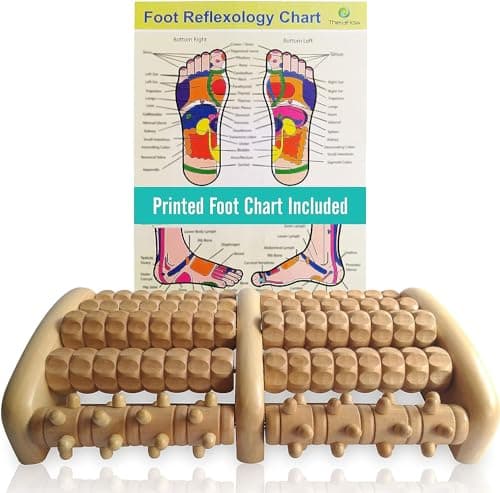
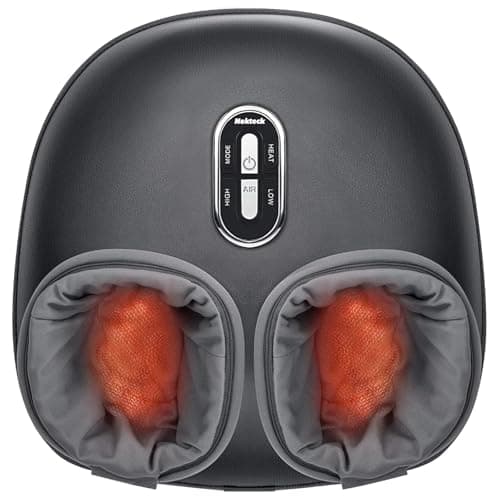
A foot massager is one of the few recovery purchases where the cheap version and the expensive version do genuinely different things — and where the marketing is at its least honest about which is which. Three mechanisms share the category. Rotating kneading nodes on an open platform press up into the sole. Shiatsu rollers plus air compression inside an enclosed shell squeeze the whole foot from the sides as well as underneath. Vibration shakes the foot without kneading it at all. They often cost about the same and they feel nothing alike, so the first job of this page is telling you which one you are actually shopping for.
What all three do well is comfort. Cleveland Clinic's summary of the research is that a foot massage “may help improve your mood, stress, energy level and sleep” — real, modest, and worth having at the end of a day on your feet. What none of them do is the thing printed on the box. The reflexology chart mapping zones of your sole to your organs is not supported: the same source notes that reflexology research “is currently of low quality” and that there are no well-designed studies showing reflexology is better than a plain foot massage. Buy one of these to make your feet feel better. Do not buy one to treat anything above your ankles.
The most common reason people search this category is plantar fasciitis, and the honest answer there is awkward for a page full of machines. The American Academy of Orthopaedic Surgeons puts stretching first — it calls it “the most effective way to relieve the pain” — and the specific self-treatment it names is rolling: “Rolling your foot over a cold water bottle or ice for 20 minutes is effective. This can be done 3 to 4 times a day.” The cheapest pick on this page does exactly that motion, and more than 90% of people improve within 10 months of starting simple treatment. If heel pain is why you are here, read our plantar fasciitis guide before you buy a machine.
One safety point belongs above the picks rather than buried in the FAQ, because a large share of listings in this category advertise the word “neuropathy.” The NIDDK's diabetes foot guidance is blunt: “Do not put a hot water bottle or heating pad on your feet,” because “if you have nerve damage from diabetes, you may burn your feet and not know you did.” A heated foot massager is a heating pad you rest your feet on. If you have diabetes, neuropathy or any loss of sensation in your feet, that is a conversation with your clinician before a purchase, not after one.
Six picks below, scored on kneading depth (real rollers and nodes, or a motor that only buzzes), coverage (sole only, whole foot, or feet plus ankles and calves), heat (how many levels, and how hot the manufacturer says it gets), fit (the foot-size ceiling that ruins more of these purchases than any other spec) and value.
If the knee is the joint you are actually shopping for, start with do knee massagers work — the same honest split between the mechanism with evidence behind it and the ones without.
Three mechanisms, and which one you actually want
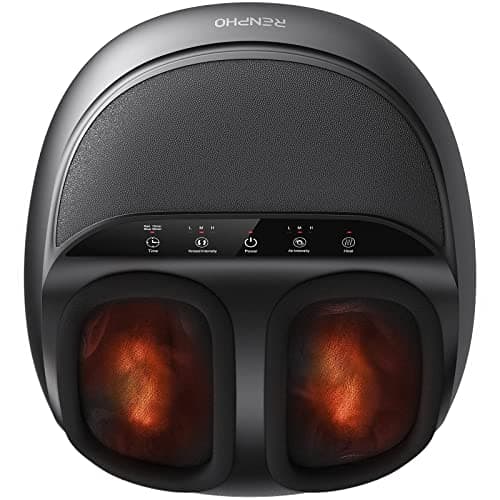
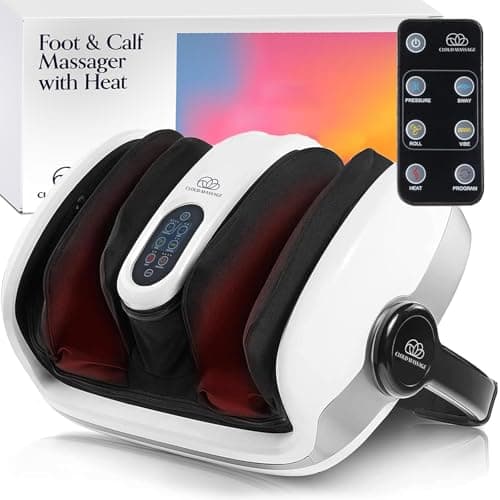
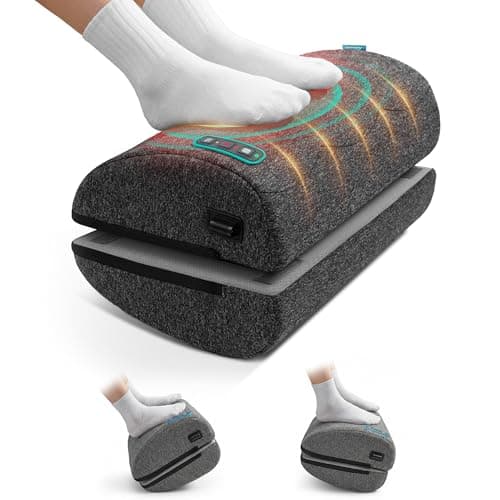
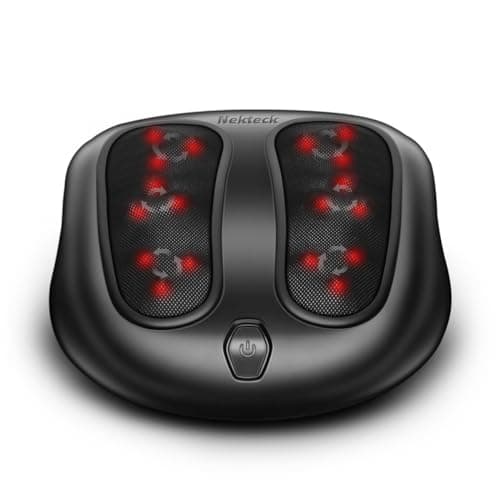
Everything sold as a foot massager uses one of three things, and the listings blur them on purpose. Rotating kneading nodes are studs on a spinning disc that press up into the sole; you set the depth by how hard you push down, and there is no size limit because your foot sits on top. Shiatsu rollers with air compression put your foot inside a shell where rollers work the sole and airbags inflate around the sides and top — the closest thing here to a pair of hands, and the only mechanism that treats the top of the foot. Vibrationshakes the whole foot without kneading anything; it is warm, pleasant and completely different, and it is what most under-desk products use. If a listing says “massage” without saying rollers or airbags, assume vibration.
Foot size is the spec that ruins the most purchases
Every enclosed machine has a hard ceiling, usually stated as US size 12, 13 or 14, and it is the most common reason one of these gets returned. The number refers to length, and a wide foot can fail to fit a shell rated for its length. Check the stated ceiling before anything else if you wear a large shoe, and if you are near the limit, buy an open-platform machine or a roller instead — neither has a size restriction at all. This matters doubly if the massager is a gift: guessing someone's shoe size wrong turns a thoughtful present into a box that has to go back.
Heat is the best feature here, and the one that is genuinely dangerous for some feet
Warmth does much of the work in this category. It makes a stiff foot more comfortable, it feels good on cold feet, and machines with several heat levels and a thermostat beat machines with a single element that climbs until you turn it off. Look for a stated maximum temperature and a timer, and treat both as spec-sheet requirements rather than nice-to-haves.
The exception is not a small one. NIDDK guidance for people with diabetes says plainly: “Do not put a hot water bottle or heating pad on your feet,” because “if you have nerve damage from diabetes, you may burn your feet and not know you did.” A heated foot massager is a heating pad you rest your feet on, often for longer. Many of these products carry the word neuropathy in the title; that is a marketing decision, not clearance for use. If you have diabetes, peripheral neuropathy or any numbness in your feet, ask your clinician before buying, and treat any device whose heat cannot be switched off as unsuitable. This is general information, not medical advice.
What the listings claim, and what the evidence supports
The supported claim is comfort. Cleveland Clinic's review says a foot massage may help mood, stress, energy level and sleep — modest, real, and enough on its own to justify one of these at the end of a long shift. The unsupported claim is the reflexology chart printed on the box, mapping regions of the sole to organs and systems. The same source notes the research is of low quality and that no well-designed study shows reflexology beating a plain foot massage. Nothing here detoxes anything, and no foot device treats a condition somewhere else in your body.
The same clinic also lists conditions where a professional would modify or avoid foot work altogether — circulatory problems, blood clots, gout, thyroid issues, athlete's foot and epilepsy among them. That list is a reasonable prompt to ask first rather than assume, and it applies just as much to a machine as to a therapist.
If the problem is swelling, heavy legs or standing all day
A foot massager is the wrong tool for swollen feet and ankles. Swelling is a fluid problem, and the gear that addresses it works by graduated pressure applied up the leg over time, not by kneading the sole for fifteen minutes. Graduated compression socks are the cheapest version and the best-evidenced item in this corner of the site; sequential air-compression boots are the powered version. We rank the boots for exactly this buyer in best compression boots for circulation, and settle the socks-versus-boots question in compression boots vs socks. Buy a foot massager for how your feet feel; buy compression for how they swell.
Where a foot massager fits with the rest of your gear
It is a comfort tool for the end of the day, and it works best alongside the things that treat the cause. For heel pain that means calf work and stretching, covered in our plantar fasciitis guide; for feet that ache after running, it means the calves and hamstrings that a massage gun or a foam roller reaches and a foot machine cannot. If you are assembling recovery gear from scratch, our recovery gear starter kit puts the whole category in buy order — and a foot massager is a late purchase in it, not an early one. And for the hours in between, what you stand in matters more than what you knead with: our recovery shoes ranking covers the sandals, slides and closed shoes that unload the arch and heel all day.