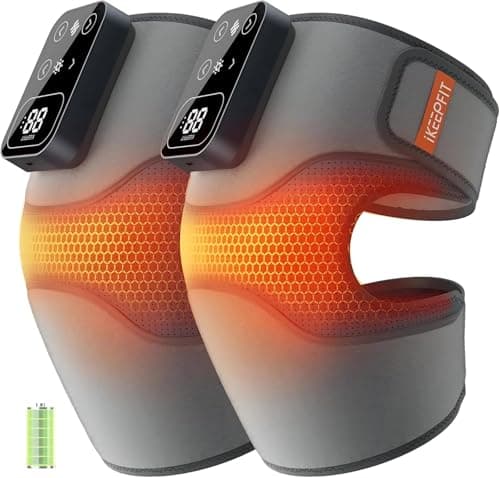
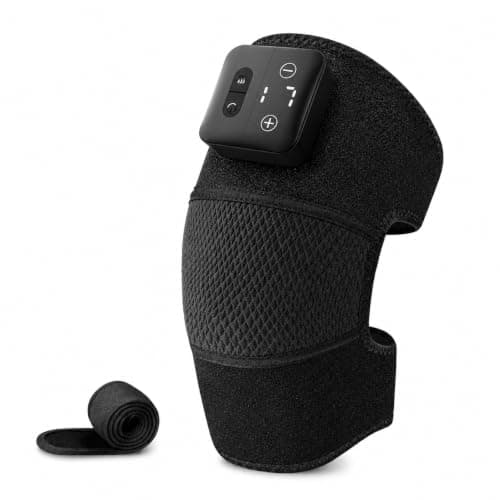
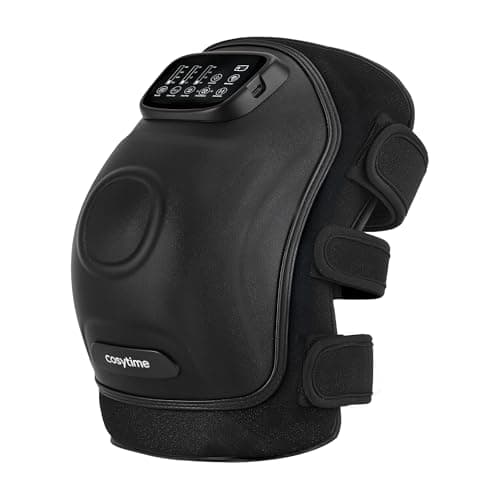
Yes for comfort, no for repair. A heated knee wrap delivers superficial heat, and local heat appears in the American College of Rheumatology and Arthritis Foundation guideline for knee osteoarthritis as a conditionally recommended adjunct— something that can help alongside the treatments that actually change the disease, not instead of them. The same guideline is less kind to the massage half of these devices: manual therapies sit under its conditionally recommended againstheading, on the finding that they provide little relief for knee and hip osteoarthritis. The heat is the part with support. Nothing in that guideline says any device repairs cartilage, and no knee massager does.
That is a real but modest claim, and it is worth being precise about, because these products are sold on three mechanisms at once. Heat has the support. Compression and vibration make a wrap feel better while it is on and have no comparable guideline backing for knee arthritis. Red light and "infrared" panels at the power levels in a consumer wrap are a marketing feature as far as we are concerned, and we do not score them.
The treatments that move the needle are unglamorous and sit in the same guideline: exercise, weight management where relevant, and strength work around the joint. A heated wrap's honest job is making the first ten minutes of that movement tolerable, and making an evening in a chair less uncomfortable. Judged on that, these devices are good value. Below: the mechanisms separated, what to expect by week, who should not use one, and three registry wraps.
The three mechanisms, separated
Heat. Superficial heat raises local tissue temperature, increases blood flow and reduces the sensation of stiffness. Thermal interventions are described as slightly improving pain and function in osteoarthritis, and heat is the one thing in a knee wrap that corresponds to something a physical therapist would actually recommend. More heat levels is a genuinely useful specification, because the right temperature is the one you will sit in for twenty minutes.
Compression.Air bladders squeezing the joint feel supportive and pleasant, and a sequential pattern feels better than a single squeeze. What compression does for knee arthritis specifically is not established; the better-supported use of intermittent pneumatic compression is in the legs, for circulation and limb swelling, which is a different product and a different purpose — see compression boots for circulation.
Vibration. Pleasant, distracting, and the weakest of the three on evidence. Vibration modes are the easiest feature to add to a wrap and the easiest to over-claim. Treat them as comfort, not therapy.
Red light and infrared.Photobiomodulation is a genuine research area at clinical doses and delivery. The LEDs in a fabric knee wrap are not that, the brands do not publish irradiance figures, and we have no way to verify any of it — so we neither count it in a score nor tell you it does nothing. We tell you it is unverified and we price the wrap as though the panel were not there.
What to expect, honestly
- During a session: warmth, less stiffness, a relaxed feeling around the joint, and for most people noticeably less discomfort for a while afterwards.
- After a week: a reliable twenty-minute comfort routine, usually easiest in the evening or before a walk.
- After a month: no structural change, because nothing about heat or vibration alters cartilage. What can change in a month is how much walking and strength work you managed, which is the part that improves the knee.
- What it will not do: repair cartilage, cure arthritis, replace an exercise programme, or substitute for a diagnosis. Knee pain has many causes and some of them need imaging, not a wrap.
Where a wrap beats a massage gun, and the other way round
A knee massager is the better tool for the joint itself: it holds steady heat around a structure a percussive device should not be pounded against. A massage gun is the better tool for the musclesthat load the knee — quadriceps, hamstrings, calves — which is frequently where the pain is actually generated. Used together they make sense; used interchangeably they do not. Never run a massage gun directly over the kneecap, the back of the knee or a bony prominence, which we cover in where not to use a massage gun.
Who should not use one
Heat is the wrong tool on a fresh, swelling injury— that is where cold belongs. Skip a heated wrap entirely, or ask a clinician first, if you have reduced sensation in the leg (diabetic neuropathy in particular, because you cannot feel a burn developing), active infection or inflammation of the joint, a deep vein thrombosis or a history of clots, open wounds or skin breakdown over the knee, a recent joint replacement or surgical hardware, or any implanted electronic device. Pregnancy and significant peripheral vascular disease are also conversations to have first. And new, severe or locking knee pain is a reason to see a doctor rather than to buy anything.
Three wraps judged on the mechanism that has support
Scored on heat control first, then fit, then whether it treats both knees, then value. Compression and vibration count as comfort rather than as therapy, and red-light panels count for nothing. Prices are live and stamped with the date they were checked.
What the evidence says, mechanism by mechanism
| Mechanism | Status for knee osteoarthritis | What to expect |
|---|
| Superficial heat | Conditionally recommended as an adjunct in the ACR / Arthritis Foundation guideline | Less stiffness and discomfort during and shortly after a session |
| Manual therapy / massage | Conditionally recommended AGAINST for knee and hip OA — little relief | Temporary comfort while it is on; do not buy a wrap for this |
| Air compression | Not established for knee arthritis; the supported use is in the legs for circulation | Feels supportive while it is on |
| Vibration | No guideline support for this use | Pleasant and distracting |
| Red light / infrared LEDs | Unverified at consumer power levels; no published irradiance figures | We score it as nothing and suggest you pay for nothing |
| Exercise and weight management | First-line in the same guideline | The part that actually improves the joint over months |
Read the top and bottom rows together: a heated wrap is a legitimate adjunct to the thing that works, which is movement. Bought as a substitute for movement it is money spent to feel slightly better while nothing improves.
How to use one properly
Twenty minutes at a temperature that is comfortable rather than maximal, once or twice a day. Put a thin layer of fabric between the element and bare skin if the wrap runs hot, and never sleep in a heated wrap — a device you cannot feel getting too hot is how low-temperature burns happen. Use it before walking or your strength exercises rather than after, so the warmth buys you a better session. If a session consistently leaves the joint more swollen than it started, stop and ask a clinician; that is not what heat should do.
The muscles around the knee matter more than the knee
Quadriceps strength is one of the most consistent modifiable factors in knee osteoarthritis function, and nothing in a wrap trains it. Sit-to-stands, step-ups, leg extensions with a band and walking all do. The hub ranks the gear for that in resistance bands for seniors and fitness equipment for seniors, and if tight, sore thigh muscles are the real complaint, a foam roller or a massage gun on the muscle — not the joint — is the right tool.