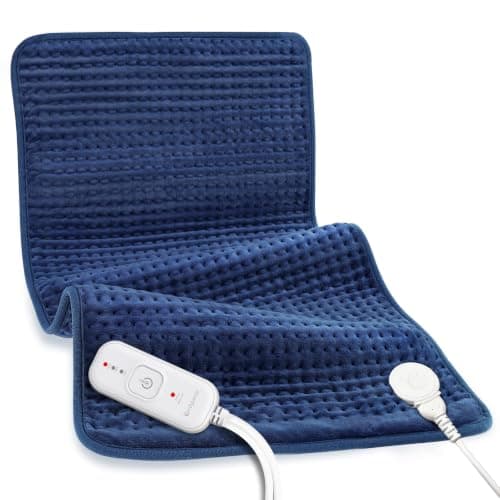
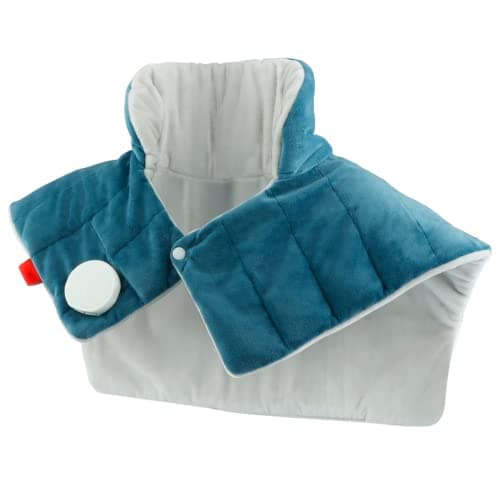
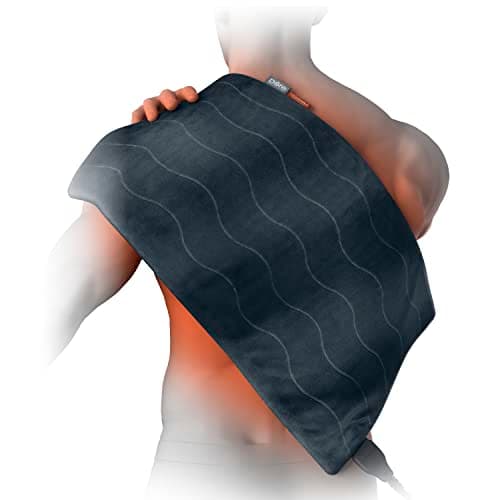
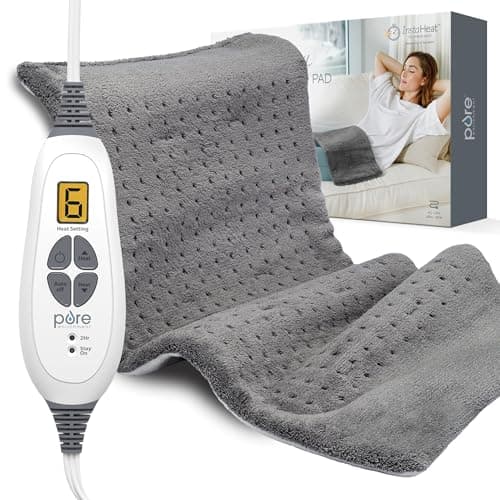
For most people the right heating pad is a 12 by 24 inch plug-in with a moist-heat option — and ours is the Pure Enrichment PureRelief XL. It is long enough to cover a whole lower back or drape over both shoulders, it has six heat settings and an auto shut-off, and the fabric goes in the washing machine, which is the spec that decides whether you still own it in three years. If the place that hurts is your neck, or you need to walk around while it works, two of the picks below beat it on exactly that and nothing else.
Heating pads are a shelf where the listings compete on the wrong numbers. Nine heat settings is not better than six — nobody uses seven of them. Eleven timer options is a software menu, not a feature. What actually decides whether a pad gets used past the first week is simpler:
- Heated area, in inches. A standard pad is roughly 12 by 15. An XL is 12 by 24. A king-size is over 30 inches on its long edge. The difference between them is whether one placement covers the sore area or you spend the session repositioning.
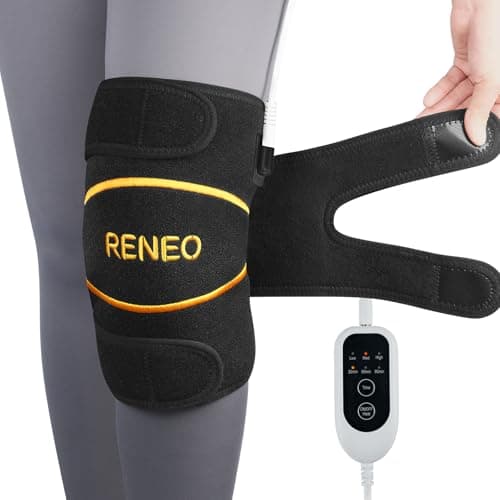
- Whether it stays put hands-free. A flat pad needs you to lie on it or hold it on. A weighted drape stays on shoulders while you sit up. A strap or belt stays on a knee or a waist while you move. This is the single biggest difference in how often a pad gets used, and almost no listing leads with it.
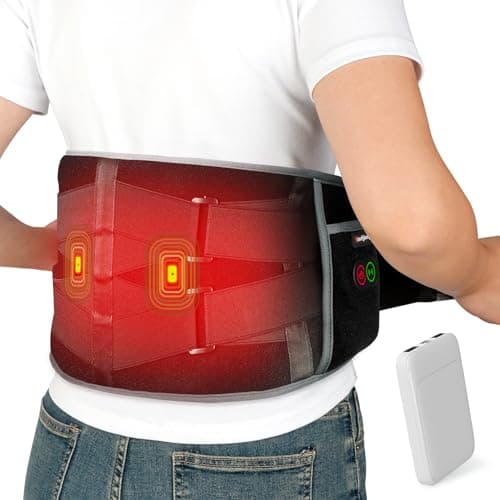
- Cord or battery. Plug-in means unlimited heat time and a cable across the room. Cordless means roughly half an hour to an hour of heat and the freedom to cook dinner in it. There is no pad that does both.
- Auto shut-off and washability. The shut-off is a safety feature you will find irritating; the removable, machine-washable cover is the reason a pad survives being used on skin and lotion for years.
What heat is actually good for
Worth being straight about this before the list, because the category oversells itself. The AAOS guidance is narrow and useful: heat is for muscle pain and stiffness, it should be warm rather than hot to avoid burns, and it should notgo on an area that is swollen, bruised or has an open wound — that is what ice is for. For low back pain specifically, the Cochrane review of superficial heat and cold found moderate evidence from a small number of trials that heat wrap therapy gives a small short-term reduction in pain and disability in acute and sub-acute back pain, and that adding exercise reduced pain further than heat alone. The same review concluded that no conclusions could be drawn about cold.
So: a pad is a real but modest tool that makes the first ten minutes of movement tolerable, and the movement is the part that changes anything. If you are buying a pad instead of walking, stretching or strengthening, you are buying the smaller half of the answer. That is also why nothing here is expensive — the whole shelf sits in the low-to-mid two-figure bracket, two brands do most of the volume, and paying more mostly buys size and a nicer cover.
Scores below are judgments from published specifications and owner feedback, not lab tests — see how we review. Prices are pulled live and stamped with the date they were checked. If what you actually want is whole-body heat rather than a sore spot, start with best sauna blankets instead; if you want heat and vibration on a joint, that is the knee massager shelf, and we are candid there about how little the vibration adds.
Pick the format, then the pad
Almost everyone gets this backwards: they compare settings counts across formats that cannot substitute for each other. Decide where the heat has to go and whether you will be still, and the shelf narrows to two or three products.
| Flat XL pad | King-size pad | Weighted drape | Cordless belt | Joint wrap |
|---|
| Best for | Lower back, lying or leaning | Whole back, diffuse ache | Neck and traps, sitting up | Back pain while moving | Knee, elbow |
| Stays put hands-free | Only lying on it | Only lying on it | Yes - by weight | Yes - by strap | Yes - by strap |
| Heat time | Unlimited to shut-off | Unlimited to shut-off | Unlimited to shut-off | About 30 minutes | Unlimited to shut-off |
| Even heat | Good | Cooler at the edges | Good | Fair | Best - wraps the joint |
| Typical bracket | Mid | Low to mid | Mid | Mid to upper | Mid |
The specs worth reading, and the ones to ignore
Read: dimensions. They are the only number on the listing that cannot be marketed. Measure the area that hurts and buy a pad longer than it.
Read: machine washable, and whether the cover comes off. A pad used on bare skin with any kind of balm or lotion gets dirty fast. The ones that die early are the ones you cannot clean.
Read: auto shut-off duration. Two hours is generous; thirty minutes on a cordless unit is a session. Either way, the shut-off existing at all is the safety feature that matters most on this shelf.
Ignore: settings counts above about six. Nine heat levels and eleven timers are a menu system. You will find one setting you like and stay there.
Ignore: wattage comparisons between different sizes. A bigger pad draws more power to reach the same temperature over more area. The number tells you nothing about how hot it gets.
Treat "far infrared", "graphene" and "deep penetrating" as marketing. We could not verify a clinical claim for any of them at the surface temperatures a consumer pad is allowed to reach. Buy the better-built pad if you want it; do not pay for the physics claim.
Safety, briefly and seriously
This is one of the few categories on the site where the product itself can injure you, so it is worth the paragraph. The AAOS guidance is to aim for warm, not hot, specifically to avoid burns, and to keep heat off anything swollen, bruised or broken-skinned. Three practical rules follow from that:
- Do not fall asleep on a pad. This is what the auto shut-off is for, and it is why a pad without one is not on this page.
- Do not use heat on skin that cannot feel it.Reduced sensation — from diabetic neuropathy, nerve injury or anything else — removes the warning system that stops a burn. Same for anyone who cannot move away from the pad unaided.
- Put a layer between the pad and bare skin, keep it on a middle setting rather than maximum, and check the cord for damage before each use.
When heat is the wrong tool
Fresh swelling, a joint that is hot to the touch, pain immediately after an impact or a sprain: that is the ice side of the decision, and the AAOS infographic is blunt about it — heat does not belong on an inflamed, swollen area. Back pain with numbness, weakness, or any change in bladder or bowel control is urgent and not a shopping problem. And back pain that has not shifted at all in six weeks needs a clinician rather than a bigger pad.
The last honest note: the Cochrane evidence for heat wraps is a small short-term improvement, and the trials that added exercise did better than heat alone. Use the pad as the thing that makes the first ten minutes of moving bearable, then go and move. If you are interested in the cold half of this argument, our cold plunge benefits page applies the same standard of evidence to the other direction.