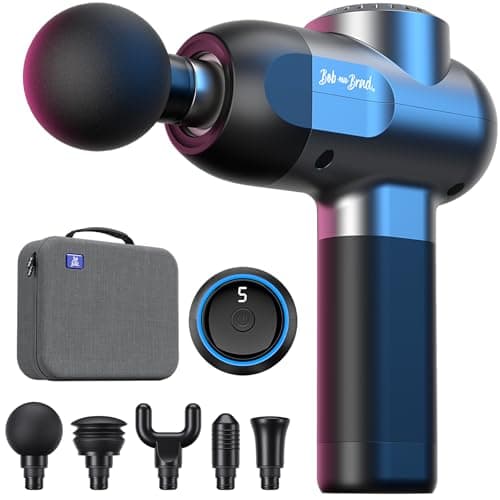
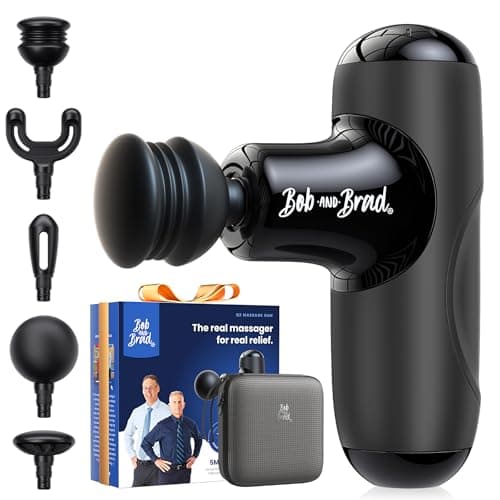
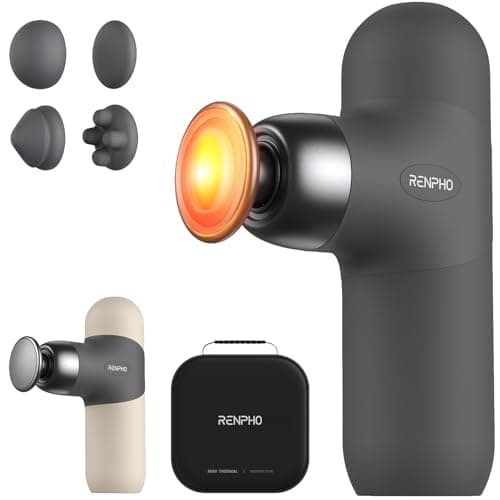
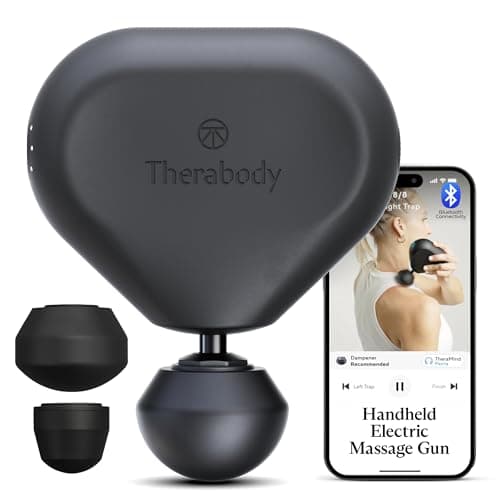
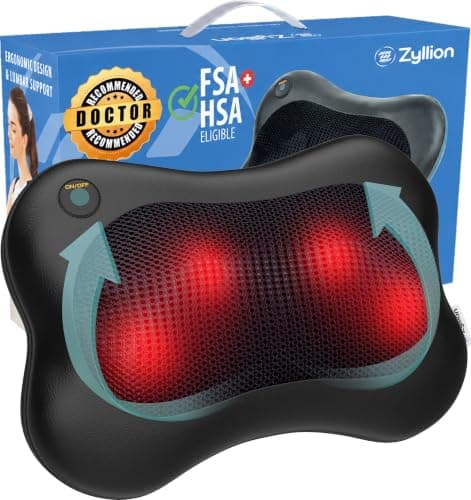
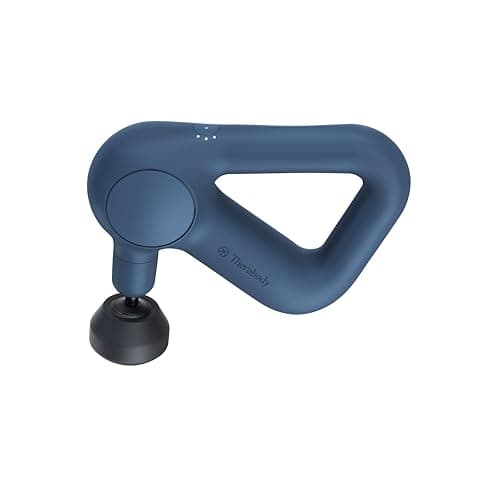
The upper trapezius — the slab of muscle between your neck and the point of your shoulder — is where desk work, driving and phone-scrolling put their tension, and it is the muscle most people reach for a massage gun to fix. It is also thin tissue sitting over bone, a hand's width from the cervical spine and the arteries that run up the neck. That combination changes what a good gun looks like for this job: not the deepest stroke or the highest stall force, but a light body you can hold across yourself one-handed, a genuinely gentle bottom speed, and a small round head that stays on muscle.
The six below are all guns we already rank in the flagship roundup or the mini and travel guns, re-scored on what shoulder work asks for: reach and one-handed weight, low-speed control, noise (this is a gun you use at a desk), battery and value. The order is different because the weighting is different — the winner here is the gentlest full-size gun we rank, which on the flagship page sits near the bottom. The sixth pick is not a gun at all, because the neck itself is not a place a gun belongs, and we would rather give you the right tool than pretend.
One thing before the list, stated bluntly because the case reports exist: a massage gun is never used on the front or sides of the neck, and never over the spine. Two published reports describe vertebral artery dissection — a tear in one of the arteries feeding the brain — in people who had used a handheld massage gun on the neck, one of them a 27-year-old. Percussion belongs on the upper traps, the tops of the shoulders and the muscles between the shoulder blades. The buyer's guide below has the map; our page on where not to use a massage gun has the full list.
Where the gun goes, and where it never does
The safe targets are the upper trapezius (the meaty ridge from the base of the neck out to the shoulder), the tops of the shoulders and rear delts, and the muscles between the shoulder blades. Work along the muscle, not across the bone, and keep the head moving. The forbidden zones are the front and sides of the neck, where the carotid and vertebral arteries and a bundle of nerves sit close under the skin; the spine itself, cervical or otherwise; the base of the skull; and the collarbone. If the head is touching something hard, it is in the wrong place.
This is not caution for its own sake. A 2022 case report in the medical literature describes a 27-year-old who developed a vertebral artery dissection — a tear in one of the arteries supplying the brain — after three weeks of using a handheld massage gun on her neck; a 2025 report describes a 65-year-old with the same injury and a cerebellar stroke after using a percussion device on his neck. The authors of the second note that nobody has studied the forces these devices put through the neck. Two case reports is not an epidemic, but it is enough to say: the neck is not a gun target.
Why the gentlest gun wins
On a quad, stroke depth and stall force decide whether a gun reaches the muscle. On an upper trap there is no depth to reach — the muscle is a finger or two thick over the shoulder blade and the first rib — and a deep, forceful stroke simply drives the head into bone. What matters instead is a low bottom speed you can control, a small round or soft head, and a body light enough to hold across your chest for two minutes without your other shoulder tightening up in sympathy. That is why the Relief, a gun we rank near the bottom for general use, wins this page, and why the minis score so well.
Technique: two minutes, low speed, keep moving
Sit, drop the shoulder you are working, and hold the gun in the opposite hand across your body. Start on the lowest speed with a round head, float the gun along the top of the trap from the neck outward for 30 to 60 seconds, then along the rear of the shoulder, then between the shoulder blades if you can reach. Let the gun's weight supply the pressure. A couple of minutes per side is the ceiling; the Cleveland Clinic's advice is no longer than a couple of minutes on any one muscle group, and HSS suggests starting with light 10- to 15-second passes. If it hurts, you are pressing too hard or in the wrong place. Our how to use a massage gun guide covers the general technique, and how often covers dosing.
Tension versus a problem
A gun helps the ordinary stiff shoulders of a desk day: it warms the tissue, eases the feeling of tightness and buys you range of motion for a few hours. It does not treat a pinched nerve, a disc problem, a whiplash injury or a headache with neck pain behind it. Numbness or tingling down an arm, pain that started with an injury, a stiff neck with a fever, or dizziness of any kind are reasons to put the gun down and see someone. For the recurring desk-tension case, the honest fix is mostly not a gun at all — it is a monitor at eye height and getting up every hour — and the gun is a pleasant supplement.