Skip to content
Rep & Recovery

Thermal · Cold & Heat

The best ice packs for injuries, ranked on cold and fit

Every listing on this shelf promises long-lasting cold. The three things that separate them are how much gel is in the pack, whether it stays floppy at freezer temperature, and whether it stays where you put it without a hand on it.

By Stephen V.Updated How we review
#ad

We earn a commission when you buy through our Amazon links, at no extra cost to you. It never changes a verdict, and we say so when the cheaper product is the better buy. How this works.

For most injuries the right ice pack is a big, floppy, clinical-grade gel pack — and ours is the Chattanooga ColPac in the standard 10 x 13.5 in size. It is the pack that physical therapy clinics buy, it stays pliable straight out of the freezer so it molds around a joint instead of bridging across it, and it costs less than most of the branded wraps on this shelf. If the injury is somewhere you cannot hold a pack against — a knee you need to walk on, a shoulder, the back of a neck — buy a strap-on wrap shaped for that joint instead, and we rank those below.

This is the cheapest piece of recovery equipment on the whole site and one of the most used. It is also the one where listings are least informative: every pack claims "long-lasting cold," nobody publishes a cooling curve, and the photographs are all of a pack lying flat on a table rather than wrapped round the part of you that hurts. Four things actually decide whether a pack is good.

  • How long it stays cold, which is mostly a function of how much gel is in it. Thermal mass is the whole mechanism; a thin pack is a short pack. Packs that publish a time — 20, 45, 120 minutes — are stating a claim about mass, not about clever chemistry.
  • Whether it stays pliable at freezer temperature. This is the single most underrated spec on the shelf. A pack that freezes solid sits on a knee as a flat board, touching it in two places. A pack that stays floppy wraps the joint and contacts all of it, which both feels better and cools better.
  • Whether it stays put without a hand on it. Twenty minutes is a long time to hold something. Straps, sleeves and contoured shapes are the difference between a pack you use properly and a pack you abandon at minute six.
  • Coverage matched to the body part. A 10 x 14 in rectangle is right for a lower back and clumsy on an ankle. A shoulder needs a pack that goes over the top and round the front. Buy the shape, not the biggest number.

What ice actually does, and what the evidence says

Ice reduces pain. That part is uncontroversial and it is most of why you want one. Where the evidence is much thinner is the claim that icing speeds up healing. A systematic review of randomized controlled trials on ice in acute soft-tissue injury (Bleakley and colleagues, American Journal of Sports Medicine, 2004) found wide variation in how cryotherapy is used clinically and concluded that guidelines continue to be made on an empirical basis — in plain terms, after decades of use, nobody has established the optimal duration, frequency or protocol. An earlier review in the International Journal of Sports Medicine reached the same place: the gaps are specifically in the duration of each session and how often to repeat it.

More recently the framing has shifted further. The British Journal of Sports Medicineeditorial that introduced the PEACE & LOVE framework for soft-tissue injury explicitly flags anti-inflammatory interventions for their "potentially harmful effects on optimal tissue repair," while acknowledging they show benefits on pain and function. That is a useful, honest summary of what an ice pack is: an effective, cheap, short-term pain tool, and not a healing device.

Practical guidance has converged regardless. The NHS tells people to "apply an ice pack (or a bag of frozen vegetables wrapped in a tea towel) to the injury for up to 20 minutes every 2 to 3 hours" and to avoid heat, alcohol and massage for the first couple of days. The AAOS patient guidance is the same shape: ice for acute injury, swelling and inflammation; heat for muscle pain and stiffness; never heat on something swollen or bruised. And Cleveland Clinic is blunt about the one rule people break: "Never put an ice or cold pack directly on your skin. Wrap it in a towel or another type of cloth."

Scores below are judgments from published specifications and owner feedback, not lab tests — see how we review. Prices are pulled live and stamped with the date they were checked. If what you actually want is the heat half of this, that is best heating pads; if you are considering whole-body cold instead of a local pack, start with cold plunge vs ice bath.

The short answer

Quick picks

#ProductBest forScorePrice
01
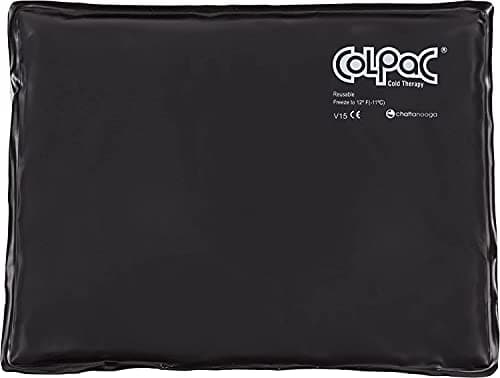
Chattanooga Chattanooga ColPac Standard (Black Polyurethane, 10 x 13.5 in)
Chattanooga ColPac Standard (Black Polyurethane, 10 x 13.5 in)

The pack physical therapy clinics buy, at consumer-shelf money. A dense slab of gel in a tough polyurethane shell that stays pliable at freezer temperature, so it molds around a knee or an elbow rather than bridging across it. Nothing here cools better per dollar.

Best overall
8.0
$24.80Amazon
02
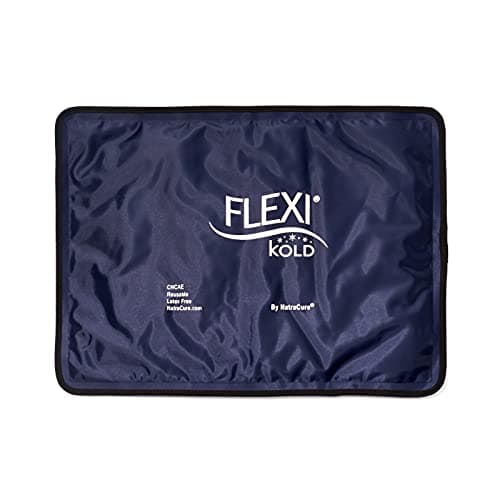
FlexiKold FlexiKold Gel Ice Pack (Standard Large, 10.5 x 14.5 in)
FlexiKold Gel Ice Pack (Standard Large, 10.5 x 14.5 in)

The large flexible pack to buy for a lower back, and the one to buy if you only ever buy one pack. Slightly bigger than the ColPac, sold on staying soft and drapeable when frozen, and widely used post-surgery for exactly that reason.

Best for back and large areas
8.0
$19.99Amazon
03
REVIX REVIX Knee Ice Pack Wrap (hands-free strap)
REVIX Knee Ice Pack Wrap (hands-free strap)

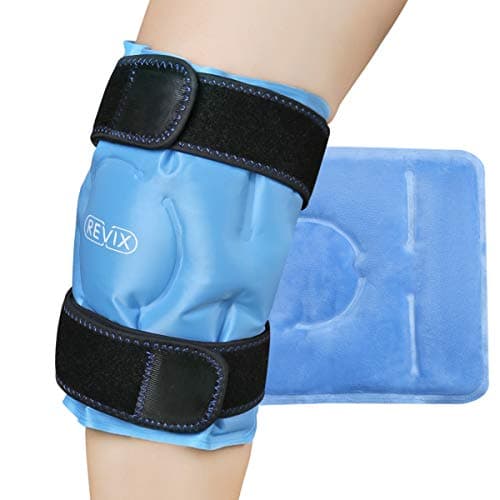
The knee pack, and the first thing to buy after knee surgery or a meniscus problem. A gel pack held in a plush-lined wrap with a hands-free strap, so it stays on the joint while you walk to the kitchen - which is the difference between icing properly and icing for six minutes.

Best for knees
7.8
$18.99Amazon
04
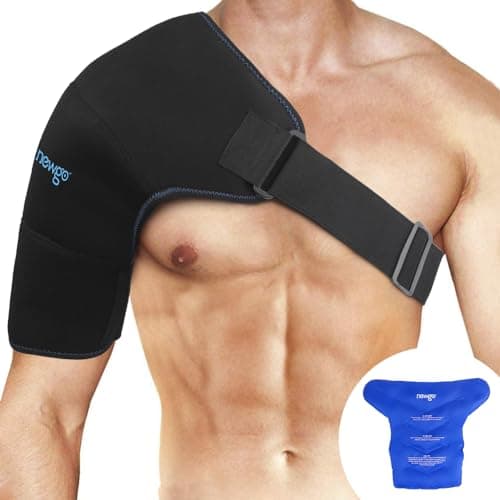
NEWGO NEWGO Shoulder Ice Pack (compression sleeve, XL)
NEWGO Shoulder Ice Pack (compression sleeve, XL)

A shoulder is the one joint a flat rectangle cannot ice properly, and this is the cheap fix: a compression sleeve that fits either shoulder and holds gel over the top of the joint and round the front. The obvious buy after rotator cuff surgery or a shoulder injury.

Best for shoulders
7.8
$17.99Amazon
05
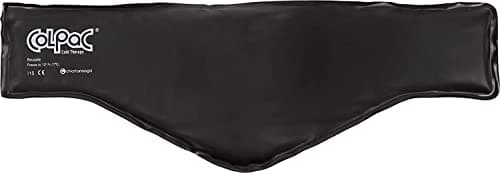
Chattanooga Chattanooga ColPac Neck Contour (Black Vinyl, 21 in)
Chattanooga ColPac Neck Contour (Black Vinyl, 21 in)

The same clinical gel as our winner, cut into a 21-inch contour that sits across the back of the neck and over both shoulders at once. If the complaint is neck or upper-back, this shape is worth more than any amount of extra gel in a rectangle.

Best for neck and upper back
8.2
$15.63Amazon
06
Comfytemp Comfytemp Knee Ice Pack Wrap (wearable)
Comfytemp Knee Ice Pack Wrap (wearable)

The cheapest thing on this page worth owning, and a sensible second wrap so you always have one frozen. A wearable gel wrap for a knee at roughly a third of the price of the branded packs, with the compromises you would expect on cold duration and build.

Best budget
7.0
$12.99Amazon

#ad · Live prices from the Amazon Product API, as of October 27, 2026. Where we have no verified live price, we show none — a gap beats a number that has rotted.

In detail

The picks, in full

01
Chattanooga Chattanooga ColPac Standard (Black Polyurethane, 10 x 13.5 in)

Best overall

Chattanooga ColPac Standard (Black Polyurethane, 10 x 13.5 in)

10 x 13.5 inClinical-grade gelBlack polyurethane shellStays pliable when frozen
8.0/10

The pack physical therapy clinics buy, at consumer-shelf money. A dense slab of gel in a tough polyurethane shell that stays pliable at freezer temperature, so it molds around a knee or an elbow rather than bridging across it. Nothing here cools better per dollar.

Cold duration
9
Pliability
10
Hands-free fit
3
Coverage
8
Value
10

Pros

  • Clinic-standard pack - the same thing that gets handed to you in a physical therapy appointment
  • Stays flexible out of the freezer, which is what lets it contact a whole joint instead of two points
  • Polyurethane shell is tougher and more puncture-resistant than the thin vinyl on cheap packs
  • 10 x 13.5 in suits knees, elbows, shoulders and a small back - the most useful single size

Cons

  • No strap and no sleeve - you hold it on, or you wrap it with a bandage
  • No fabric cover included, so you must supply the towel yourself every time
  • Dense gel is heavy for its size, which is awkward on a raised limb
  • Takes a couple of hours in the freezer to recharge, so one pack is not a continuous rotation

Don't buy this if…

…you need to move while you ice - a pack with no strap on a knee you intend to walk on is the wrong tool, and the REVIX wrap below is the right one.

Pliability is why this wins, and it is worth laboring because it is not on most listings at all. Water freezes hard; the gel in a good cold pack is formulated not to, so at freezer temperature it has roughly the consistency of a bag of wet sand. Press that against a knee and it takes the shape of the knee. Press a rock-solid pack against the same knee and it touches the kneecap and nothing else — which is both less comfortable and, because contact area is what moves heat, less effective.

Buy two. This is the one piece of advice that changes how useful a cold pack is, and it costs very little here. A single pack gives you one 20-minute session and then two hours of waiting; two packs let you follow the every-two-to-three hours pattern the NHS describes without planning your day around the freezer.

The shell is the other quiet reason to pick this over a supermarket pack. Thin vinyl packs split along a seam eventually, usually while frozen and usually onto something you cared about. Polyurethane takes more abuse. Note that this version ships without a fabric cover, so a thin tea towel between pack and skin is mandatory rather than optional — see the cold-therapy safety section below.

$24.80View on Amazon

Price as of October 27, 2026. Prices change — Amazon's at checkout is the one that counts.

#ad · we may earn a commission from this link to Chattanooga ColPac Standard (Black Polyurethane, 10 x 13.5 in)

02
FlexiKold FlexiKold Gel Ice Pack (Standard Large, 10.5 x 14.5 in)

Best for back and large areas

FlexiKold Gel Ice Pack (Standard Large, 10.5 x 14.5 in)

10.5 x 14.5 inProfessional-grade gelFlexible when frozenReusable, double-sealed
8.0/10

The large flexible pack to buy for a lower back, and the one to buy if you only ever buy one pack. Slightly bigger than the ColPac, sold on staying soft and drapeable when frozen, and widely used post-surgery for exactly that reason.

Cold duration
9
Pliability
9
Hands-free fit
4
Coverage
10
Value
8

Pros

  • The largest flat pack here - a lumbar back wants coverage, not precision
  • Designed around staying soft and drapeable at freezer temperature
  • Works as well around a shoulder or a thigh as it does flat on a back
  • Commonly recommended for post-surgical icing, which is the most demanding use case there is

Cons

  • No strap, so on a back it works best lying down rather than walking around
  • A large pack takes longer to refreeze than a small one
  • Costs a little more than the ColPac for broadly similar performance
  • Too big for an ankle, a wrist or a child

Don't buy this if…

…the target is a small joint - a wrist or an ankle under a 14-inch pack is mostly icing the air around it, and you want the smaller ColPac or a shaped wrap.

For a lower back there is no substitute for area. Back pain is rarely a point; it is a band across the lumbar spine, and a pack that covers 10.5 x 14.5 in reaches all of it at once. The trade is that a pack this size is awkward to strap on, so the realistic protocol is to lie down on it — which is no hardship, and which is what most people do with a back anyway.

Ice is not the first-line answer for ordinary back pain, though. For an acute strain in the first day or two it is sensible. For the persistent, stiff, long-running kind, the guidance points towards heat and movement instead, which is why we rank the other half of that choice in best heating pads and why foam rollers for back pain exists at all. The NHS specifically says to avoid heat for the first couple of days after an injury — that cut-off is the whole decision.

$19.99View on Amazon

Price as of October 27, 2026. Prices change — Amazon's at checkout is the one that counts.

#ad · we may earn a commission from this link to FlexiKold Gel Ice Pack (Standard Large, 10.5 x 14.5 in)

03
REVIX REVIX Knee Ice Pack Wrap (hands-free strap)

Best for knees

REVIX Knee Ice Pack Wrap (hands-free strap)

Hands-free strapWraps the whole jointHot or cold usePlush lining included
7.8/10

The knee pack, and the first thing to buy after knee surgery or a meniscus problem. A gel pack held in a plush-lined wrap with a hands-free strap, so it stays on the joint while you walk to the kitchen - which is the difference between icing properly and icing for six minutes.

Cold duration
6
Pliability
8
Hands-free fit
10
Coverage
7
Value
8

Pros

  • The strap is the feature: it holds the pack on a knee through a full 20-minute session without a hand on it
  • Wraps around rather than resting on top, so it contacts the sides of the joint where most knee swelling sits
  • Plush lining is a built-in barrier, which removes the commonest cold-therapy mistake
  • Doubles as a heat wrap once the acute phase has passed

Cons

  • Less gel than the big flat packs, so it runs out of cold sooner
  • Shaped for a knee - it is a compromise on a shoulder or a back
  • Strap tension is easy to overdo, and a tight wrap plus cold is how skin gets hurt
  • Fabric cover means washing it occasionally, unlike a bare gel slab

Don't buy this if…

…you will be lying still anyway - a bigger flat pack holds more cold for less money, and the strap buys you nothing on a sofa.

Knees are the body part where the strap earns its money, because a knee is a joint you keep needing to use. The practical failure mode of a flat pack on a knee is not that it cools badly; it is that twenty minutes of sitting with a hand pressed to your leg is more commitment than most people give it, so the session quietly becomes eight minutes and then nothing.

Do not pull the strap tight. Compression and cold together are a genuinely effective combination and also the quickest route to a cold injury, because compression reduces the blood flow that would otherwise warm the skin. Snug, not tight, and if the skin underneath goes numb or waxy, stop. Twenty minutes is the ceiling, not a target to beat.

If knee pain is chronic rather than acute, cold is a symptom tool and not a plan. Knee massagers cover the heat-and-vibration option, and equipment for bad knees covers the loading side, which is the part that actually changes anything.

$18.99View on Amazon

$22.9917% off

Price as of October 27, 2026. Prices change — Amazon's at checkout is the one that counts.

#ad · we may earn a commission from this link to REVIX Knee Ice Pack Wrap (hands-free strap)

04
NEWGO NEWGO Shoulder Ice Pack (compression sleeve, XL)

Best for shoulders

NEWGO Shoulder Ice Pack (compression sleeve, XL)

Fits either shoulderCompression sleeve designXL coverageFSA/HSA eligible
7.8/10

A shoulder is the one joint a flat rectangle cannot ice properly, and this is the cheap fix: a compression sleeve that fits either shoulder and holds gel over the top of the joint and round the front. The obvious buy after rotator cuff surgery or a shoulder injury.

Cold duration
6
Pliability
8
Hands-free fit
9
Coverage
8
Value
8

Pros

  • Shaped for a shoulder, which is the joint flat packs genuinely cannot cover
  • Sleeve holds the pack over the top and around the front of the joint at once
  • Fits either side, so it is not a left-or-right purchase
  • FSA and HSA eligible, which quietly makes it cheaper for a lot of US buyers

Cons

  • Getting a shoulder sleeve on one-handed, with a sore shoulder, is genuinely fiddly
  • Less gel than a large flat pack, so sessions are shorter
  • Compression plus cold needs care - do not pull the straps hard
  • Single-purpose: it is useless on a knee, a back or an ankle

Don't buy this if…

…the problem is not a shoulder - this is the most shape-specific pick on the page and there is no second use for it.

The shoulder is a ball on a slope. A flat pack laid over it touches the top of the deltoid and stands away from the front and back of the joint, which is exactly where rotator cuff pain and post-surgical swelling live. A sleeve solves the geometry and that is the entire reason to own one rather than a second rectangle.

Two practical notes. First, put the sleeve on before you chill the insert if you can — threading a stiff, cold pack into a sleeve with one working arm is unpleasant. Second, the FSA and HSA eligibility on this one is not a gimmick: for cold therapy bought after an injury, it is a real discount that most buyers on this shelf never claim.

$17.99View on Amazon

$18.995% off

Price as of October 27, 2026. Prices change — Amazon's at checkout is the one that counts.

#ad · we may earn a commission from this link to NEWGO Shoulder Ice Pack (compression sleeve, XL)

05
Chattanooga Chattanooga ColPac Neck Contour (Black Vinyl, 21 in)

Best for neck and upper back

Chattanooga ColPac Neck Contour (Black Vinyl, 21 in)

21 in contouredClinical-grade gelCovers neck + both shouldersStays pliable when frozen
8.2/10

The same clinical gel as our winner, cut into a 21-inch contour that sits across the back of the neck and over both shoulders at once. If the complaint is neck or upper-back, this shape is worth more than any amount of extra gel in a rectangle.

Cold duration
8
Pliability
10
Hands-free fit
5
Coverage
9
Value
9

Pros

  • Contour follows the neck and drapes over both trapezius muscles instead of bridging across them
  • Same clinical gel formulation as the standard ColPac, so it stays pliable from the freezer
  • One pack covers the whole neck-and-shoulder complaint rather than half of it
  • Cheap for what it is - it is the same money as a plain pack of similar mass

Cons

  • No strap, so it is a sit-or-lie-down pack, not a walk-around one
  • Vinyl shell rather than the tougher polyurethane of the standard version
  • The contour that makes it good on a neck makes it awkward anywhere else
  • 21 inches of pack needs real freezer shelf space

Don't buy this if…

…you want one pack for everything - the shape is the point, and it is the wrong shape for a knee, an ankle or a lower back.

Neck complaints are nearly always a band of tension running from the base of the skull across both shoulders, and a rectangle laid on top of that reaches perhaps a third of it. A contoured pack follows the curve and sits down onto the trapezius on both sides, which is both more comfortable and the reason the clinical version of this product exists in this shape at all.

Be careful about reaching for cold here, though. Most everyday neck and upper-back pain is stiffness rather than acute injury, and the AAOS guidance points stiffness towards heat, not ice. Cold is right for a fresh strain, a new flare, or anything swollen or bruised; heat is right for the tight, dull, long-standing version. If yours is the second kind, read best heating pads instead, and massage guns for neck and shoulders for the mechanical option.

$15.63View on Amazon

Price as of October 27, 2026. Prices change — Amazon's at checkout is the one that counts.

#ad · we may earn a commission from this link to Chattanooga ColPac Neck Contour (Black Vinyl, 21 in)

06
Comfytemp Comfytemp Knee Ice Pack Wrap (wearable)

Best budget

Comfytemp Knee Ice Pack Wrap (wearable)

Wearable wrapHot or cold useReusable gelLowest price here
7.0/10

The cheapest thing on this page worth owning, and a sensible second wrap so you always have one frozen. A wearable gel wrap for a knee at roughly a third of the price of the branded packs, with the compromises you would expect on cold duration and build.

Cold duration
5
Pliability
7
Hands-free fit
8
Coverage
6
Value
9

Pros

  • Cheap enough to buy two, which is what actually makes icing practical
  • Wearable, so it does the one job a bare gel slab cannot
  • Hot or cold, which covers the transition from the acute phase to the stiff phase
  • Low enough risk that it is the right first purchase if you are not sure you will use it

Cons

  • Less gel than every other pick here, so expect a noticeably shorter cold session
  • Build quality is the compromise at this price - seams and straps are where budget packs fail
  • Thinner lining than the REVIX wrap, so a towel is more necessary, not less
  • Published specification detail is thin compared with the clinical packs above

Don't buy this if…

…this is for post-surgical icing - that is the one case where cold duration and reliability matter more than price, and the ColPac or the REVIX wrap are the correct answers.

Every argument on this page for buying two packs runs into the price of buying two packs, and this is where that stops being a problem. A cheap second wrap sitting in the freezer is worth more than a marginally better single pack, because the thing that makes cold therapy work is doing it repeatedly across the first day or two, and that requires one in the freezer while one is on you.

What you give up is minutes of cold and some confidence in the seams. Neither matters much for an ordinary sore knee after a run. Both matter after surgery, where you are icing to a schedule and a split pack at 2am is a real problem.

$12.99View on Amazon

Price as of October 27, 2026. Prices change — Amazon's at checkout is the one that counts.

#ad · we may earn a commission from this link to Comfytemp Knee Ice Pack Wrap (wearable)

The six, side by side

PackPublished size / typeHands-freeBest body partBarrier included
ColPac Standard10 x 13.5 in flatNoKnee, elbow, small backNo
FlexiKold Large10.5 x 14.5 in flatNoLower back, thighNo
REVIX Knee WrapStrapped wrapYesKneeYes, plush lining
NEWGO ShoulderCompression sleeveYesShoulderYes, sleeve
ColPac Neck Contour21 in contouredNoNeck, upper backNo
Comfytemp WrapWearable wrapYesKneeYes, cover

How to ice, in four lines

Twenty minutes, not more.The NHS puts it at "up to 20 minutes every 2 to 3 hours," and AAOS patient guidance uses the same 20-minute ceiling. Longer is not better; past that point you are risking the skin for no extra benefit.

Always use a barrier.Cleveland Clinic's wording is worth memorizing: "Never put an ice or cold pack directly on your skin. Wrap it in a towel or another type of cloth." A thin tea towel is enough. The wraps on this page that include a lining have the barrier built in; the bare gel packs do not.

Ice early, then stop. Cold is a first-48-hours tool for a fresh injury, and a symptom tool after that. The NHS also tells you what to avoid in that window: heat, alcohol and massage.

Two packs, not one. Every protocol that works assumes a pack is available every two to three hours, and a single pack takes hours to refreeze. This is the cheapest upgrade on the page.

Ice or heat? The one rule that settles most cases

AAOS patient guidance divides it cleanly: ice for acute injury, swelling and inflammation; heat for muscle pain and stiffness— and never heat on something swollen, bruised or with an open wound. So a rolled ankle an hour ago is ice. A back that has been stiff for three weeks is heat. A sore neck on waking is usually heat. A knee that swelled up after a game is ice.

The place people go wrong is the middle of the week after an injury, where the swelling has settled but the area is still sore and tight. That is where heat and gentle movement generally beat more ice, and it is also where the PEACE & LOVE framework is explicitly pointing: load, optimism, vascularization and exercise after the first few days, rather than continued anti-inflammatory treatment. We rank the heat side in best heating pads.

Gel pack, instant pack, or a bag of peas?

Reusable gel packs are what this page is about: cheapest per use, coldest for longest, and the only ones that stay pliable. Instant chemical packs are for a kit bag where there is no freezer — they are single-use, far less cold, and cost more per application than anything here. Frozen vegetables genuinely work, which the NHS says in as many words, and they are the right answer at 10pm when you do not own a pack; they just warm up fast and they cannot be shaped around a joint twice.

When cold therapy is a bad idea

Numb or poorly sensed skin.If you cannot feel the area normally — diabetic neuropathy, nerve damage, anything that has reduced sensation — the warning system that stops an ice burn is gone. Ask a clinician before icing.

Poor circulation, Raynaud's, or a vascular condition. Cold constricts vessels, which is the mechanism, and in these cases that is a risk rather than a benefit.

Over a wound, a rash, or broken skin. A cold pack is not a dressing and it is not sterile.

And for whole-body cold, this page is the wrong one.Immersion is a different intervention with a different risk profile — we cover it, including who should not do it, in cold plunge risks.
How we picked

We did not lab-test this gear

Everyone in this category says they tested twenty products. We have not lab-tested any of these, and we say so. What we did instead: compiled the published specifications, pulled the numbers from the manufacturer manuals, ran the cost-to-run and cost-per-unit math where there was math to run, and scored each product against a published rubric. The scores are judgments from documented research — not measurements we took, because we do not have a lab and we will not pretend we do. Where a number came from someone else's work, we name them in Sources.

Questions

Frequently asked

How long should you leave an ice pack on?
Up to 20 minutes, then take it off. The NHS guidance is "up to 20 minutes every 2 to 3 hours" and the AAOS patient guidance uses the same ceiling. Beyond 20 minutes you add skin risk without adding benefit, which is why two packs in rotation beats one pack left on.
Do you put an ice pack directly on the skin?
No. Cleveland Clinic is unambiguous: "Never put an ice or cold pack directly on your skin. Wrap it in a towel or another type of cloth." The strapped wraps on this page have a lining that does this for you; the bare clinical gel packs do not, so a thin towel is part of the kit.
Ice or heat for an injury?
Ice for an acute injury, swelling and inflammation; heat for muscle pain and stiffness, and never heat on anything swollen or bruised — that is the AAOS patient guidance in one line. The common error is staying on ice into week two, when heat and gentle movement usually do more. The heat options are ranked in best heating pads.
Does icing actually speed up healing?
The evidence for that is weak, and it is worth knowing. A 2004 systematic review of randomized trials in the American Journal of Sports Medicinefound wide variation in clinical use and concluded guidelines are still made on an empirical basis, and the PEACE & LOVE editorial in the British Journal of Sports Medicine flags anti-inflammatory interventions for potentially harmful effects on tissue repair while acknowledging their benefit on pain. Treat an ice pack as a good, cheap pain tool rather than a healing device.
What is the best ice pack for a knee?
A strapped wrap, not a flat pack. A knee needs cold on the sides as well as the front, and it needs to stay there while you move - which is what a hands-free strap buys you. Keep the strap snug rather than tight: compression plus cold is the fastest route to a skin injury.
How many ice packs should I buy?
Two. Any protocol that calls for icing every two to three hours assumes a cold pack is available, and a gel pack takes a couple of hours to refreeze. The cheapest wrap on this page exists mostly to be the second one.
Are gel ice packs better than a bag of frozen peas?
Yes, but peas are a legitimate fallback and the NHS names them explicitly. A gel pack holds more cold, stays pliable so it contacts the whole joint, and survives being refrozen hundreds of times. Peas warm up quickly and lose their shape. If you have no pack tonight, use the peas, wrapped in a tea towel.
Can you use an ice pack as a heat pack?
The wraps on this page that say hot-or-cold can be warmed, and that is genuinely useful once an injury moves from the swollen phase into the stiff phase. The bare clinical gel packs are cold-only. Never microwave a pack that does not say it is microwave-safe.
Who should not use cold therapy?
Anyone with reduced sensation in the area - diabetic neuropathy or nerve damage - because the warning sign that prevents an ice burn is missing. Also people with Raynaud's, poor circulation or a vascular condition, and never over broken skin or a rash. When in doubt, ask a clinician rather than guessing.

Keep reading

Receipts

Sources

We do not run a testing lab, and we do not pretend to. Where a measured number came from someone else's work, we name them and link them. Where we could not verify something, we say so on the page rather than quietly leaving it out. Read our full method.