Skip to content
Rep & Recovery

Mobility · Foam Rollers

The best foam rollers for back pain

A roller is one of the cheapest things that reliably makes a stiff upper back feel better — and one of the easiest to use wrongly on the lower one. Five picks, ranked, with the safety rules first.

By Stephen V.Updated How we review
#ad

We earn a commission when you buy through our Amazon links, at no extra cost to you. It never changes a verdict, and we say so when the cheaper product is the better buy. How this works.

Foam rolling the upper back is one of the most reliably useful five minutes in this entire category. If you sit at a desk, your thoracic spine — the middle section, between the neck and the lower back — spends the day rounded forward, and lying across a roller to extend it backwards is precisely the opposite input. Most people feel the difference immediately.

The lower back is a different story, and this is where most guides go quiet. The lumbar spine is not designed to extend over a hard cylinder, the muscles there are already working to stabilize, and rolling directly on the lumbar area is a common way to leave a session feeling worse. The productive lower-back work is on the muscles either side of the spine — which is a job for a peanut-shaped ball, not a full-width roller — and on the glutes and hips that pull on the pelvis.

So this page ranks on three things: length (a roller you can lie along lengthwise opens up an entire class of chest-and-shoulder work), firmness matched to how sore you are, and a surface that does not concentrate pressure on the spinous processes down your midline. The general-purpose ranking is in best foam rollers.

The short answer

Quick picks

#ProductBest forScorePrice
01
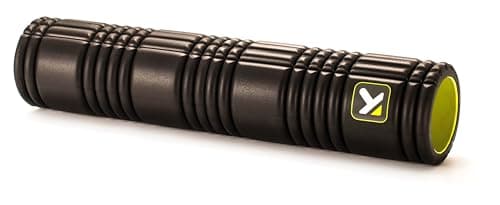
TriggerPoint TriggerPoint GRID 2.0 Foam Roller (26")
TriggerPoint GRID 2.0 Foam Roller (26")

The best roller for a back, because 26 inches lets you lie along it lengthwise — spine down the middle, arms out to the sides — which opens the chest and shoulders in a way no short roller can. The multi-density surface also means the raised sections sit either side of the spine rather than on it.

Best overall for back work
8.8
$74.99Amazon
02
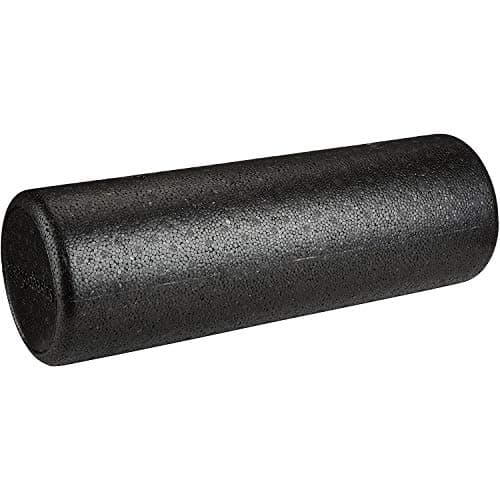
Amazon Basics Amazon Basics High-Density Foam Roller (18")
Amazon Basics High-Density Foam Roller (18")

The sensible-money answer for backs. Eighteen inches is wide enough to lie across comfortably without your shoulders hanging off, the smooth surface spreads pressure evenly across the thoracic muscles, and it is firm enough to actually reach them. The value pick, and not a compromise.

Best value for back work
8.2
$16.99Amazon
03
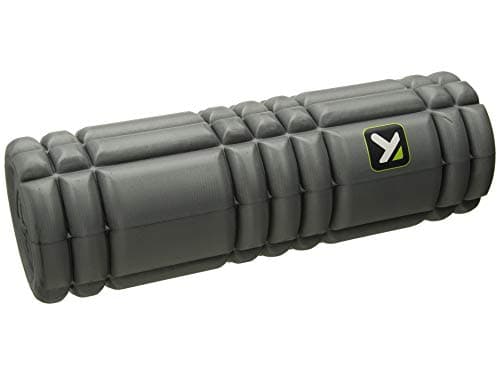
TriggerPoint TriggerPoint CORE Foam Roller
TriggerPoint CORE Foam Roller

The pick if firm rollers hurt. Medium-density solid EVA is forgiving on a back that is genuinely sore or deconditioned, which is exactly the situation where a hard grid roller makes people give up after one session. Softer is not weaker here — it is the difference between doing it and not.

Best for sore or sensitive backs
8.0
$24.99Amazon
04
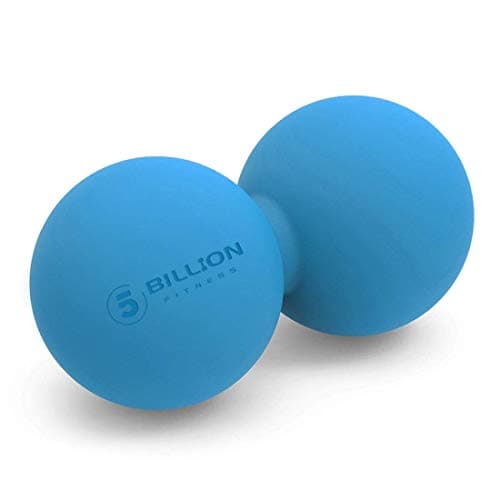
5BILLION 5BILLION Peanut Massage Ball
5BILLION Peanut Massage Ball

Not a roller, and the most important item on this page for lower-back complaints. The center channel straddles the spine by design, so the two lobes press into the erector muscles either side while the bones down the middle are untouched — the one safe way to work the lower back with your body weight.

Best for the lower back specifically
8.4
$16.99Amazon
05
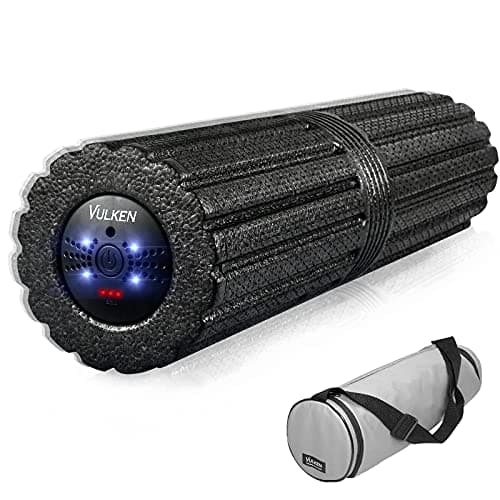
Vulken Vulken Extra Long Vibrating Foam Roller (17")
Vulken Extra Long Vibrating Foam Roller (17")

Vibration makes a stiff back tolerate more, for longer, at lower pressure — which is a real advantage when the tissue is guarded. Seventeen inches covers the width of a back comfortably, and the low speed is gentle enough for a bad day.

Best vibrating option
7.6
$79.99Amazon

#ad · Live prices from the Amazon Product API, as of Sep 4, 2026. Where we have no verified live price, we show none — a gap beats a number that has rotted.

In detail

The picks, in full

01
TriggerPoint TriggerPoint GRID 2.0 Foam Roller (26")

Best overall for back work

TriggerPoint GRID 2.0 Foam Roller (26")

26 in lengthHollow rigid core3-zone GRID surface500 lb load limit
8.8/10

The best roller for a back, because 26 inches lets you lie along it lengthwise — spine down the middle, arms out to the sides — which opens the chest and shoulders in a way no short roller can. The multi-density surface also means the raised sections sit either side of the spine rather than on it.

Back coverage
10
Spine comfort
9
Firmness control
8
Durability
10
Value
7

Pros

  • Long enough to lie along lengthwise for chest and shoulder opening
  • Multi-density surface distributes pressure either side of the spine
  • Rigid hollow core does not deform under a full body weight
  • Rated to a 500 lb static load — it will outlast the habit

Cons

  • Bulky to store and impossible to travel with
  • The most expensive roller here

Don't buy this if…

storage space is genuinely tight — an 18-inch roller does the crosswise work for less bulk.

The lengthwise position is the argument. Lie with the roller running the length of your spine, head supported at one end, knees bent, and let your arms fall out to the sides: gravity does slow, sustained chest and front-of-shoulder opening for as long as you can comfortably stay there. That single position addresses the posture problem that causes a great deal of upper-back complaint, and only a roller of about 26 inches or more makes it possible.

Crosswise, the three-zone surface is well judged for backs. The raised nodules sit either side of the midline as you roll up and down the thoracic spine, so the pressure goes into the erector muscles rather than onto the bones you can feel down the middle.

$74.99View on Amazon

Price as of Sep 4, 2026. Prices change — Amazon's at checkout is the one that counts.

#ad · we may earn a commission from this link to TriggerPoint GRID 2.0 Foam Roller (26")

02
Amazon Basics Amazon Basics High-Density Foam Roller (18")

Best value for back work

Amazon Basics High-Density Foam Roller (18")

18 in length~6 in diameterMolded polypropyleneSmooth surface
8.2/10

The sensible-money answer for backs. Eighteen inches is wide enough to lie across comfortably without your shoulders hanging off, the smooth surface spreads pressure evenly across the thoracic muscles, and it is firm enough to actually reach them. The value pick, and not a compromise.

Back coverage
8
Spine comfort
8
Firmness control
7
Durability
8
Value
10

Pros

  • 18 inches is wide enough to lie across without shoulders overhanging
  • Smooth surface spreads pressure evenly — comfortable on a stiff back
  • Firm high-density foam that holds its shape
  • Very inexpensive for a roller that lasts

Cons

  • Too short for the lengthwise chest-opening position
  • No texture to differentiate pressure across the surface

Don't buy this if…

the lengthwise chest-and-shoulder position is what you came for — that needs 26 inches.

$16.99View on Amazon

Price as of Sep 4, 2026. Prices change — Amazon's at checkout is the one that counts.

#ad · we may earn a commission from this link to Amazon Basics High-Density Foam Roller (18")

03
TriggerPoint TriggerPoint CORE Foam Roller

Best for sore or sensitive backs

TriggerPoint CORE Foam Roller

Solid EVA foamMedium density5.5 in diameterSofter compression
8.0/10

The pick if firm rollers hurt. Medium-density solid EVA is forgiving on a back that is genuinely sore or deconditioned, which is exactly the situation where a hard grid roller makes people give up after one session. Softer is not weaker here — it is the difference between doing it and not.

Back coverage
8
Spine comfort
10
Firmness control
6
Durability
8
Value
8

Pros

  • Medium density is forgiving on a genuinely sore back
  • Solid EVA is durable and water-resistant
  • Smooth surface makes it an easy on-ramp for beginners
  • Available in more than one length to match your back

Cons

  • Not firm enough to satisfy someone used to a hard roller
  • Solid foam compresses over time more than a hollow-core roller

Don't buy this if…

you already roll regularly and want deep pressure — you will roll straight through this one.

$24.99View on Amazon

Price as of Sep 4, 2026. Prices change — Amazon's at checkout is the one that counts.

#ad · we may earn a commission from this link to TriggerPoint CORE Foam Roller

04
5BILLION 5BILLION Peanut Massage Ball

Best for the lower back specifically

5BILLION Peanut Massage Ball

Peanut / double shape~5 in x 2.5 inNatural rubberCarry bag included
8.4/10

Not a roller, and the most important item on this page for lower-back complaints. The center channel straddles the spine by design, so the two lobes press into the erector muscles either side while the bones down the middle are untouched — the one safe way to work the lower back with your body weight.

Back coverage
5
Spine comfort
10
Firmness control
8
Durability
9
Value
10

Pros

  • Center channel straddles the spine — the design solves the lower-back problem
  • Firm natural rubber reaches the erectors properly
  • Costs a fraction of any roller and fits in a bag
  • Works against a wall as well as on the floor for less pressure

Cons

  • Pinpoint tool — it will not cover the whole back like a roller
  • Firm rubber is intense for beginners; start against a wall

Don't buy this if…

you want broad, gentle coverage across the whole back — that is a roller's job.

$16.99View on Amazon

Price as of Sep 4, 2026. Prices change — Amazon's at checkout is the one that counts.

#ad · we may earn a commission from this link to 5BILLION Peanut Massage Ball

05
Vulken Vulken Extra Long Vibrating Foam Roller (17")

Best vibrating option

Vulken Extra Long Vibrating Foam Roller (17")

17 in length4 speeds / 3800 RPM2200 mAh batteryQuick charge
7.6/10

Vibration makes a stiff back tolerate more, for longer, at lower pressure — which is a real advantage when the tissue is guarded. Seventeen inches covers the width of a back comfortably, and the low speed is gentle enough for a bad day.

Back coverage
9
Spine comfort
8
Firmness control
8
Durability
7
Value
6

Pros

  • Vibration lets a guarded back relax at lower mechanical pressure
  • 17 inches spans the back comfortably
  • Four speeds including a genuinely gentle low setting
  • Rechargeable with quick charging

Cons

  • Heavier and bulkier than a plain roller, and needs charging
  • Several times the price of a basic roller

Don't buy this if…

a plain roller already feels fine — vibration is a comfort upgrade, not a results one.

$79.99View on Amazon

Price as of Sep 4, 2026. Prices change — Amazon's at checkout is the one that counts.

#ad · we may earn a commission from this link to Vulken Extra Long Vibrating Foam Roller (17")

Roll the upper back. Be careful with the lower one.

The thoracic spine — from roughly the bottom of your shoulder blades up to the base of your neck — is built to extend, and a roller placed crosswise under it does exactly that. Support your head with your hands, lift your hips slightly off the floor, and roll slowly between the shoulder blades and the mid-back. Five slow passes and a couple of pauses is a complete session.

The lumbar spine — the lower back — is a different structure with different mechanics, and extending it over a hard cylinder while the surrounding muscles are already working is not the same helpful input. Skip the roller there. Work the erectors either side of the spine with a peanut ball, and spend most of your effort on the glutes and hips, which are very often the actual source of lower-back tightness and are perfectly safe to roll. Never roll the neck.

The four positions worth knowing

  • Crosswise thoracic roll. Roller under the mid-back, hands supporting the head, hips slightly raised. Slow passes between shoulder blades and mid-back.
  • Lengthwise chest opener. Roller along the spine, head supported at the top, knees bent, arms out to the sides. Stay there for a minute or two and breathe. Needs a 26-inch roller.
  • Lat roll. Lie on your side with the roller under the armpit-to-ribs area. Tight lats round the shoulders and are almost always involved in a stiff upper back.
  • Glute roll. Sit on the roller with one ankle crossed over the opposite knee, and lean into that side. This is the highest-yield position for anyone whose lower back complains after sitting.

Firmness: start softer than you think

The back tolerates less than the legs. A hard grid roller under a stiff, guarded back produces the kind of experience that makes people conclude foam rolling is not for them — when in fact the density was wrong. If you are new to this, or genuinely sore, start with a medium-density roller, or put a folded towel over a firm one. You can progress to firmer; you cannot un-scare someone who tried it once.

When it is not a rolling problem

Rolling is for ordinary muscular stiffness. Pain that radiates down a leg, numbness or tingling, weakness, pain that wakes you at night, pain following a fall, or pain that is steadily worsening are all signals to stop self-treating and get assessed. Rolling also does not belong over an acute injury, an inflamed area, or a suspected fracture — and if you have osteoporosis, a spinal condition, or take blood thinners, ask a clinician what is appropriate before putting your body weight on a hard cylinder. For a hands-free alternative that never touches the spine, a kneading back massager covers the mid-back from a chair.

How we picked

We did not lab-test this gear

Everyone in this category says they tested twenty products. We have not lab-tested any of these, and we say so. What we did instead: compiled the published specifications, pulled the numbers from the manufacturer manuals, ran the cost-to-run and cost-per-unit math where there was math to run, and scored each product against a published rubric. The scores are judgments from documented research — not measurements we took, because we do not have a lab and we will not pretend we do. Where a number came from someone else's work, we name them in Sources.

Questions

Frequently asked

Is foam rolling good for back pain?
For ordinary stiffness in the upper and middle back, usually yes — rolling the thoracic spine crosswise is one of the most immediately satisfying things in this category, especially if you sit at a desk. For the lower back, use a peanut-shaped ball either side of the spine and focus on the glutes and hips instead, and skip the roller on the lumbar spine itself.
Can you foam roll your lower back?
Rolling directly on the lumbar spine is not recommended — the lower back is not built to extend over a hard cylinder, and the muscles there are already working to stabilize. Use a peanut ball, which straddles the spine and presses only the muscles either side, and spend most of your effort on the glutes and hips that pull on the pelvis.
What size foam roller is best for your back?
Eighteen inches is the practical minimum for lying across comfortably; 26 inches lets you lie along the roller lengthwise for chest and shoulder opening, which is the single most useful position for desk-related upper-back stiffness. Below 18 inches, your shoulders overhang and the position stops working.
How long should you foam roll your back?
Five minutes is plenty: five to eight slow passes over the thoracic spine, a minute or two in the lengthwise position if your roller allows it, then a minute per glute. Roll slowly, about an inch per second, and pause on tender spots rather than sawing back and forth.
Should you foam roll if your back hurts?
If it is ordinary muscular stiffness, gently, on the upper back, with a softer roller. If the pain radiates down a leg, causes numbness or weakness, wakes you at night, follows an accident, or is getting worse, stop and get it assessed — that is not a rolling problem.

Keep reading

Receipts

Sources

We do not run a testing lab, and we do not pretend to. Where a measured number came from someone else's work, we name them and link them. Where we could not verify something, we say so on the page rather than quietly leaving it out. Read our full method.