Everything a cold plunge does for you, it does by shocking the body — the surge of adrenaline and noradrenaline, the constricted blood vessels, the spike in heart rate and blood pressure. Those are the mechanisms behind the mood lift and the reduced soreness, and they are also, without exaggeration, the mechanisms behind drowning, cardiac arrest and hypothermia in cold water. A review in Experimental Physiology put it in one sentence: cold water can be either good or bad, threat or treatment, depending on circumstance. This page is about the circumstance.
We wrote cold plunge benefits as the honest case for the practice and how long to cold plunge as the dosing guide. This is the third leg: the risks, ranked by how likely they are to hurt you, who should not plunge at all, and the handful of rules — about temperature, time, company and how you get out — that manage the danger for everyone else. At the end, and only then, the tub features that make a home setup safer, and the tubs we rank that have them.
Risk one: cold shock, in the first minute
The moment cold water hits skin, the body produces what physiologists call the cold shock response: an involuntary, enormous gasp, followed by rapid, uncontrolled breathing, alongside an instantaneous spike in heart rate and blood pressure. The National Center for Cold Water Safety describes the gasp as one that "totally fills your lungs" and the hyperventilation that follows as something that "can continue for a long time" — in one documented case, fifteen minutes after leaving the water. The Cleveland Clinic lists the same thing in plainer language: cold water can trigger rapid, uncontrolled breathing.
The practical danger is simple. If your face is under water when the gasp happens, you inhale water. That is why the single most important rule of cold plunging is not about temperature or time: enter slowly, feet first, and keep your head above the water until your breathing is under control. The Cold Water Safety center's temperature guide says breathing control becomes progressively harder as water falls from 70°F to 60°F and describes 50 to 60°F as "maximum intensity cold shock" — which is exactly the range beginners are told to start in. That is the physiological reason to enter slowly and build up gradually rather than start at the temperature the influencers use.
Risk two: the heart
The Cleveland Clinic's summary: when cold water constricts your blood vessels, it raises your blood pressure and forces your heart to work harder. Harvard Health's cardiology piece explains the mechanism — the fight-or-flight surge sends adrenaline and noradrenaline into the bloodstream, speeding heart rate and raising blood pressure, and the extra adrenaline can also disrupt the heart's rhythm. In a healthy heart that is a stress it handles. In a heart with an existing rhythm disorder, narrowed arteries or uncontrolled high blood pressure, it is a stress that can tip into something serious, and the Cold Water Safety center is blunt that the spike "greatly increases the danger of heart failure and stroke in vulnerable individuals."
Harvard's cardiologist goes further than most: anyone with a heart rhythm disorder such as atrial fibrillation should avoid cold plunges, and so should people with circulation problems such as peripheral artery disease or Raynaud's. If you have heart disease or high blood pressure, the Cleveland Clinic's advice — and ours — is to ask your doctor before you try, not after.
Risk three: staying in too long
Cold water pulls heat out of the body quickly, and the Cleveland Clinic lists hypothermia, frostbite and skin damage among the consequences of prolonged exposure. The subtler danger arrives first: extended exposure leads to numbness and reduced motor control, which makes it difficult to exit the water safely. Feet and hands go first, grip weakens, and a tub you climbed into easily becomes one you struggle out of. This is why the recommended sessions are short — the Cleveland Clinic's ceiling is five minutes, with one or two for beginners — and why nobody should plunge alone at the outer edge of their tolerance. Shivering and clumsiness for a while after you get out are normal, and a warm layer and a warm room should already be waiting.
Risk four: the training trade-off
This one does not hurt you; it just quietly undoes some of what you trained for. A body of research on cold-water immersion after resistance training — summarized in a 2024 review we cite on the benefits page — finds that plunging soon after lifting blunts the muscle-growth response. If you train for strength or size, the fix is timing: plunge before you lift, on a rest day, or several hours after, and never straight after the session you want to adapt to. For endurance work the picture is more forgiving. Our dosing guide has the schedule.
Who should not cold plunge, or should ask first
The Cleveland Clinic's list of conditions that warrant a conversation with a doctor first: heart disease, high blood pressure, diabetes, pregnancy, peripheral neuropathy, poor circulation, venous stasis and cold agglutinin disease. Harvard Health adds — as an avoid, not an ask — heart rhythm disorders such as atrial fibrillation, and circulation problems including peripheral artery disease and Raynaud's syndrome. To that we would add, as common sense rather than clinical guidance: anyone who has fainted in cold water before, anyone who has been drinking, and anyone with an acute illness. None of this is a moral judgment about toughness. It is that the adaptations cold plunging offers are modest and available elsewhere, and the risks for these groups are not.
The rules that manage the risk for everyone else
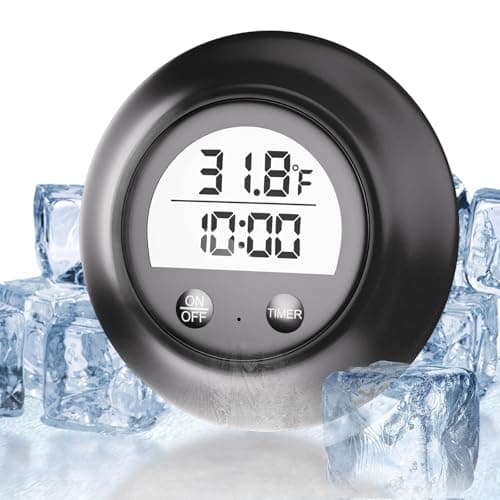
Temperature: the Cleveland Clinic says never below 40°F, and beginners should start between 50 and 59°F — measured with a thermometer, not guessed. Time: one to two minutes to begin, never more than five. Frequency: once or twice a week to start, building as tolerance builds. Entry: slowly, feet first, head up, breathing under control before you settle. Company: someone within earshot, especially early on and always at the cold end. Exit:a plan for getting out — a step, a handle, a tub you can stand up in — and warm clothes and a warm room waiting. And the Cleveland Clinic's closing line, which we would put on the lid: cold water can become dangerous quickly, so do not try to push through what does not feel right.
What a safer home setup looks like
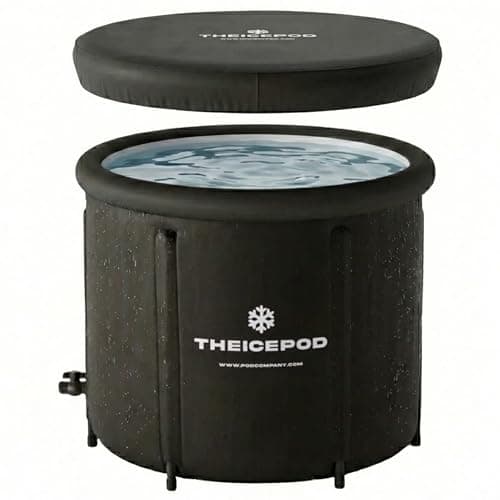
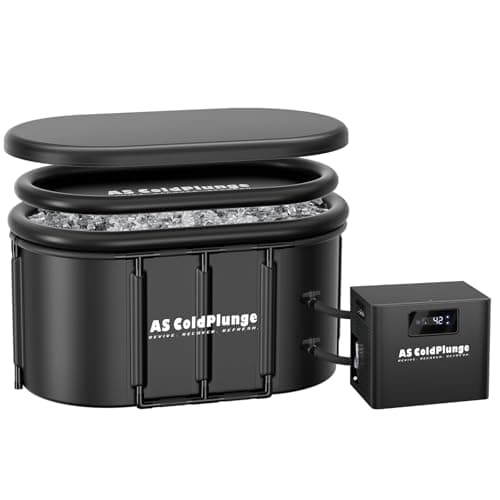
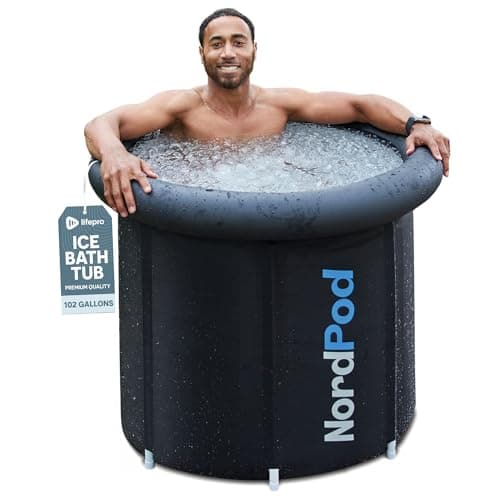
The rules above are mostly about you. The tub matters in three ways. First, temperature control: the difference between 45°F and 55°F is the difference between a session a beginner can do and one they should not, and a tub you cool with ice hits whatever temperature the ice happens to produce. Good insulation and a lid keep the water where you set it; a thermostatic chiller holds it there exactly. A floating thermometer is not optional on any tub. Second, exit: a tub you can stand up in and step out of, with stable walls, is safer at the numb-fingered end of a session than a deep barrel. Third, size: a tub you fit in comfortably with your head well clear of the water is one where the gasp reflex has nowhere to go wrong. The three below are the tubs from our cold plunge ranking and under-$500 comparison that best fit that description, and the thermometer is listed with them.
Sauna to plunge, and plunge to sauna
Contrast bathing — hot then cold — stacks two cardiovascular stressors, and the transition is where the heart works hardest: vessels dilated by heat, then slammed shut by cold. For a healthy person it is a well-tolerated routine; for anyone on the caution list above it doubles the reason to ask first. Practically, go from the sauna to the plunge slowly, sit for a minute between, and treat the plunge portion by the same temperature and time rules as a standalone session. Our sauna vs cold plunge page compares the two on their own, and is a sauna blanket safe? is the heat-side counterpart to this page.
The honest scale of the risk
For a healthy adult who enters slowly, keeps sessions short, measures the water, and has someone nearby, cold plunging is a low-risk activity with a well-understood stress response that the body adapts to over a few weeks. The serious harms — drowning from the gasp, cardiac events, hypothermia — cluster among people with existing heart or circulation problems, people who go in alone and cold and stay too long, and people who treat the first plunge like the hundredth. The benefits, meanwhile, are real but modest, and the Portsmouth review is candid that some of the claims made for cold water rest on anecdote. Weigh it accordingly: worth doing, worth doing carefully, and not worth doing at all for the people on the list.