Skip to content
Rep & Recovery

Thermal · Cold & Heat

What temperature should a cold plunge be?

Colder is not better, it is just shorter. The honest answer is a range rather than a number, and the number you pick changes how long you should stay in — which is the part most charts leave out.

By Stephen V.Updated How we review
#ad

We earn a commission when you buy through our Amazon links, at no extra cost to you. It never changes a verdict, and we say so when the cheaper product is the better buy. How this works.

For most people, 50-59°F (10-15°C) is the right range, and 2-5 minutes is the right time in it. That is cold enough to produce everything a plunge is supposed to produce and warm enough that you can breathe normally within the first thirty seconds. If you want a single starting number: 55°F for three minutes. Go colder only when that has become genuinely easy, and shorten the session when you do.

The reason the internet cannot agree on a number is that temperature and time are one setting, not two. A 2025 network meta-analysis in Frontiers in Physiology looked at cold-water immersion dose across both variables precisely because they trade off against each other: the colder the water, the less of it you need and the sooner it stops being useful and starts being a stress you have to recover from. So the sensible way to read any recommendation is as a pair.

The temperature-and-time chart

Treat these as sensible starting points for a healthy adult, not prescriptions. Shorter is always a valid choice.

  • 60-68°F (15-20°C) — cool. 5-10 minutes. Pleasant, almost no shock, and a reasonable first week. Mild enough that some people feel nothing much, which is fine: the point of week one is learning to breathe, not enduring.
  • 50-59°F (10-15°C) — the working range. 2-5 minutes. Cold enough to be unmistakably cold, short enough to be repeatable, and where most home plunging sits. This is what we recommend across the site.
  • 40-49°F (4-9°C) — advanced. 1-3 minutes. For people who have been plunging for months. The gasp response at this temperature is sharp and the margin for error is much smaller.
  • Below 40°F (4°C). Not something we recommend at home, at any duration. There is no evidence of extra benefit and the risks scale fast.

Duration has its own page — how long to cold plunge — and the two pages agree: the dose is the pair, and 50-59°F for 2-5 minutes is the middle of it.

Why colder is not better

Three reasons. The first is that the physiological responses people plunge for — the catecholamine surge, the vasoconstriction, the alertness — are already fully engaged in the fifties; dropping another ten degrees mostly adds discomfort.

The second is cold shock. The gasp reflex and the involuntary hyperventilation that follow immersion are at their most intense between roughly 50 and 60°F according to the National Center for Cold Water Safety, and they get harder to control the colder you go. Losing breathing control in a tub is how a wellness habit becomes an emergency.

The third is that cold is a stressor you have to recover from, not a free bonus. If the plunge leaves you shivering for an hour and sleeping badly, the dose was wrong regardless of what the thermometer said.

What each band actually feels like

At 60°F you notice it and then adjust; you could hold a conversation. At 55°F the first fifteen seconds take real attention and then breathing settles. At 50°F the gasp is involuntary and the first thirty seconds are the entire skill. At 45°Fhands and feet ache within a minute and the clock is doing the work for you. The subjective jump between 55 and 45°F is far larger than ten degrees suggests.

Safety, before you set a number

Never plunge alone. Get in slowly and deliberately rather than jumping, and never dunk your head on entry — face immersion amplifies the shock response. Get out at the first sign of losing breathing control, numbness that spreads, or shivering that starts while you are still in. Rewarm passively with dry clothes and movement; do not jump into a hot shower, which drops blood pressure.

Talk to a doctor first if you have a heart condition, high blood pressure, an arrhythmia, peripheral arterial disease, Raynaud's, are pregnant, or take medication affecting heart rate or blood pressure. Harvard Health is blunt about the cardiovascular side of this, and so are we in cold plunge risks.

Hitting a temperature, and holding it

Knowing the number is the easy half. The hard half is that water warms up: an uninsulated tub in a garage climbs several degrees a day, and body heat alone raises it during a session. There are three ways to deal with that, and they cost very different amounts.

Ice. Cheap to start, linear to run. You are buying a temperature drop every single session, and in a well-insulated tub with a lid, one fill can last several days of plunging. A chiller. You set a number and the machine holds it, which is the only way to get a repeatable dose without thinking about it; the cost is electricity and the up-front purchase. Insulation and a lid, which is not an alternative so much as the thing that makes either of the other two affordable.

Whether a chiller is worth it for you is a frequency question, and it has its own page at do you need a chiller for a cold plunge. Below are three ways to hold a setpoint, scored on how precisely they let you control temperature, how big a tub they cover, what they cost to run, and value. Prices are live and stamped with the date they were checked.

The short answer

Quick picks

#ProductBest forScorePrice
01
FADHOLE FADHOLE 1/3 HP Cold Plunge Chiller
FADHOLE 1/3 HP Cold Plunge Chiller

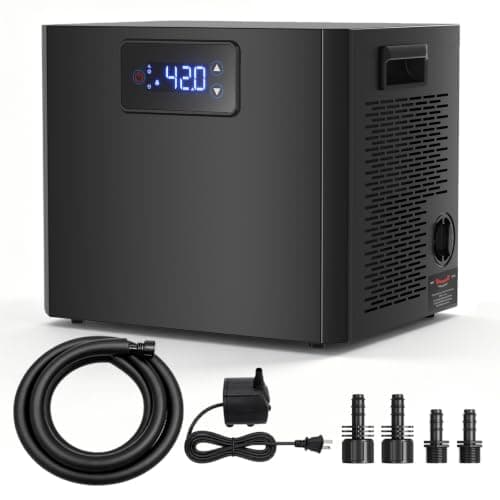
The sensible way to own a number rather than chase one. A third of a horsepower rated for tubs up to 79 gallons and down to 42°F, with a digital panel where you set a temperature and it holds it — which is exactly what a repeatable dose requires. Built-in pump and a washable metal filter rather than disposable cartridges.

Best value way to hold a setpoint
8.2
$340.00Amazon
02
Healcryo Healcryo 0.5 HP Cold Plunge Chiller
Healcryo 0.5 HP Cold Plunge Chiller

The unit to buy if you want the colder end of the range, a big tub, or both. Half a horsepower and a published 4,000 BTU/h take water to 38°F and hold it in tubs up to 120 gallons — and it is the only one here that adds sanitation to filtration rather than just a filter.

Best for cold water, big tubs or warm climates
8.4
$456.95Amazon
03
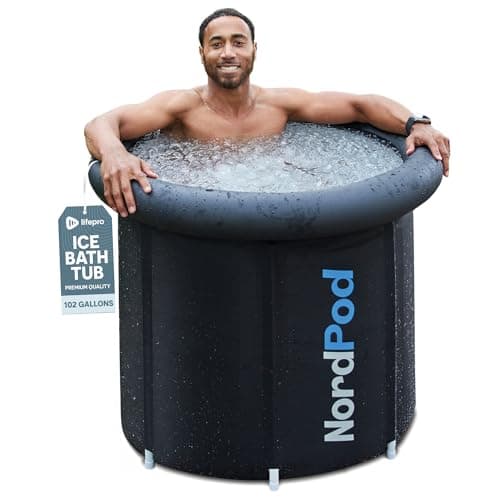
LifePro LifePro NordPod Ice Tub
LifePro NordPod Ice Tub

The ice route, done properly. Five layers of insulation and an all-weather lid are what make ice affordable — they are the difference between re-icing every session and re-icing every few days — and 102 gallons is enough water that the temperature does not swing while you are in it.

Best without a chiller
7.4
$99.99Amazon

#ad · Live prices from the Amazon Product API, as of October 18, 2026. Where we have no verified live price, we show none — a gap beats a number that has rotted.

In detail

The picks, in full

01
FADHOLE FADHOLE 1/3 HP Cold Plunge Chiller

Best value way to hold a setpoint

FADHOLE 1/3 HP Cold Plunge Chiller

1/3 HP, rated to 79 galHolds down to 42°FBuilt-in pump + metal filterHoses and fittings included
8.2/10

The sensible way to own a number rather than chase one. A third of a horsepower rated for tubs up to 79 gallons and down to 42°F, with a digital panel where you set a temperature and it holds it — which is exactly what a repeatable dose requires. Built-in pump and a washable metal filter rather than disposable cartridges.

Temperature control
9
Tub size covered
7
Running cost
8
Ease of use
8
Value
9

Pros

  • Set 55°F and it stays 55°F — no ice arithmetic, no session-to-session drift
  • Rated for up to 79 gallons, which covers most home tubs
  • Washable metal filter instead of a consumable cartridge
  • Insulated hoses, connectors and a submersible pump in the box

Cons

  • 1/3 HP takes longer to pull a large tub down than a 1/2 HP unit
  • Struggles harder in a hot garage or on a summer patio
  • One-year warranty, and a marketplace brand with no long track record

Don't buy this if…

…your tub is very large or lives somewhere hot — the 0.5 HP unit below holds temperature there with less strain.

$340.00View on Amazon

$359.996% off

Price as of October 18, 2026. Prices change — Amazon's at checkout is the one that counts.

#ad · we may earn a commission from this link to FADHOLE 1/3 HP Cold Plunge Chiller

02
Healcryo Healcryo 0.5 HP Cold Plunge Chiller

Best for cold water, big tubs or warm climates

Healcryo 0.5 HP Cold Plunge Chiller

0.5 HP · 4,000 BTU/hDown to 38°F, up to 120 galOzone + cartridge filtrationTitanium heat exchanger
8.4/10

The unit to buy if you want the colder end of the range, a big tub, or both. Half a horsepower and a published 4,000 BTU/h take water to 38°F and hold it in tubs up to 120 gallons — and it is the only one here that adds sanitation to filtration rather than just a filter.

Temperature control
10
Tub size covered
10
Running cost
6
Ease of use
8
Value
8

Pros

  • Publishes a real cooling figure — 4,000 BTU/h — rather than horsepower alone
  • Reaches and holds the advanced 40s band, which a 1/3 HP unit struggles with
  • Rated to 120 gallons, the widest envelope here
  • Titanium heat exchanger, which does not corrode the way copper does

Cons

  • Draws more power than a 1/3 HP unit, so running cost is higher
  • Healcryo rates it for ambient below 90°F — a hot patio still limits it
  • The oxidation module and cartridge are consumables a bare chiller does not have
  • Reaching 38°F does not mean you should plunge at 38°F

Don't buy this if…

…you have a small, insulated, covered tub in a cool garage — a 1/3 HP unit holds that comfortably for less money and less electricity.

$456.95View on Amazon

Price as of October 18, 2026. Prices change — Amazon's at checkout is the one that counts.

#ad · we may earn a commission from this link to Healcryo 0.5 HP Cold Plunge Chiller

03
LifePro LifePro NordPod Ice Tub

Best without a chiller

LifePro NordPod Ice Tub

102-gallon capacity5-layer EPE insulationFits users to 6 ft 7 inNo running cost (ice-based)
7.4/10

The ice route, done properly. Five layers of insulation and an all-weather lid are what make ice affordable — they are the difference between re-icing every session and re-icing every few days — and 102 gallons is enough water that the temperature does not swing while you are in it.

Temperature control
5
Tub size covered
9
Running cost
7
Ease of use
7
Value
9

Pros

  • Five-layer EPE insulation holds a temperature far longer than a single-wall tub
  • All-weather lid slows warming between sessions and keeps debris out
  • 102 gallons: a large thermal mass, so your own body heat barely moves the number
  • No electricity, no plumbing, folds into a bag when you are done

Cons

  • No chiller port — you cool it with ice, not a machine
  • Hitting an exact temperature by eye takes a thermometer and some practice
  • Full of water it is heavy and not meant to be moved

Don't buy this if…

…you want the same number every day without thinking about it — that is what a chiller buys, and ice will not give it to you.

If you are going the ice route, buy a floating thermometer with it. Guessing at temperature is how people end up plunging at 42°F on a cold morning when they thought they were at 55°F, and the difference is not subtle. Insulation and a lid are the real cost control: the ice you do not lose overnight is ice you do not buy.

$99.99View on Amazon

Price as of October 18, 2026. Prices change — Amazon's at checkout is the one that counts.

#ad · we may earn a commission from this link to LifePro NordPod Ice Tub

Temperature and time, at a glance

Water temperatureTypical timeWho it suitsWhat it feels like
60-68°F / 15-20°C5-10 minutesFirst week, or anyone easing inCool, no gasp, conversational
50-59°F / 10-15°C2-5 minutesMost people, most of the timeUnmistakably cold; breathing settles after 15-30 seconds
40-49°F / 4-9°C1-3 minutesExperienced plungers onlySharp gasp, aching hands and feet within a minute
Below 40°F / 4°CNot recommended at homeNobody, unsupervisedNo added benefit, materially higher risk

What makes your tub drift off target

Ambient temperature.A garage at 85°F fights a chiller far harder than a garage at 60°F, and it melts ice several times faster. Insulation and a lid. The single cheapest upgrade to temperature stability; an uninsulated tub with no cover is a radiator. Volume.More water is more thermal mass, so a big tub moves slower in both directions — slower to cool, slower to warm, steadier during a session. You.A body is roughly 100°F of heat sitting in the water; in a small tub, two consecutive users will see the number rise.

Measuring it honestly

Use a floating or digital thermometer and read it before you get in, not after. Chillers display the temperature at the unit, which can differ from the water at the far end of a large tub — worth checking once with a separate thermometer so you know your offset. And write the number down for the first few weeks; most people discover their “55°F” was nothing of the sort.

Does temperature change the benefits?

Within the ranges here, not as much as the marketing suggests. The best available evidence on cold-water immersion treats dose as temperature and duration together, and does not support the idea that a specific magic number unlocks a different effect. The practical implication is freeing: pick a temperature you will actually get into several times a week, because consistency does more than any single degree. What cold does and does not do is covered in cold plunge benefits, and the one timing caveat that matters — cold immediately after lifting — is in cold plunge before or after a workout.
Same cart

Essentials under $40

The cheap stuff that decides whether the expensive thing gets used. These are add-ons, not ranked picks — no rubric, no score, and nothing here changes a verdict above.

  • Ice Bath Thermometer with Timer

    Ice Bath Thermometer with Timer

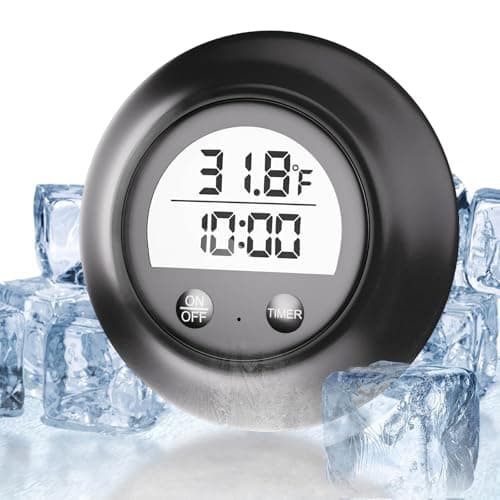
    "As cold as I can stand" is not a temperature. The guidance on this site is 50-59°F for two to five minutes, and neither number means anything without a thermometer and a clock — this floats in the tub and carries both.

  • 3mm Neoprene Cold Plunge Booties

    3mm Neoprene Cold Plunge Booties

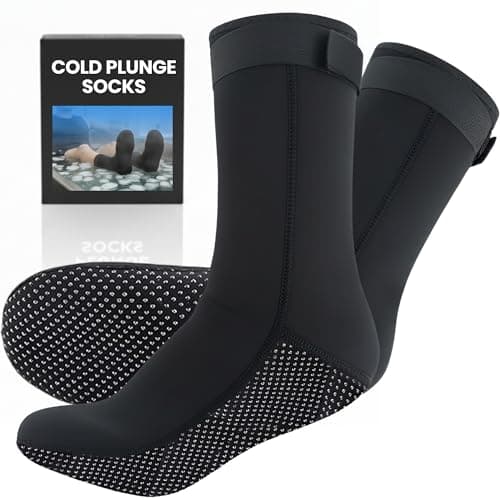
    Feet hit the pain ceiling long before the rest of you does, which is why most people climb out early. 3mm neoprene buys back the last minute or two of a session. Sold by size — pick yours on the listing.

  • Add-on

    Insulated cold plunge tub cover

    A covered tub holds its temperature between sessions and keeps leaves, dust and sunlight out of the water — most of what decides whether a plunge is cheap to run. Covers are cut to a specific tub shape and size, so we link the search rather than guess your dimensions.

#ad · Live prices from the Amazon Product API, as of October 18, 2026. Where fit or size varies by tub, body or machine we link a search instead of guessing, and where we have no verified price we show none. We may earn a commission.

How we picked

We did not lab-test this gear

Everyone in this category says they tested twenty products. We have not lab-tested any of these, and we say so. What we did instead: compiled the published specifications, pulled the numbers from the manufacturer manuals, ran the cost-to-run and cost-per-unit math where there was math to run, and scored each product against a published rubric. The scores are judgments from documented research — not measurements we took, because we do not have a lab and we will not pretend we do. Where a number came from someone else's work, we name them in Sources.

Questions

Frequently asked

What is the ideal cold plunge temperature?
50-59°F (10-15°C) for 2-5 minutes suits most people. If you want one number to start with, 55°F for three minutes. Colder water is not more effective; it just shortens how long you should stay in and raises the risk of losing breathing control.
Is 50 degrees cold enough for a cold plunge?
Comfortably, yes — 50°F sits at the cold end of the standard working range and produces a strong response. Anyone telling you it is too warm is selling something; the evidence treats dose as temperature and time together, and three minutes at 50°F is a real dose.
How cold is too cold for a cold plunge?
Below 40°F (4°C) at home, in our view, at any duration. Cold shock is at its most intense in the 50-60°F band and becomes harder to manage below it, and nothing in the evidence suggests extra benefit from going colder. Full detail in cold plunge risks.
What temperature should a beginner cold plunge at?
Start at 60-68°F for five to ten minutes and work down a few degrees at a time over several weeks. The skill you are building in the first month is breathing control, not tolerance — and that is learned faster in water that is not fighting you.
Do I need a chiller to hit a specific temperature?
Not to hit one — ice will get you there. You need a chiller to hold one without thinking about it, which matters if you plunge most days. Below three sessions a week, an insulated tub with a lid and bagged ice is usually the better economics; the threshold is worked through in do you need a chiller.
Does the water get warmer while you are in it?
Yes, by a degree or two in a small tub and barely at all in a large one — you are a continuous heat source. It is one reason the 100-gallon-plus tubs feel more consistent, and why back-to-back users should expect the second session to be slightly warmer.

Keep reading

Receipts

Sources

We do not run a testing lab, and we do not pretend to. Where a measured number came from someone else's work, we name them and link them. Where we could not verify something, we say so on the page rather than quietly leaving it out. Read our full method.