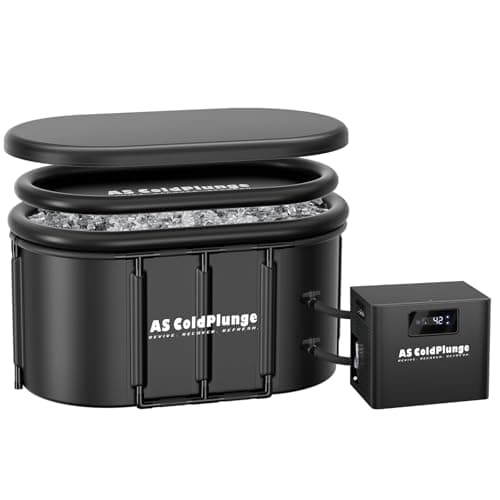
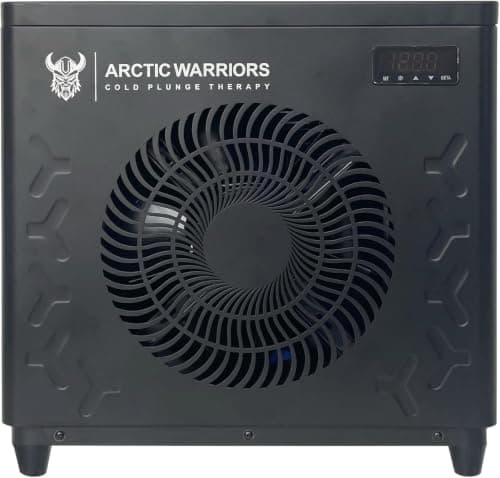
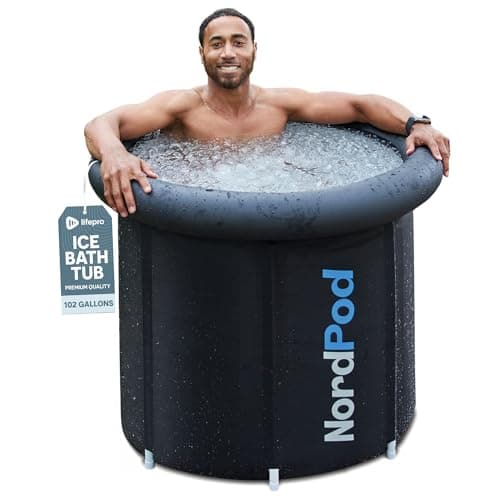
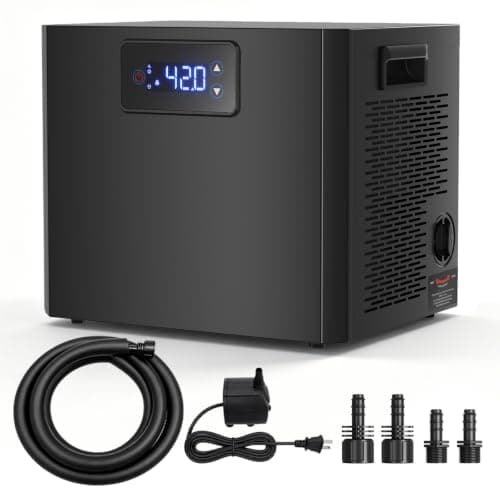
No, you do not need one. An insulated tub and bags of ice is a complete, legitimate cold plunge setup and always has been. But the honest version of the answer has a threshold in it: if you plunge most days, a chiller usually costs less over a year than the ice does, and it removes the errand that is the actual reason most plunge tubs stop getting used. If you are plunging two or three times a week, ice is fine and a chiller is a convenience purchase. Our pick for people crossing that line is the FADHOLE 1/3 HP Cold Plunge Chiller; for the ice route, the LifePro NordPod is the tub that makes ice go furthest.
The reason this question gets a confused answer online is that two different things get bundled together. A chiller does not make the water colder than ice can. Ice will take a tub to 40 degrees happily. What a chiller changes is whether the cold is already there when you walk out to it. That is a convenience spec, not a performance one, and pricing it as convenience is how you make this decision properly.
Below: the arithmetic on both routes, the three setups where ice stays the right answer, the aquarium-chiller question people keep asking, and then the picks. If you have not bought a tub yet, start at best cold plunge tubs and check chiller compatibility before you commit to either path.
What each route actually costs
The ice side.Work it out with your own prices: bags of ice at your local cost, times bags per session, times sessions per week. Most people running an uninsulated tub in warm weather need two to four bags a session. An insulated tub with a lid cuts that substantially because yesterday's cold is still partly there. Do not forget the part that does not appear on the receipt — the drive, the freezer space, and the sessions you skip because you did not stop for ice.
The electricity side. A 1/3 HP chiller draws a few hundred watts while the compressor runs, and once the tub is at temperature it does not run continuously — an insulated, covered tub lets it idle most of the day. Multiply running watts by actual compressor hours by your electricity rate; the US average residential price is published monthly by the EIA and is linked in Sources. For most households this lands as a figure per month, not per week.
That asymmetry is the whole answer. Ice scales linearly with sessions; electricity scales with ambient temperature and insulation, and barely at all with how often you get in. Which is why daily plungers typically find a chiller pays back inside a year and twice-a-week plungers typically do not.
Three cases where ice stays the right answer
- You plunge two or three times a week. The chiller will not pay for itself, and ice for two sessions is a trivial errand.
- You plunge outdoors in a cold climate.For a decent part of the year ambient temperature is doing the chiller's job for free. Buying a compressor to cool water that is already 45 degrees is paying for nothing.
- Your tub has no chiller port and no conversion kit. Most chillers are tub-agnostic — a refrigeration unit with an inlet and an outlet hose — but the fittings have to exist somewhere. Confirm before you buy either half, not after.
Can you use an aquarium chiller?
People ask this constantly and the arithmetic is unkind. Aquarium chillers are sized to hold a tank a few degrees below room temperature, against glass, with no one climbing into it. A plunge tub is a far larger volume, you want it far further below ambient, and a 180-pound body at 98 degrees dumps heat into it on every session. A unit rated for a fish tank will run constantly, fail to reach temperature, and wear out early. The horsepower and BTU ratings on purpose-built plunge chillers exist because this is a genuinely harder cooling job. If you want the chiller route, buy one rated for the gallons you actually have.
If you go chiller: what rating you need
1/3 HP is the standard, and the units in our chiller roundup publish volume ratings from about 53 to 79 gallons — check your tub against the figure on the unit instead of assuming. 1/2 HP earns the extra if your tub is large, uninsulated, outdoors in a warm climate, or you want fast pull-down after a water change. And note that the same chiller behaves very differently by location: a unit that holds 40 degrees effortlessly in a cool garage will labor on a hot patio.
Two cheaper upgrades come first, though. Insulation and a fitted cover hold cold dramatically longer, which means less ice on one route and less compressor time on the other — it is the cheapest performance upgrade in this category and most people skip it. And if you are buying a chiller, prefer one with integrated filtration: circulation without filtration just moves the problem around, and filtration is what extends the interval between water changes. Cold water slows biological growth; it does not stop it.
The protocol does not change either way
A chiller changes convenience, not physiology. The guidance is the same as in how long to cold plunge: cold enough to be genuinely uncomfortable rather than dangerous, for a few minutes, and not immediately after strength training if hypertrophy is the goal — the reasoning for that is in cold plunge benefits, and the safety case is in cold plunge risks. Do not plunge alone when you are new to it, get out at any sign of trouble, and clear it with a clinician first if you have a heart condition or high blood pressure. Making cold water effortlessly available makes it easier to overdo, which is a real and under-discussed side effect of choosing the chiller.
Four picks: two routes
Picks below with live prices — the first three for the chiller route at three different scales, the last for the ice route. The full rankings live in best cold plunge chillers and best cold plunge tubs; this page scores them only on the question it is about.