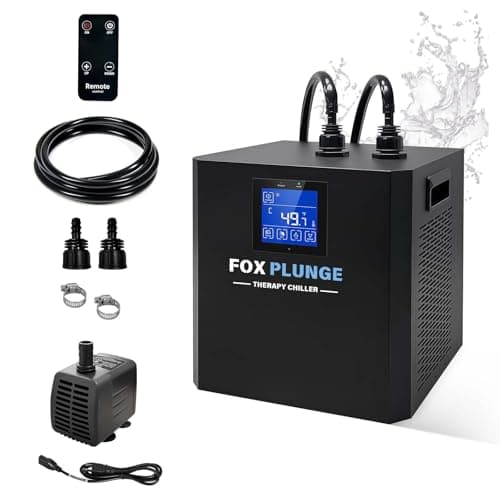
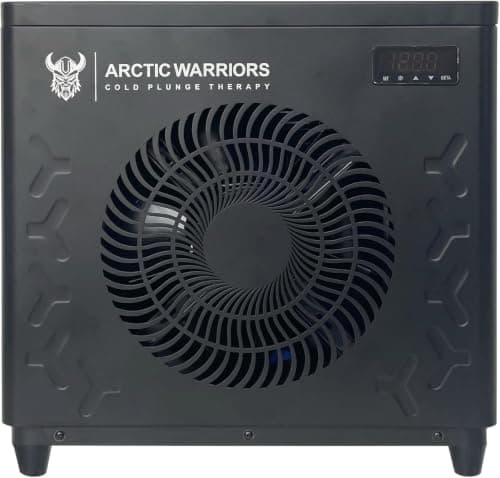
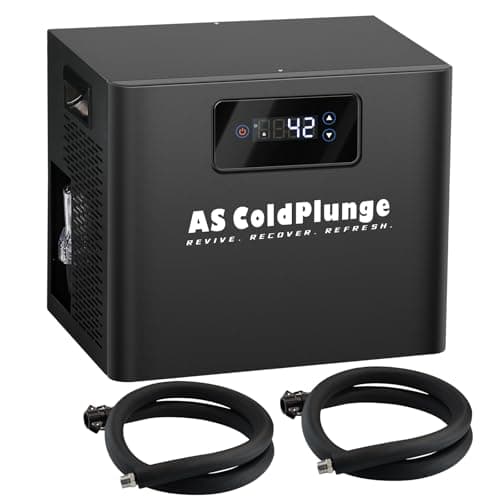
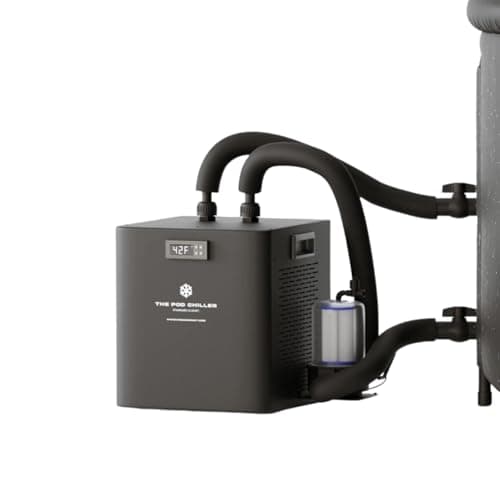
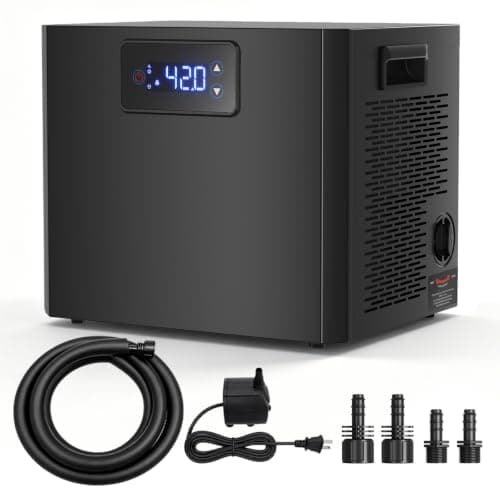
Every ice-based plunge tub has the same failure mode: the ice. Buying, hauling and dumping bags of it every session is the reason most tubs end up used twice a week and then not at all. A chiller removes that entirely — it pumps water through a refrigeration unit and holds the tub at a set temperature, so the plunge is simply there, at 45°F, whenever you want it.
That convenience costs money twice: several hundred up front, and a running cost in electricity. The good news is that the running cost is smaller than people expect and the ice cost is larger. If you plunge most days, a chiller is usually cheaper within a year — we do that arithmetic properly in the guide below.
Ranked on cooling power (horsepower, and how far below ambient it can hold a tub), filtration (a chiller that also filters and sanitizes means you change the water far less often), and running cost. If you do not yet have a tub, start with best cold plunge tubs — and check the tub you buy is chiller-compatible before you commit to this path.
A chiller changes your maintenance routine as much as your water temperature: the water now stays in the tub between sessions, which means filtration and a sanitizer residual become your job. The routine is in how to clean a cold plunge.
The arithmetic: does a chiller pay for itself?
Work it out with your own numbers rather than ours. The ice side: bags of ice, at your local price, times how many bags a session, times sessions per week. Most people using an uninsulated tub in warm weather need two to four bags a session, and that is before the time and the drive.
The electricity side: a 1/3 HP chiller draws a few hundred watts while the compressor runs, and it does not run continuously once the tub is at temperature — an insulated, covered tub lets it idle most of the day. Multiply the running watts by hours of actual compressor time and by your electricity rate; the US average residential price is published monthly by the EIA, cited below. For most households that arrives at a figure per month rather than per week, which is why daily plungers usually find a chiller pays back inside a year while twice-a-week plungers often do not.
How much horsepower do you need?
1/3 HP is the standard, and the units here publish volume ratings from about 53 to 79 gallons — check your tub against the figure on the unit rather than assuming. 1/2 HPis worth the extra if your tub is large (the half-horsepower unit here is rated to 120 gallons), uninsulated, outdoors in a warm climate, or you want fast pull-down after refilling. Note that the same chiller performs very differently depending on ambient temperature — a unit that holds 40°F effortlessly in a cool garage will labor on a hot patio.
Insulation and a cover do half the work for free
Before upsizing the chiller, upgrade the tub. An insulated tub with a fitted cover holds cold dramatically longer, which means the compressor runs less, which means both lower bills and less strain on the unit. A cover also keeps leaves, dust and sunlight out of the water — sunlight being the thing that most reliably turns a plunge tub green. This is the cheapest performance upgrade available and most people skip it.
Filtration, sanitation and water changes
A chiller circulates water, and circulation without filtration just moves the problem around. Units with integrated filtration and sanitation let you go far longer between water changes; without them, plan on changing the water regularly and keeping the tub covered. Cold water slows biological growth but does not stop it, and a plunge tub is a body of standing water that people get into — treat the hygiene seriously.
The protocol has not changed
A chiller changes convenience, not physiology. The guidance on this site remains what it was in how long to cold plunge: cold enough to be genuinely uncomfortable rather than dangerous, for a few minutes, and not immediately after strength training if muscle growth is the goal — the reasoning is in cold plunge benefits. Never plunge alone if you are new to it, get out at any sign of trouble, and if you have a heart condition or high blood pressure, ask a clinician before you start. Making cold water effortlessly available makes it easier to overdo, which is worth being aware of.
Not sure you need one of these at all? That is the more useful question for most readers, and we answer it with the ice-versus-electricity arithmetic laid out at do you need a chiller for a cold plunge — including the three cases where ice stays the right answer.