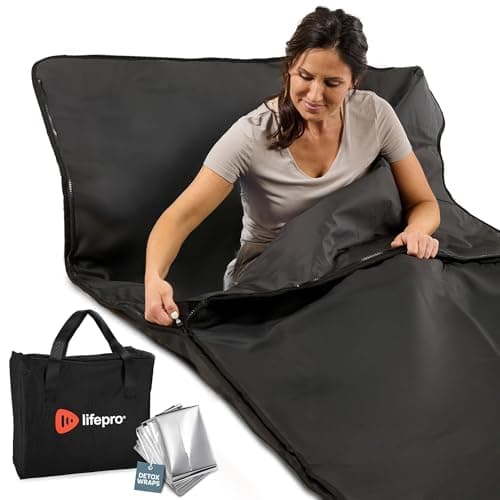
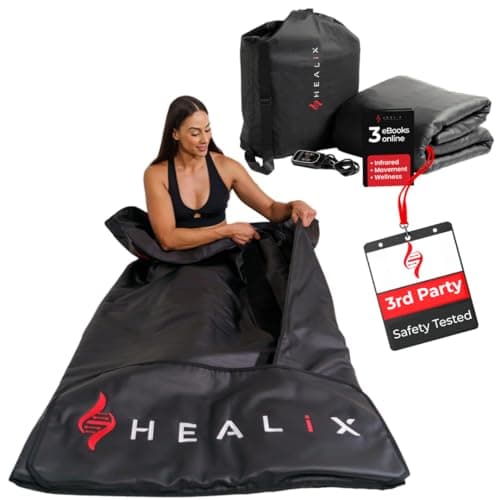
A sauna blanket is a zip-up, heated sleeping bag that gets you hot and sweating for around thirty minutes, then rolls up and goes in a cupboard. It costs a few hundred dollars against five figures for a built sauna, needs no plumbing, no permit and no room of its own, and runs off a normal socket. That is a genuinely compelling proposition — and it is also why the category attracts some of the most overheated marketing in the recovery world.
The short answer: yes, if what you want is regular, convenient heat exposure in a home that cannot host a sauna, and you are honest that it is not the same experience. No, if you are buying it for weight loss, if you have a condition heat affects, or if you expect it to replicate a 190°F Finnish sauna. This page is the buy-or-skip decision; for what heat itself does to a body, see sauna benefits, and for which model, see best sauna blankets.
What a sauna blanket actually is
Mechanically it is simple: a padded, waterproof-lined bag with heating elements through the inner layer, a controller that sets a target temperature, and a zip. You lie inside it, from the neck down, usually in long sleeves and socks so the elements are not against bare skin, and it heats you directly by conduction and radiant warmth.
That is the first real difference from a sauna. A traditional sauna heats the air around you to 160-190°F, so you breathe hot air, your face and head are in the heat, and your whole body including your airways is in a hot environment. A blanket heats your body but not the room— your head is outside it, breathing normal air. Most people find that makes a blanket noticeably easier to tolerate for longer, and it also makes it a fundamentally different sensory experience. Neither fact is a criticism; it is just worth knowing before you spend, because "a sauna you can roll up" oversells it.
The case for buying one
- The cost gap is enormous and real. A home sauna is a five-figure build with a dedicated space and electrical work. A blanket is a few hundred dollars and a plug socket. If regular heat exposure is what you are after, this is by far the cheapest honest route to it.
- No space commitment. It rolls up. For a flat, a rented house or anywhere a spare room is not on offer, that is the difference between owning one and not.
- You will use it more than a gym sauna. The gym sauna you drive to gets used when you are already there. The blanket in your bedroom cupboard gets used on a Tuesday evening while you listen to something — and with heat exposure, as with everything else in recovery, consistency beats intensity.
- The relaxation is genuine. Thirty minutes of enforced stillness in deep warmth is pleasant, reliably so, and most owners report sleeping well afterwards. That benefit needs no clinical framing to be worth something.
- It is portable. It goes to another house, or in a car boot. No sauna does that.
The case against
- It is not a sauna, and the difference is not just temperature. Your head is outside the heat, you are lying flat and immobile, and you cannot get up and walk out without unzipping. Some people find being zipped into a hot bag mildly claustrophobic — and if that is you, you will not use it twice.
- Cleaning is a real, recurring chore. You sweat heavily into an enclosed space. The inner surface must be wiped down after every session, and most owners use an insert or wear full-length clothing to make that manageable. It is the single most common reason blankets stop getting used.
- Sessions are immobilizing. Thirty minutes lying still with your arms mostly inside a bag. Some people find that blissful; others find it interminable.
- The marketing is worse than the product."Detox," "burns 600 calories," "removes toxins through sweat" — none of these are supportable, and they make it harder to evaluate a product that has real, modest merits.
The weight-loss claim, addressed directly
Nearly every listing in this category advertises calorie burn or weight loss. It is the least honest thing about the category and it deserves a plain answer: the weight you lose in a sauna blanket is water, and you replace it the moment you drink. Sweating is thermoregulation, not fat oxidation. Passive heat raises your heart rate somewhat and does have a modest metabolic cost, but nothing resembling the figures on the boxes — and you rehydrate the loss within the hour by design, because you should.
The "detox" framing is equally unsupported. Sweat is overwhelmingly water and electrolytes; the organs that clear toxins from your body are your liver and kidneys, and neither is meaningfully assisted by sweating. Buy a blanket for how the heat feels, for relaxation, and for the sleep that often follows. If a listing leans on detox and calorie burn, treat that as a signal about the seller, not about the product.
Who it is genuinely worth it for
Apartment and rental dwellers who want regular heat and have no route to a built sauna. People who like heat for relaxation and sleep rather than as a performance intervention. Anyone with a gym sauna they never use because of the friction of getting there. People training hard who want passive heat as an easy recovery ritual alongside rolling or a massage gun. And anyone curious about heat exposure who is not ready to spend five figures finding out whether they like it.
Three cases where the answer is no
- You want the full sauna experience. Hot air, breathing heat, sitting up, the social or ritual element — a blanket delivers none of it. If that is what you are picturing, a portable sauna tent gets far closer for similar money: you sit up, your head is in the heat, and you can get out easily.
- You are buying it to lose weight. See above. The purchase will not do what you want and the disappointment is guaranteed.
- You have a condition heat affects. Passive heat raises heart rate and drops blood pressure, and being zipped into a bag makes exiting quickly harder than stepping out of a sauna room. If you are pregnant, have cardiovascular disease, low blood pressure, neuropathy or reduced skin sensation, a condition affecting sweating, or are on medication that affects thermoregulation, ask a clinician before buying — not after. Never use one after drinking alcohol, and never fall asleep in one.
Sauna blanket, portable sauna, or gym sauna?
If you have a gym or pool sauna you genuinely visit, that is already the best version and you do not need to buy anything. If you want to sit up in hot air at home, a portable sauna tent is the closer analog — bigger to store, easier to get out of, and it heats the air rather than only you. If you want minimum friction, minimum storage and maximum likelihood of actually using it, the blanket wins, and that is the honest reason most people should choose one. Whichever way you go, pairing heat with cold is where it gets interesting — see sauna vs cold plunge.
Two picks below bracket the category: the premium blanket with the EMF paperwork behind it, and the value option that does the same core job for far less. This is general information, not medical advice.
If you do buy one, whether it keeps getting used comes down to the session routine and the two-minute clean afterwards — both are in how to use a sauna blanket.