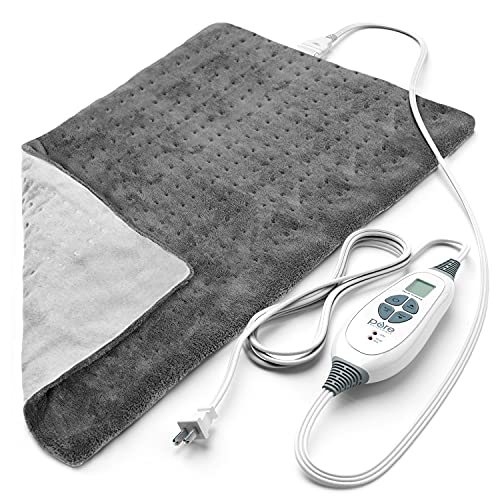
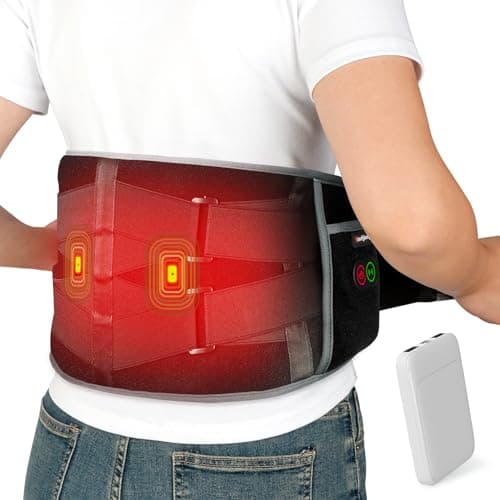
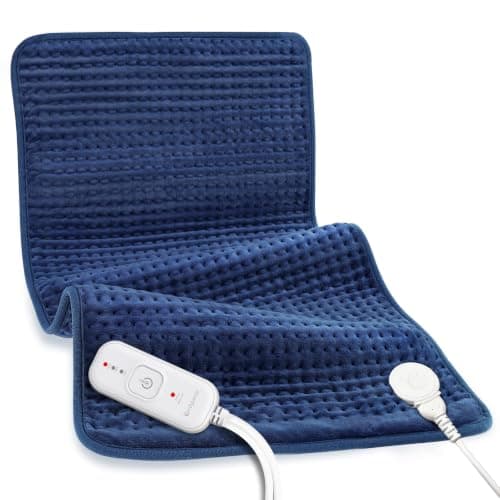
For back pain, buy the Comfytemp king-size pad. At 33 by 17 inches it covers the whole lumbar span and wraps the flanks in one placement, which is the only specification on this page that reliably decides whether a pad helps a back or just warms a patch of it. It is the right buy for almost anyone whose pain is across the lower back rather than in one spot. It is also the budget pick — the cheapest pad here does the job best, which is unusual enough to say outright. If you need heat while you stand up and move around, the Comfytemp cordless wrap is the shape to buy instead.
Before the picks, the evidence, because it changes how much to spend. The Cochrane review of superficial heat and cold for low back pain found moderate evidence of a small short-term benefit from heat wrap therapy, and found that adding exercise reduced pain further. It drew no conclusions for cold. That is a real finding and a modest one: heat is a cheap, low-risk way to make a sore back more comfortable for a while, it is not a treatment, and the part of the package with the stronger effect is the movement you do while it is more comfortable. AAOS says the same thing in plainer words — heat for muscle pain and stiffness, warm rather than hot, and not on skin that is swollen, bruised or broken.
The practical consequence: do not spend a lot. Buy enough coverage, buy a pad that stays where you put it, and spend the difference on nothing at all. Ranked below on lumbar coverage first, placement stability second, and moist-heat capability third — moist heat being the form the heat-wrap studies actually used, and an option two of these pads offer.
And the part that matters more than any of it: back pain with leg weakness, numbness in the groin or saddle area, loss of bladder or bowel control, fever, unexplained weight loss, or pain after a significant fall is not a heating pad problem. Those are the red flags NHS and NINDS list, and they mean get seen rather than get warm. If heat and ice is the question rather than which pad, we settle it in best ice packs.
Coverage is the only specification that reorders this list
The lower back is roughly as wide as it is tall, and pain there is usually diffuse rather than pinpoint. A 12 by 15 inch pad covers part of it; you then spend the session shuffling the pad, or heating one side and getting up with the other still stiff. A 33 by 17 inch pad covers the lumbar span and wraps round the flanks from a single placement, and a 12 by 24 inch pad is long enough to run the length of the spine if your problem is vertical rather than horizontal.
That is the whole reason the cheapest pad here wins. Heating elements at this price are not meaningfully different from one another; the fabric size is, and it is the thing you cannot fix after the box arrives.
Lying on it, sitting on it, or wearing it
Three placements, three different right answers. Lying down on a large flat pad is the most effective and the least practical: it is twenty minutes where you do nothing else, and it is where the big pad wins. Sitting against it in a chair needs either a pad long enough to stay put behind you or a strap, and this is where most pads slide down and heat your kidneys instead of your pain. Wearing it is what the cordless wrap is for, and it is the only format that lets you keep moving — which, given that the Cochrane finding was strongest for heat plus exercise, is a better argument than its battery-limited heat output suggests.
Moist versus dry heat
Two picks here offer moist heat — you dampen a liner or the fabric and the heat carries into the tissue more readily, which is the form most of the heat-wrap literature used. Whether it is better for you is a genuinely open question; what is not open is that it feels more penetrating to most people at a lower setting, which is a safety advantage. If a pad offers it, use the moist option on a lower heat rather than dry heat on a higher one.
Auto shut-off is a safety feature, not a convenience
Every pad here switches itself off. Use it. Low-temperature burns from heating pads happen at temperatures that do not feel dangerous, over long periods, most often to people who fall asleep on a pad or who have reduced sensation in the area — which is why diabetes and neuropathy change this calculation entirely. Twenty minutes at a warm setting is the standard advice, there is nothing to gain from an hour, and never sleep on a heating pad.
Do not use heat on an area that is swollen, bruised, numb, or has broken skin. Do not use it over a fresh injury — that is ice's job for the first day or two, and our ice packs for knee pain page covers the twenty-minute rule that applies either way.
The cheaper and more useful thing to buy alongside it
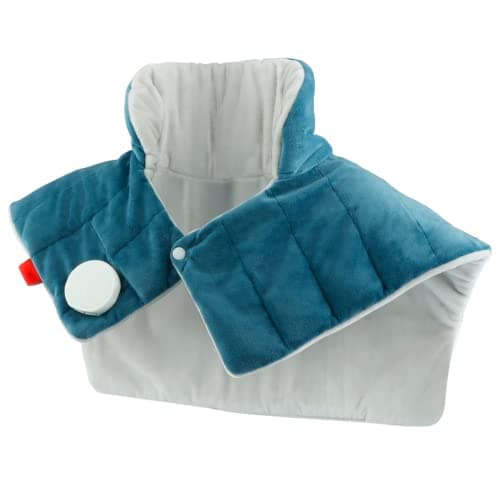
If the pain is muscular and recurring rather than acute, the two things with more behind them than a pad are movement and soft-tissue work on the upper back rather than the lumbar spine. We rank the tools for that in best foam rollers for back pain, which includes the important caveat that rolling the lower back itself is not the move people think it is. And if the stiffness is in the neck and shoulders rather than the lumbar spine, the weighted drape here is the right pick, with massage guns for neck and shoulders as the alternative.