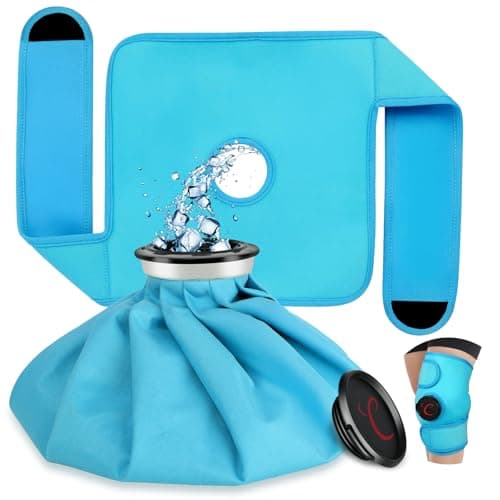
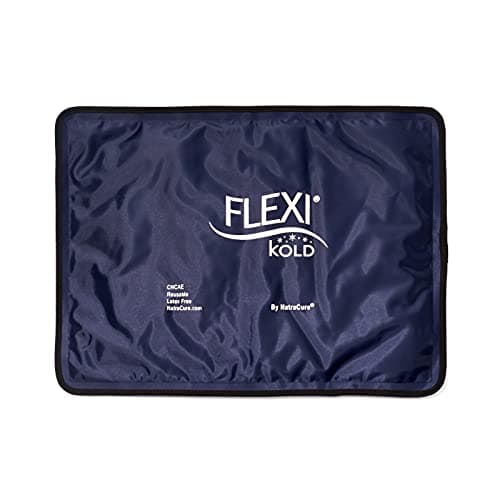
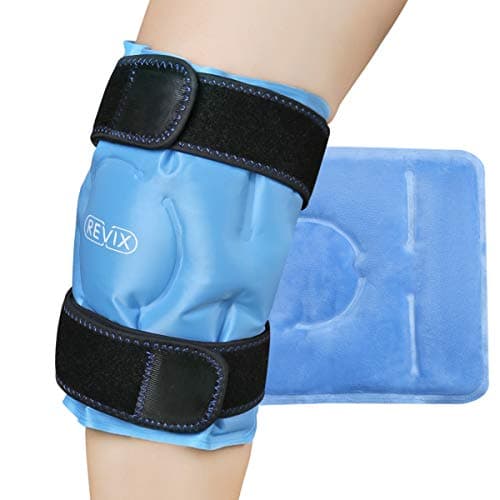
For a knee, buy the REVIX knee ice pack wrap. It is built for the shape of the problem: a gel pack held in a sleeve with a hands-free strap, so it wraps the whole joint and stays there while you elevate your leg instead of needing a hand to hold it. It is the right buy for everyday knee pain, post-run soreness and most post-injury use. The budget pick is the Comfytemp wearable wrap — the cheapest thing here that does the job, and the sensible second pack so one is always frozen. If you are icing after knee surgery and need to cover more than the joint itself, the FlexiKold large gel slab is the shape to buy.
Two rules before the picks, because they matter more than which pack you choose. Never put an ice or gel pack directly against your skin — wrap it in a towel or cloth; that is Cleveland Clinic's wording, and ice burns are the reason for it. And the NHS guidance for sprains and strains is up to twenty minutes every two to three hours, avoiding heat, alcohol and massage for the first couple of days. Longer is not better, and a pack left on a numb joint is how skin gets damaged.
On what icing achieves, we will not oversell it. The published work is honest about its own gaps: the systematic reviews of ice in acute soft-tissue injury note wide variation in clinical practice and guidelines still being made on an empirical basis, and the PEACE & LOVEeditorial in the British Journal of Sports Medicine goes further — anti-inflammatory interventions show benefits on pain and function but are flagged for “potentially harmful effects on optimal tissue repair”. The reasonable reading: ice is a good analgesic for a painful, swollen knee and a poor long-term strategy. Use it for comfort, early, and then get the joint moving.
Ranked below on wrap geometry first — whether the pack conforms to a round joint under compression — then hands-free retention, then coverage area, then how long the pack stays usefully cold. If heat is what you actually want, that is a different page: heating pads are for ongoing stiffness, ice is for swelling and acute pain.
Why a flat pack is the wrong shape for a knee
A knee is a hinge wrapped in soft tissue, and the parts that hurt — the joint line either side, the front of the patella, the back of the knee — are on different planes. A rigid or semi-rigid flat pack touches the front and bridges the sides, so you get cold where you did not need it and nothing where you did. A wrap holds a flexible gel pack against all of it under light compression, which is also why wraps feel colder faster at the same temperature: contact area is doing the work.
The exception is after surgery, where the swelling spreads well beyond the joint and the thing you want is a large flexible slab that covers the knee and the lower thigh at once. That is the FlexiKold's job here, and why it outranks the clinical slab despite the latter being the better-made object.
Hands-free is not a luxury
The advice is twenty minutes with the leg elevated. Twenty minutes holding a pack in place with one hand while your leg is up is twenty minutes you will not do twice. A strap turns icing from a chore into something that happens while you read, work or watch something, and that compliance difference is bigger than any difference in gel chemistry on this page.
Gel chemistry, in the only way it matters
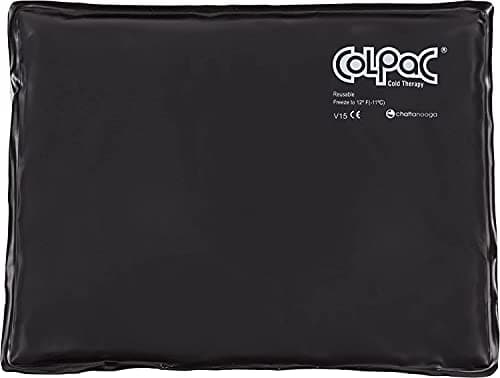
All four packs here use a gel that stays pliable below freezing — that is the one real distinction between a therapy pack and a bag of frozen peas, and the reason a therapy pack is worth the money. What separates them is mass: a bigger, heavier pack holds cold longer and takes longer to refreeze. The clinical-grade slab here is the longest-lasting cold on the page and also the least conformable. Pick your side of that trade.
Buy two of whatever you choose, or one cheap second pack. The binding constraint on icing a knee three times a day is not the pack — it is the two hours it takes to refreeze one.
When icing a knee is the wrong tool
A knee that is hot, red and swollen with no obvious injury, a knee you cannot bear weight on, a knee that locks or gives way, or swelling that appeared within minutes of an injury, are all reasons to be assessed rather than iced. So is a knee that has been painful for months — at that point the useful interventions are strengthening and load management, not cold. We rank the equipment side of that in best exercise equipment for bad knees and the band work in best resistance bands for physical therapy.
If what you want is a device rather than a pack, a heated-and-compressed knee wrap is a different category with a different job — those are ranked in best knee massagers, and we answer whether they do anything in do knee massagers work.