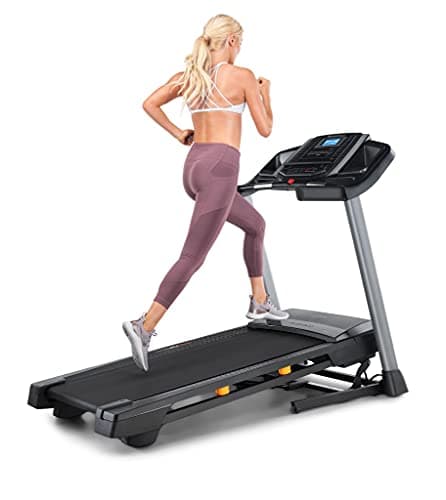
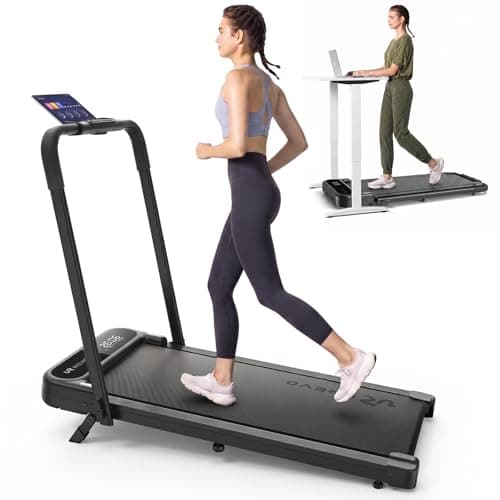
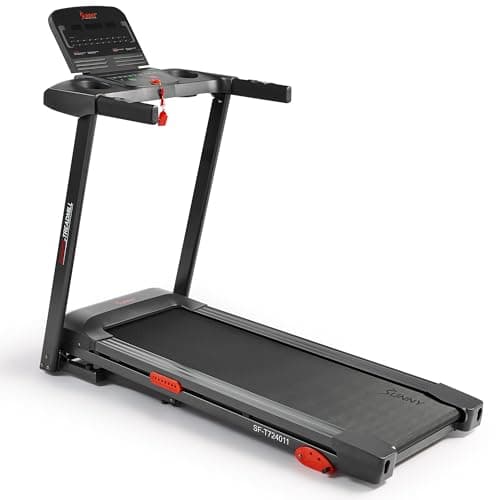
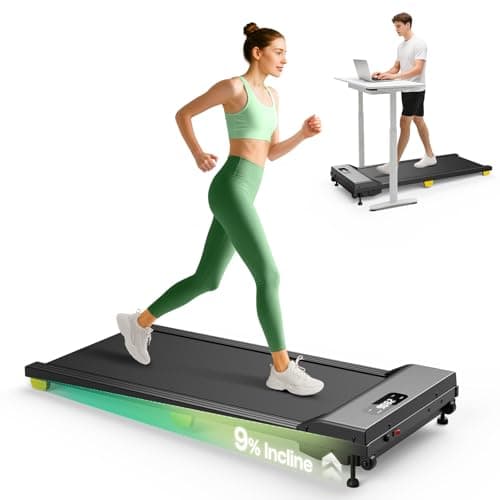
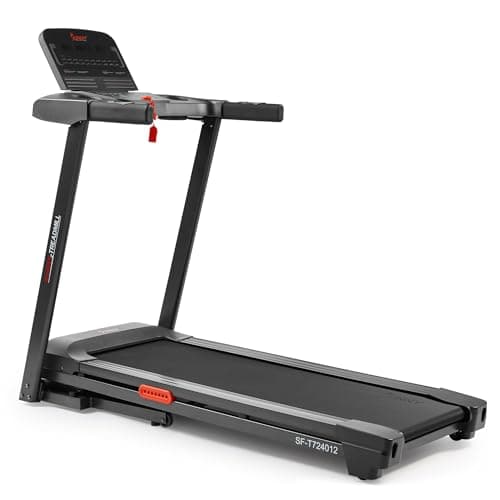
"Treadmill" now covers two machines that barely resemble each other. A full folding treadmill has a 2.5-3.5 horsepower motor, a belt long enough to run on, handrails, powered incline and a folding deck — it is a piece of gym equipment that happens to fold. A walking pad is a flat slab with a small motor and a short belt, built to slide under a desk or a bed, for walking while you work. Both are sold on the same search results page and buying the wrong one is the most common mistake in the category.
The specs that separate them are concrete. Motor power — under about 2.0HP is a walking machine no matter what the listing says; 2.5HP and up will take sustained running. Belt length — running needs roughly 55 inches or more, and taller runners want 60; a 40-inch pad is for walking only. Incline — the single most useful feature on any treadmill, because it multiplies the training effect at a walking pace and spares your joints the pounding of running. And folded dimensions, which is what actually determines whether the machine survives its first month in your home.
Five picks below, split honestly across both kinds. Before you read on, be clear about which machine you are buying: something to run on, or something to walk on while you work. They are not interchangeable, and a walking pad bought for running will be a broken walking pad within a year.
If you will mostly walk rather than run, a treadmill may be the wrong category altogether: a pad with incline covers walking for a fraction of the money and stores under a desk. The honest side-by-side is in walking pad vs treadmill.
Walking pad or full treadmill? Answer this before anything else
A walking pad is for accumulating easy movement — under a standing desk, during calls, in front of the television. It has a short belt, a small motor, usually no handrails, and it disappears under furniture. A full treadmill is for training: a belt long enough for a running stride, a motor built for sustained load, handrails, and a deck with cushioning. Buying a pad and trying to run on it burns out the motor and is genuinely unsafe at speed on a short belt; buying a full treadmill for gentle desk walking means surrendering a large piece of a room to something you use at 2mph. Decide which of those two things you are doing, and the list halves immediately.
Motor power and belt length, in plain numbers
Motor: under 2.0HP is a walking machine regardless of what the listing calls it. 2.0-2.5HP handles walking and occasional light jogging. 2.5-3.0HP continuous duty is the realistic floor for regular running, and 3.0HP+ for a heavier runner or daily use. Note that listings quote peak horsepower far more often than continuous horsepower, and peak is the flattering number.
Belt: walking needs about 45-50 inches of length. Running needs 55 inches minimum, and 60 inches if you are over about 6ft — a short belt at running speed forces you to shorten your stride and pushes you toward the front of the deck, which is both awkward and unsafe. Belt width matters less, but under 18 inches feels precarious once you are moving quickly.
Incline is the feature worth paying for
If you upgrade one spec, make it incline. Walking at a brisk pace on a 10-12% grade produces a serious cardiovascular stimulus at an impact load your joints barely register — which is why incline walking has become the default recommendation for people who want the training effect of running without the pounding. It also gives a home treadmill something the pavement outside does not: repeatable, controllable grade.
Powered incline changes grade at the touch of a button and can be programmed into intervals. Manual incline means stopping, adjusting a physical support, and restarting — fine if you pick a grade and stay there, useless for intervals. The gap in price between the two is usually smaller than people expect and is the single best upgrade on the sheet.
Folded footprint, and the honest weight problem
Every full treadmill claims to fold and none of them vanish. A folded treadmill is typically still about 3ft by 3ft of floor and chest-high, and — this is the part listings bury — often weighs 150-250lb. Check two numbers before ordering: the folded dimensions, and the machine weight. If you cannot comfortably tilt that weight on a hydraulic assist, the machine will not get folded, and an unfolded treadmill is a permanent room fixture. Walking pads sidestep this entirely: most are 50-70lb and slide flat under a bed or desk, which is most of their appeal.
Treadmill or rower?
They compete for the same corner and the same budget. A treadmill wins on specificity and ease — walking and running need no technique instruction, and incline walking is about the most accessible real cardio there is. A rower wins on impact and muscle recruitment — no pounding at all, and it trains the back, legs and arms rather than just legs. If your knees, hips or ankles have opinions, the rower is the safer buy. If you want the simplest possible thing you will actually use every day, and especially if you want to walk while working, the treadmill wins. Neither replaces resistance training — that is what dumbbells and a rack are for.
And if the treadmill-or-something-else question is still open, we rank it against rowers, bikes and walking pads on the criteria that actually decide it at best home cardio machines. If you have already decided it is a pad you want, we rank those on their own axes — belt length, incline, deck height and weight — in best walking pads.