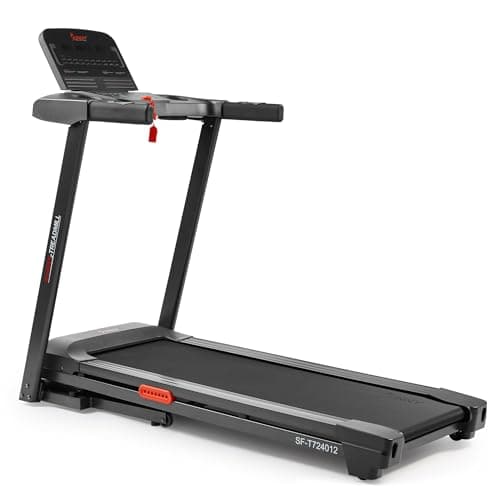
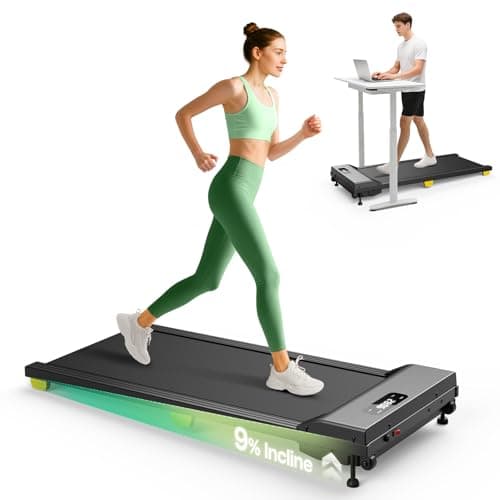
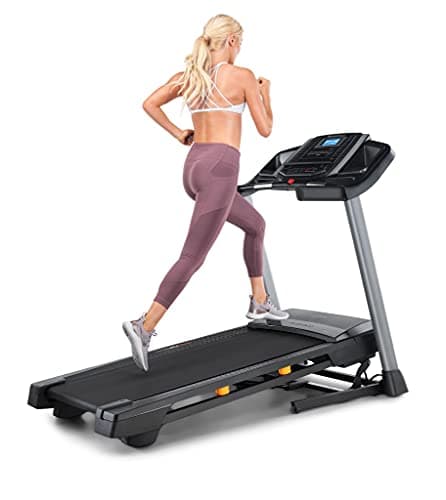
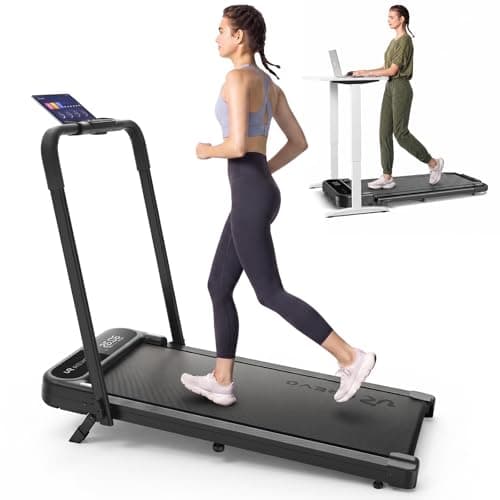
For most people buying their first machine, a walking pad is the right answer — and the one to get is the UREVO Strol 2E Pro, because it has 12% incline and a safety handle, which between them cover most of what makes a treadmill better. Buy a treadmill instead if you will genuinely run on it, if you are tall, or if you want to train at speed on a grade. That is the whole decision; the rest of this page is the evidence for it.
The two machines look like versions of each other and are not. The honest comparison comes down to four published numbers:
- Belt length. Pads run roughly 40 to 47.6 inches. Full treadmills run 55 to 60. A running stride needs the longer belt; a walking stride does not. This is the single spec that decides whether you can run, and no amount of motor fixes it.
- Motor rating. Pads are typically 2.0-3.0 HP and rated for walking and light jogging. Treadmill motors are built for sustained running and are specified for continuous duty, which is a different thing from peak horsepower.
- Incline.Most pads have none. The ones that do — 9% and 12% on the two here — close most of the gap, because grade does to a walk what speed cannot do on a 45-inch belt.
- Stored footprint.A pad is 4 to 5.6 inches tall and slides under a desk or a bed. A folded treadmill is still a folded treadmill — upright, visible, and in the room.
The thing nobody says out loud is that the machine that gets used is the one that is already out. A pad that lives under the desk gets walked on in ten-minute pieces across a working day; a treadmill in a spare room gets used when you decide to go and use it. For hitting the 150 minutes of weekly moderate activity the CDC recommends, the first pattern wins more often than the second.
Scores below are judgments from published specifications and owner feedback, not lab tests — see how we review. Prices are live and stamped with the date they were checked.
Walking pad vs treadmill, side by side
| | Walking pad | Treadmill |
|---|
| Belt length | About 40-47.6 in | About 55-60 in |
| Height when stored | 4.1-5.6 in — under a desk or bed | Folds upright, still in the room |
| Weight | About 35-55 lb | Typically well over 150 lb |
| Running | No — walking and light jogging | Yes, that is the point |
| Incline | None on most; 9-12% on the best | Powered, adjustable mid-session |
| Handrails | None, or a single safety handle | Full rails and an emergency stop |
| Typical price | A fraction of a treadmill | Several times a pad |
| Assembly | None worth the name | A real job, and awkward to move later |
Buy a treadmill if any of these is true
You will run.Not “might eventually” — will. A 45-inch belt cannot hold a running stride safely, and the motors in pads are not specified for sustained running.
You are tall. Stride length scales with height, and a long stride on a short belt means either shuffling or drifting back toward the rear roller. If you are over about six feet, most pads are compromised even at walking pace.
You want handrails.Balance concerns, recovery from injury, or simply wanting something to hold at speed — full rails and an emergency stop are treadmill features, and a pad's single handle is not the same thing.
Buy a pad if any of these is true
Your goal is daily steps rather than training sessions. A pad under a desk collects far more minutes per week than a machine that requires a decision.
You do not have a permanent room for cardio. This is the real reason most treadmills end up as clothes racks: not that people stop caring, but that the machine is in the way between sessions.
You want the cheapest route to the activity guidelines. Thirty minutes of brisk walking five days a week meets the CDC's 150-minute recommendation, and a pad with incline will do that without a single running stride.
The one feature that changes the comparison
Incline. A flat pad can only get harder by getting faster, and speed is exactly what a short belt cannot safely allow — so a flat pad has a low ceiling. Add 9-12% grade and the same pad can produce a genuinely demanding session at a walking speed the belt handles comfortably. If you are comparing a pad against a treadmill and the pad has no incline, the treadmill wins by more than the spec sheet suggests. Compare the pads themselves in best walking pads, and the treadmills in best treadmills for home.
What about an exercise bike instead?
Worth a thought if your knees, hips or back complain about standing exercise. A bike is seated, non-weight-bearing and takes less floor space than a treadmill, though it does nothing for bone loading or balance the way walking does. We compare the whole cardio shelf in best home cardio machines, and the joint-friendly options specifically in best exercise equipment for bad knees.
How we picked
Everyone in this category says they tested twenty products. We have not lab-tested any of these, and we say so. What we did instead: compiled the published specifications, pulled the numbers from the manufacturer manuals, ran the cost-to-run and cost-per-unit math where there was math to run, and scored each product against a published rubric. The scores are judgments from documented research — not measurements we took, because we do not have a lab and we will not pretend we do. Where a number came from someone else's work, we name them in Sources.