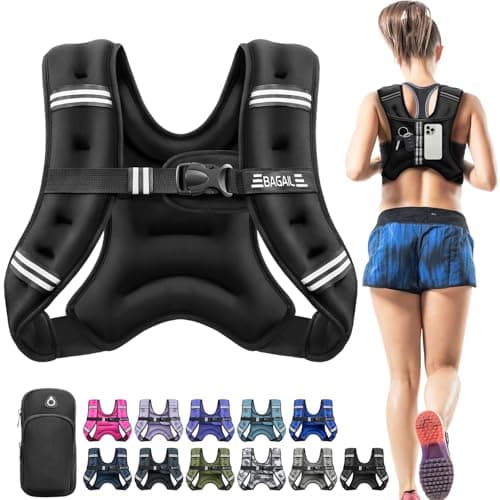
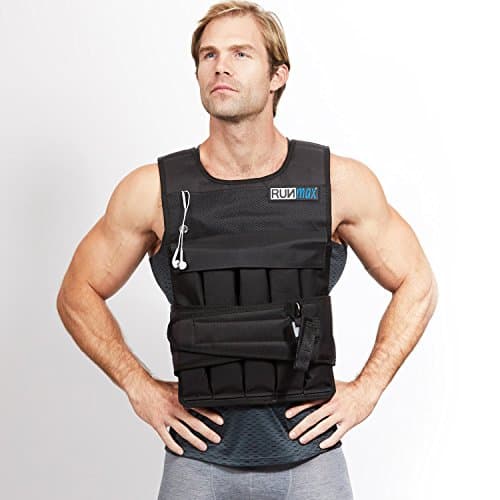
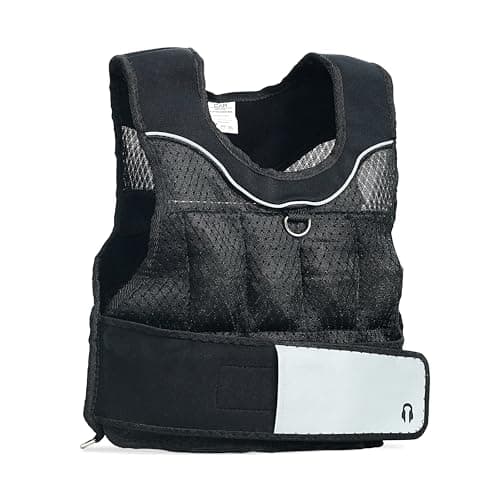
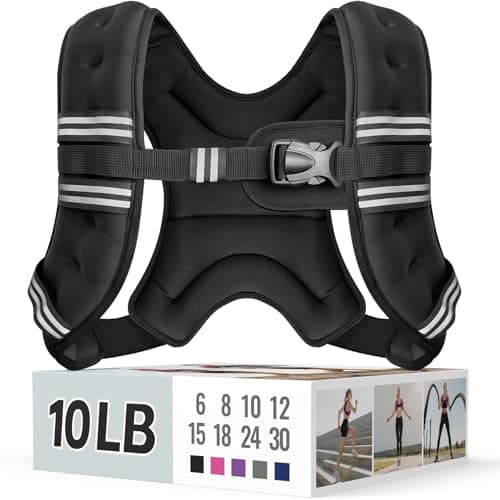
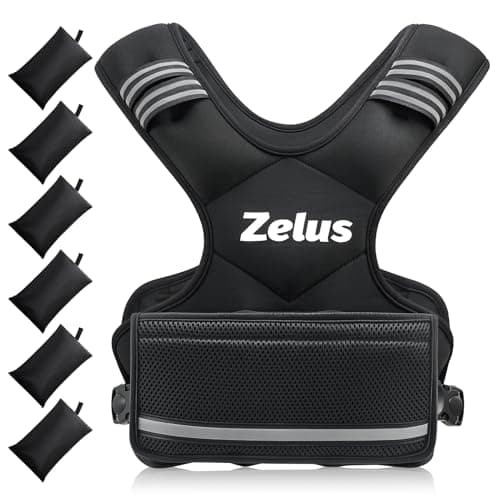
For most people the right weighted vest is an adjustable one — and ours is the ZELUS Adjustable Weighted Vest, which runs from about 4 lb to 32 lb on six removable ironsand packs. The reason is simple and it is the whole argument of this page: the load you want in week one is not the load you want in month six, and a vest with a fixed, sewn-in weight is a vest you outgrow or never start. If you only ever want to walk in it, the cheaper no-bounce vest below is the better buy.
Weighted vests have become a crowded shelf, and the listings compete on the one number that matters least: total pounds. Four things actually decide whether a vest gets worn.
- Adjustable load range. Removable weight packs mean one purchase covers a beginner walk and a loaded set of pull-ups two years later. A sewn-shut vest is a single point on that line, and if you guessed the point wrong you bought the wrong thing.
- Whether it stays still.A vest that shifts on every stride chafes, slaps and gets abandoned in a fortnight. What stops that is weight spread thin and flat across the torso plus a strap that actually cinches — not padding.
- Fit and cut. Most generic vests are cut as a flat rectangle, which fits some chests badly. Contoured vests exist and are the reason a 10 lb vest can feel better than a 6 lb one.
- What you are going to do in it. Walking, bodyweight training and rucking want different vests, and this is the question to answer before you look at a single price. A 40 lb rucking vest is a bad walking vest and vice versa.
What the research actually supports
The honest version first, because the marketing on this shelf has got ahead of the evidence. A 2026 analysis from Wake Forest's INVEST in Bone Health trial — published in Frontiers in Aging— compared a weighted vest worn during a year of weight loss against weight loss alone and against weight loss plus supervised resistance training. Its finding was specific: more time spent standing or stepping while wearing the vest was associated with positive changes in bone mineral density, and the benefit did not show up for time spent seated in it. The researcher's own summary of it is the sentence to remember: "A vest can be a great tool. But, like any tool, it's not going to do the work for you."
So a vest is a way of making walking and standing harder, which is a genuinely useful thing — it raises the effort of activity you were already doing without adding minutes. It is not a substitute for resistance training, and wearing one on the sofa does nothing. Treat any listing that promises "faster weight loss" as marketing: the extra load burns a modest amount of extra energy, nothing more.
Scores below are judgments from published specifications and owner feedback, not lab tests — see how we review. Prices are pulled live and stamped with the date they were checked. If what you are really after is loaded strength work rather than loaded walking, adjustable dumbbells buy more progress per dollar; if the goal is indoor walking minutes, walking pads is the other half of that problem.
Decide what the vest is for first
This is the whole buying decision, and getting it wrong is why so many vests end up unused. The three jobs want different products, and a vest that is good at one is usually poor at another.
| Walking / standing | Bodyweight training | Rucking / loaded carries |
|---|
| Useful load | Roughly 5-12 lb | Roughly 15-30 lb | 30 lb and up |
| What matters most | No bounce, no chafe, forgettable | Adjustable load, close fit | Strap strength, shoulder comfort |
| Worn for | 30-60 minutes at a time | A 20-40 minute session | An hour or more |
| Fixed weight acceptable? | Yes - most people stay light | No - you will outgrow it | Yes, if you already train loaded |
| Our pick | BAGAIL Comfort-Fit | ZELUS Adjustable | RUNmax 40 lb |
How much weight to start with
Start lighter than feels impressive. The load that changes your habit is the one you forget you are wearing by minute ten, and for most people that is single-digit pounds or low double digits — comfortably under a tenth of bodyweight. The reason to err low is not caution for its own sake: a vest only produces the effect the research described while you are standing and stepping in it, so minutes worn is the variable to maximize, and weight is the thing that trades against it.
Progress by adding a pack, not by adding a vest. Two or three pounds at a time, with a couple of weeks at each step, is unremarkable advice that works. If your knees, hips, lower back or shoulders have opinions, that is the signal to go back down a step rather than push through.
The four specs worth reading on a listing
Removable weights, and how many.Six packs across a 4-32 lb range is a genuinely flexible vest. "Adjustable" on a listing often just means the straps adjust — check whether the weight comes out.
Fill material. Ironsand and sand packs sit flat and conform; steel bars and plates sit proud and lever. Flat is better for walking, and for anything where the vest has to not swing.
Strap and closure design. A single buckle that cinches the whole torso beats padded shoulders for bounce control. Padding stops a vest hurting; tension stops it moving.
Cut. A contoured vest and a flat rectangular one at the same weight are not the same product. If a flat vest has fitted you badly before, this is the spec that changed.
What a weighted vest will not do
It will not replace resistance training.In the INVEST trial the comparison group did supervised resistance training, and the vest was not a substitute for it — the vest's benefit tracked time spent upright and moving. If you want to get stronger, dumbbells or kettlebells do that job, and a vest supplements it.
It will not make you lose weight on its own.The extra energy cost of carrying 10 lb for an hour is real and small. Listings that promise "faster weight loss" are selling the walk, not the vest.
It will not help while you sit. That is the clearest finding to come out of the 2026 analysis, and it is worth repeating because wearing a vest at a desk is exactly what the internet suggests doing.
And it is not for everyone.Added load goes through the spine, hips, knees and ankles on every step. If you have a joint problem, a back problem, osteoporosis, are pregnant, or are returning from injury, this is a question for a clinician before it is a purchase — the NIAMS osteoporosis guidance is the right starting point for the bone case specifically.