The best fitness trackers — ranked by what they actually measure
Every tracker shows you twenty numbers. Four or five of them come from a sensor and the rest are modelled from those. Six picks ranked on how much of the display is real.
We earn a commission when you buy through our Amazon links, at no extra cost to you. It never changes a verdict, and we say so when the cheaper product is the better buy. How this works.
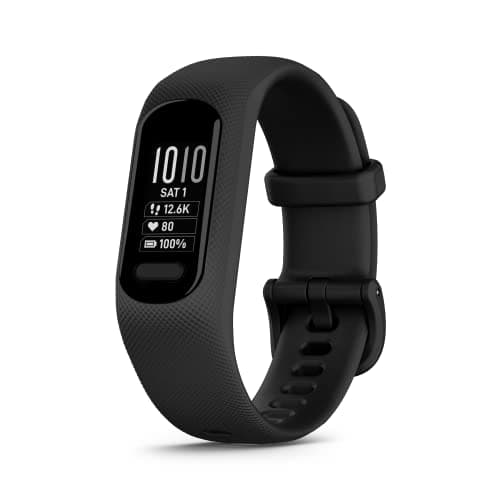
The fitness tracker to buy is the Garmin vívosmart 5. It is a slim band with optical heart rate and Pulse Ox, about a week of battery, a 5 ATM water rating and no subscription at all — and its Body Battery readout is built from your own measured heart rate, HRV, sleep and stress rather than from a guess, which makes it the right buy for anyone who wants one honest morning number. If you want a full watch with built-in GPS and maps for less, the Amazfit Active 2 is the value answer. The budget pick is the Amazfit Bip 6 — the cheapest tracker here that does the job, with a 1.97-inch AMOLED, built-in GPS and up to two weeks of battery.
Here is the distinction nobody selling you a tracker will draw. Measured numbers come off a sensor: optical heart rate from a green or red LED reading blood flow, blood-oxygen estimates from a pulse-oximetry array, skin temperature from a thermistor, satellite position from a GNSS chip, an ECG trace from electrodes you touch. Modelled numbers are calculated from those: sleep stages, calories burned, stress scores, readiness and recovery scores, step counts from accelerometer patterns. Both are useful. But a device with four sensors and forty readouts is mostly inference, and knowing which is which is what stops you making decisions on a number that was never measured.
So this page is ranked on sensor coverage first — how much of the display has a physical basis — then on how long it runs between charges, because a tracker only measures what it is worn for and the single commonest reason overnight data has holes in it is a flat battery, and then on whether anything you need is behind a subscription. Four of the six picks here have no mandatory fee; two do, and we say exactly which features sit behind the paywall.
One honest framing before the list. No consumer tracker is a medical device, none of them measures blood pressure or blood glucose from a wrist whatever the marketing of some other brand implies, and sleep staging from a wrist disagrees with a sleep lab more often than the pretty graphs suggest. What these devices are genuinely good at is trends in one person over time: your resting heart rate drifting up, your HRV dropping, your sleep getting shorter. We cover why that matters in what is HRV, and the blood-pressure question specifically in do fitness trackers measure blood pressure.
Five-year cost is one axis; which numbers come off a real sensor rather than a model is another, and it sorts the shelf differently. That ranking is in best fitness trackers.
Once you have settled the form factor, the devices themselves are ranked on how much of their display is measured rather than modelled in best fitness trackers.
For the devices themselves rather than the formats — the straps, the running watch and the cleared-ECG watch, ranked on measurement method and what each one broadcasts to — see best heart rate monitors.
Overnight HRV and exercise heart rate are different jobs with different winners. If the number you need is the one during a hard interval, that shelf is ranked in best heart rate monitors.
If the conclusion you are reaching is that you want out of Garmin rather than deeper into it, we rank the switch honestly - on how much of Garmin's no-fee recovery suite, GPS accuracy and multi-day battery each rival keeps - in Garmin alternatives.
Apple is not the only way out of Garmin, and on battery it is the worst of them. The wider field - including a hybrid rated at up to 30 days with a cleared ECG - is ranked in Garmin alternatives.
If neither of these two is the answer, the rest of the field is ranked against Garmin's own three selling points - satellite accuracy, a complete no-subscription recovery suite and multi-day battery - in Garmin alternatives.
The best ratio of measured data to price, and no subscription for any of it. Optical heart rate and Pulse Ox on a slim band you will actually keep on overnight, about seven days per charge, 5 ATM. Body Battery is a model - but it is a model fed by your own measured HR, HRV, sleep and stress, which is the honest version of a readiness score.
The most sensors per dollar. A real smartwatch with built-in GPS and offline maps, the BioTracker 6.0 optical array behind sleep, SpO2 and HRV, around ten days of battery and 5 ATM - all free in the Zepp app with no membership. It will not out-analyze Garmin, and it does not need to at this price.
The cheapest tracker here that does the job properly. A 1.97-inch AMOLED, built-in GPS, Bluetooth calling and up to fourteen days per charge, with all the health tracking free in the Zepp app. The recovery analysis is basic - you are paying the least of anyone on this page to get real measured data.
The pick if you train rather than just track. Multi-GNSS GPS is the most accurate position measurement on this page, and it feeds training load, HRV Status and recovery time - Garmin's mature modeling, with no subscription. Up to eleven days of battery and an AMOLED screen. Overkill if all you want is a morning number.
The friendliest app on the page, and the one to buy for somebody who will be put off by a data dump. A slim band with optical heart rate, sleep tracking, built-in GPS and Google apps. Be clear about the catch before you buy: some insights sit behind Google's paid tier, so the purchase price is not the whole price.
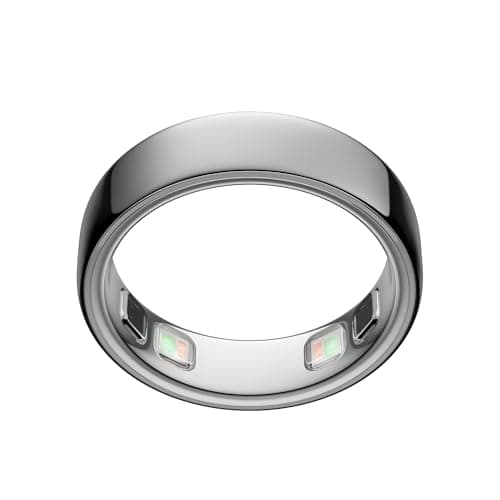
The best measured sleep data here, from the best place to measure it. A ring reads a finger artery rather than the back of a wrist, and it is the only device on this page with a skin-temperature sensor - which is what adds illness and cycle trends. It is also the only one whose insights require a paid membership, so the purchase price is a down payment.
#ad · Live prices from the Amazon Product API, as of November 24, 2026. Where we have no verified live price, we show none — a gap beats a number that has rotted.
In detail
The picks, in full
01
Best overall
Garmin vívosmart 5
Body Battery recoveryPulse Ox (SpO2)~7-day battery5 ATM · no subscription
8.6/10
The best ratio of measured data to price, and no subscription for any of it. Optical heart rate and Pulse Ox on a slim band you will actually keep on overnight, about seven days per charge, 5 ATM. Body Battery is a model - but it is a model fed by your own measured HR, HRV, sleep and stress, which is the honest version of a readiness score.
Sensor coverage
7
Battery
8
No-fee features
10
Wearability
9
Value
9
Pros
+Every feature is included — Garmin charges nothing for Body Battery, sleep or HRV
+Slim band is comfortable to sleep in, which is where the data that matters comes from
+Tracks stress, sleep stages, resting heart rate and Pulse Ox
+About a week per charge, so overnight data has no gaps
+5 ATM, so showers and swimming are fine
Cons
−No built-in GPS — distance comes from your phone or from the accelerometer
−Small monochrome display, not a smartwatch screen
−No ECG and no skin-temperature sensor
Don't buy this if…
…you run or cycle outdoors without a phone — you want built-in GPS, which means the Forerunner or the Active 2.
The most sensors per dollar. A real smartwatch with built-in GPS and offline maps, the BioTracker 6.0 optical array behind sleep, SpO2 and HRV, around ten days of battery and 5 ATM - all free in the Zepp app with no membership. It will not out-analyze Garmin, and it does not need to at this price.
Sensor coverage
9
Battery
9
No-fee features
10
Wearability
7
Value
10
Pros
+Built-in GPS and offline maps — real measured distance with no phone
+160+ sport modes and a bright AMOLED, with nothing behind a paywall
+Around 10 days of battery, longer than most AMOLED watches
+Sleep stages, SpO2, stress and readiness included free
Cons
−Zepp's recovery modeling is less mature than Garmin's or Oura's
−No ECG and no skin-temperature sensor
−A watch is a bigger thing to sleep in than a band or a ring
Don't buy this if…
…you want the most trustworthy readiness score — Garmin's Body Battery and Oura's readiness are both built on more years of modeling.
1.97in AMOLEDBuilt-in GPSUp to 14-day battery5 ATM · no subscription
8.8/10
The cheapest tracker here that does the job properly. A 1.97-inch AMOLED, built-in GPS, Bluetooth calling and up to fourteen days per charge, with all the health tracking free in the Zepp app. The recovery analysis is basic - you are paying the least of anyone on this page to get real measured data.
Sensor coverage
7
Battery
10
No-fee features
10
Wearability
7
Value
10
Pros
+Up to ~14 days per charge, the longest battery on this page
+Built-in GPS at the lowest price here — the spec cheap trackers usually drop first
+Sleep, SpO2, heart rate and stress, all with no subscription
+5 ATM water rating and Bluetooth calling included
Cons
−Basic recovery modeling compared with Garmin or Oura
−Optical HR on a cheap sensor is the least reliable during hard intervals
−Plastic build, and it looks like the price
Don't buy this if…
…you want a readiness score you will actually act on — the modeling is where the money goes, and this is the cheapest end of it.
AMOLED · multi-GNSS GPSBody Battery + HRV StatusUp to 11-day battery5 ATM · no subscription
8.2/10
The pick if you train rather than just track. Multi-GNSS GPS is the most accurate position measurement on this page, and it feeds training load, HRV Status and recovery time - Garmin's mature modeling, with no subscription. Up to eleven days of battery and an AMOLED screen. Overkill if all you want is a morning number.
Sensor coverage
9
Battery
9
No-fee features
10
Wearability
6
Value
7
Pros
+Multi-GNSS — measured position from more than one satellite system, the accuracy upgrade that matters outdoors
+Training load, HRV Status and recovery time with no fees
+Up to 11 days in smartwatch mode and a bright AMOLED
+Garmin Pay on all editions and 5 ATM water rating
Cons
−Costs more than the Amazfit watches for data most casual users will not use
−No ECG and no skin temperature
−A running watch is a large thing to wear to bed
Don't buy this if…
…you do not train for anything — the training-load analysis is the reason for the price, and it is wasted on step counting.
Slim, all-day bandBuilt-in GPS + Google appsHeart rate + sleep trackingSome insights need a paid tier
7.0/10
The friendliest app on the page, and the one to buy for somebody who will be put off by a data dump. A slim band with optical heart rate, sleep tracking, built-in GPS and Google apps. Be clear about the catch before you buy: some insights sit behind Google's paid tier, so the purchase price is not the whole price.
Sensor coverage
8
Battery
6
No-fee features
5
Wearability
9
Value
7
Pros
+The most approachable app of any device here — genuinely motivating rather than overwhelming
+Built-in GPS on a slim band, which the vívosmart 5 does not have
+Comfortable enough to wear overnight, where the sleep data comes from
+Google app integration if you are already in that ecosystem
Cons
−Some insights require a paid Google tier — the one real asterisk on this page
−Requires a Google Account and internet access to set up
−Smaller feature set than the watches at a similar price
Don't buy this if…
…you refuse to pay a subscription for anything — four other picks here charge nothing at all, and we rank that shelf separately.
PPG + temperature sensors6-9 day battery100m water resistantMembership required
6.8/10
The best measured sleep data here, from the best place to measure it. A ring reads a finger artery rather than the back of a wrist, and it is the only device on this page with a skin-temperature sensor - which is what adds illness and cycle trends. It is also the only one whose insights require a paid membership, so the purchase price is a down payment.
Sensor coverage
10
Battery
7
No-fee features
2
Wearability
10
Value
5
Pros
+Class-leading sleep staging and overnight HRV — the finger gives a cleaner signal than a wrist
+A real skin-temperature sensor, which no other pick here has
+40% slimmer than the Ring 4 at 6.09 mm — the easiest thing here to sleep in
+100 m water resistance and a hardened PVD finish
Cons
−The insights that justify it need a paid Oura Membership, ongoing
−No display and no GPS — it tracks you, it does not show you anything on your hand
−Sizing kit required, and a ring cannot be resized later
−Poor at exercise heart rate: a finger moves too much during lifting
Don't buy this if…
…you want one device for training and recovery — a ring measures the night brilliantly and the workout badly, and a subscription on top makes it the most expensive answer here.
Measured, modelled, and why the difference matters
A tracker's sensors are a short list: an optical heart-rate array, usually a pulse-oximetry channel for SpO2, an accelerometer, sometimes a GNSS chip, rarely a skin thermistor, rarer still ECG electrodes. Everything else on the screen is arithmetic on top of those. Sleep stages are inferred from heart rate and movement patterns. Calories are a formula using your age, weight and heart rate. Stress and readiness scores are weighted models over HRV and resting heart rate. That is not a scandal — a well-built model is genuinely useful — but it explains why two trackers on the same wrist disagree about how you slept while agreeing almost exactly about your heart rate.
The practical rule: trust the measured numbers as numbers, and trust the modelled numbers only as trends in yourself. Your resting heart rate tonight against your own last month is informative. Your sleep-stage breakdown against your partner's different tracker is noise.
Band, watch or ring
A band is the compromise that wins most often: small enough to sleep in, cheap, long battery, and the slim ones disappear. The cost is no map, no big screen, and often no built-in GPS.
A watch buys built-in GPS, a screen worth reading and sport modes, and costs you overnight comfort — a 44 mm watch on a pillow is the single commonest reason people stop collecting sleep data.
A ring is the best overnight sensor platform available and the worst exercise one: the signal from a finger artery is cleaner at rest and useless during a lift, there is no display, and you cannot resize it. It is also the one form factor here that charges a membership. We compare the two directly in smart ring vs smartwatch.
Battery life is a data-quality spec
This is the point the spec sheets bury. A tracker only measures what it is worn for, and recovery data comes from the night, so a device you have to charge every other evening systematically loses nights — usually the nights after the hard days you most wanted to see. The picks here run from about seven days to around fourteen, and the fourteen-day device is collecting more real data than a flashier one you charge on Wednesday evenings.
Subscriptions: what is actually behind the paywall
Four of the six picks on this page charge nothing: both Garmins and both Amazfits include their recovery analysis in the purchase price, permanently. Oura requires a paid membership for the insights that are the reason to buy a ring. Fitbit puts some insights behind Google's paid tier. None of that is hidden, but it changes the five-year cost of ownership far more than the sticker price does — which is the whole argument of best no-subscription trackers and best budget fitness trackers.
What none of these do
None of them is a medical device. None measures blood pressure from the wrist. None measures blood glucose without a separate sensor, whatever an advertisement implies. None diagnoses sleep apnea, and none replaces a sleep study. Two devices here can flag an irregular rhythm in a way that is worth taking to a clinician, which is a screening prompt rather than a diagnosis. If a tracker shows something that worries you, the right next step is a doctor, not a different tracker.
How we picked
We did not lab-test this gear
Everyone in this category says they tested twenty products. We have not lab-tested any of these, and we say so. What we did instead: compiled the published specifications, pulled the numbers from the manufacturer manuals, ran the cost-to-run and cost-per-unit math where there was math to run, and scored each product against a published rubric. The scores are judgments from documented research — not measurements we took, because we do not have a lab and we will not pretend we do. Where a number came from someone else's work, we name them in Sources.
Questions
Frequently asked
What is the best fitness tracker?+
For most people the Garmin vívosmart 5: a slim band with optical heart rate and Pulse Ox, about a week of battery, a 5 ATM rating, and Body Battery recovery scoring with no subscription for any of it. If you want built-in GPS, maps and a real screen for less money, the Amazfit Active 2 is the best value full watch. The cheapest tracker here that still does the job properly is the Amazfit Bip 6, which includes built-in GPS and runs for up to two weeks.
Which fitness tracker is most accurate?+
Split the question. For resting and overnight heart rate and HRV, a ring on a finger has the cleanest signal, which is why the Oura leads the sleep data here. For position and pace outdoors, a multi-GNSS watch like the Forerunner 165 is the most accurate measurement on this page. For exercise heart rate during hard efforts, no optical sensor on any of these beats a chest strap - the straps we rate are on our heart rate monitor page.
Do fitness trackers need a subscription?+
Most do not. Both Garmins and both Amazfits on this page include all their recovery analysis in the purchase price with no ongoing fee. Oura requires a paid membership for the insights that make a ring worth owning, and some Fitbit insights sit behind Google's paid tier. Over five years the fee usually matters more than the sticker price, so decide which camp you want before you compare models.
Fitness tracker or smartwatch - which should I buy?+
A tracker if the data is the point and you want to sleep in it; a smartwatch if you want apps, maps and a screen worth reading. The practical fork is overnight comfort against built-in GPS: slim bands are better to sleep in and often lack GPS, watches have GPS and are worse on a pillow. If you want one device for both, the mid-size watches here are the compromise, and we lay the choice out in fitness tracker vs smartwatch.
How accurate is sleep tracking on a fitness tracker?+
Good at telling you when you fell asleep and roughly how long you slept; much weaker at sleep stages, which are inferred from heart rate and movement rather than measured. Expect the totals to be useful and the light/deep/REM breakdown to be indicative at best - it disagrees with a sleep lab more often than the graphs suggest. Use it as a trend in yourself, not as a diagnosis, and never to self-diagnose apnea.
Can a fitness tracker measure blood pressure?+
Not from your wrist, and not on any device on this page. The devices that genuinely measure blood pressure use an inflating cuff, and a handful of hybrid wearables include one. Anything claiming cuffless wrist blood pressure from an optical sensor is estimating, usually after calibration against a real cuff. We go through what the claims actually mean on our blood pressure page.
We do not run a testing lab, and we do not pretend to. Where a measured number came from someone else's work, we name them and link them. Where we could not verify something, we say so on the page rather than quietly leaving it out. Read our full method.