Every brand comparison on this site — Whoop vs Oura, Garmin vs Whoop, Fitbit vs Garmin — assumes you have already answered a more basic question: what shape do you want strapped to your body? Get that wrong and the best device in its class will sit in a drawer.
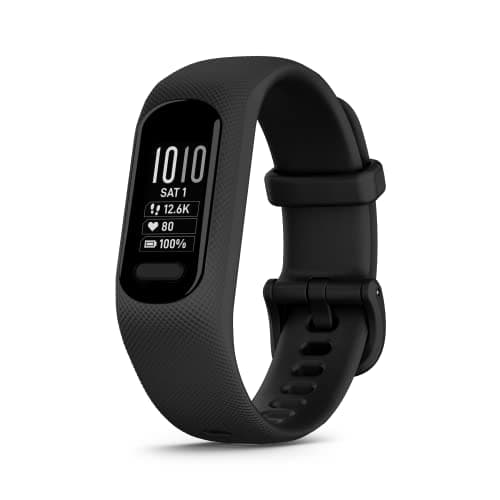
There are three answers in 2026, not two. A fitness tracker is a slim band with a small screen, built to measure and get out of the way. A smartwatch is a wrist computer that also measures — notifications, apps, GPS, maps, payments, a bright display. A smart ring abandons the screen entirely and puts the sensor on a finger, where it reads cleanly and disappears at night. Each of the three trades away something the others keep, and the trade is the whole decision.
The three form factors, compared
| | Fitness tracker (band) | Smartwatch | Smart ring |
|---|
| Typical battery | 5-10 days | 1-10 days (AMOLED and GPS cost days) | 4-8 days |
| Comfortable to sleep in? | Usually | Often not — bulk and a lit screen | Yes, the best of the three |
| Screen | Small, functional | Large, bright, app-capable | None |
| Notifications / distraction | Minimal | Full — this is the point, and the cost | None |
| Workout GPS | Usually phone-tethered | Built in on most | No |
| Live heart rate accuracy in hard training | Moderate | Moderate | Poor — rings are not built for it |
| Overnight HRV / sleep quality | Good | Good, if you wear it to bed | Excellent |
| Subscription risk | Low | Low | High — most rings charge monthly |
| Typical price | $60-$180 | $100-$800 | $250-$400 plus fees |
What a plain fitness tracker still does better
Bands have been declared obsolete for a decade and keep not being, for three good reasons. The first is battery: without a large, bright display to drive, a band runs for the better part of a week or more, which is what makes 24/7 wear — and therefore a continuous overnight data set — realistic. The second is sleep comfort: a slim band is far easier to keep on all night than a chunk of metal and glass, and a recovery metric you only collect on some nights is not a trend. The third is focus. A band shows you steps, heart rate and a readiness score; it does not light up every time someone replies to a group chat. If the reason you are buying is to understand your recovery, the device that does less is often the one that works.
What a smartwatch buys you
Two things, and they are worth real money to the right person. On-board GPS and a usable screen mean you can run, ride or hike without a phone and still see pace and route — genuinely hard to give up once you have it. And the watch is also a watch: notifications, payments, music control, maps. If you were going to wear something on your wrist anyway, a smartwatch replaces it rather than adding to it.
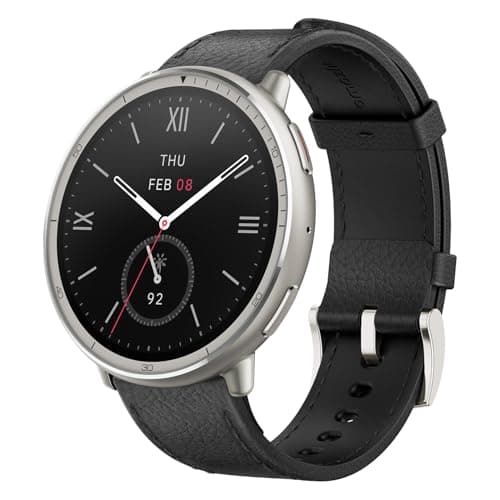
The costs are equally real. Battery is the big one — a bright AMOLED display plus GPS turns a ten-day device into a two-day one, and a watch you charge every other night is a watch that misses sleep data. Bulk is the other: many people simply cannot sleep in a large watch, which quietly removes the entire overnight half of recovery tracking. The Amazfit below is the honest counter-example: a smartwatch that keeps roughly ten days of battery precisely because it does not try to be a phone.
Where the smart ring fits
A ring is the specialist, and it is very good at its specialty. Finger arteries sit closer to the surface than wrist vessels and there is far less soft tissue in the way, so overnight heart rate and HRV read cleanly; and nothing you wear is easier to sleep in. That combination is why rings dominate sleep and readiness tracking.
The trade-offs are steep. There is no screen, so every piece of information arrives through your phone. Rings are poor at live workout heart rate — a finger sensor is disrupted by grip and movement, which is why serious training data still belongs to a chest strap. And most rings carry a subscription, so the sticker price is the beginning of the cost, not the end — the case is laid out in is the Oura Ring worth it.
The battery question decides more than people expect
Recovery metrics are trenddata. A single night's HRV tells you almost nothing; two weeks of nights tells you a great deal. That makes charging cadence a first-order feature rather than a footnote, because every device gets charged at the moment it is least inconvenient — which for most people is bedtime, exactly when the recovery data is being collected. A device that lasts a week gets charged in the shower and never misses a night. A device that lasts two days gets charged overnight and misses half your sleep data. If you take one thing from this page: pick for battery before you pick for features.
Which should you buy?
Buy a fitness tracker band if recovery and sleep are the point, you want multi-day battery, you would rather not be notified all day, and you want to spend under $200. This is the right answer for most people reading a recovery site.
Buy a smartwatch if you train outdoors and want GPS without a phone, if you would wear a watch regardless, or if you want one device instead of two. Prioritize battery life over screen brightness, and check you can sleep in it before committing.
Buy a smart ring if sleep and readiness are overwhelmingly your priority, you already have a watch or a strap for workouts, and you are comfortable with a recurring fee. It is the best sleep sensor you can wear and the worst training sensor.
Once you have picked a shape, the ranked options live in best recovery wearables, and if the recurring fee is your sticking point, start at best no-subscription trackers.
If you have landed on a full smartwatch, the next fork is which ecosystem: Apple Watch vs Garmin takes that one apart on battery, cleared health features and which phone you carry.
If you have settled on a full smartwatch and carry an Android phone, the shortlist is shorter than it looks and depends on your phone brand — we rank it in best smartwatches for Android.