Skip to content
Rep & Recovery

Tracking · Recovery Wearables

The best budget fitness trackers

A cheap tracker with a monthly fee is not cheap. Ranked on what each one costs you over five years, and what the recovery data is actually worth at the bottom of the market.

By Stephen V.Updated How we review
#ad

We earn a commission when you buy through our Amazon links, at no extra cost to you. It never changes a verdict, and we say so when the cheaper product is the better buy. How this works.

The best budget fitness tracker for most people is the Amazfit Bip 6: a 1.97-inch AMOLED screen, built-in GPS, Bluetooth calling and up to two weeks of battery, with every health feature free in the Zepp app. Nothing else at this price includes real GPS and charges nothing monthly. If you want the single most useful recovery number instead of the longest feature list, buy the Garmin vivosmart 5 for Body Battery — it costs more and tells you more about whether to train today.

The trap in this category is that sticker price is not price. A tracker that costs less up front and puts its sleep analysis, readiness score or trend history behind a subscription costs more in year two than a tracker that charges nothing — and far more by year five. So this ranking is built on five-year cost of ownership, which reorders the list completely and pushes the cheapest-looking options down.

The second thing worth saying plainly: at this end of the market, the sensors are closer to each other than the marketing suggests, and the algorithms are what differ. Every tracker here counts steps and reads heart rate acceptably. What separates them is whether that raw data gets turned into something you can act on — which is one reason Garmin keeps appearing on this list despite being the least cheap option on it. The deeper analysis of that gap is in best recovery wearables, and the fee question has its own page at best no-subscription trackers.

The short answer

Quick picks

#ProductBest forScorePrice
01
Amazfit Amazfit Bip 6
Amazfit Bip 6

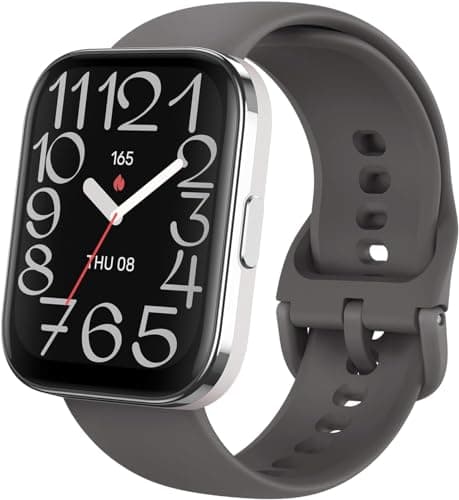
The most tracker per dollar on the market right now, and the one we would buy. A big 1.97-inch AMOLED, genuine built-in GPS, Bluetooth calling, 5 ATM water rating and up to 14 days of battery — with sleep, SpO2, heart rate and stress all free in the Zepp app. The recovery algorithms are the most basic here, and at this price that is a fair trade.

Best overall budget
8.8
$79.00Amazon
02
Amazfit Amazfit Active 2
Amazfit Active 2

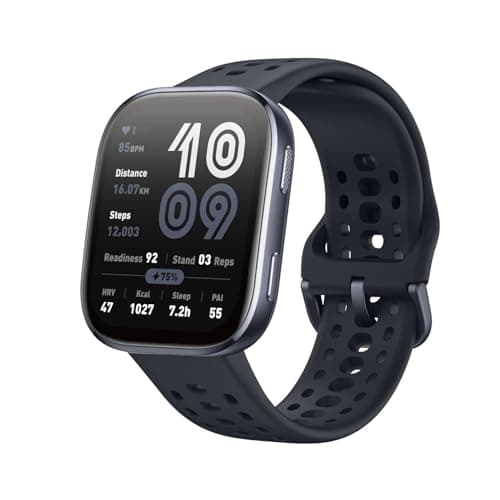
The step up that still costs less than a mid-range Garmin. A proper smartwatch with built-in GPS and offline maps, the BioTracker 6.0 sensor, 160-plus sport modes and around 10 days of battery — all free in the Zepp app. Buy it over the Bip 6 if you want maps and a nicer object; the recovery data is only marginally better.

Best budget smartwatch
8.2
$129.98Amazon
03
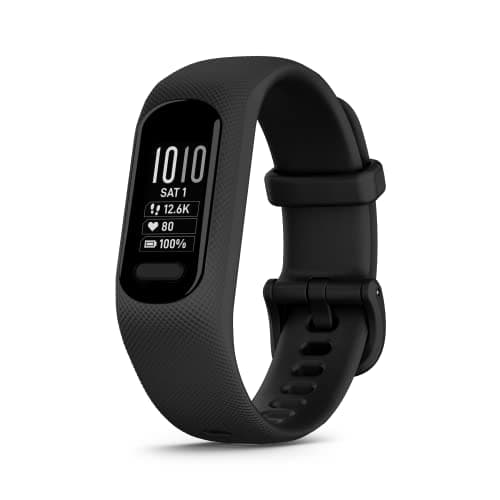
Garmin Garmin vivosmart 5
Garmin vivosmart 5

The cheapest tracker that answers the only question most people have in the morning. Body Battery turns sleep, stress and heart rate variability into one honest readiness score, with no membership behind it, on a slim band comfortable enough to actually sleep in. It is the most expensive pick here and the only one whose data reliably changes a decision.

Best recovery data on a budget
7.8
$142.99Amazon
04
Garmin Garmin Forerunner 55
Garmin Forerunner 55

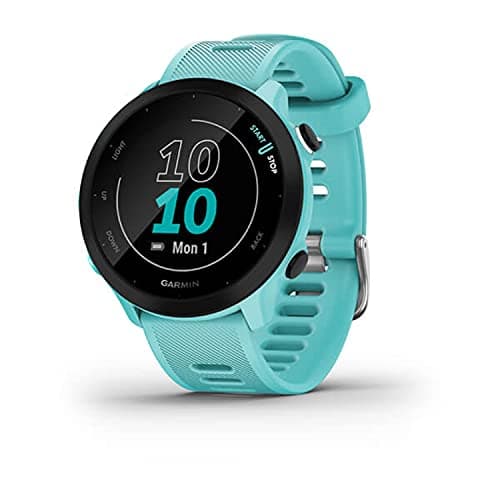
The budget running watch, and the longest-lasting thing here: Garmin states up to two weeks in smartwatch mode and 20 hours with GPS running. Daily suggested workouts, PacePro pacing and race predictions in a light plastic case, with no fees. One honest caveat on price — the 55 is at the end of its life and remaining stock no longer reliably undercuts the newer 165.

Best for running
7.6
$199.99Amazon
05
Amazfit Amazfit Bip 5
Amazfit Bip 5

The cheapest thing on this page that is still a real tracker. A big 1.91-inch screen, built-in GPS, Alexa and Bluetooth calling, with sleep and heart rate free in the Zepp app. The LCD and the older sensors show the price, and the IP68 rating means splashes rather than swimming — but for basic no-fee tracking it does the job.

Cheapest real tracker
7.4
$59.95Amazon
06
Fitbit Fitbit Charge 6
Fitbit Charge 6

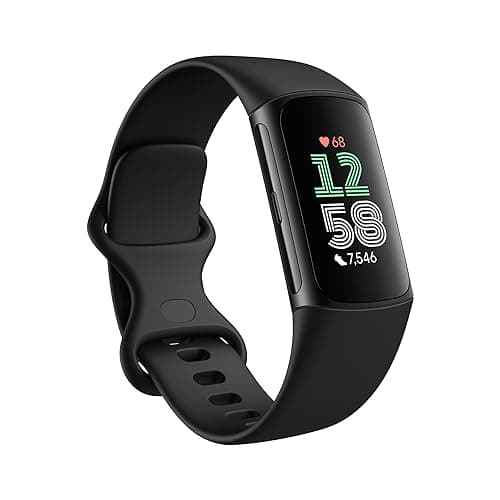
The friendliest app in the category, and the reason it is ranked last on a five-year-cost page: some of what you will want sits behind Fitbit Premium. A slim band with solid heart-rate and sleep tracking, built-in GPS and Google apps, and the most motivating interface here — bought on sticker price it is competitive, bought on five-year cost it is not.

Best app experience
6.4
$132.99Amazon

#ad · Live prices from the Amazon Product API, as of October 4, 2026. Where we have no verified live price, we show none — a gap beats a number that has rotted.

In detail

The picks, in full

01
Amazfit Amazfit Bip 6

Best overall budget

Amazfit Bip 6

1.97in AMOLEDBuilt-in GPSUp to 14-day battery5 ATM, no subscription
8.8/10

The most tracker per dollar on the market right now, and the one we would buy. A big 1.97-inch AMOLED, genuine built-in GPS, Bluetooth calling, 5 ATM water rating and up to 14 days of battery — with sleep, SpO2, heart rate and stress all free in the Zepp app. The recovery algorithms are the most basic here, and at this price that is a fair trade.

Five-year cost
10
Recovery data
6
Battery
10
Build & screen
8
Value
10

Pros

  • Built-in GPS at a price where most rivals borrow your phone's
  • Up to ~14-day battery, the longest of any tracker on this page
  • Sleep, SpO2, heart rate and stress with nothing behind a paywall
  • Big bright AMOLED and Bluetooth calling, both rare this cheap

Cons

  • Recovery and sleep algorithms are the most basic of the group
  • Polymer build feels its price next to a Garmin

Don't buy this if…

…you want a readiness number you will genuinely act on — the Garmin below turns the same raw signals into a decision, and that is what you are paying the difference for.

Two specs do the heavy lifting here. Built-in GPS means the watch records a run without your phone, which is the dividing line between a step counter and a training tool and is usually the first thing cut at this price. And no subscription means the number on the price tag is the number: five years of ownership costs exactly what you paid today, which is the arithmetic the rest of this page is built on.

Set the expectation honestly on the data. Zepp will tell you how you slept and give you a readiness-style summary, and it is coarser than what Garmin or Oura produce from comparable sensors. If you want a number that reliably changes what you do on a given morning, you are shopping for an algorithm and you will pay for it. If you want accurate steps, heart rate, sleep duration and GPS routes for very little money, this is the end of the search.

$79.00View on Amazon

Price as of October 4, 2026. Prices change — Amazon's at checkout is the one that counts.

#ad · we may earn a commission from this link to Amazfit Bip 6

02
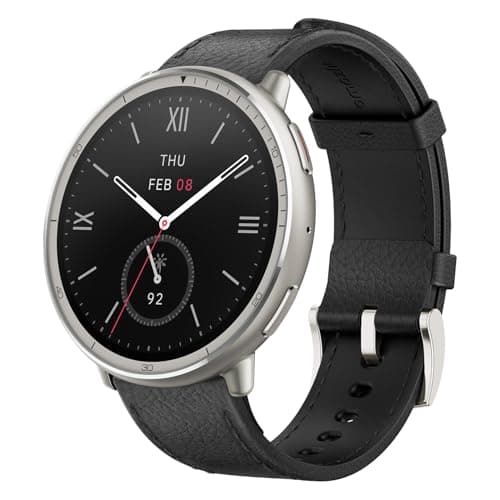
Amazfit Amazfit Active 2

Best budget smartwatch

Amazfit Active 2

BioTracker 6.0 PPGBuilt-in GPS + offline maps~10-day battery5 ATM, no subscription
8.2/10

The step up that still costs less than a mid-range Garmin. A proper smartwatch with built-in GPS and offline maps, the BioTracker 6.0 sensor, 160-plus sport modes and around 10 days of battery — all free in the Zepp app. Buy it over the Bip 6 if you want maps and a nicer object; the recovery data is only marginally better.

Five-year cost
9
Recovery data
7
Battery
8
Build & screen
8
Value
9

Pros

  • Offline maps on the wrist at a price nobody else offers them
  • Around 10 days of battery, long for an AMOLED smartwatch
  • Sleep stages, SpO2, stress and readiness, all with no mandatory fee
  • 160-plus sport modes and a 5 ATM rating for swimming

Cons

  • Recovery analysis is still less refined than Garmin's Body Battery
  • Zepp's third-party app support trails Garmin and Apple

Don't buy this if…

…you mainly want battery and the basics — the Bip 6 does the same core tracking for meaningfully less, and lasts longer between charges.

$129.98View on Amazon

Price as of October 4, 2026. Prices change — Amazon's at checkout is the one that counts.

#ad · we may earn a commission from this link to Amazfit Active 2

03
Garmin Garmin vivosmart 5

Best recovery data on a budget

Garmin vivosmart 5

Body Battery recoveryPulse Ox (SpO2)~7-day battery5 ATM, no subscription
7.8/10

The cheapest tracker that answers the only question most people have in the morning. Body Battery turns sleep, stress and heart rate variability into one honest readiness score, with no membership behind it, on a slim band comfortable enough to actually sleep in. It is the most expensive pick here and the only one whose data reliably changes a decision.

Five-year cost
9
Recovery data
9
Battery
7
Build & screen
6
Value
8

Pros

  • Body Battery is a genuinely actionable readiness readout, free of any membership
  • Slim and light enough to wear overnight, which is when the useful data is collected
  • Garmin Connect is the deepest free app in this price bracket by a distance
  • 5 ATM rating handles swimming and showers without thinking about it

Cons

  • Small monochrome OLED shows far less at a glance than the AMOLED picks
  • No built-in GPS — it borrows your phone for mapped workouts

Don't buy this if…

…you want to run without your phone — there is no GPS in this band, and the Forerunner below is the cheapest Garmin that has it.

$142.99View on Amazon

$149.995% off

Price as of October 4, 2026. Prices change — Amazon's at checkout is the one that counts.

#ad · we may earn a commission from this link to Garmin vivosmart 5

04
Garmin Garmin Forerunner 55

Best for running

Garmin Forerunner 55

Up to 2 weeks battery20 h in GPS modeDaily suggested workoutsNo subscription
7.6/10

The budget running watch, and the longest-lasting thing here: Garmin states up to two weeks in smartwatch mode and 20 hours with GPS running. Daily suggested workouts, PacePro pacing and race predictions in a light plastic case, with no fees. One honest caveat on price — the 55 is at the end of its life and remaining stock no longer reliably undercuts the newer 165.

Five-year cost
9
Recovery data
7
Battery
10
Build & screen
5
Value
7

Pros

  • Two weeks in smartwatch mode and 20 hours of GPS on Garmin's stated figures
  • Daily suggested workouts and PacePro pacing — real coaching at a budget price
  • Very light and unobtrusive to sleep in, so you get the overnight data too
  • Garmin's free ecosystem, with no feature held back behind a fee

Cons

  • Transflective LCD looks a decade older than the AMOLED picks here
  • End of life: check the live price against the newer 165 before buying

Don't buy this if…

…you are not running — you are paying for GPS and pacing features, and the vivosmart gives you better everyday recovery data for less.

$199.99View on Amazon

Price as of October 4, 2026. Prices change — Amazon's at checkout is the one that counts.

#ad · we may earn a commission from this link to Garmin Forerunner 55

05
Amazfit Amazfit Bip 5

Cheapest real tracker

Amazfit Bip 5

1.91in LCDBuilt-in GPS + Alexa~10-day batteryIP68, no subscription
7.4/10

The cheapest thing on this page that is still a real tracker. A big 1.91-inch screen, built-in GPS, Alexa and Bluetooth calling, with sleep and heart rate free in the Zepp app. The LCD and the older sensors show the price, and the IP68 rating means splashes rather than swimming — but for basic no-fee tracking it does the job.

Five-year cost
10
Recovery data
5
Battery
8
Build & screen
5
Value
9

Pros

  • Built-in GPS and calling at the lowest price in this roundup
  • Large 1.91-inch screen with Alexa onboard
  • Around 10 days of battery and no fee for the core tracking
  • Light and genuinely simple to live with

Cons

  • LCD rather than the AMOLED of the Bip 6 — dimmer and less readable outdoors
  • IP68 handles splashes but is not rated for swimming

Don't buy this if…

…the Bip 6 is within reach of your budget — it is a better screen, a better water rating and longer battery for a modest step up, and it is the pick we would make.

$59.95View on Amazon

Price as of October 4, 2026. Prices change — Amazon's at checkout is the one that counts.

#ad · we may earn a commission from this link to Amazfit Bip 5

06
Fitbit Fitbit Charge 6

Best app experience

Fitbit Charge 6

Slim all-day bandBuilt-in GPS + Google appsHeart rate + sleep trackingSome insights need Premium
6.4/10

The friendliest app in the category, and the reason it is ranked last on a five-year-cost page: some of what you will want sits behind Fitbit Premium. A slim band with solid heart-rate and sleep tracking, built-in GPS and Google apps, and the most motivating interface here — bought on sticker price it is competitive, bought on five-year cost it is not.

Five-year cost
6
Recovery data
6
Battery
7
Build & screen
7
Value
6

Pros

  • The easiest and most motivating app experience of anything on this page
  • Slim and comfortable to wear day and night
  • Built-in GPS plus Google Maps and Wallet on the wrist
  • Genuinely good at nudging inactive people into moving more

Cons

  • Some insights sit behind Fitbit Premium, which changes the five-year arithmetic
  • Shorter battery life than the Amazfit and Garmin picks here

Don't buy this if…

…you are buying on total cost — a tracker with a monthly fee attached is the one thing this ranking is designed to catch, and over five years it is the most expensive option on the page.

$132.99View on Amazon

$159.9517% off

Price as of October 4, 2026. Prices change — Amazon's at checkout is the one that counts.

#ad · we may earn a commission from this link to Fitbit Charge 6

The six, side by side

TrackerBuilt-in GPSStated batteryWater ratingSubscription
Amazfit Bip 6YesUp to 14 days5 ATMNone
Amazfit Active 2Yes, with offline maps~10 days5 ATMNone
Garmin vivosmart 5No — uses your phone~7 days5 ATMNone
Garmin Forerunner 55YesUp to 2 weeks / 20 h GPS5 ATMNone
Amazfit Bip 5Yes~10 daysIP68 (splashes)None
Fitbit Charge 6YesShortest hereWater resistantSome insights need Premium

All figures are the manufacturers' published specifications from the brand pages and listings in Sources. Battery claims in particular are best-case figures from the maker — real battery life depends on screen brightness, GPS use and how often the heart-rate sensor samples, and every one of these will fall short of its headline number in heavy use.

Five-year cost is the only honest comparison

Do this arithmetic before you buy anything in this category: take the purchase price, add the monthly fee multiplied by sixty, and compare those numbers. A subscription of even a few dollars a month adds up to more than most of the trackers on this page cost outright. That single calculation is why a fee-free tracker tops this list and why the one with features behind a paywall is ranked last despite being a perfectly good device.

It is also why we are wary of the cheapest end of the market generally. A tracker that costs very little and locks its trend history behind a fee is not a budget tracker — it is a subscription with hardware attached. The fee question is important enough that it has its own page at best no-subscription trackers, and the two rankings deliberately use different axes: that one is about fee structure, this one is about what you get for the money.

What you genuinely give up at this price

  • Algorithms, not sensors.Every tracker here reads heart rate and counts steps acceptably. What a premium device buys is the interpretation — readiness scores and recovery models built on years of validation. Garmin's Body Battery is the only one of those available on this page.
  • Screen quality and build. Polymer cases, plastic lenses, shorter lifespans. This is where the money visibly went.
  • Ecosystem depth. Third-party app support, platform integrations and long-term software updates all thin out at the bottom of the market.
  • Not accuracy of the basics. Step count, heart rate and sleep duration are broadly fine across this list. The gap is in what happens to the data afterwards.

Three specs worth checking before you buy

Built-in GPS or not. A tracker without it borrows your phone, which is fine if your phone is always with you and useless if the point was to leave it behind. This is the single most common budget-tracker disappointment and it is printed on the spec sheet.

5 ATM versus IP68. 5 ATM means you can swim in it. IP68 means it survives rain and a shower. They are frequently confused, and one of the picks here is the cheaper rating for a reason.

Whether sleep analysis is free. Sleep is the feature most people actually use a tracker for and the one most often used as the subscription hook. Check before, not after.

Is a budget tracker enough for recovery?

For most people, yes — with one caveat. If you want to know whether you slept badly, moved enough and how your resting heart rate is trending, anything on this page does that. If you want a morning readiness number you will genuinely obey, the honest answer is that Body Battery is the cheapest version of that worth having, and the step above it is a different conversation entirely — we lay out what that extra money buys in best recovery wearables and best HRV monitors. For most budgets, a fee-free tracker you keep wearing beats a premium one you stop paying for.

How we picked

We did not lab-test this gear

Everyone in this category says they tested twenty products. We have not lab-tested any of these, and we say so. What we did instead: compiled the published specifications, pulled the numbers from the manufacturer manuals, ran the cost-to-run and cost-per-unit math where there was math to run, and scored each product against a published rubric. The scores are judgments from documented research — not measurements we took, because we do not have a lab and we will not pretend we do. Where a number came from someone else's work, we name them in Sources.
Questions

Frequently asked

What is the best budget fitness tracker?
The Amazfit Bip 6, for most people. It includes genuine built-in GPS, a bright AMOLED screen, a 5 ATM water rating and up to two weeks of battery, with every health feature free in the Zepp app — no other tracker at this price combines GPS with no subscription. If you want a readiness score you will actually act on rather than the longest feature list, the Garmin vivosmart 5 and its Body Battery is the better buy.
Which cheap fitness trackers have built-in GPS?
All three Amazfit picks here, the Garmin Forerunner 55 and the Fitbit Charge 6. The exception is the Garmin vivosmart 5, which borrows your phone's GPS instead — fine if your phone comes with you, useless if the point was to leave it at home. Built-in GPS is the most common thing cut at this price, so check the spec sheet rather than assuming.
Do budget fitness trackers need a subscription?
Most do not, and the ones that do are the reason to read the small print. Amazfit's Zepp app and Garmin Connect both give you sleep, heart rate and recovery data for free. Fitbit holds some insights behind Premium. Multiply any monthly fee by sixty and compare that against the purchase price — over five years a small subscription costs more than most of these trackers do outright.
Are cheap fitness trackers accurate?
For steps, heart rate and sleep duration, broadly yes — the sensors at this end of the market are closer to the premium ones than the price gap suggests. What you are not buying is the interpretation: readiness scores, recovery models and the validation behind them. The hardware is fine; the algorithms are where the money goes.
Is a budget tracker good enough for recovery tracking?
Enough to see whether you slept badly and how your resting heart rate is trending, yes. Enough to give you a morning readiness number you will genuinely act on, only if it has something like Garmin's Body Battery — which on this page means the vivosmart 5 or the Forerunner. A tracker you keep wearing beats a better one you stopped paying for.
What is the difference between 5 ATM and IP68?
5 ATM means you can swim in it. IP68 means it survives rain, sweat and a shower but is not rated for swimming. They get confused constantly, and the difference matters if you swim — one of the cheaper picks on this page carries the lower rating, and that is part of why it is cheaper.

Keep reading

Receipts

Sources

We do not run a testing lab, and we do not pretend to. Where a measured number came from someone else's work, we name them and link them. Where we could not verify something, we say so on the page rather than quietly leaving it out. Read our full method.