Most "best fitness tracker" lists are written for people training for something. A tracker for a parent in their seventies, or for yourself past retirement, is bought for different reasons: an alert if you fall, a heart reading you can show a doctor, a nudge to walk, and a screen you can read without glasses. Battery matters more than on any other wrist, because a watch that dies quietly on a Tuesday is a watch that is not watching. And the honest first question is whether the device needs a smartphone at all, because several of these are close to useless without one.
Every device below is one we already rank in this hub, re-scored on five things: safety features (fall detection and emergency contact), readability and simplicity, battery, cleared health sensors, and what it costs to own. The order is different from best health-monitoring wearables or best recovery wearables because the weighting is different. If the buyer is a senior who is still training hard, those two pages are the better read; this one is for the safety-and-simplicity buyer.
Two caveats we would rather state up front than bury. Fall detection is a supplemental feature on every device that offers it — Apple, Garmin and Samsung all say in their own documentation that it cannot detect every fall, and none of them should be the only emergency plan in the house. And no wearable here is a medical device in the sense of replacing a check-up: the ECG features are cleared to flag signs of a rhythm problem worth showing a doctor, not to diagnose one. Our guide to whether fitness trackers measure blood pressure covers the most common misunderstanding in that category.
Start with the phone, not the watch
Every device on this list pairs with a smartphone, and three of them are effectively locked to one kind. The Apple Watch needs an iPhone. The Samsung needs a Samsung Galaxy phone for its health and safety features. The Garmins, the Withings and the Amazfit work with either. If the senior in question does not carry a smartphone at all, the honest answer is that none of these are a good fit — the safety features all send their alerts through the paired phone, and a watch with no phone nearby is a step counter. That is not a reason to skip a tracker; it is a reason to buy the simplest one and treat it as a walking nudge, not a safety net.
Fall detection: what each maker actually promises
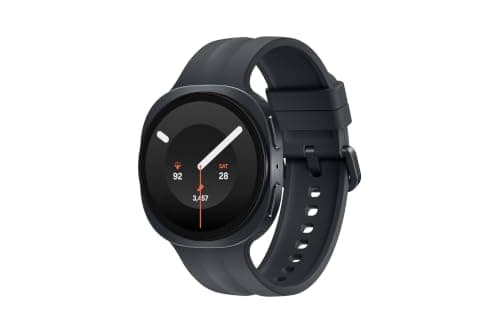
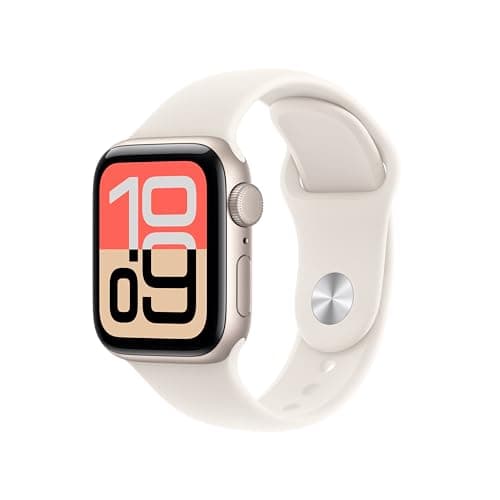
The three implementations here are different enough that the labels mislead. Apple detects a hard fall at any time, alerts the wearer, and if there is no response for about a minute, calls emergency services itself and messages emergency contacts with location; it switches on automatically for users 55 and over. Samsung detects hard falls, alerts for 60 seconds, then sends an SOS message to emergency contacts; it is off by default and must be enabled in the Galaxy Wearable app. Garmin's Incident Detection works during certain tracked outdoor activities and sends an automated message and location to contacts through the phone; Garmin states plainly that the Connect app does not contact emergency services on your behalf. All three say the feature cannot detect every fall and that vigorous movement can trigger it falsely. Read those as what they are: a useful backstop, not a guarantee.
Battery is a safety feature too
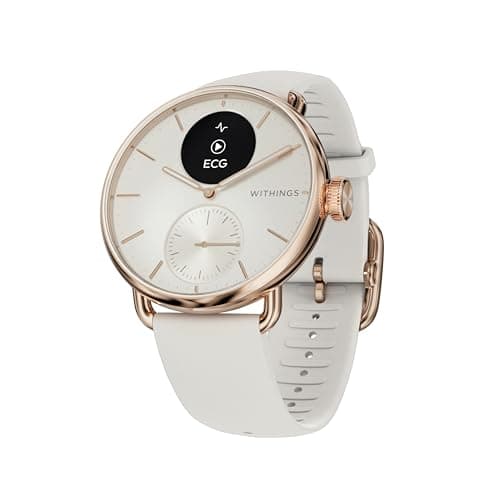
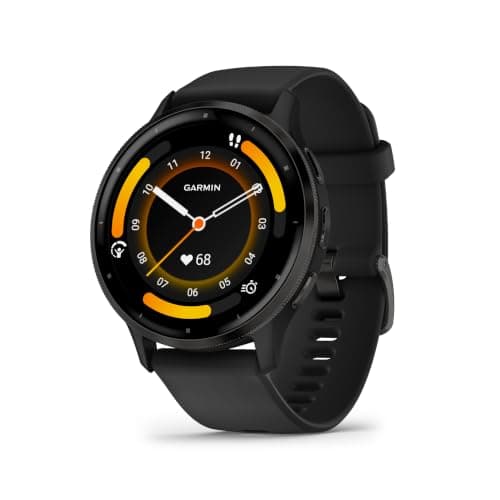
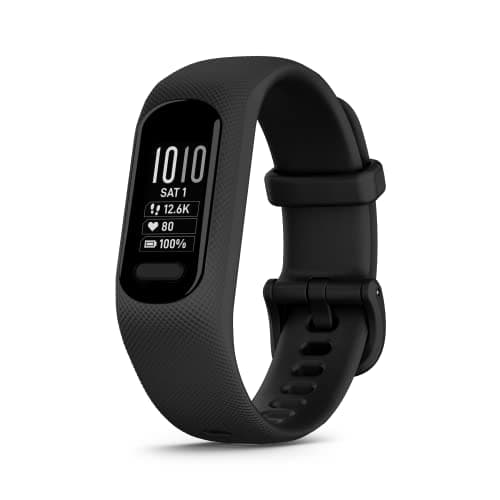
A tracker with a dead battery detects nothing, and daily charging is the habit most likely to lapse. The Withings runs for up to a month, the Amazfit and the Venu 3 for up to two weeks, the vívosmart for about a week; the Apple and the Samsung need charging every day or two. If the wearer is likely to forget, that ordering should weigh heavily, and it is why the Withings ranks second despite having no fall detection at all. A practical middle path for the Apple: charge it during a fixed daily routine — breakfast, the evening news — so it is back on the wrist before bed.
Readability: screen size, text size, and the analog option
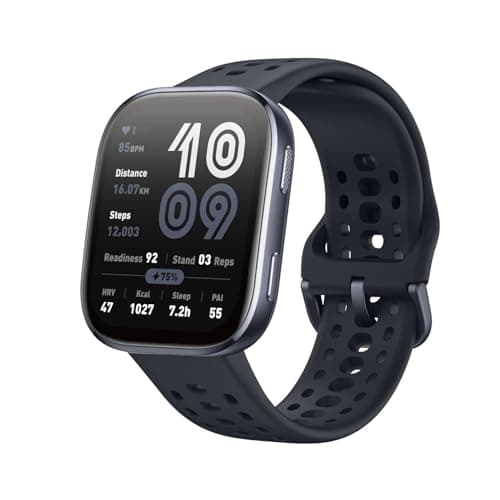
The Amazfit has the largest screen here, and the Apple and the Garmin Venu are both bright full-color displays; the vívosmart's small monochrome window is the hardest to read. The Withings takes a different route entirely — real hands on a dial, which for someone who has worn a watch for sixty years is the most readable display there is. Consider also how the device is operated: the vívosmart and the Withings have physical buttons and short menus, while the touchscreen watches assume a comfortable swipe.
What the heart sensors can and cannot tell you
The Withings, the Garmin Venu 3 and the Samsung each carry an FDA-cleared ECG feature that records a short single-lead trace and flags signs of atrial fibrillation — a rhythm problem that can occur without symptoms and raises stroke risk, which is exactly the sort of thing a wearable worn for weeks at a time can catch. None of them diagnose it; the result is a prompt to see a doctor. The Apple Watch SE does not include the ECG app — the Series 11 does — and the Amazfit and vívosmart have no cleared features. No device on this page measures blood pressure without a cuff calibration. Our health-monitoring wearables ranking goes deeper on the cleared features if that is the priority.
How we picked
Everyone in this category says they tested twenty products. We have not lab-tested any of these, and we say so. What we did instead: compiled the published specifications, pulled the numbers from the manufacturer manuals, ran the cost-to-run and cost-per-unit math where there was math to run, and scored each product against a published rubric. The scores are judgments from documented research — not measurements we took, because we do not have a lab and we will not pretend we do. Where a number came from someone else's work, we name them in Sources.