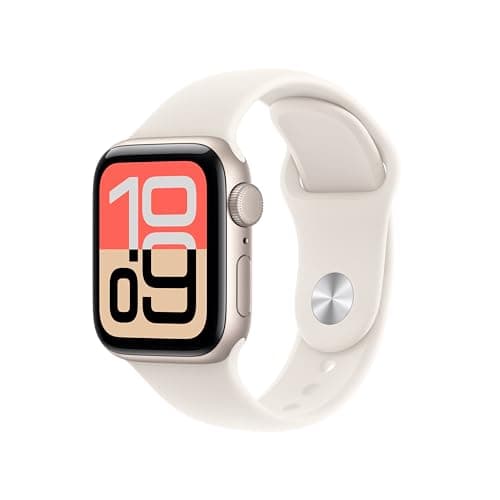
These two get compared constantly and they are barely the same product. Whoop is a screenless strap with no watch functions whatsoever, sold as a membership: you pay monthly, the hardware comes with it, and everything it does is in service of one number telling you how recovered you are. The Apple Watch is a general-purpose computer for your wrist that happens to include good health sensors, sold once and owned outright.
The short version. If you want the deepest continuous recovery and strain analysis, do not want a screen, and are comfortable with a recurring bill, Whoop is purpose-built for exactly that. If you want one device that does notifications, payments, workouts, fall detection and sleep — and you have an iPhone — the Apple Watch is far more useful per day and costs nothing after you buy it. Most people are the second person.
The comparison, point by point
- Screen. Whoop has none, by design — no notifications, no glancing, no distraction, nothing to charge a display. Apple Watch is all screen. Whether that is a feature or a flaw is genuinely personal.
- Recovery depth.Whoop wins. Continuous 24/7 HRV, strain scoring, sleep performance and a daily recovery percentage are the entire product, and the modeling is more developed than Apple's equivalent metrics.
- Battery. Whoop runs for days and charges via a slide-on battery pack you can attach without taking the band off — so it never stops recording. Apple Watch is typically a daily or near-daily charge, which is the practical obstacle to sleep tracking.
- Sleep comfort. Whoop is a fabric band, which is far more comfortable overnight than a hard-cased watch. The Apple Watch tracks sleep well; whether you want to wear it to bed is a different question.
- Everything else. Apple Watch wins comprehensively: apps, calls, payments, music, maps, fall and crash detection, and an ECG feature on the models that offer it.
- Cost.Whoop is a subscription with no end date. The Apple Watch is a purchase. Over three years the difference is substantial and runs in Apple's favor.
And if the subscription is what put you off Whoop, the other no-fee option is a Garmin — we put the two purchase-once watches side by side in Apple Watch vs Garmin.
What Whoop actually does better
Three things, and they are not marketing. Continuity: because it charges without coming off and has no screen to drain, it records without gaps, and recovery metrics are trend instruments where gaps genuinely hurt. Modeling: the strain-versus-recovery framework is a coherent system rather than a set of separate readouts — it tells you how hard today should be, not just what yesterday was. Comfort: a fabric band on the wrist or upper arm is far easier to sleep and train in than a hard case, and adherence is most of what makes any wearable useful.
What the membership really costs
Whoop's pricing is a subscription with the hardware included, so the correct comparison is not sticker price against sticker price — it is three years of membership against the one-off cost of a watch. Do that arithmetic before you commit, because the gap is substantial and it does not stop growing. The same analysis applied to the other subscription platform is in Whoop vs Oura, and the no-fee alternatives are in best no-subscription trackers.
The third option nobody mentions
If what you want is recovery data with no subscription and no daily charging, neither of these is the answer — a Garmin band or watch gives you Body Battery, HRV Status and training load with no fees and a battery measured in days, and a smart ring gives you the best sleep comfort of any form factor. We rank the full field in best recovery wearables, and the Garmin range specifically in best Garmin watches.
Who should buy which
Buy Whoop if you train seriously, want a daily recovery score you will actually act on, hate wrist screens, and accept a recurring cost as the price of the best continuous analysis. Buy the Apple Watch if you have an iPhone and want one device that covers health, fitness, safety and everything else, with no ongoing fee. If you are neither — you want recovery data, no subscription, and week-long battery — buy neither and look at a Garmin or a ring instead.
A caution about readiness scores
Both devices will hand you a number every morning, and both numbers are estimates derived from heart-rate variability, resting heart rate and sleep. Treat them as trends, not verdicts. A single low score after one bad night is noise; a week of declining scores while your training load climbs is signal. And no consumer wearable diagnoses anything — if something feels medically wrong, that is a clinician's job. Our guide to HRV explains what the underlying metric is and is not.
How we picked
Everyone in this category says they tested twenty products. We have not lab-tested any of these, and we say so. What we did instead: compiled the published specifications, pulled the numbers from the manufacturer manuals, ran the cost-to-run and cost-per-unit math where there was math to run, and scored each product against a published rubric. The scores are judgments from documented research — not measurements we took, because we do not have a lab and we will not pretend we do. Where a number came from someone else's work, we name them in Sources.