Skip to content
Rep & Recovery

Tracking · Recovery Wearables

Smart ring vs smartwatch: decided by charging, screens and fees

A ring has no screen, no GPS and no cleared ECG, and it runs for two weeks. A watch has all three and wants charging every day - which is also when its best health features are supposed to be running. That is the whole decision.

By Stephen V.Updated How we review
#ad

We earn a commission when you buy through our Amazon links, at no extra cost to you. It never changes a verdict, and we say so when the cheaper product is the better buy. How this works.

If what you want is sleep and recovery data you will actually collect every single night, buy a ring — and the no-fee one, the RingConn Gen 3. If you want to see your pace mid-run, record a route, get cleared cardiac notifications or take a call from your wrist, buy a watch — and for most people the sensible one is the Garmin vívoactive 5. The two devices overlap in marketing far more than they overlap in capability.

This is a form-factor decision, not a brand decision, and three questions settle it. Each one has a published answer, which is why this page is shorter on opinion than most comparisons.

  • Do you need a screen, GPS or a cleared cardiac feature? A ring has none of them. It cannot show you a split, map a route, record an ECG, detect a fall, answer a message or pay for coffee. If any of those is the reason you are shopping, the ring half of this page is simply not an option and the question becomes which watch.
  • When does it charge, and what is it missing while it does? This is the underrated one. Apple publishes "Up to 24 hours"of all-day battery for the Series 12 and "Up to 38 hours in Low Power Mode"; RingConn publishes "Up to 14 Days of Power" for the Gen 3. Sleep staging, overnight HRV, resting heart rate and apnea pattern insights all happen while you are asleep, which on a one-day watch is also the window you might be charging in. A two-week device collects a complete record by default; a one-day device collects a complete record only if you build a habit around it.
  • What do you pay after the box? Oura's own membership page lists "$5.99 USD/month or $69.99 USD/annually before tax for US members" and says that without it the ring and app "will still function" but "the insights, personal health data, and benefits you receive will be much more limited." RingConn's Gen 3 page states "No Subscription Required." Garmin charges nothing for its recovery suite, and Apple charges nothing for health data. Across three years that difference is larger than most of the hardware price gaps on this page.

Where the sensor sits changes what it can see

Both form factors read your pulse the same way — green light through the skin, looking at how much of it comes back — so the interesting difference is the location. A finger is a well-perfused, thin-tissue site that sits still for eight hours a night, which is why rings are good at exactly the things that happen at rest: resting heart rate, overnight heart-rate variability, sleep staging, temperature trend. A wrist is a worse optical site and a better platform: it has room for a bigger battery, a screen, GPS and, in Apple's case, a cleared single-lead ECG.

Be skeptical of either camp's accuracy claims during exercise. Optical heart rate from any body surface degrades when the sensor moves against the skin, and a device clamped on a finger that is gripping a bar is not in a better position than one on a wrist. Nothing we would be willing to cite shows a ring beating a watch during hard training, and both lose to a chest strap — which is the argument, with the specifics, in chest strap vs wrist heart rate. Buy a ring for the night and a strap for the intervals; do not buy either expecting the other's job.

Sizing is the trap that only applies to rings

A watch band adjusts. A ring is a fixed size and cannot be altered, which makes buying one a two-step process: RingConn recommends its free sizing kit and states plainly that Gen 3 sizing differs from other RingConn and standard rings, and Oura sizing has shifted between generations too. Order the kit, wear the dummy ring for a day including overnight, and buy that size — fingers are not the same diameter in the morning as they are after a salty dinner or a hot afternoon.

The second ring-specific caveat is training. Take it off for barbell work, kettlebells and pull-ups: a hard ring pinched between knurled steel and your finger is bad for the ring and worse for the finger. That is a small daily friction a watch does not have, and it is also the reason some lifters end up with a ring for sleep and a watch for sessions.

Scores below are judgments from published specifications and aggregated owner feedback, not lab testing — see how we review, and note that every verdict and score here is the same one these products carry elsewhere on the site, so no two pages contradict each other. If you have already decided on a ring, the shelf is ranked in best smart rings; if you have decided on a wrist device but not a type, fitness tracker vs smartwatch is the next decision down.

The short answer

Quick picks

#ProductBest forScorePrice
01
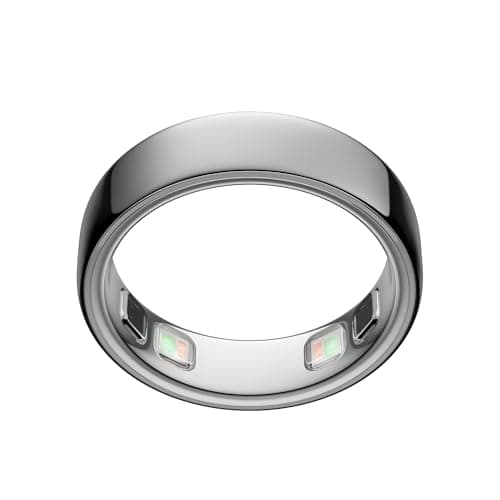
RingConn RingConn Gen 3 Smart Ring
RingConn Gen 3 Smart Ring

The best-value ring, and the one most people should buy. No subscription at all — you buy it once and every feature is yours — plus a rated 14-day battery, sleep-apnea pattern insights and, new to this generation, on-finger vibration alerts. The app is less polished than Oura's; the total cost is dramatically lower.

Best overall value (no subscription)
9.0
$349.00Amazon
02
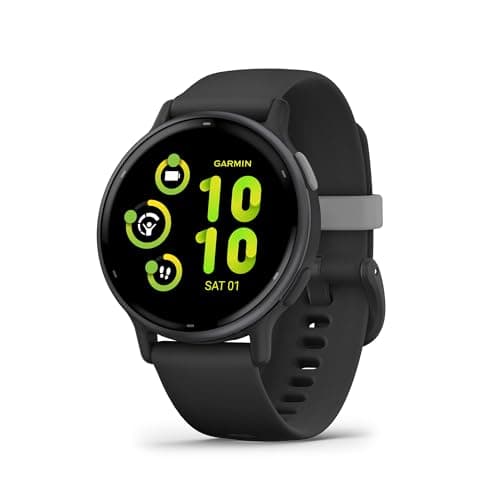
Garmin Garmin vívoactive 5
Garmin vívoactive 5

The lifestyle pick: an AMOLED health-and-fitness smartwatch rather than a running watch, with the same no-subscription recovery suite in a case that does not announce itself at dinner. Choose this over a Forerunner if training is a part of your life rather than the organizing principle of it.

Best everyday smartwatch
8.4
$194.99Amazon
03
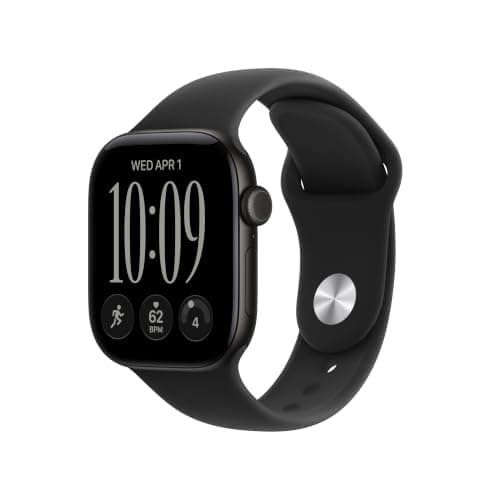
Apple Apple Watch Series 12 (GPS, 42mm)
Apple Watch Series 12 (GPS, 42mm)

The widest set of cleared health features on any wrist, if you carry an iPhone. ECG, irregular-rhythm notifications, sleep-apnea notifications and hypertension notifications, the last of which cleared in September 2025 and carries over unchanged to the Series 12. The catch is a 24-hour battery on a device whose best features run overnight.

Best for iPhone owners
7.8
$399.00Amazon
04
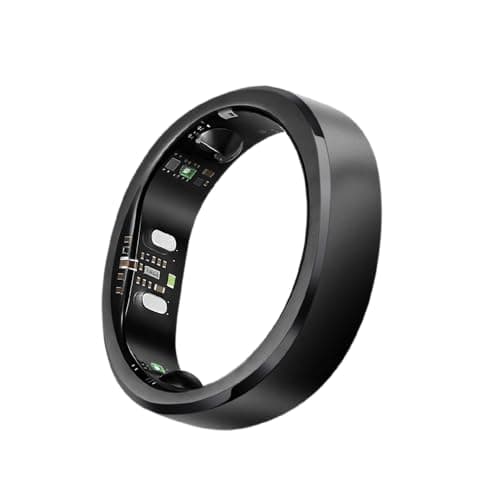
Oura Oura Ring 5
Oura Ring 5

Still the data benchmark, now in a body 40% smaller than the Ring 4 it replaces. The sleep staging and readiness modeling are the most refined in the category, the titanium ring is genuinely comfortable to sleep in, and the temperature sensor adds illness and cycle trends most rivals lack. The membership is the price of admission, and it never stops being the price of admission.

Best data (subscription required)
6.8
$399.00Amazon

#ad · Live prices from the Amazon Product API, as of October 31, 2026. Where we have no verified live price, we show none — a gap beats a number that has rotted.

In detail

The picks, in full

01
RingConn RingConn Gen 3 Smart Ring

Best overall value (no subscription)

RingConn Gen 3 Smart Ring

No subscriptionUp to 14-day batterySleep apnea pattern insightsVibration alerts
9.0/10

The best-value ring, and the one most people should buy. No subscription at all — you buy it once and every feature is yours — plus a rated 14-day battery, sleep-apnea pattern insights and, new to this generation, on-finger vibration alerts. The app is less polished than Oura's; the total cost is dramatically lower.

Sleep & recovery data
8
Battery
9
Comfort
8
No-fee ownership
10
Value over 3 years
10

Pros

  • No membership fee — the purchase price is the whole price
  • Rated up to 14 days between charges, with a universal charging case
  • Sleep apnea pattern insights and vascular trend tracking, both fee-free
  • Costs less up front than the subscription rings and far less over time

Cons

  • App and insight quality lag behind Oura's
  • Smaller research and validation record than the market leader
  • Vascular readings are trends after a one-time calibration, not single measurements

Don't buy this if…

…you want the most refined sleep staging and readiness modeling available and are willing to pay monthly for it.

In a ring-versus-watch argument this is the ring case at its strongest, because it removes the two things people dislike about rings: the fee and the uncertainty about what you are getting. RingConn's own page states "No Subscription Required" and "Up to 14 Days of Power," and a device you charge fortnightly is a device that is on your finger every night of the month — which is the entire reason to prefer a ring in the first place.

What it does not do is anything a screen does. No pace, no maps, no notifications beyond vibration, no cleared cardiac features. If that list reads like a set of omissions rather than a simplification, you want a watch. Order the free sizing kit before you order the ring: RingConn says Gen 3 sizing differs from other RingConn and standard rings, and a ring in the wrong size is not adjustable.

$349.00View on Amazon

Price as of October 31, 2026. Prices change — Amazon's at checkout is the one that counts.

#ad · we may earn a commission from this link to RingConn Gen 3 Smart Ring

02
Garmin Garmin vívoactive 5

Best everyday smartwatch

Garmin vívoactive 5

AMOLED displayHealth + fitness trackingMulti-day batteryNo subscription
8.4/10

The lifestyle pick: an AMOLED health-and-fitness smartwatch rather than a running watch, with the same no-subscription recovery suite in a case that does not announce itself at dinner. Choose this over a Forerunner if training is a part of your life rather than the organizing principle of it.

Recovery data
9
Training analysis
7
Display
9
Battery
8
Value
9

Pros

  • AMOLED display in a design that works outside the gym
  • Same core Garmin recovery data with no fees
  • Multi-day battery — no nightly charging
  • Broad activity profiles for people who do several different things

Cons

  • Less running-specific analysis than a Forerunner
  • No maps

Don't buy this if…

…running is your main sport and you want structured training analysis — the Forerunner line is built for that.

This is the watch that makes the ring argument hardest, because it answers the two complaints that normally push people onto a finger: it has multi-day battery rather than overnight-charging anxiety, and it charges no subscription for recovery data. You get sleep tracking and recovery metrics plus everything a screen does — GPS, workout data as it happens, notifications, broad activity profiles.

What you give up against a ring is comfort in bed and the sheer forgettability of a device you charge twice a month. Some people sleep in a watch happily; plenty take it off at midnight and lose the data they bought it for. If that is you, the ring is the honest answer. The rest of the Garmin range, including the running-specific models, is ranked in best Garmin watches.

$194.99View on Amazon

$299.9935% off

Price as of October 31, 2026. Prices change — Amazon's at checkout is the one that counts.

#ad · we may earn a commission from this link to Garmin vívoactive 5

03
Apple Apple Watch Series 12 (GPS, 42mm)

Best for iPhone owners

Apple Watch Series 12 (GPS, 42mm)

ECG + AFib HistorySleep-apnea notificationsHypertension notificationsUp to 24-hour battery
7.8/10

The widest set of cleared health features on any wrist, if you carry an iPhone. ECG, irregular-rhythm notifications, sleep-apnea notifications and hypertension notifications, the last of which cleared in September 2025 and carries over unchanged to the Series 12. The catch is a 24-hour battery on a device whose best features run overnight.

Cleared features
10
Sensor breadth
9
Battery
4
App & data
9
No-subscription
9
Value
6

Pros

  • The only device here combining a cleared ECG with sleep-apnea and hypertension notifications
  • Hypertension notifications work passively in the background over a month-long window
  • Blood oxygen, high and low heart-rate alerts and a sleep score round out the sensor suite
  • Fast charging claws back roughly eight hours of use from a 15-minute top-up

Cons

  • Around 24 hours of battery — you have to schedule charging around the sleep features
  • iPhone only; the watch is useless to an Android owner
  • Hypertension notifications exclude anyone already diagnosed with hypertension, anyone pregnant and anyone under 22, and Apple says they will not detect every case

Don't buy this if…

…you carry an Android phone, or you resent charging a health monitor daily — the Withings and the Garmin both run for weeks.

Nothing on a finger competes with this on cleared features, and that is the one place where the ring-versus-watch question has an objectively correct answer: if you want an ECG you can show a doctor, irregular-rhythm notifications, sleep-apnea notifications and hypertension notifications in one device, no ring offers them and the Series 12 does.

The charging rhythm is the honest cost, and Apple's own numbers make it workable rather than painless: "Up to 24 hours" of all-day battery, "Up to 38 hours in Low Power Mode," about 30 minutes to 80%, with a 15-minute charge listed as adding up to 12 more hours and a 5-minute charge as providing up to 10 hours of sleep tracking. In practice that means topping up while you shower or make dinner, every day, forever. A ring asks that of you twice a month.

$399.00View on Amazon

Price as of October 31, 2026. Prices change — Amazon's at checkout is the one that counts.

#ad · we may earn a commission from this link to Apple Watch Series 12 (GPS, 42mm)

04
Oura Oura Ring 5

Best data (subscription required)

Oura Ring 5

PPG + temperature sensors6-9 day battery100m water resistantMembership required
6.8/10

Still the data benchmark, now in a body 40% smaller than the Ring 4 it replaces. The sleep staging and readiness modeling are the most refined in the category, the titanium ring is genuinely comfortable to sleep in, and the temperature sensor adds illness and cycle trends most rivals lack. The membership is the price of admission, and it never stops being the price of admission.

Sleep & recovery data
10
Battery
8
Comfort
9
No-fee ownership
2
Value over 3 years
5

Pros

  • Class-leading sleep staging and overnight HRV from the finger
  • Digital temperature sensor adds illness and cycle trends
  • Six to nine days of battery, and 40% slimmer than the Ring 4 — easy to forget
  • The most mature app and the largest body of published validation work

Cons

  • Ongoing membership fee to see the insights you bought it for
  • Sold in fixed sizes — you need the sizing kit before ordering, and Ring 5 sizing differs from the Ring 4's

Don't buy this if…

…you object to paying monthly for data your own body generated — the RingConn picks below do most of this with no fee.

On the data itself this is the best device on the page, and if the question is purely "which wearable understands my sleep best," the answer is a ring and this is the ring. It sits fourth here on total cost rather than on capability. Oura's membership page lists "$5.99 USD/month or $69.99 USD/annually before tax for US members," and states that without a membership the ring and app "will still function" but the insights and benefits "will be much more limited" — so the subscription is not a nice-to-have, it is most of what you are buying.

Set against a watch, that changes the arithmetic rather than the argument: a Garmin gives you recovery data, a screen and GPS with no fee at all, while this gives you the best sleep model and a bill. Whether that is worth it is worked through properly in is the Oura Ring worth it.

$399.00View on Amazon

Price as of October 31, 2026. Prices change — Amazon's at checkout is the one that counts.

#ad · we may earn a commission from this link to Oura Ring 5

The four, side by side

DeviceWornScreen / GPSPublished batteryFee
RingConn Gen 3FingerNeitherUp to 14 daysNone
Garmin vívoactive 5WristBothMulti-dayNone
Apple Watch Series 12WristBothUp to 24 hoursNone for health data
Oura Ring 5FingerNeither6-9 days$5.99/mo or $69.99/yr (US)

What a ring physically cannot do

This list is the fastest way to end the decision, because none of it is a software gap that a future update fixes. A smart ring has no screen, so nothing is displayed during a workout. It has no GPS, so a run is steps and heart rate, not a route or a pace. It has no cleared ECG, no fall detection and no emergency calling. It cannot take a call, show a message beyond a vibration, play music or pay for anything.

In exchange it is invisible, it does not catch on a sleeve, it is comfortable to sleep in, and it runs for one to two weeks. If the list above reads like things you would not use, the exchange is a good one.

What a watch does badly

Overnight wear. A watch on a wrist under a duvet is warm, bulky and easy to take off, and every recovery metric either device sells is collected while you sleep. The data a watch does not collect because it is on a charger is the single biggest practical difference between these form factors.

The daily charging habit.Apple's own figures make a 24-hour device workable — 30 minutes to 80%, and a five-minute charge listed as up to 10 hours of sleep tracking — but it is a habit you have to keep for years. Multi-day watches like the vívoactive largely remove this objection, which is why it ranks second here rather than fourth.

Discretion. A ring reads as jewelry in a meeting, at a wedding and in a hospital bed. A sports watch does not.

Three readers, three different answers

You want to understand your sleep and recovery. Buy a ring. The device is on you every night without a decision, and the finger is the better site for resting measurements. Take the no-fee one unless you specifically want the most refined model and will pay monthly for it.

You train, and you want data during sessions. Buy a watch. A ring cannot show you anything mid-set, and GPS is not coming to a finger. Pair it with a chest strap for intervals and you have the accurate version of what the ring cannot do at all.

You want health monitoring for a heart or breathing concern.Buy an Apple Watch if you carry an iPhone — the cleared ECG, irregular-rhythm, sleep-apnea and hypertension notifications are the specific reason this category exists for you. We rank that whole shelf on clearance rather than on readiness scores in best health monitoring wearables.

Which phone you carry narrows it first

One filter settles this page before any spec does: an Apple Watch requires an iPhone— it does not merely prefer one. If your phone is an Android, the cleared-ECG argument for a watch is off the table and the choice becomes a Garmin or a ring. Garmin works fully with either platform, which is a large part of why the vívoactive ranks second here rather than lower.

Rings are the quieter version of the same question. They are app-dependent devices with no screen of their own, so the app is the product — check that the brand supports your phone, and your phone's OS version, on the listing before you order rather than after. It is also worth knowing that a ring with no screen cannot show you a notification; it can only buzz, which some readers find restful and others find useless.

The deeper platform trade is data portability. Oura's membership page notes you can export your data as CSV through the Membership Hub even without a membership, which is more than most of this category offers; beyond that, assume the numbers live in the maker's app and that switching brands means starting your trend lines over. That is an argument for choosing a form factor you will still want in two years, which is precisely the decision this page is about.

Is wearing both worth it?

A ring and a watch together is the setup a lot of enthusiasts land on: the ring owns the night, the watch owns the workout. It works, and it is two devices, two apps and two readiness scores that will disagree with each other on the same morning.

If you do run both, decide up front which device owns sleep and ignore the other's version, because chasing two conflicting scores is how people end up trusting neither. And be honest about the spend: before adding a second device, a chest strap costs a fraction of either and does more for training accuracy than a duplicate wrist tracker — see best HRV monitors.

Neither one is a medical device

Both form factors sell screening features, and with the exception of Apple's cleared notifications none of this is diagnostic. A readiness score is a model of your own trend data, not a measurement of health, and no consumer ring or watch currently measures blood pressure from a wrist or a finger without a cuff — which we document in do fitness trackers measure blood pressure. Treat any alert as a prompt to see a clinician, not as a result.
How we picked

We did not lab-test this gear

Everyone in this category says they tested twenty products. We have not lab-tested any of these, and we say so. What we did instead: compiled the published specifications, pulled the numbers from the manufacturer manuals, ran the cost-to-run and cost-per-unit math where there was math to run, and scored each product against a published rubric. The scores are judgments from documented research — not measurements we took, because we do not have a lab and we will not pretend we do. Where a number came from someone else's work, we name them in Sources.

Questions

Frequently asked

Is a smart ring more accurate than a smartwatch?
For resting measurements the finger is the better site — it is thin-tissue, well-perfused and still while you sleep, which is why rings do well on resting heart rate, overnight HRV and sleep staging. During exercise, treat both skeptically: optical heart rate degrades whenever the sensor moves against skin, and a finger gripping a bar is no better placed than a wrist. For intervals, a chest strap beats both — see chest strap vs wrist heart rate.
Can a smart ring track workouts?
It can log that one happened and estimate the effort, but it cannot show you anything while it happens and it has no GPS, so there is no pace, no route and no mid-session feedback. If sessions are the reason you are buying, buy a watch. If the sessions are already handled and you want to know whether you recovered, a ring is the better buy.
Do smart rings require a subscription?
Some do and some do not, and it is the biggest cost difference in the category. RingConn's Gen 3 page states "No Subscription Required." Oura's membership page lists $5.99 USD/month or $69.99 USD/annually before tax for US members, and says that without a membership the ring and app will still function but the insights and benefits will be much more limited. Across three years that gap is larger than most hardware price differences here.
How often do you have to charge a smart ring versus a smartwatch?
RingConn publishes up to 14 days for the Gen 3 and Oura six to nine days for the Ring 5. Apple publishes up to 24 hours for the Series 12, or up to 38 hours in Low Power Mode. Multi-day Garmin watches sit in between. The practical consequence is not convenience but data completeness, since the metrics both devices sell are collected overnight.
Can you wear a smart ring while lifting weights?
Take it off for barbell work, kettlebells and pull-ups. A hard ring trapped between knurled steel and your finger is bad for the ring and worse for the finger, and the heart-rate data from a gripping hand is poor anyway. This is the main daily friction of a ring, and the reason some lifters end up wearing a ring overnight and a watch to train.
Which is better for sleep tracking, a ring or a watch?
A ring, for two reasons that have nothing to do with sensor quality: it is comfortable enough that you keep it on, and it does not need charging on the night you forget. The full shelf, ranked, is in best sleep trackers, and the ring-versus-ring decision is in best smart rings.
Do I need both a ring and a watch?
No, and most people should not start there. If you do run both, decide which device owns sleep and ignore the other's score, because two readiness numbers that disagree is how people stop trusting either. A chest strap is a cheaper second device than a duplicate tracker and does more for training accuracy.
Can a smart ring replace an Apple Watch for health alerts?
No. No ring currently offers a cleared ECG, irregular-rhythm notifications, fall detection or emergency calling, and those are the features people buy an Apple Watch for. A ring is a recovery and sleep instrument; if cardiac screening is the goal, the watch is the device and an iPhone is a requirement.

Keep reading

Receipts

Sources

We do not run a testing lab, and we do not pretend to. Where a measured number came from someone else's work, we name them and link them. Where we could not verify something, we say so on the page rather than quietly leaving it out. Read our full method.