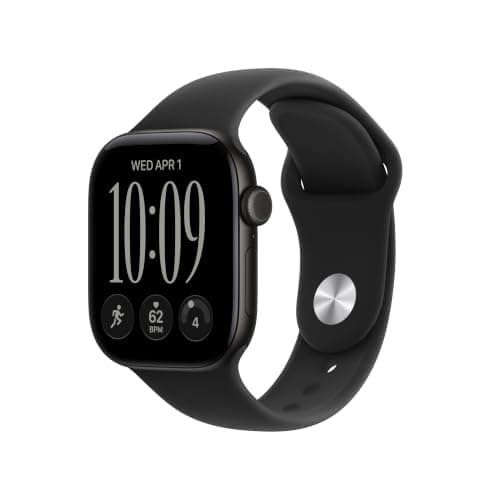
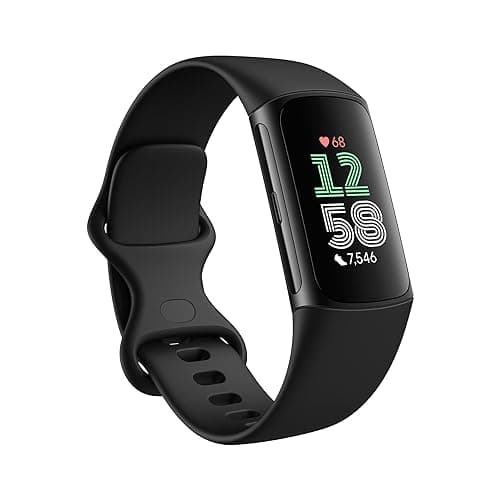
For most people, buy the Fitbit Charge 6. It works the same with an iPhone or an Android phone, it is slim enough that you will actually keep it on overnight, it has built-in GPS, and the readiness score that used to sit behind a subscription is now available to all users. Buy an Apple Watch Series 12instead if you carry an iPhone and specifically want the widest set of cleared health features on any wrist — ECG, sleep-apnea notifications and hypertension notifications — and you accept charging it every single day.
That is the comparison, and the reason it resolves so cleanly is that these two products are not really competing. An Apple Watch is a small computer that happens to be very good at health monitoring. A Fitbit Charge is a health band that happens to show notifications. Sensor quality is not the deciding factor and has not been for years. Three things are.
- Which phone you carry. An Apple Watch requiresan iPhone — not prefers one. If your phone is an Android, the Apple half of this page is simply not available to you and the question is which Fitbit, or which of the alternatives below. Fitbit works fully on both platforms. This filter settles the decision for a large share of readers before any other spec matters.
- What you pay after the box.Neither brand charges you to see your basic data. Google Health Premium — Fitbit Premium's new name since May 2026 — exists and gates some of the deeper analysis, but the headline readiness score is no longer part of that — Google's own support documentation now describes the daily readiness score as available to users generally, with Premium adding coaching on top of it. Apple charges nothing for health data at all.
- Whether you can sleep in it.This is the one people underestimate. The features both brands sell hardest — sleep staging, overnight heart-rate variability, resting heart rate, apnea screening — all run while you are asleep, which is also when a one-day-battery watch is on its charger. A slim band with a week of battery collects a complete record by default. A watch that lasts a day collects a record with holes in it unless you build a charging habit around your shower.
What Apple genuinely has that Fitbit does not
Apple's advantage is regulatory, not mechanical, and it is real. The ECG app records a single-lead trace on the watch and checks whether the upper and lower chambers of the heart are in rhythm, looking specifically for atrial fibrillation. Apple is unusually clear about its limits, and the limits are worth reading before you buy on this feature: it "cannot detect a heart attack," "cannot detect blood clots or a stroke," and cannot detect "high blood pressure, congestive heart failure, high cholesterol, or other forms of arrhythmia". It is also not intended for anyone under 22, and people with a pacemaker or an implantable defibrillator may get inconclusive results.
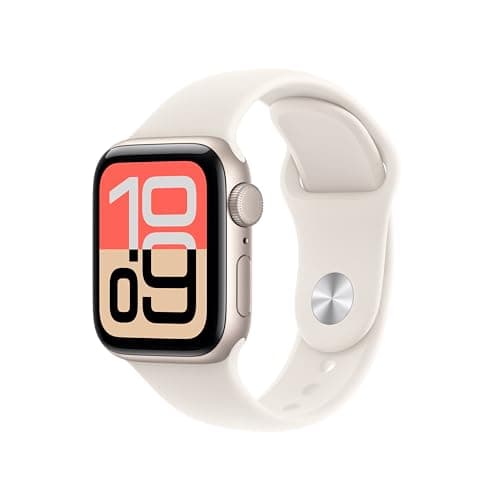
The one trap on the Apple side is which model. The ECG app runs on Apple Watch Series 4 or later and all Apple Watch Ultra models, and is explicitly not supported on the Apple Watch SE. That catches a lot of buyers who choose the SE to save money and then discover the headline feature is missing.
Sleep-apnea notifications are the other Apple exclusive here, and they work differently from how people assume. The watch uses its accelerometer to look for breathing disturbances overnight, classifies each night as elevated or not, and notifies you only after a 30-day evaluation period of consistently elevated readings. Apple states plainly that the feature is not intended to diagnose, treat or manage sleep apnea, and that not everyone with sleep apnea will receive a notification. It is a screening nudge towards a doctor, which is genuinely valuable and is not a test.
What Fitbit has that Apple does not
Platform freedom, form factor, and endurance — and the first of those is worth more than any single feature on the Apple side, because it is the difference between the device being an option at all. A Charge works the same whether the household runs on iPhones, Android phones or both, which is also what makes it the sane choice as a gift.
The form factor is the quieter argument. A slim band disappears on the wrist in a way a watch case does not, and people who report never wearing their tracker to bed are almost always describing a watch. Since every recovery metric worth having is collected overnight, the device you tolerate asleep is the device that produces useful data.
On the subscription, the honest 2026 position is better for Fitbit than its reputation suggests. The daily readiness score — built from heart-rate variability, resting heart rate and sleep, and needing seven nights of wear to establish a baseline — is described in Google's support documentation as available to users, with Premium subscribers getting proactive coaching recommendations on top. Premium still gates deeper sleep analytics and programs, so it is not free of paywalls; it is no longer the case that the headline recovery number is one of them. If recurring cost is your main concern, we rank the whole field on it in best no-subscription trackers.
Scores below are judgments from published specifications, manufacturer documentation and owner feedback, not lab tests — see how we review. Prices are pulled live and stamped with the date they were checked.
The rows that decide it
| Fitbit Charge 6 | Apple Watch Series 12 | Apple Watch SE 3 |
|---|
| Works with Android | Yes | No | No |
| ECG app | Not the Apple cleared set | Yes | No - not supported on SE |
| Sleep-apnea notifications | No | Yes, after a 30-day window | No |
| Stated battery | Multi-day band | Up to 24 hours | About a day |
| Subscription | Premium optional; readiness free | None | None |
| Form factor | Slim band | Watch case | Watch case |
| Our pick for | Most people | Cleared health features | Fall Detection only |
Decide it in four questions
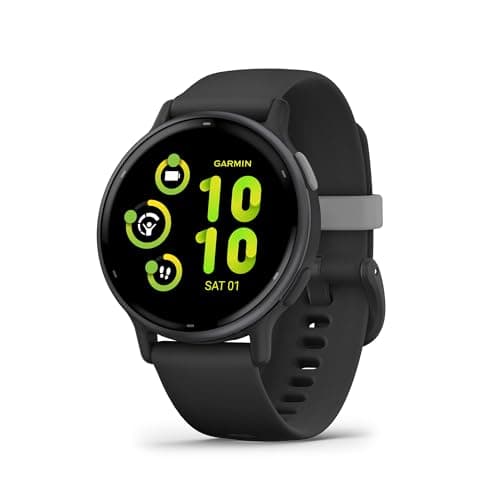
1. Is your phone an Android? Then the answer is a Fitbit or the Garmin. There is no workaround; an Apple Watch needs an iPhone. This question alone ends the comparison for a large share of readers.
2. Do you want a cleared ECG, sleep-apnea or hypertension notification? Then it is an Apple Watch Series 12, and not the SE. These are the only genuinely one-sided features in this comparison, and they come with a watch case and a daily charge.
3. Will you wear it to sleep?Be honest. If the answer is "probably not a watch," buy the band, because every recovery metric either brand sells is collected overnight and a device on a charger collects nothing.
4. Do you mind a paywall existing at all?If any subscription is a dealbreaker on principle, neither Fitbit tier is the answer and the Garmin is — it charges nothing, ever, for sleep, HRV or recovery data.
What neither of them is
Neither is a medical device in the sense people hope.Apple's own wording on the ECG app — cannot detect a heart attack, cannot detect blood clots or stroke, cannot detect high blood pressure, heart failure, high cholesterol or other arrhythmias — is the right calibration for both brands. These are screening tools that produce a reason to see a doctor.
Neither measures blood pressure.Apple's hypertension feature watches for a pattern over about a month and notifies; it does not give you a reading. If a number is what you want, that needs a cuff — we go through why in do fitness trackers measure blood pressure.
Neither will make you fitter on its own.The most valuable thing either device does is make your sleep and resting heart rate visible, and visibility only helps if something changes afterwards. The two changes that move those numbers most are training and sleep regularity — see how to improve HRV.
And neither is a recovery system by itself. A readiness score that tells you to take it easy is only useful if you own something to take it easy with. That is the rest of this site, starting with the recovery gear starter kit.