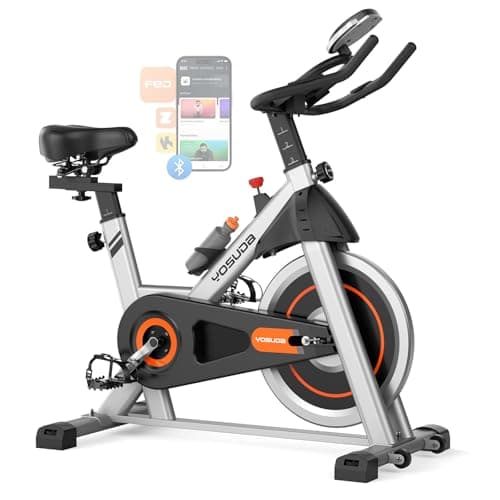
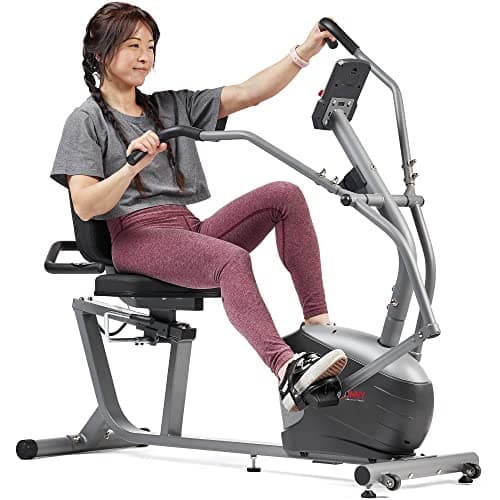
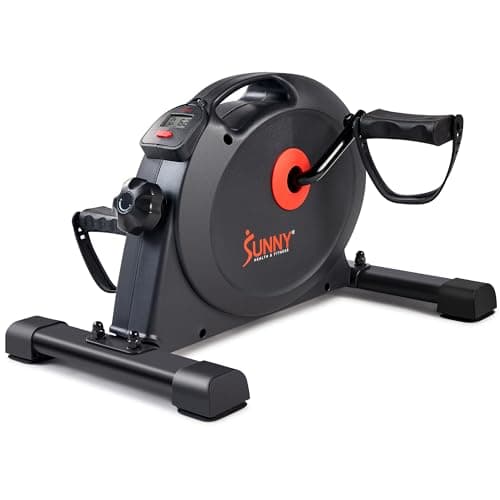
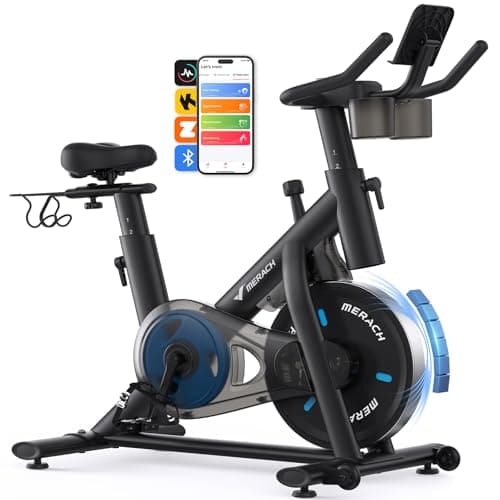
Under $500 the bike to buy is the MERACH magnetic exercise bike. Magnetic resistance has no pad touching the flywheel, so there is nothing to wear out and nothing to replace, and it is quiet enough to ride at 6 a.m. in an apartment. If your bike lives in a garage where nobody can hear it, the YOSUDA costs less and gives you infinitely variable resistance instead of fixed steps. If getting on and off a saddle is the problem rather than the price, the Sunny recumbent is a different and better machine for you. The budget pick is the Sunny under-desk pedal exerciser— not a bike at all, and the thing most likely to actually get used.
Price check · as of November 13, 2026
Every pick below sat under $500 at Amazon when our price layer last ran, on November 13, 2026 — 4 of 4 carry a live price right now, shown in the table and on each card. Amazon prices move daily and a listing can cross the line between our check and your click, so the number on Amazon is the one that counts.
A $500 ceiling is a comfortable budget in this category, and that is exactly why it is confusing: under $500 you are not choosing between four versions of one machine, you are choosing between three genuinely different machinesthat all answer to “exercise bike.”
An upright indoor-cycling bike puts you leaning forward over a weighted flywheel. It gives you the most intensity per minute of anything here and the closest thing to a studio ride, and it asks for balance, a tolerance for a narrow saddle, and a permanent patch of floor. A recumbent bikeseats you in a supported chair with a step-through frame, so there is no balance requirement at any point and nothing to swing a leg over — and it is by far the largest object on this page. A pedal exerciser is not a bike: it is the crank and the resistance unit on their own, it slides under a desk, and it is the one that gets used daily because using it requires no decision.
Once you know the format, there is exactly one mechanical question left, and it is the one that separates the two uprights here. Friction resistance presses a felt pad against the flywheel: infinitely variable, cheap, proven in spin studios for decades, and the pad is a consumable you will eventually replace. Magnetic resistance uses magnets that never touch the flywheel: silent, nothing to wear out, and usually stepped rather than continuous. Under $500 you can have either. What you cannot have is both a heavy commercial-grade flywheel and magnets, which is where the machines above this ceiling live.
Ranked below on resistance mechanism and running cost first, format fit second, and build and capacity third. If your budget stretches further, the premium end of the shelf is a genuinely different ride and we rank the whole thing in best exercise bikes. If you have not settled on a bike at all, compare it against the other formats in best home cardio machines.
What $500 does not buy
A built-in screen. Nothing here has a tablet-sized display with classes on it. The two uprights give you a tablet mount, which is a deliberately better deal — you bring your own screen and your own subscription, or none. But if you were picturing a bike with a 22-inch panel bolted to the handlebars, that is not a sub-$500 object.
Electronically controlled resistance. On connected bikes above this ceiling, an app can change the resistance for you mid-class. Under $500 you turn a knob or move a lever when the instructor tells you to. In practice this is a smaller loss than it sounds, and it is one fewer thing that can break.
A commercial-grade flywheel.Heavy flywheels cost money and shipping weight. The uprights here have real weighted flywheels rather than token ones, and they are not the 40 lb-plus masses on premium cycles — which is exactly what the full shelf ranking is for if ride quality is what you are buying.
A high user-weight capacity as standard. This one is worth real attention. Both uprights here state 300 lb; the recumbent states 265 lb. Capacity is a structural limit, not a suggestion, and it is the single spec most often discovered after delivery. Check it against your own weight before you order.
Any heart-rate data worth training on.Seat and handlebar pulse sensors are approximate at best. If you want to know what a session actually cost you, that reading comes from a chest strap or a watch, not from the bike — see best HRV monitors for the cheap accurate option, or Apple Watch alternatives if you want the same data on your wrist without Apple's nightly charge.
Friction or magnetic: the only mechanical question that matters
Everything else on a sub-$500 bike is a frame, a saddle and a flywheel. The resistance mechanism is the part that decides how it sounds, how finely you can adjust it, and whether it still feels the same in three years.
Friction works by pressing a felt pad onto the flywheel. It is the design spin studios used for decades, it gives you a continuous range rather than fixed steps, and it is cheap to build, which is why the lowest-priced real bike on this page uses it. The pad is a wear part: it glazes and thins with use and eventually needs replacing. That is a small cost and an easy job, but it is a recurring one, and it is the only recurring cost anywhere on this page.
Magneticworks by moving magnets closer to a steel flywheel without touching it. Nothing contacts anything, so nothing wears, and the bike is near-silent. The usual trade is stepped levels instead of a continuous sweep. At this price the magnetic unit costs more than the friction one, and we think that is money well spent for anyone in an apartment or sharing a wall — which is most people shopping here.
Note the recumbent also uses magnets, on eight levels. So of the four picks, three have nothing to wear out and one has a felt pad. That is the durability ranking in one sentence.
Which format fits your room
Measure before you buy, because the footprints here are not close. The recumbent is 63.8 inches long and 77.4 lb assembled— a piece of furniture that needs a permanent corner and, realistically, a second person to build. The uprights are far more compact but still claim a dedicated patch of floor and do not fold away. The pedal unit slides under a desk and weighs little enough to carry between rooms.
The pattern we would bet on: the bigger the machine, the better the workout it can give you and the less often it gets used. That is not a reason to buy small — it is a reason to be honest about where the thing is going to live before you order it. If floor space is the binding constraint rather than money, read home gym for small spaces, and if the $500 is better spent elsewhere entirely, home gym on a budget lays out the order we would buy in.
One thing to buy with it
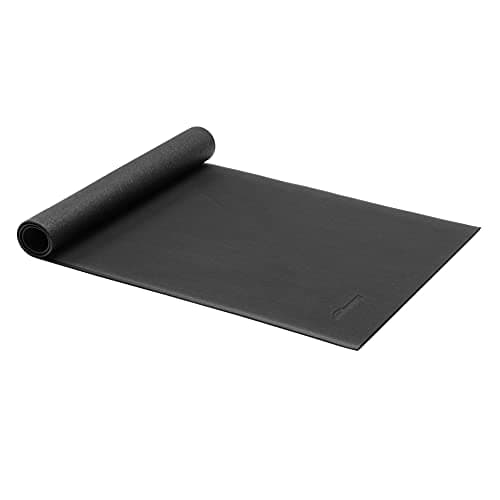
A mat. Both mechanisms are quiet; a person moving on a steel frame is not, and a bike on bare boards transmits every pedal stroke into the room below. A mat also stops the feet marking a floor you are not getting back, and it keeps sweat off the surface underneath — the add-on below is the same one we rank in best exercise mats.