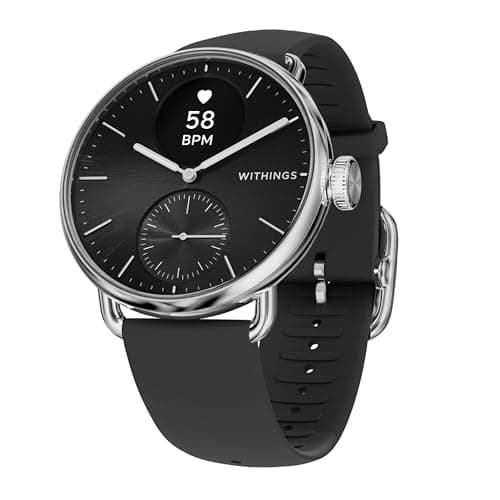
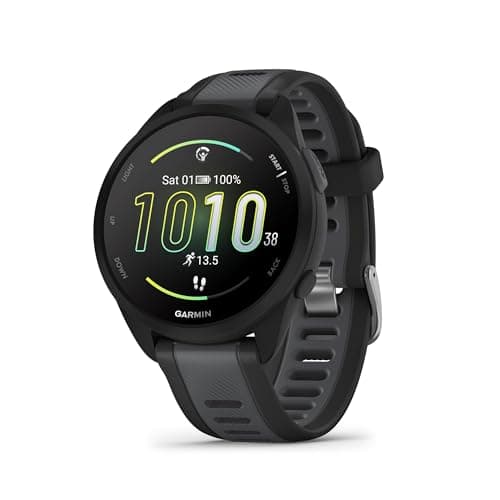
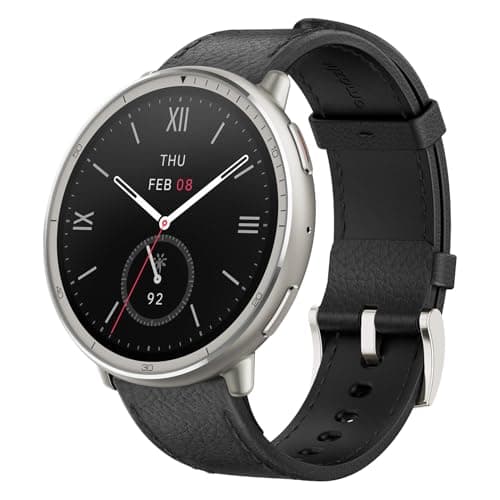
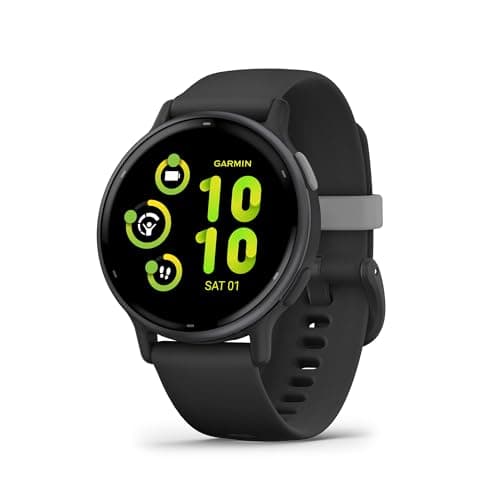
The Apple Watch alternative to buy is the Garmin vívoactive 5.It keeps the parts of the Apple Watch most people actually use — an AMOLED screen, sleep and heart-rate tracking, notifications on your wrist — and runs for days instead of hours, with no subscription and no requirement to change phones. If a cleared ECG is the reason you wore an Apple Watch, buy the Withings ScanWatch 2 instead; it is the only alternative here with one. The budget pick is the Amazfit Active 2, which carries built-in GPS, offline maps and free sleep and recovery scoring for roughly a quarter of what a current Apple Watch costs.
Start with what Apple actually gives you, because an honest alternatives list has to name it. The Apple Watch Series 12 carries the widest set of cleared health features on any wrist: an ECG app cleared for signs of atrial fibrillation since 2018, AFib History, irregular-rhythm notifications, sleep-apnea notifications, and hypertension notifications that picked up FDA clearance in September 2025 and carry forward unchanged. On top of that sits the deepest app ecosystem in wearables, Apple's safety features, and software support measured in many years. Nothing below matches that list. One pick matches part of it; the rest do not try.
Now the number that organizes this page. Apple rates the Series 12 at up to 24 hours of normal use— and the features it sells hardest run while you are asleep. Sleep-apnea notifications need nights of breathing data. Hypertension notifications watch the optical sensor over about a 30-day window. Overnight HRV, resting heart rate and sleep staging all need the watch on your wrist at 3 a.m. A 24-hour watch therefore asks you to choose, every single day, between charging it and measuring yourself with it. Most people solve that by charging overnight, which is exactly when the sensors are supposed to be working.
Every alternative on this page runs for days or weeks. That is the single biggest functional upgrade available by leaving, and it is the reason the ranking below leads with battery rather than sensor count. The other three things we rank on: which cleared feature you genuinely need (for most people that means an ECG, and only one pick here has one), whether your phone gets to stay an iPhone (one pick needs you to leave, and we say so on its card rather than in the footnotes), and running cost— an Apple Watch charges nothing after you buy it, and exactly one alternative here does.
If you want the shelf ranked without the brand framing, that is best recovery wearables. If the Apple Watch is only one of two names on your list, we settle the direct comparison in Apple Watch vs Garmin and Apple Watch vs Fitbit.
What you give up by leaving, in one list
Cleared health features. This is the big one and it is not close. Apple ships an ECG app cleared for signs of AFib, AFib History, irregular-rhythm notifications, sleep-apnea notifications and hypertension notifications. Exactly one pick on this page has a cleared ECG (the Withings), one more has an ECG plus cleared rhythm alerts but needs a Galaxy phone to switch them on (the Samsung), and the remaining four have none at all. If a doctor has told you to keep an eye on your heart rhythm, the honest advice is that leaving the Apple Watch is a downgrade and you should not do it for battery.
Safety features.Fall Detection, Crash Detection and Emergency SOS over cellular are not matched by anything here. For an older relative in particular, that is usually the whole reason the watch is on the wrist — which is why an Apple Watch still wins our fitness trackers for seniors ranking rather than any of these.
The ecosystem. On-wrist apps, Apple Pay, message replies, a watch face store, Find My, unlocking a Mac, years of software updates. Garmin, Withings and Amazfit all do a thinner version of some of this. None does all of it.
And one thing you do not give up:your phone. Four of the six picks here — both Garmins, the Amazfit and the Oura — pair perfectly well with an iPhone. The only pick that forces a phone change is the Samsung, and that is on its card.
Why battery is the spec this page ranks on
It looks like a convenience metric and it is not. Every passive health feature a modern wearable sells — sleep staging, overnight HRV, resting heart rate, respiratory rate, skin temperature trends, sleep-apnea detection, Apple's month-long hypertension window — is collected while you are asleep and not looking at the screen. A device on a charger collects none of it.
Apple rates the Series 12 at up to 24 hours of normal use, with fast charging that claws back roughly eight hours from a fifteen-minute top-up. That is enough to make overnight wear workable if you build a habit: charge while you shower and get dressed, wear it to bed. Plenty of people do this successfully. Plenty of other people charge it at night, which quietly turns an expensive health monitor into a step counter. The alternatives here run from about a day and a half (Samsung) to around ten or eleven days (Amazfit, both Garmins) to up to thirty (Withings), and the ones at the long end remove the decision entirely.
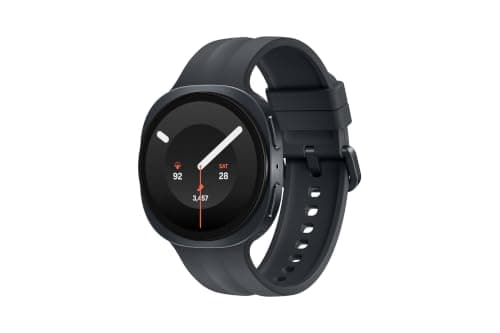
That is also why we rank the Samsung fifth despite its sensor list. Trading 24 hours for 36 is not solving the problem; it is paying to move it.
The subscription question, honestly
One of the underrated things about an Apple Watch is that the price on the box is the whole price — the health features do not sit behind a membership. Of the six alternatives here, five are the same: buy it, use it, pay nothing again. The Oura is the exception, and its best output is behind a recurring fee.
We do not think that makes it a bad buy — it reads sleep better than anything else on the page — but it does mean the comparison people make in a shop is wrong. A ring with a membership and a watch without one are not the same kind of purchase, and the gap widens every month. If recurring fees are what you are actually trying to avoid, the list to read is best no-subscription trackers, and our Oura review works through whether the fee earns its keep.
If it is the look rather than the watch
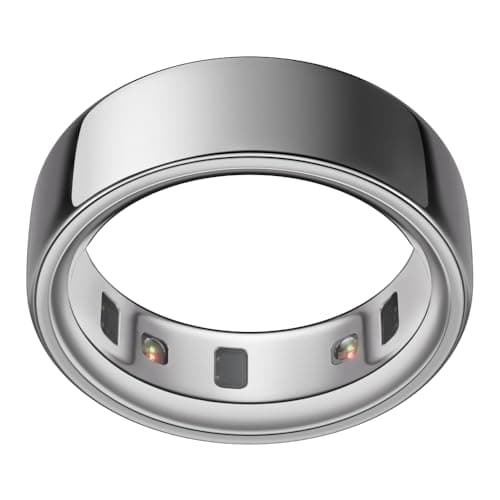
A fair number of people searching for an Apple Watch alternative are not unhappy with the data — they are unhappy that there is a small black screen on their wrist in every photo. Two picks here answer that directly and they answer it differently. The ScanWatch 2 is an analog watch with hands, a dial and a small window, so from across a table it reads as jewelry rather than hardware. The Oura Ring 4 removes the wrist from the question altogether. Both collect the overnight metrics better than the thing you are replacing, because both of them are still on you at 3 a.m.
Whatever you land on, do not buy a wearable for a reading it does not take. No device here, Apple included, measures blood pressure from the wrist without a cuff, and none of them measures blood glucose at all — we go through that claim in do fitness trackers measure blood pressure. And if your real goal is recovery rather than diagnosis, the cheapest accurate thing you can own is a chest strap, which beats every optical sensor on this page during exercise — see best HRV monitors.