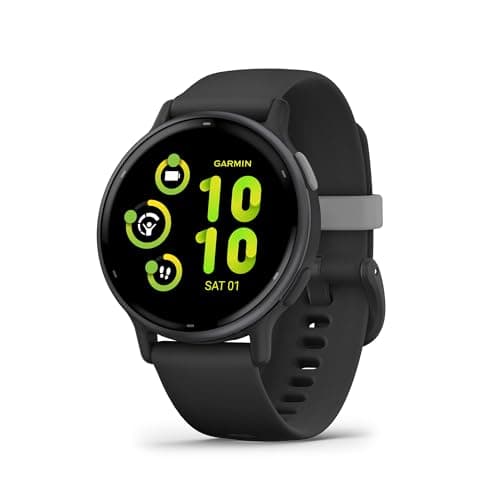
Under $200 the watch to buy is the Garmin vivoactive 5. An AMOLED screen, multi-band GPS, Body Battery, HRV Status and training load — with nothing behind a paywall and battery measured in days. It is the right pick for anyone who wants recovery data rather than notifications. If you mainly run, the Garmin Forerunner 165 is the better shape at the same money. The budget pick is the Amazfit Bip 5 — the cheapest watch here that still has built-in GPS and free health tracking, which is the floor below which a watch stops being useful.
Price check · as of November 7, 2026
Every pick below sat under $200 at Amazon when our price layer last ran, on November 7, 2026 — 5 of 5 carry a live price right now, shown in the table and on each card. Amazon prices move daily and a listing can cross the line between our check and your click, so the number on Amazon is the one that counts.
The useful thing about a $200 ceiling in 2026 is that it no longer costs you the features that matter for recovery. Five years ago, heart-rate variability, sleep staging and a readiness score were $400 features. They are not any more. What $200 still cannot buy is a cleared ECG, fall detection, on-wrist maps you would actually navigate by, or LTE. If any of those is the reason you want a watch, stop reading this page and spend more.
So this list is ranked on four things, in this order. Recovery metrics you get for free, because the whole point of a watch on a recovery site is overnight data and what the watch does with it. GPS, where multi-band genuinely beats single-band in cities and under trees and is the clearest hardware difference inside this band. Battery, which is a health feature rather than a convenience: every recovery metric these watches sell is collected while you sleep, and a watch on a charger at midnight collects nothing. And subscription — of which there is none on any pick here, and that is deliberate.
Two things we will not claim. None of these watches measures blood pressure from the wrist, whatever a listing implies, and we set out why in do fitness trackers measure blood pressure. And none of them is a medical device: a readiness score is a trend to watch, not a diagnosis. If you want the comparison across form factors instead of a price band, that is smart ring vs smartwatch.
The short answer
Quick picks
| # | Product | Best for | Score | Price |
|---|
| 01 | Garmin vívoactive 5The lifestyle pick: an AMOLED health-and-fitness smartwatch rather than a running watch, with the same no-subscription recovery suite in a case that does not announce itself at dinner. Choose this over a Forerunner if training is a part of your life rather than the organizing principle of it. | Best overall under $200 | | $169.00·Amazon |
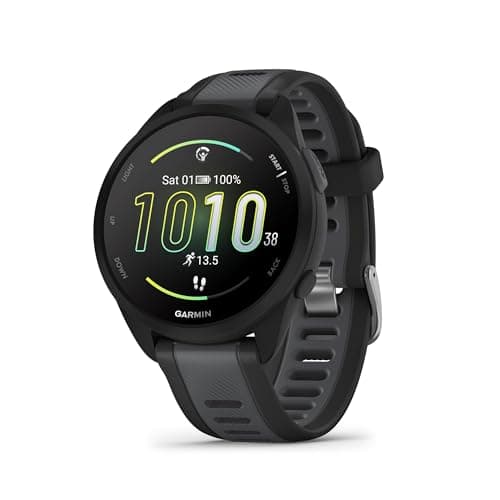
| 02 | Garmin Forerunner 165The one to buy. An AMOLED screen, multi-GNSS GPS, Body Battery, HRV Status and training load, with battery measured in days rather than hours — and no subscription for any of it. Everything above this in the range adds refinement; almost nothing above it adds a metric you will use. | Best for runners under $200 | | $191.50·Amazon |
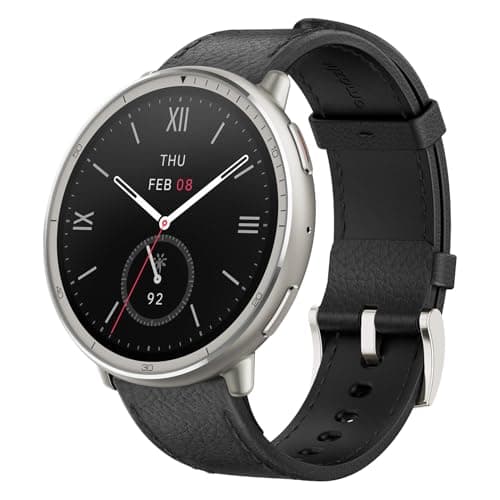
| 03 | Amazfit Active 2The value sweet spot: a proper smartwatch with built-in GPS, offline maps and solid sleep and HRV tracking, all free in the Zepp app with no subscription. It won't out-analyze Garmin or Oura, but it covers the recovery basics for a fraction of the running cost. | Best value | | $129.99·Amazon |
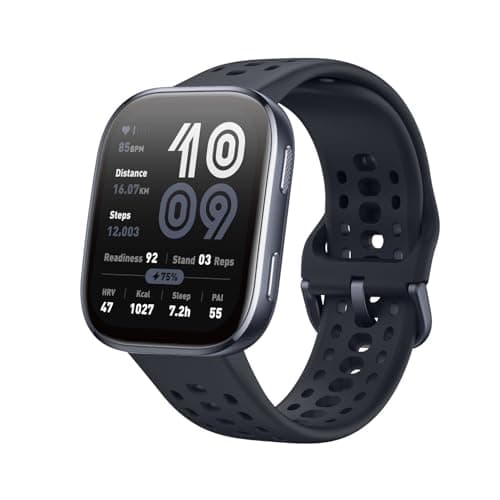
| 04 | Amazfit Bip 6Punches far above its price: a 1.97-inch AMOLED, built-in GPS, Bluetooth calling and up to two weeks of battery, with all health tracking free in the Zepp app. The recovery data is basic, but nothing here gets you GPS and a fortnight of battery for less except the pick below it. | Best battery for the money | | $79.00·Amazon |
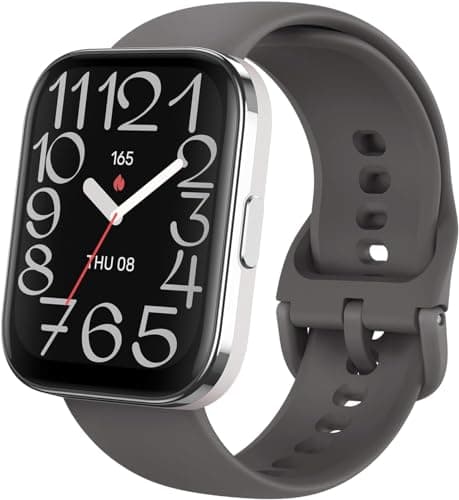
| 05 | Amazfit Bip 5The cheapest way onto this list: a big 1.91-inch screen, built-in GPS, Alexa and Bluetooth calling, with sleep and heart rate tracking free in the Zepp app. The LCD and older sensors show the price, but for basic no-fee tracking it does the job. | Cheapest that does the job | | $59.95·Amazon |
#ad · Live prices from the Amazon Product API, as of November 7, 2026. Where we have no verified live price, we show none — a gap beats a number that has rotted.
In detail
Best overall under $200
Garmin vívoactive 5
AMOLED displayHealth + fitness trackingMulti-day batteryNo subscription
The lifestyle pick: an AMOLED health-and-fitness smartwatch rather than a running watch, with the same no-subscription recovery suite in a case that does not announce itself at dinner. Choose this over a Forerunner if training is a part of your life rather than the organizing principle of it.
- Recovery data
- 9
- Training analysis
- 7
- Display
- 9
- Battery
- 8
- Value
- 9
Pros
- +AMOLED display in a design that works outside the gym
- +Same core Garmin recovery data with no fees
- +Multi-day battery — no nightly charging
- +Broad activity profiles for people who do several different things
Cons
- −Less running-specific analysis than a Forerunner
- −No maps
Don't buy this if…
…running is your main sport and you want structured training analysis — the Forerunner line is built for that.
Best for runners under $200
Garmin Forerunner 165
AMOLED · multi-GNSS GPSBody Battery + HRV StatusUp to 11-day battery5 ATM · no subscription
The one to buy. An AMOLED screen, multi-GNSS GPS, Body Battery, HRV Status and training load, with battery measured in days rather than hours — and no subscription for any of it. Everything above this in the range adds refinement; almost nothing above it adds a metric you will use.
- Recovery data
- 9
- Training analysis
- 8
- Display
- 9
- Battery
- 8
- Value
- 10
Pros
- +Bright AMOLED display at the lowest price Garmin offers one
- +Full recovery suite: Body Battery, HRV Status, sleep, training load
- +Up to 11 days of battery in smartwatch mode
- +5 ATM water rating, and Garmin Pay across the range
Cons
- −Base model has no on-board music storage
- −No maps — that is a step up the range
Don't buy this if…
…you want maps for trails or the deepest premium hardware — that is the Forerunner 970.
Best value
Amazfit Active 2
BioTracker 6.0 PPGBuilt-in GPS + maps~10-day battery5 ATM · no subscription
The value sweet spot: a proper smartwatch with built-in GPS, offline maps and solid sleep and HRV tracking, all free in the Zepp app with no subscription. It won't out-analyze Garmin or Oura, but it covers the recovery basics for a fraction of the running cost.
- Recovery insight
- 7
- Sleep
- 7
- Battery
- 9
- Comfort
- 7
- Value
- 8
Pros
- +Full smartwatch features — GPS, maps, 160+ sport modes — with no mandatory fees
- +Around 10 days of battery, longer than most AMOLED watches
- +Tracks sleep stages, SpO2, stress and readiness in the free Zepp app
- +5 ATM water rating and a bright, readable AMOLED screen
Cons
- −Recovery analysis is less refined than Garmin's Body Battery or Oura's readiness
- −Zepp's ecosystem and third-party support trail Garmin and Apple
- −Wrist-worn watch is bulkier to sleep in than a band or ring
Don't buy this if…
…you want the deepest recovery science on the market — this nails the fundamentals, but Garmin and Oura read the nuance better.
Best battery for the money
Amazfit Bip 6
1.97in AMOLEDBuilt-in GPSUp to 14-day battery5 ATM · no subscription
Punches far above its price: a 1.97-inch AMOLED, built-in GPS, Bluetooth calling and up to two weeks of battery, with all health tracking free in the Zepp app. The recovery data is basic, but nothing here gets you GPS and a fortnight of battery for less except the pick below it.
- Recovery insight
- 6
- Sleep
- 6
- Battery
- 10
- Comfort
- 7
- Value
- 8
Pros
- +Up to ~14-day battery is the longest in this roundup
- +Big, bright AMOLED with built-in GPS and free maps at a rock-bottom price
- +Sleep, SpO2, heart rate and stress tracking with no subscription
- +5 ATM water rating and Bluetooth calling included
Cons
- −Recovery and sleep algorithms are the most basic of the group
- −Polymer build feels its price next to Garmin
- −No ANT+ and limited third-party fitness app depth
Don't buy this if…
…you want nuanced readiness scoring or premium build — this is a big-battery basics watch, and priced like one.
Cheapest that does the job
Amazfit Bip 5
1.91in displayBuilt-in GPS + Alexa~10-day batteryIP68 · no subscription
The cheapest way onto this list: a big 1.91-inch screen, built-in GPS, Alexa and Bluetooth calling, with sleep and heart rate tracking free in the Zepp app. The LCD and older sensors show the price, but for basic no-fee tracking it does the job.
- Free features
- 7
- Battery
- 8
- Health data
- 6
- Comfort
- 7
- Value
- 9
Pros
- +Very low price for built-in GPS, calling and sleep tracking
- +Large 1.91-inch screen and Alexa built in
- +Around 10-day battery, no subscription for core tracking
- +Lightweight and simple to live with
Cons
- −LCD screen, not the AMOLED of the Bip 6
- −IP68 handles splashes but is not rated for swimming
- −Older sensors and the most basic health data here
Don't buy this if…
…you swim or want a sharp AMOLED and better sensors — the Bip 6 is a small step up in price for a real upgrade.
The feature that actually separates these watches
It is not the screen, and it is not the sensor. At this price every watch here has a decent optical heart-rate sensor and three of them have an AMOLED display. The difference is what the software does with the overnight data.
Garmin's Body Battery and HRV Status turn a night of heart-rate variability into a number you can act on, and the training-load view tells you whether yesterday was hard relative to your own recent weeks. Amazfit's Zepp app collects the same raw signals and presents them more simply. Neither is a medical measurement; both are trends, and a trend is only useful if you wear the thing every night. That is the whole argument, and it is why battery life sits so high in this ranking.
Multi-band GPS, and when it matters
Single-band GPS is fine in open ground and wanders between buildings and under tree cover. Multi-band (sometimes labelled dual-frequency or multi-GNSS) fixes most of that, costs battery, and is the one hardware specification inside this price band where the more expensive picks are measurably better. If you run on roads in a city, or on trails under canopy, it is worth the extra. If you walk, cycle on open roads or mostly use the watch for sleep and steps, it is not.
Why we exclude the band-format trackers
Two good devices that also sit under $200 are not on this page: the Garmin vivosmart 5 and the Fitbit Charge 6. Both are bands rather than watches — narrow screens, no watch face worth the name, worn as a fitness device rather than as a watch. If that format suits you better they are genuinely strong, and we rank them properly in best budget fitness trackers and settle the format question in fitness tracker vs smartwatch.
The subscription question, answered once
Nothing on this page charges a recurring fee, and that is not an accident of price — it is a selection criterion. Several well-known recovery wearables put their headline metrics behind a membership, which changes the five-year cost of a device far more than the sticker price does. We do that arithmetic in best no-subscription trackers. If you are weighing one of the subscription devices against a watch, the direct versions of that argument are in Garmin vs Whoop and Whoop alternatives.
What $200 does not buy, stated plainly
A cleared ECG app. Fall detection and emergency SOS over cellular. Cuff-calibrated blood pressure, which in any case only works on one phone ecosystem. On-wrist maps detailed enough to navigate an unfamiliar trail. Skin-temperature trending on every pick. And the polish of a flagship — the haptics, the speaker, the third-party app library. If one of those is load-bearing for you, the honest answer is to spend more rather than to buy the best $190 watch and be disappointed by it. The tier above is ranked in best Garmin watches and best health-monitoring wearables.
How we picked
Everyone in this category says they tested twenty products. We have not lab-tested any of these, and we say so. What we did instead: compiled the published specifications, pulled the numbers from the manufacturer manuals, ran the cost-to-run and cost-per-unit math where there was math to run, and scored each product against a published rubric. The scores are judgments from documented research — not measurements we took, because we do not have a lab and we will not pretend we do. Where a number came from someone else's work, we name them in Sources.
Questions
Frequently asked
What is the best smartwatch under $200?+
At our last price check, the Garmin vivoactive 5 — AMOLED screen, multi-band GPS, Body Battery, HRV Status and training load, with no subscription and multi-day battery. The Forerunner 165 is the better buy at similar money if running is your main activity, and the Amazfit Bip 5 is the cheapest watch here that still has built-in GPS.
Can you get HRV and recovery data on a cheap smartwatch?+
Yes, and that is the real change in this price band. Heart-rate variability, sleep staging and a readiness-style score used to be $400 features and are now available under $200 with no subscription. Treat the numbers as trends relative to your own baseline rather than as measurements — none of these is a medical device.
Is a $200 smartwatch good enough for running?+
For most runners, yes. The Forerunner 165 gives you multi-band GPS, structured workouts, training load and 5 ATM water resistance. What you do not get at this price is on-wrist mapping or the multi-week battery of the ultra-endurance models. If you race long trail events and navigate by watch, that is the reason to spend more.
Do any smartwatches under $200 need a subscription?+
None of the picks here do — that was a selection criterion rather than a coincidence. Garmin and Amazfit both give you the full metric set in the free app. The devices that charge a membership are a separate category, and the five-year cost comparison is on our no-subscription trackers page.
What do you give up with a smartwatch under $200?+
A cleared ECG app, fall detection with cellular SOS, cuff-calibrated blood pressure, on-wrist maps you could navigate an unfamiliar route by, LTE, and flagship polish. The sensors and the recovery software are close to the tier above; the medical-adjacent features and the premium hardware are not.
Can a smartwatch under $200 measure blood pressure?+
No, and nothing you can buy at this price measures blood pressure from the wrist without a cuff. Listings sometimes imply otherwise. We go through what the sensors can and cannot do in
do fitness trackers measure blood pressure.
Receipts
Sources
- Garmin — vivoactive 5 published specifications (AMOLED, Body Battery, HRV Status, battery life)
- Garmin — Forerunner 165 published specifications (AMOLED, multi-band GNSS, up to 11-day battery, 5 ATM)
- Amazfit — Active 2 published specifications (BioTracker 6.0, built-in GPS, battery life, no subscription)
- Amazfit — Bip 6 published specifications (1.97 in AMOLED, built-in GPS, up to 14-day battery)
- Amazfit — Bip 5 published specifications (1.91 in display, built-in GPS, Alexa, Bluetooth calling)
- Harvard Health — Heart rate variability: a new way to track well-being (HRV as a trend, not a diagnosis)
We do not run a testing lab, and we do not pretend to. Where a measured number came from someone else's work, we name them and link them. Where we could not verify something, we say so on the page rather than quietly leaving it out. Read our full method.