Peloton alternatives — ranked on what you are really replacing
A Peloton is a bike, a screen and a membership sold as one object. Four of the five picks here let you keep the parts you use and drop the one you resent paying for.
We earn a commission when you buy through our Amazon links, at no extra cost to you. It never changes a verdict, and we say so when the cheaper product is the better buy. How this works.
The best Peloton alternative is the Schwinn Fitness IC4. It is a heavy magnetic-resistance indoor cycle from an established brand that broadcasts over Bluetooth to third-party apps rather than a walled garden — so you keep the class experience and choose who you rent it from, which is the right buy for anyone who liked the riding and resented the membership. If you want most of that for a third of the money, the MERACH magnetic bike is the value answer and is near-silent in a flat. The budget pick is the YOSUDA friction bike — the cheapest thing here that still rides like an indoor cycling bike, with a 300 lb capacity and a brake pad you will eventually replace.
Be precise about what you are replacing, because “a Peloton” is three products in one chassis. There is a good bike: heavy flywheel, magnetic resistance, a solid frame. There is a screen running software you do not own. And there is a membership that the screen is largely useless without. Almost everybody searching for an alternative wants the first thing, is indifferent to the second, and is leaving because of the third. That is the order this page is ranked in.
The feature worth protecting when you switch is repeatable resistance. The reason a Peloton class works is that the instructor can say “resistance 35” and you can go back to the same number next week — progress you can see. Magnetic bikes with marked levels reproduce that; a friction bike with an unmarked knob does not, and that is the single biggest practical difference between the picks below. The second feature is Bluetooth broadcast: a bike that transmits cadence and speed can drive Zwift, Kinomap, Peloton's own app in digital-only form, or any class app you like, on a tablet you already own.
What no alternative here reproduces: the instructor roster and the leaderboard. If the specific people are why you ride, nothing on this page replaces them, and the honest advice is to keep the digital app and buy a cheaper bike to run it on — which is exactly what three of these picks are built for. If you are replacing a Tread rather than a Bike, the fifth pick is for you. The whole bike shelf, ranked on ride quality instead of subscription freedom, is in best exercise bikes.
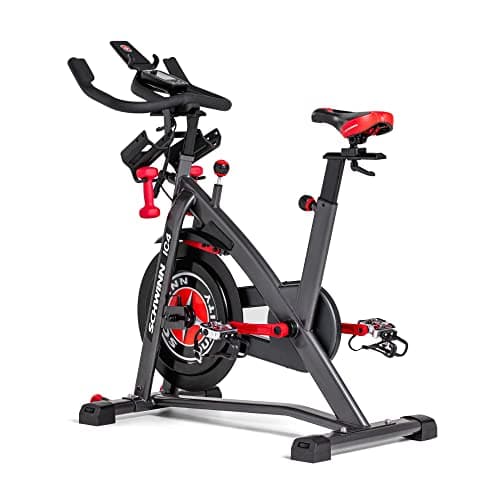
The closest thing to a Peloton that is not one. A heavy magnetic-resistance cycle from an established brand with Bluetooth out to third-party apps, so the classes are a choice rather than a condition of ownership. It is the bike a cyclist would pick to train indoors on, and it costs the most here.
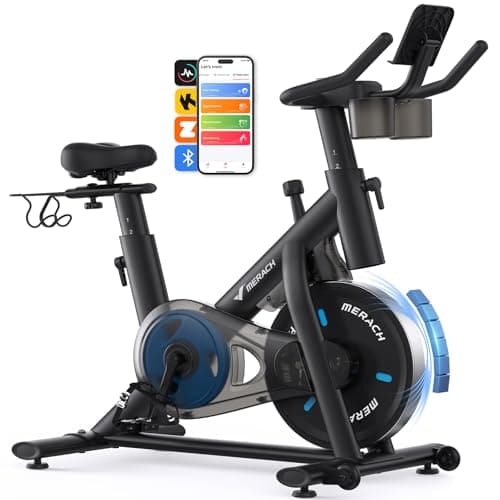
The value answer, and the one for flats and shared walls. Magnetic resistance means no contact and effectively no noise beyond your own breathing, with a 300 lb capacity, a tablet mount and app-guided classes you are not locked into. Most of the Peloton experience for a fraction of the outlay.
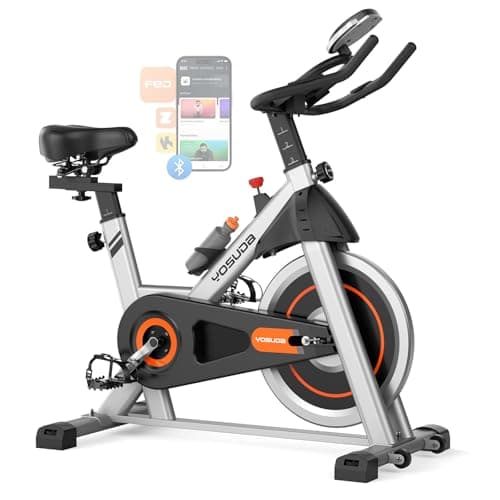
The cheapest bike here that still rides like an indoor cycling bike rather than a piece of furniture. A proper weighted flywheel, a 300 lb capacity, a tablet holder and app-guided classes. Friction resistance is the compromise: a pad to replace eventually, and a knob rather than a number.
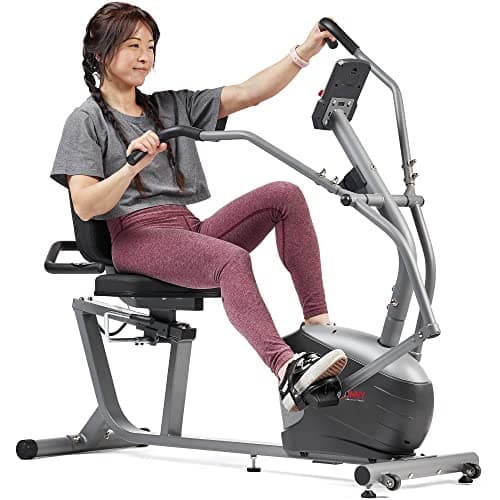
The pick for the reader whose real objection to a Peloton is the riding position, not the price. A supported back, a step-through frame, eight marked magnetic levels, dual-motion arm handles and a 265 lb capacity. It is 77 lb of machine that needs assembling and a permanent corner.
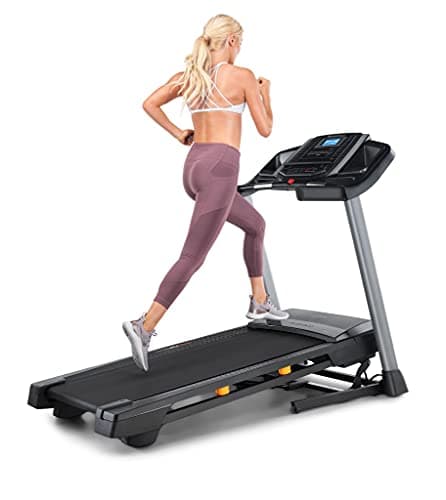
The Tread alternative rather than the Bike alternative. A proper cushioned running deck with powered incline and NordicTrack's guided-workout platform - the most treadmill here for anyone whose plan involves actually running. Note that its class platform is a subscription too, so this is a cheaper machine rather than an escape from memberships.
#ad · Live prices from the Amazon Product API, as of November 24, 2026. Where we have no verified live price, we show none — a gap beats a number that has rotted.
In detail
The picks, in full
01
Best overall Peloton alternative
Schwinn Fitness IC4 Indoor Cycling Bike
Magnetic resistanceHeavy flywheelBluetooth to third-party appsEstablished brand
8.6/10
The closest thing to a Peloton that is not one. A heavy magnetic-resistance cycle from an established brand with Bluetooth out to third-party apps, so the classes are a choice rather than a condition of ownership. It is the bike a cyclist would pick to train indoors on, and it costs the most here.
Repeatable resistance
10
App freedom
10
Ride quality
10
No-membership value
7
Value
6
Pros
+Broadcasts over Bluetooth, so Zwift, Kinomap or a digital class app all work on your own tablet
+Magnetic resistance with marked levels — the repeatable number a class needs
+Heavy flywheel and a stiff frame: the ride quality is the reason to spend here
+An established fitness brand with a parts and service record behind it
+No membership is required for the hardware to function at all
Cons
−The most expensive pick on this page by a wide margin
−No screen — you supply the tablet and the app subscription you choose
−Heavy, and it is not going to be moved between rooms
Don't buy this if…
…you ride two or three times a week for general fitness — the value picks do that job for a fraction of the price.
Magnetic resistance300 lb capacityTablet mountApp-connected
8.4/10
The value answer, and the one for flats and shared walls. Magnetic resistance means no contact and effectively no noise beyond your own breathing, with a 300 lb capacity, a tablet mount and app-guided classes you are not locked into. Most of the Peloton experience for a fraction of the outlay.
Repeatable resistance
8
App freedom
8
Ride quality
8
No-membership value
9
Value
9
Pros
+Near-silent, so a 6 a.m. ride in an apartment is not a conversation with a neighbor
+No brake pad to wear out, so nothing to replace
+Tablet mount plus app classes — the Peloton format without the Peloton contract
+300 lb published capacity
Cons
−Not the frame stiffness or flywheel mass of the premium pick
−App-class quality from a hardware brand is not an instructor roster
−You supply the tablet
Don't buy this if…
…you train in a garage where nobody can hear you — you would be paying a premium for silence you do not need.
The cheapest bike here that still rides like an indoor cycling bike rather than a piece of furniture. A proper weighted flywheel, a 300 lb capacity, a tablet holder and app-guided classes. Friction resistance is the compromise: a pad to replace eventually, and a knob rather than a number.
Repeatable resistance
5
App freedom
8
Ride quality
9
No-membership value
10
Value
10
Pros
+Real indoor-cycling feel from a weighted flywheel, not a token one
+Infinitely variable resistance rather than fixed steps
+300 lb capacity and a tablet holder at the lowest price here
+Leaves enough budget over to pay for a year of whichever app you choose
Cons
−Friction resistance means a brake pad that wears and must be replaced
−An unmarked knob cannot reproduce a class instruction like 'resistance 35'
−Noisier than a magnetic bike, which matters above a neighbor
Don't buy this if…
…you live above someone and want near-silence, or you ride structured classes by resistance number — magnetic is the answer to both.
Sunny Health & Fitness Compact Performance Recumbent Bike (SF-RB420032)
8 magnetic levels265 lb user capacityStep-through frameDual-motion arm handles
6.8/10
The pick for the reader whose real objection to a Peloton is the riding position, not the price. A supported back, a step-through frame, eight marked magnetic levels, dual-motion arm handles and a 265 lb capacity. It is 77 lb of machine that needs assembling and a permanent corner.
Repeatable resistance
8
App freedom
4
Ride quality
6
No-membership value
9
Value
7
Pros
+Full back support — no wrist, neck or lower-back loading at all
+Eight marked resistance levels, so a session is repeatable
+Step-through frame is easy to get on and off, which outranks any spec if it is a barrier
+Arm handles bring the upper body in, which no spin bike does
Cons
−Not an indoor cycling bike — you cannot stand up and climb on it
−77 lb, needs assembly and a dedicated corner
−265 lb capacity is the lowest here
−No Bluetooth broadcast, so app integration is limited
Don't buy this if…
…you want the Peloton ride — standing climbs and sprints are the whole point of a spin bike and a recumbent cannot do either.
The Tread alternative rather than the Bike alternative. A proper cushioned running deck with powered incline and NordicTrack's guided-workout platform - the most treadmill here for anyone whose plan involves actually running. Note that its class platform is a subscription too, so this is a cheaper machine rather than an escape from memberships.
Repeatable resistance
9
App freedom
5
Ride quality
9
No-membership value
5
Value
7
Pros
+A real running deck with powered incline, which no walking pad offers
+Guided workouts that control incline and speed, the Tread's main trick
+Folds, which the Tread does not
+Far less outlay than a Tread for the same job
Cons
−Its guided platform is a subscription — this is not the no-membership pick
−The machine works fully without the subscription, but the classes do not
−Heavy and large even folded
−Overkill if you mainly intend to walk
Don't buy this if…
…you mainly intend to walk — you would be paying for running capability and a subscription you will not use, and a walking pad costs a fraction of this.
The cheapest honest way to leave Peloton is often not to leave the classes at all. The app runs on a phone or tablet in digital-only form, and every bike on this page has either a tablet mount or a flat surface you can clamp one to. Buy the bike for the ride and rent the classes from whoever you like — Peloton digital, Zwift, Kinomap, a free YouTube channel — and the day you stop paying, you still own a working bike. That is the structural difference worth understanding: on a connected bike, the subscription is a condition of the screen working; on these, it is a choice.
Why magnetic resistance is the spec that decides this
A magnetic bike slows the flywheel with magnets that never touch it. That means no wear part, near-silence, and — the part people miss — numbered levels you can return to. A friction bike presses a felt pad onto the flywheel: lovely, progressive feel, a pad that wears out, more noise, and a knob with no markings, so “the same effort as last Tuesday” is guesswork. If you ride structured classes, buy magnetic. If you ride by feel and want the cheapest real bike, the friction pick is genuinely fine and we have ranked it third rather than last for that reason.
Bluetooth: the difference between a bike and a connected bike
A bike that broadcasts cadence and speed over Bluetooth shows up in third-party apps as a sensor, which is what makes a tablet feel like a console. A bike without it still works — you just read your numbers off its own display and the app runs as a video. It is the single feature most worth paying up for if the class experience is why you are shopping, and it is why the premium pick heads this list despite costing several times the budget one.
Measure the thing people forget: the footprint and the ceiling
Indoor cycles are about 4 feet long and need clear space behind for getting on and off; a recumbent is longer again at over 5 feet. Published user-weight capacity is the other number to check before you order — the picks here publish 265 to 300 lb, and that is a structural rating from the manufacturer rather than something we have tested. If the bike is going upstairs, weigh the machine as well as the rider: the premium cycle is a two-person carry. For a floor that needs protecting, the mats are in best exercise mats.
How we picked
We did not lab-test this gear
Everyone in this category says they tested twenty products. We have not lab-tested any of these, and we say so. What we did instead: compiled the published specifications, pulled the numbers from the manufacturer manuals, ran the cost-to-run and cost-per-unit math where there was math to run, and scored each product against a published rubric. The scores are judgments from documented research — not measurements we took, because we do not have a lab and we will not pretend we do. Where a number came from someone else's work, we name them in Sources.
Questions
Frequently asked
What is the best Peloton alternative?+
The Schwinn IC4. It is a heavy magnetic-resistance indoor cycle that broadcasts over Bluetooth to third-party apps, so you keep the class format and choose the provider instead of being tied to one. If you want most of that for far less, the MERACH magnetic bike is the value pick and is quiet enough for an apartment; the YOSUDA friction bike is the cheapest option here that still rides like a real indoor cycle.
Is there a Peloton alternative without a subscription?+
Every bike on this page works fully with no subscription at all - you get resistance, a display and a ride. What a subscription buys is classes, and you can rent those from whoever you like on a tablet you already own, or skip them. The distinction that matters is that on a connected bike the screen is largely useless without the membership, while on these the hardware does not care.
Can you use the Peloton app on another bike?+
Yes - the app has a digital-only form that runs on a phone or tablet and does not require Peloton hardware, and every pick here either mounts a tablet or has somewhere to clamp one. What you lose on non-Peloton hardware is automatic resistance matching and the leaderboard position that depends on it; you follow the instructor's resistance call manually, which is easier on a bike with numbered magnetic levels than on a friction knob.
What is a cheap Peloton alternative?+
At our last price check the YOSUDA friction bike was the cheapest machine in our registry that still rides like an indoor cycling bike - a weighted flywheel, a 300 lb capacity and a tablet holder. The compromises are real and worth knowing: a brake pad that wears out, more noise than a magnetic bike, and an unmarked resistance knob that cannot reproduce a class instruction by number.
What is a good Peloton Tread alternative?+
A folding treadmill with powered incline and a guided-workout platform - the NordicTrack T Series 6.5 S is the pick in our registry. It gives you a cushioned running deck and incline control for a fraction of a Tread, and it folds, which a Tread does not. Be clear that its class platform is also a subscription, so it is a cheaper machine rather than an escape from memberships. If you only want to walk, a walking pad costs a tenth as much.
Magnetic or friction resistance for a spin bike?+
Magnetic if you can afford it. It is silent, there is no pad to wear out, and the levels are numbered so you can repeat a session exactly - which is the whole mechanism behind structured classes. Friction gives a progressive, infinitely variable feel and costs less, at the price of noise, a consumable pad and no repeatable numbers. In an apartment, magnetic is close to mandatory.
We do not run a testing lab, and we do not pretend to. Where a measured number came from someone else's work, we name them and link them. Where we could not verify something, we say so on the page rather than quietly leaving it out. Read our full method.