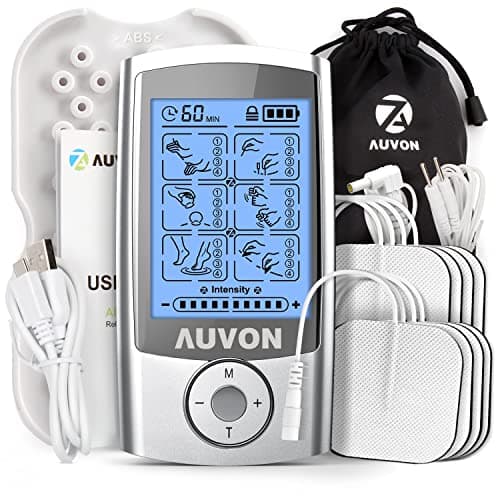
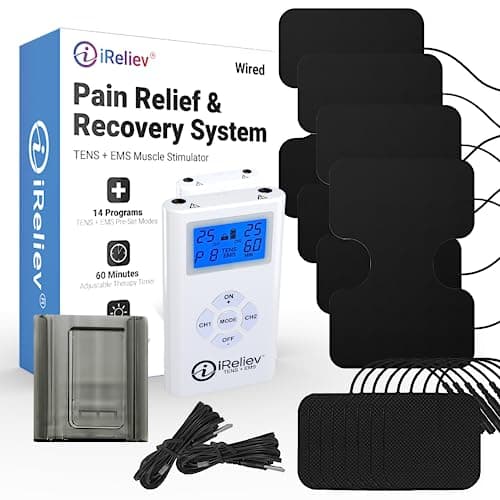
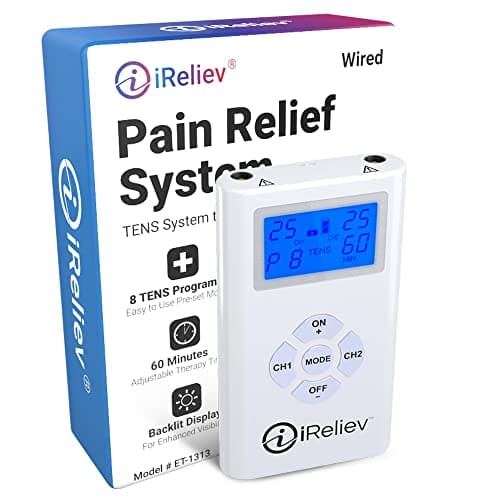
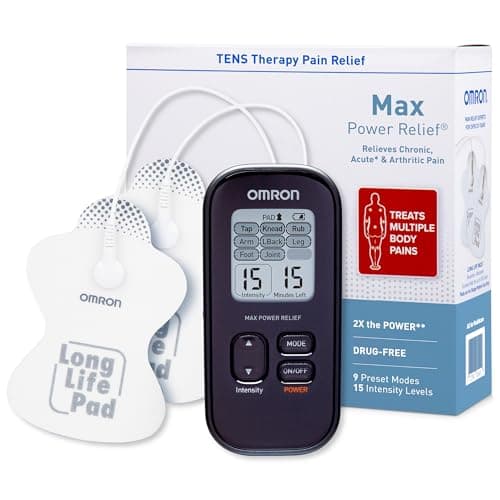
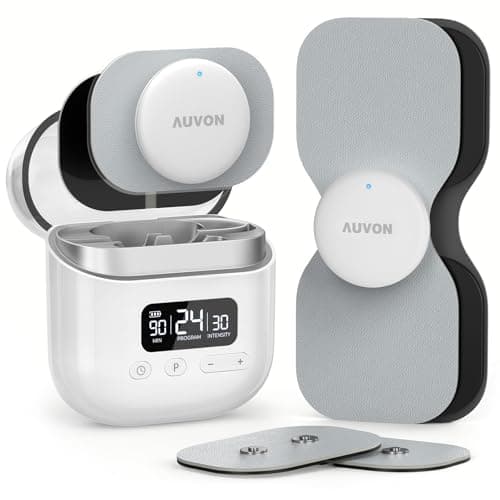
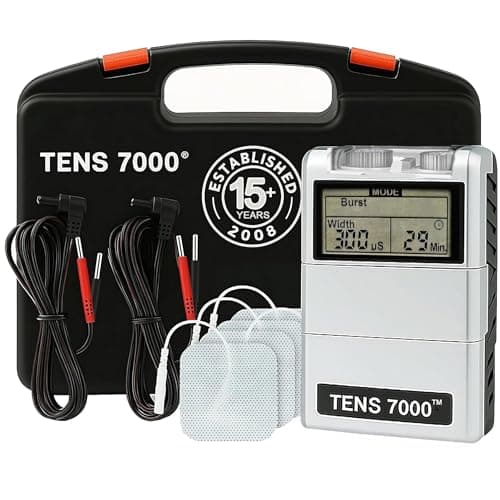
For most people the right TENS unit is the cheap, unglamorous, dual-channel one that has been on physical therapy shelves for years — the TENS 7000 Digital. It drives four pads at once, it hands you direct control of the current instead of a menu of named presets, and it costs less than most of the app-connected units sold beside it. Everything else on this page exists for one specific reason: a rechargeable battery instead of a 9V, a wireless pod instead of wires, programs labeled by body part instead of dials, or EMS muscle stimulation as well as TENS.
A TENS unit is not a massage device and it is not a recovery gadget. It is a pain-modulation tool: adhesive electrodes on the skin, a mild current running between them and, in Cleveland Clinic's words, "a low-voltage electrical current to block pain or change your perception of it." That is a narrow job with genuinely mixed evidence behind it, and both of those facts should shape what you are willing to spend. We put the evidence and the safety list before the picks for that reason.
Four things separate these units, and the mode count is not one of them.
- Channels, and therefore pads.A dual-channel unit runs two independent pairs of electrodes — four pads. That is what lets you bracket one wide area like a lower back, or treat two places at once. A single-channel unit runs one pair, and on a back that means moving the pads around rather than covering the problem.
- How much control you actually get.At one end, manual dials for intensity, pulse rate and mode let you tune the sensation and dial it back up as the nerves accommodate — which they do, within minutes. At the other, preset programs labeled "lower back" or "knee" set those parameters for you. Neither is more effective: the Cochrane overview of TENS reviews was "unable to find any reliable evidence that the effectiveness of TENS varies when using different delivery modes". Control buys you comfort and the ability to chase the sensation, not a better protocol.
- Power source. A 9V battery is swapped in ten seconds and costs pennies, which matters for a device you may use several times a day. A rechargeable unit is cheaper to run across a year and useless the evening you forget to charge it. Wireless pods remove the wires and add another thing to charge.
- Running cost, which means pads.Electrodes are consumables. They lose tack after a few weeks of regular use, faster on hairy or lotioned skin, and a unit that takes ordinary snap-connector or standard pigtail pads is far cheaper to own over a year than one tied to proprietary cartridges — regardless of what either costs on the day you buy it. This is the number nobody on this shelf advertises.
The number to ignore is the headline on almost every box: 24 modes, 30 modes, 40 intensity levels. Mode count is a software menu, it is the cheapest thing a manufacturer can add, and per the Cochrane finding above there is no reliable evidence it changes the outcome. A unit with five honest modes and four pads will serve a sore lower back better than a twenty-four-mode unit with two.
What the evidence actually says
This is where an honest TENS page has to be careful, because the shelf is sold with far more confidence than the research supports. A Cochrane overview of Cochrane reviews of TENS for chronic pain in adults concluded that the authors were "unable to conclude with any confidence that, in people with chronic pain, TENS is harmful, or beneficial" — the reviews themselves were judged methodologically sound, but the quality of the evidence inside them was very low. The Cochrane review of TENS for neuropathic pain reaches the same place in different words: it is "impossible to confidently state whether TENS is effective in relieving pain" compared with sham TENS, and while the pooled result across five small studies favored TENS, the authors warn the true effect is likely to be substantially different from that estimate.
The NHS puts the practical version in four words: TENS "does not work for everyone."What that adds up to is not "do not bother" — the only adverse event the neuropathic review found was skin irritation under the electrodes, the devices are cheap, and plenty of people report real relief while one is running. It adds up to a spending rule: treat a TENS unit as a cheap experiment on your own pain, not as a treatment worth upgrading. Buy the capable budget unit and a stack of spare pads. Do not buy the premium one on the strength of an app.
Who should not use a TENS unit
Read this before the picks, because for some readers the answer to the whole page is "not this." Cleveland Clinic says you should not use a TENS unit if you are pregnant or if you have an implantable device like a pacemaker, cancer, epilepsy, deep vein thrombosis, a bleeding disorder or heart disease. The NHS gives the same pacemaker, epilepsy and pregnancy cautions, with the sensible exception that a doctor or midwife may specifically advise TENS in labor.
Placement has its own list. Cleveland Clinic says not to use TENS on or near infected tissue, damaged skin, varicose veins, the eyes, the mouth, the front or side of the neck, the head, the genitals, areas of numbness or anywhere that has recently had radiation therapy. The NHS also warns against running pads on your chest and back at the same time, and against using a unit while asleep, in the bath or shower, or while driving or operating machinery. If the skin under a pad goes itchy, red or irritated, switch off and take the pads off.
Scores below are judgments from published specifications and aggregated owner feedback, not lab measurements — see how we review. Prices are pulled live and stamped with the date they were checked. If you are not yet sure this is the right category at all, start with massage gun vs TENS unit, which sorts muscle problems from nerve problems; if the pain is a stiff, long-running back rather than an acute one, heating pads and back massagers are the cheaper first answers.
The six, side by side
| Unit | Pads it drives | Power | Control | Best use |
|---|
| TENS 7000 Digital | 4 (dual channel) | 9V battery | Manual dials, 5 modes | Lower back, sciatica-type pain |
| AUVON 24 Modes | 4 (dual channel), 8 supplied | Rechargeable | Preset modes | Cheapest way to test TENS |
| iReliev TENS + EMS | 4 (dual channel) | Rechargeable | TENS and EMS programs | Clinician-directed stim work |
| iReliev ET-1313 | 4 (dual channel) | Battery | Preset programs | A gift, or a parent's first unit |
| OMRON Max Power Relief | 2 (one pair supplied) | 2 AAA batteries | 6 body areas, 15 levels | Knee, elbow, shoulder, travel |
| AUVON Wireless | 6 supplied, wireless | Rechargeable | Preset modes | Use at a desk, under clothing |
Pads are the real cost of owning one
Every unit on this page is cheap. None of them is cheap to own badly. Electrodes are adhesive consumables: they lose tack with use, faster if the skin is hairy, lotioned or sweaty, and a pad that is half-stuck delivers a weak, patchy, unpleasant current that feels like the unit has failed. Three habits cover most of it.
Clean, dry skin before every session. Lotion and sweat are what kill adhesive. A rinse and a towel is enough; alcohol wipes dry the skin out over time.
Back on the liner, somewhere cool, straight after use. Air is the enemy. Pads stored sealed last a multiple of pads left on a bedside table.
Check the connector before you reorder. Snap-stud and 2mm pigtail pads look similar and do not interchange. Buying the wrong box is the most common waste of money in this category after buying too much unit.
How to run a session, and for how long
Bracket the pain rather than covering it: a pad either side of the sore area, a couple of inches of clear skin between them, never overlapping. Switch the unit on only after the pads are placed, then raise intensity slowly until you feel a strong but comfortable tingle. The NHS wording is the right target — it should not hurt. When the sensation fades, which it will, nudge the intensity up or switch to a burst or modulation mode rather than enduring a session that has stopped doing anything.
On duration, Cleveland Clinic notes that "some people use it several times a day for up to 60 minutes each time," and adds that it is a good idea to check with your healthcare provider before trying it. Short and frequent beats one long session, and the NHS is explicit that you should not use a unit while asleep, in the bath or shower, or while driving or operating machinery.
TENS, EMS and percussion are three different tools
TENS modulates the pain signal through the nerves. EMS makes the muscle contract. A massage gun mechanically works the tissue. They are not competitors, and buying the wrong one for your problem is the main way people waste money here: percussion does little for pain that originates in a nerve, and TENS does nothing for a tight, knotted calf. We sort that decision properly in massage gun vs TENS unit, and if the answer turns out to be percussion, the shortlist is in best massage guns.
When a TENS unit is the wrong answer entirely
If the pain is new and you do not know what it is. A device that changes how much you feel an injury is a poor substitute for finding out what the injury is. Masking pain and carrying on is how a small problem becomes a long one.
If you are in any of the groups in the safety section above.Pacemaker, epilepsy, cancer, DVT, bleeding disorders, heart disease, pregnancy — that is a clinician conversation, not a purchase.
If the problem is stiffness rather than pain. A back that is tight and dull rather than sharply painful usually responds better to heat and movement. That is best heating pads and foam rollers for back pain, both cheaper than everything on this page.
If the goal is recovery after training. TENS is a pain tool, not a recovery intervention. For legs after a long run, compression boots and the cheaper options we rank beside them are the honest category.