Sciatica is the name for pain along the sciatic nerve — the large nerve that runs from the lower back through the buttock and down the back of each leg — and the Cleveland Clinic defines it plainly as pain caused by irritation or compression of that nerve. The key word is compression, and the key question for a massage gun is: compressed by what? If the answer is a tight, irritable muscle in the buttock, percussion can help. If the answer is a herniated disc, a bone spur or a narrowed spinal canal, no amount of vibrating the buttock will change what is happening at the spine — and vibrating the spine itself is one of the things a massage gun must never do.
This page walks through that distinction, because it is the whole answer. It also covers where a gun goes and does not go for this problem, the warning signs that mean stop reading and see a doctor, and — after all of that — the three tools from our rankings that suit the job. It is a companion to massage guns for plantar fasciitis, which makes the same kind of argument about a different nerve-and-tissue problem, and to best massage guns for back pain, which covers the muscular back.
First: the symptoms that mean a doctor, not a gun
Before anything else. The Cleveland Clinic says to seek immediate medical attention for sciatica with muscle weakness in the leg or foot, or with loss of bladder or bowel control; those can indicate serious nerve compression that needs urgent evaluation. Add to that list: numbness in the saddle area, pain that began with a fall or an accident, pain with fever, or pain that is steadily worsening rather than waxing and waning. None of those is a massage-gun situation. Most sciatica, the same source notes, improves within four to six weeks with conservative care — heat and cold, over-the-counter anti-inflammatories, gentle movement and stretching, physical therapy — and a gun is at most a small part of that, never the plan.
What is actually pressing on the nerve
The common causes of true sciatica are in the spine: a herniated disc, spinal stenosis (a narrowed canal), degenerative disc disease, a slipped vertebra, arthritis of the spine. In all of those, the nerve is being irritated where it leaves the spinal column, and the pain in the buttock and leg is referred from there. A massage gun cannot reach a disc, cannot widen a canal and cannot un-slip a vertebra. It can make the guarding muscles around the problem feel less tight for a while, which some people find worth having; it cannot treat the cause.
The other case is different. Piriformis syndrome is when the piriformis — a flat, narrow muscle running from the lower spine through the buttock to the top of the thigh — compresses the sciatic nerve where it passes near or through the muscle, causing aching, burning, tingling or shooting pain in the buttock, hip or upper leg that worsens with sitting, walking, running or stairs. The Cleveland Clinic lists massage among its treatments, alongside rest, stretching and strengthening, physical therapy and anti-inflammatories, and says most episodes settle in days or weeks. This is the case where a massage gun has a genuine job: a tight muscle, not a structural problem, and one that percussion and pressure can reach.
The honest complication is that you often cannot tell which you have from the symptoms alone — both produce buttock-and-leg pain, and a disc problem can coexist with a tight piriformis. The practical rule: if the pain is centered in the buttock and gets worse with sitting, gentle work on the glutes is reasonable to try; if it is centered in the lower back, shoots below the knee, or came with any of the red flags above, get it looked at before you point a motor at it.
Where the gun goes for sciatica — and where it never goes
The targets are the gluteus maximus (the big muscle of the buttock), the gluteus medius at the side of the hip, and — gently, indirectly — the region of the piriformis deep in the middle of the buttock. Work the muscle belly, keep the head moving, use a large round head at a low speed, and stop at a minute or two per area. Many people find the hamstring and outer thigh tight as well and can work those normally.
The forbidden zones are non-negotiable. Never on the spine — lumbar, sacrum or tailbone — and never directly over the sciatic nerveitself where it is close to the surface: the crease at the bottom of the buttock and the back of the knee. HSS's rule is that the devices are for muscles only and are to be kept off bones, nerves and joints, and the sciatic nerve is a very large one. If pressing a spot sends an electric, tingling or shooting sensation down the leg, you are on the nerve, not the muscle: move. And if the pain is acute — you cannot stand straight, it started this week, it is severe — HSS is blunt that a device is not for fresh injuries with significant pain, and neither is this.
How much a gun can realistically do
What the evidence supports for percussion in general is a short-term increase in range of motion and a reduction in how tight and sore a muscle feels. Applied to a tight glute or piriformis, that translates to an easier hip stretch afterward and a buttock that feels less like a fist for a few hours. It does not decompress anything, and it is not a substitute for the stretches and hip strengthening the Cleveland Clinic and any physical therapist will give you — the piriformis stretch, bridges, knee-to-chest — which are the things that actually change the problem over weeks. Think of the gun as the thing that makes the stretch more comfortable, and do the stretch. Our benefits and side effects page sets out what percussion can and cannot do in general.
What to look for, if you do use one for this
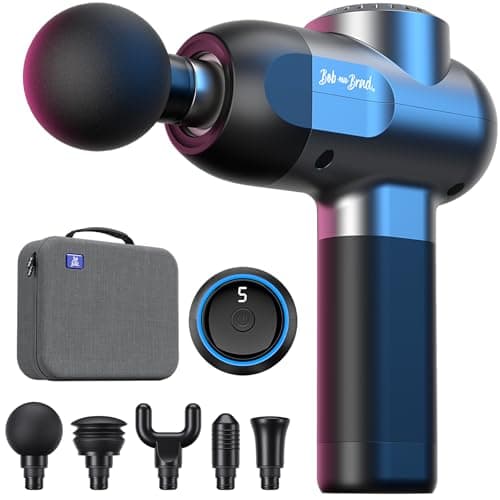
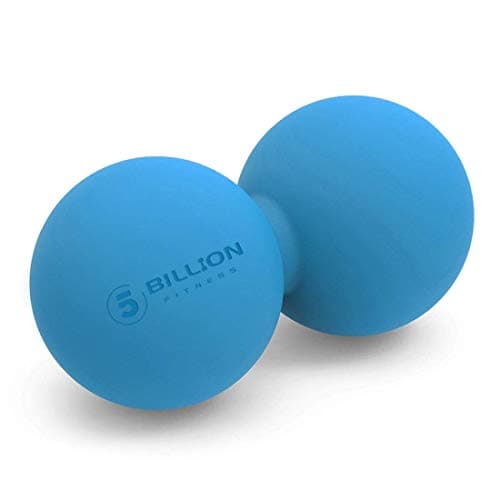
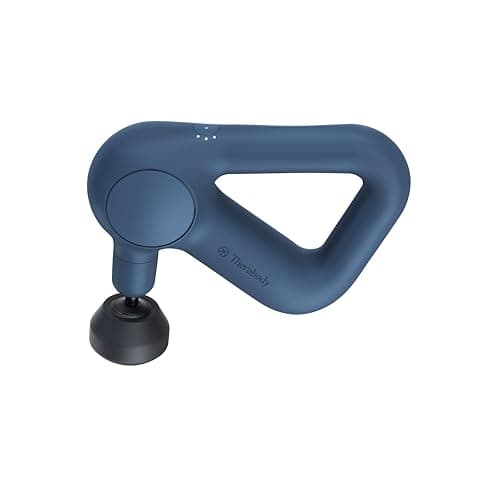
Three things, and none of them is power. A light body, because working your own glute means holding the gun behind you one-handed at an awkward angle, and a heavy gun ends that session early. A low, controllable bottom speed, because the nerve is close and the whole point is gentle work on a muscle, not punishment. And a large round head, which spreads the pressure and is far less likely to find the nerve than a bullet head. A handle angle that reaches your own backside is the fourth. For the piriformis specifically, a firm ball you sit on and control with your bodyweight is the older, cheaper and arguably better tool, which is why one is on the list below.
A sensible routine
On a day the buttock is tight but nothing is shooting down the leg: sit on the ball or work the glute with the gun on a low speed for one to two minutes, then do the stretches your clinician gave you — a piriformis stretch, a figure-four, bridges — while the tissue is warm and less guarded. Once a day is plenty; twice on a bad day is the ceiling. Track whether it helps over a week or two. If it does not, or if the pain is changing character, that is information for your doctor, not a reason to buy a stronger gun.
What a gun will never do for sciatica
It will not shrink a herniated disc, widen a narrowed spinal canal, or reposition a slipped vertebra. It will not treat the nerve — pressing on an irritated nerve makes it more irritated. It will not replace the movement, stretching and strengthening that the Cleveland Clinic lists as the mainstays of getting better, and it will not shorten the four to six weeks most episodes take. Used on a tight glute at low intensity it can make those weeks more comfortable, and that is the honest limit of the claim. For the general rules on keeping a gun away from nerves, bones and the spine, see where not to use a massage gun.