Skip to content
Rep & Recovery

Strength · Home Gym

The best inversion tables

Inversion tables feel wonderful and the evidence for them is thin. Five ranked on the things that actually differ — ankle comfort, frame build and safety certification — with the contraindications first.

By Stephen V.Updated How we review
#ad

We earn a commission when you buy through our Amazon links, at no extra cost to you. It never changes a verdict, and we say so when the cheaper product is the better buy. How this works.

Start with the part most inversion table pages leave out. The mechanism — hanging upside down to apply traction to the spine — has been studied, and the evidence is underwhelming. Cochrane's review of traction for low back pain, with or without sciatica, concluded that traction is unlikely to be effective compared with sham or other treatments. Many people nonetheless find inversion genuinely relieving in the moment, and short-term relief is a legitimate reason to own something. It is not the same as a treatment.

There is also a real contraindication list. Inverting raises pressure in the head and eyes and changes blood pressure and heart rate. If you have high blood pressure, heart disease, glaucoma or other eye conditions, a history of stroke, hernia, are pregnant, or are being treated for a spinal condition, ask a clinician before you buy one — not after. That advice is not boilerplate here; it is the single most important sentence on the page.

With that established: if you have cleared it and you want one, the models genuinely differ on things you will feel. Ankle clamps are where every complaint starts — hanging your body weight from your ankles is uncomfortable if the cuffs are cheap. Frame rigidity determines whether the table feels stable at 60 degrees. And safety certification is a meaningful differentiator in a category where the failure mode is being upside down.

The short answer

Quick picks

#ProductBest forScorePrice
01
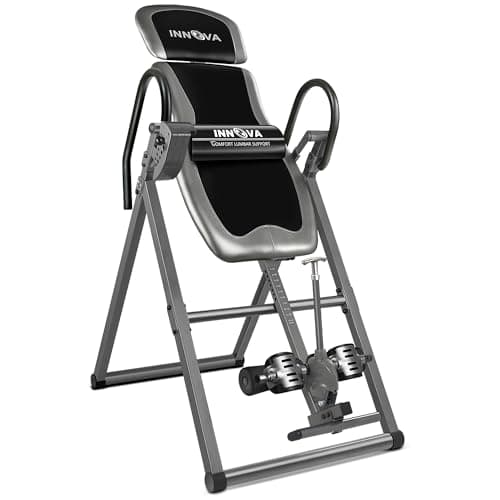
Innova Innova Inversion Table (Standard)
Innova Inversion Table (Standard)

The sensible buy. Adjustable headrest, reversible ankle holders and a 300 lb capacity at a price that makes the category worth trying at all — which matters given how personal the response to inversion is. If you do not know whether you will use one, do not spend four hundred pounds finding out.

Best overall value
7.4
$149.99Amazon
02
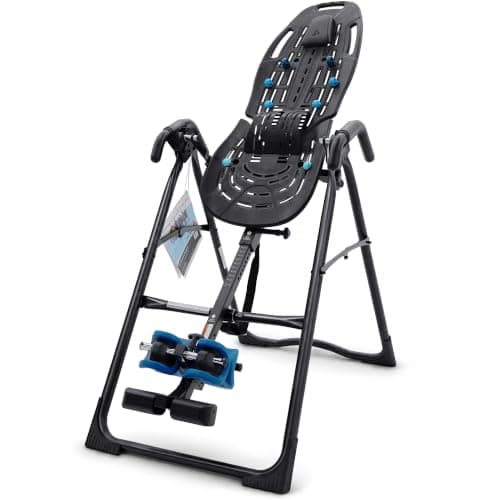
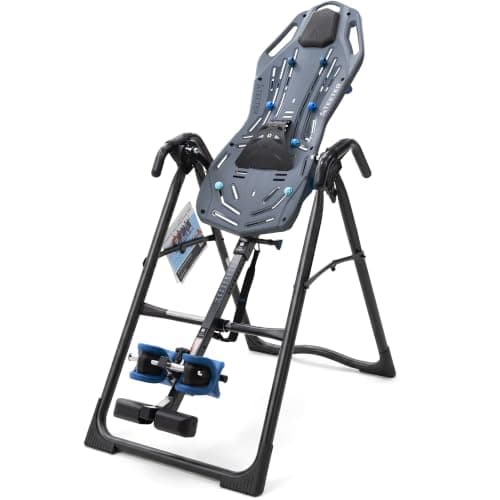
Teeter Teeter FitSpine X1 Inversion Table
Teeter FitSpine X1 Inversion Table

The one to buy if you will actually use it. Teeter's ankle system is the reason the brand exists — it is the difference between five comfortable minutes and two uncomfortable ones — and the frame is UL safety certified with a 300 lb rating. The premium is real and, for a regular user, defensible.

Best build and ankle comfort
8.8
$349.99Amazon
03
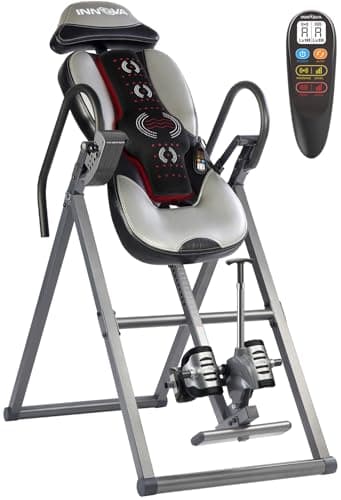
Innova Innova ITM5900 Heat and Massage Inversion Table
Innova ITM5900 Heat and Massage Inversion Table

The comfort-features pick: a lumbar pad with heat and vibration built into the backrest. The heat and massage are not doing anything to your spine that the inversion is not — but warmth on a tight lower back is pleasant, and pleasant is most of why people keep using a device.

Best with heat and massage
7.0
$207.14Amazon
04
Teeter Teeter EP-560 Ltd. Inversion Table
Teeter EP-560 Ltd. Inversion Table

The cheaper way into Teeter's build quality: FDA-registered, UL safety-certified and rated to 300 lb, with the brand's ankle system, at a price between the budget tables and the FitSpine line. If the Teeter ankle clamps are what you want, this is the least expensive route to them.

Best mid-range
8.6
$269.99Amazon
05
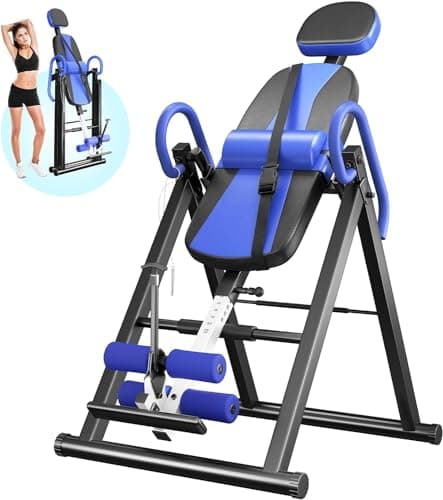
YOLEO YOLEO Gravity Heavy Duty Inversion Table
YOLEO Gravity Heavy Duty Inversion Table

The cheapest way to find out whether you like being upside down. A headrest, an adjustable protective belt to limit how far you invert, and a heavy-duty frame at the lowest price here. Basic, and honest about being basic.

Cheapest way to try inversion
6.2
$134.99Amazon

#ad · Live prices from the Amazon Product API, as of Sep 4, 2026. Where we have no verified live price, we show none — a gap beats a number that has rotted.

In detail

The picks, in full

01
Innova Innova Inversion Table (Standard)

Best overall value

Innova Inversion Table (Standard)

300 lb capacityAdjustable headrestReversible ankle holdersFolds for storage
7.4/10

The sensible buy. Adjustable headrest, reversible ankle holders and a 300 lb capacity at a price that makes the category worth trying at all — which matters given how personal the response to inversion is. If you do not know whether you will use one, do not spend four hundred pounds finding out.

Ankle comfort
7
Frame stability
7
Safety certification
6
Ease of setup
7
Value
10

Pros

  • Reversible ankle holders let you pick the more comfortable of two clamp styles
  • Adjustable headrest, which cheaper tables often omit
  • 300 lb rated capacity — the category standard
  • Costs a fraction of a premium table

Cons

  • Ankle comfort is acceptable rather than good — the premium tables are noticeably better
  • Frame flexes more at steep angles than a Teeter

Don't buy this if…

you already know you will invert several times a week — the ankle system is the part you will wish you had upgraded.

Inversion is an unusually personal experience: some people get off the table feeling wonderful, others find the head pressure unpleasant and never use it again. That makes the cheap-but-competent option the rational first purchase, and this is it — a proper 300 lb frame with an adjustable headrest and a choice of ankle clamp styles.

What you give up against a premium table is refinement: the ankle system is less comfortable, and the frame has more flex at steeper angles. Neither is a safety issue at the rated capacity; both are things you would notice if you used it daily for a year.

$149.99View on Amazon

Price as of Sep 4, 2026. Prices change — Amazon's at checkout is the one that counts.

#ad · we may earn a commission from this link to Innova Inversion Table (Standard)

02
Teeter Teeter FitSpine X1 Inversion Table

Best build and ankle comfort

Teeter FitSpine X1 Inversion Table

UL safety certified300 lb capacityErgo-Embrace ankle supportsDecompression surface
8.8/10

The one to buy if you will actually use it. Teeter's ankle system is the reason the brand exists — it is the difference between five comfortable minutes and two uncomfortable ones — and the frame is UL safety certified with a 300 lb rating. The premium is real and, for a regular user, defensible.

Ankle comfort
10
Frame stability
10
Safety certification
10
Ease of setup
8
Value
6

Pros

  • The most comfortable ankle system in the category by a clear margin
  • UL safety certification, which most budget tables lack
  • Rigid frame that feels stable at full inversion
  • Better-supported brand with parts and documentation

Cons

  • Costs two to three times the value picks
  • Large and heavy even folded

Don't buy this if…

you are not yet sure inversion agrees with you — try a cheap table first, because a lot of people find they do not enjoy it.

$349.99View on Amazon

$369.005% off

Price as of Sep 4, 2026. Prices change — Amazon's at checkout is the one that counts.

#ad · we may earn a commission from this link to Teeter FitSpine X1 Inversion Table

03
Innova Innova ITM5900 Heat and Massage Inversion Table

Best with heat and massage

Innova ITM5900 Heat and Massage Inversion Table

Heat + vibration lumbar pad300 lb capacityAdjustable headrestFolds flat
7.0/10

The comfort-features pick: a lumbar pad with heat and vibration built into the backrest. The heat and massage are not doing anything to your spine that the inversion is not — but warmth on a tight lower back is pleasant, and pleasant is most of why people keep using a device.

Ankle comfort
7
Frame stability
7
Safety certification
6
Ease of setup
7
Value
8

Pros

  • Heated, vibrating lumbar pad is genuinely comfortable
  • Same 300 lb frame rating as the standard model
  • Priced well below the premium brands
  • Folds for storage like the rest of the range

Cons

  • Heat and massage are comfort features, not therapeutic ones — do not pay for them expecting more
  • Ankle system is the same acceptable-not-great design as the standard Innova

Don't buy this if…

you have reduced sensation in your back or take medication affecting heat perception — heated pads and impaired sensation are a burn risk.

$207.14View on Amazon

Price as of Sep 4, 2026. Prices change — Amazon's at checkout is the one that counts.

#ad · we may earn a commission from this link to Innova ITM5900 Heat and Massage Inversion Table

04
Teeter Teeter EP-560 Ltd. Inversion Table

Best mid-range

Teeter EP-560 Ltd. Inversion Table

FDA-registeredUL safety-certified300 lb capacityTeeter ankle system
8.6/10

The cheaper way into Teeter's build quality: FDA-registered, UL safety-certified and rated to 300 lb, with the brand's ankle system, at a price between the budget tables and the FitSpine line. If the Teeter ankle clamps are what you want, this is the least expensive route to them.

Ankle comfort
9
Frame stability
9
Safety certification
10
Ease of setup
8
Value
7

Pros

  • Teeter's ankle comfort at a lower price than the FitSpine range
  • FDA-registered and UL safety-certified
  • Solid, rigid frame at the 300 lb rating
  • Long-standing model with plenty of owner history

Cons

  • Fewer refinements than the current FitSpine models
  • Still noticeably more expensive than the budget tables

Don't buy this if…

you want the newest ankle and bed design — the FitSpine line is where those live.

$269.99View on Amazon

$299.0010% off

Price as of Sep 4, 2026. Prices change — Amazon's at checkout is the one that counts.

#ad · we may earn a commission from this link to Teeter EP-560 Ltd. Inversion Table

05
YOLEO YOLEO Gravity Heavy Duty Inversion Table

Cheapest way to try inversion

YOLEO Gravity Heavy Duty Inversion Table

Adjustable protective beltHeadrest includedHeavy-duty frameFolds for storage
6.2/10

The cheapest way to find out whether you like being upside down. A headrest, an adjustable protective belt to limit how far you invert, and a heavy-duty frame at the lowest price here. Basic, and honest about being basic.

Ankle comfort
5
Frame stability
6
Safety certification
5
Ease of setup
6
Value
9

Pros

  • Lowest price in the category by some distance
  • Adjustable belt limits inversion angle — useful for beginners
  • Headrest included rather than an extra
  • Folds away between sessions

Cons

  • Basic ankle clamps — the first thing you will notice
  • Least refined frame and finish here

Don't buy this if…

you know you will use it regularly — the ankle comfort gap is what turns a daily habit into an abandoned one.

$134.99View on Amazon

Price as of Sep 4, 2026. Prices change — Amazon's at checkout is the one that counts.

#ad · we may earn a commission from this link to YOLEO Gravity Heavy Duty Inversion Table

Who should not use an inversion table

This list matters more than any spec. Do not use one, or ask a clinician first, if you have high blood pressure, heart disease or a history of stroke; glaucoma, retinal detachment or other eye conditions (inversion raises intraocular pressure); a hernia; you are pregnant; you have osteoporosis or a diagnosed spinal condition; or you are taking blood thinners. Ear infections and severe obesity are also commonly listed cautions. If you become dizzy, get a headache, or your vision changes, come up immediately and do not go back.

What the evidence actually shows

Inversion is a form of spinal traction, and traction for low back pain has been reviewed repeatedly. Cochrane's review concluded traction is unlikely to be effective for low back pain with or without sciatica when compared with sham or other treatments. That does not mean nothing happens when you invert — decompressing the spine and stretching the surrounding tissue feels good, and short-term relief is real for many users. It means you should buy one for comfort, not as a treatment, and you should not delay proper care for a back problem because you own a table. The mainstream first-line advice for back pain remains staying active, movement and strengthening.

The three specs that actually differ

  • Ankle clamps. The entire experience. Cheap clamps concentrate your body weight on a small area and are the reason most tables end up unused. This is where the premium brands earn their money.
  • Frame rating and rigidity. Most tables rate to 300 lb. Frame flex at steep angles is a comfort and confidence issue rather than a strict safety one, but it determines whether you relax up there.
  • Angle control. A tether strap or pin that limits how far you go is a genuinely useful feature — nobody should start at full inversion, and a belt that stops you at 20 or 30 degrees is how you build up sensibly.

How to use one without frightening yourself

Set the height adjustment to your actual height before the first use — this is what determines how easily the table rotates, and getting it wrong is why some people find it swings alarmingly. Start at a shallow angle, around 20 to 30 degrees, for a minute or two. Come up slowly. Increase angle and duration gradually over weeks, not in one session, and keep sessions to a few minutes. Have someone nearby the first few times. And do not invert straight after eating.

The cheaper alternatives worth trying first

If the appeal is decompression and back relief, several things on this site cost far less and have better evidence behind them. A back roller wheel extends the thoracic spine for a fraction of the price. A foam roller covers the whole back. A peanut massage ball works the muscles either side of the lumbar spine. And hanging from a pull-up bar — a dead hang, feet off the floor — applies a version of the same traction for the price of a doorway bar. For most people with an ordinary stiff back, one of those is the better first purchase.

How we picked

We did not lab-test this gear

Everyone in this category says they tested twenty products. We have not lab-tested any of these, and we say so. What we did instead: compiled the published specifications, pulled the numbers from the manufacturer manuals, ran the cost-to-run and cost-per-unit math where there was math to run, and scored each product against a published rubric. The scores are judgments from documented research — not measurements we took, because we do not have a lab and we will not pretend we do. Where a number came from someone else's work, we name them in Sources.
Questions

Frequently asked

Do inversion tables actually work for back pain?
The evidence is weak. Cochrane's review of traction for low back pain, with or without sciatica, concluded it is unlikely to be effective compared with sham or other treatments. Many users report genuine short-term relief, which is a reasonable reason to own one — but it is comfort rather than treatment, and it should not replace proper care for a back problem.
Who should not use an inversion table?
Anyone with high blood pressure, heart disease, a history of stroke, glaucoma or other eye conditions, a hernia, osteoporosis, or who is pregnant, should not use one without medical advice — inversion raises pressure in the head and eyes and changes blood pressure. Stop immediately if you experience dizziness, headache or visual changes.
How long should you stay on an inversion table?
Start at a shallow angle of around 20 to 30 degrees for one to two minutes, and build up gradually over weeks. A few minutes is a normal session even for experienced users. Come up slowly, and have someone nearby the first few times.
What should I look for in an inversion table?
Ankle clamp comfort above everything — it is what decides whether you use the table or abandon it. Then frame rating and rigidity (300 lb is the category standard), then an angle-limiting strap or pin so you can build up gradually, then safety certification, which the better brands carry and budget tables often do not.
Is there a cheaper alternative to an inversion table?
Yes, several. A dead hang from a pull-up bar applies traction for a fraction of the cost, and a back roller wheel or foam roller addresses the stiffness most people are actually chasing.

Keep reading

Receipts

Sources

We do not run a testing lab, and we do not pretend to. Where a measured number came from someone else's work, we name them and link them. Where we could not verify something, we say so on the page rather than quietly leaving it out. Read our full method.