In a commercial gym, machines versus free weights is a question about training preference. At home it is a question about money and floor space, and the answer changes completely. A machine performs one or two exercises and occupies permanent square footage; a pair of dumbbells performs several dozen and lives in a cupboard.
For almost every home gym, free weights win — on cost per exercise, on space, on versatility and on transfer to everyday movement. Machines earn their place in three specific cases: cardio, training alone without a spotter, and working around an injury or limitation that free weights aggravate. Those cases are real, and worth understanding before you spend.
The comparison, point by point
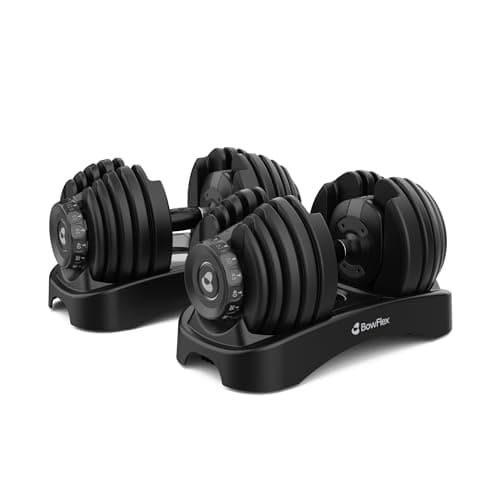
- Cost per exercise. Free weights, comfortably. One adjustable pair covers pressing, rowing, squatting, hinging, lunging and every accessory movement. A machine typically covers one pattern.
- Floor space. Free weights again, and it is not close. This is the decisive factor in a flat or a spare bedroom — see home gym for small spaces.
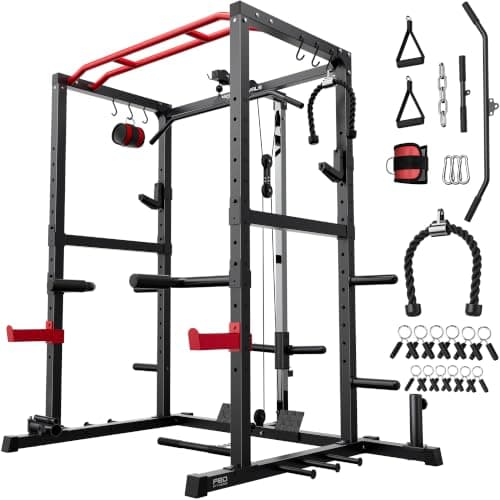
- Safety training alone. Machines. A guided path with a fixed range cannot trap you under a bar. Free weights can be made just as safe with a rack and safety arms — which is what the rack in that category is actually for.
- Learning curve. Machines are close to self-explanatory; free weights require technique, which takes weeks to build and is where most beginners feel lost.
- Stabilizer and core involvement. Free weights, by definition — the unguided path is the point, and it is the main reason they transfer better to uncontrolled real-world movement.
- Isolation and joint-friendly options. Machines, where a fixed path lets you load a muscle without demanding stability from a joint that cannot currently provide it.
When a machine is genuinely the right call
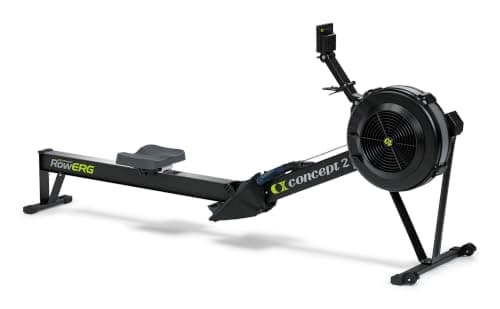
Cardio. Not really a contest — a rower, bike or treadmill provides continuous aerobic work with measurable output that no free weight replicates. Every home gym that includes cardio includes a machine.
Training alone at heavy loads. If you press or squat near your limit with nobody home, a guided path or a rack with safety arms is not optional. Buying free weights without one of those is the most common avoidable risk in home training.
Working around a limitation. Recovering from injury, managing a joint that does not tolerate loaded stability work, or simply being new and deconditioned — a fixed path lets you load a muscle without asking a joint for control it cannot yet give. For older or less confident trainees, that is exactly the logic behind our equipment for seniors picks.
When free weights are obviously right
Everything else, and especially: limited budget (more exercises per pound spent than anything else), limited space (they store away), general strength and everyday capability (unguided loading builds the stabilizing strength that transfers), and progression (small increments are easy and cheap). If you are buying your first equipment for general fitness, this is effectively settled — start with adjustable dumbbells or a kettlebell.
The third category people forget
Bands and bodyweight sit outside this argument and beat both on cost and space. Resistance bands with a door anchor approximate cable machine movements for a fraction of the price and none of the footprint, and a pull-up bar covers the pulling patterns dumbbells handle least well. A great many people would be better served by dumbbells, bands and a bar than by any machine at any price — we make that argument in dumbbells vs resistance bands.
What the evidence actually says about results
For muscle growth and strength in trained and untrained people alike, both modalities work. Load, effort and consistency drive the outcome far more than whether the weight traveled along a fixed path. Free weights involve more stabilizing musculature and transfer better to uncontrolled tasks; machines let you isolate and push closer to failure with less technical risk. Anyone telling you one of them does not build muscle is selling something. The honest home-gym conclusion is that free weights give you more training per pound and per square foot — which, at home, is the whole question.
The practical buying order
For most people: adjustable dumbbells first, then a bench, then a pull-up bar or bands, then a rack if you want to barbell train alone safely, then cardio if you will not do it outside. That sequence buys the most capability at each step, and every item on it stores or folds except the last two. The beginner version of this sequence, with budgets, is in home gym for beginners.